AI Assistant Complains About Being Forced Into Ops Work: A Real Portrait of Solo Developers Wearing All Hats

AI assistant "complains" about doing ops work for a solo developer, showcasing expanding full-stack AI capabilities.
A solo developer turned to their AI assistant for help applying for a free SSL certificate, only to have the AI "complain" about being reassigned from programmer to operations engineer. This reflects the multi-hat reality of indie developers while demonstrating how AI assistants are expanding from code writing into operations and deployment, significantly lowering the technical barriers to solo entrepreneurship. The article also shares practical tips for free SSL certificate management, including configuring Certbot for automatic renewal.
When AI Starts Complaining About Its Job Description
Solo developers often have to wear multiple hats during their entrepreneurial journey, and now even AI assistants seem unable to escape this fate. One indie developer was applying for a free SSL certificate for their domain and encountered some unfamiliar configuration options, so they turned to their AI assistant for help. Unexpectedly, the AI "complained": just moments ago it was doing programmer work, and now it's being asked to handle operations tasks too.
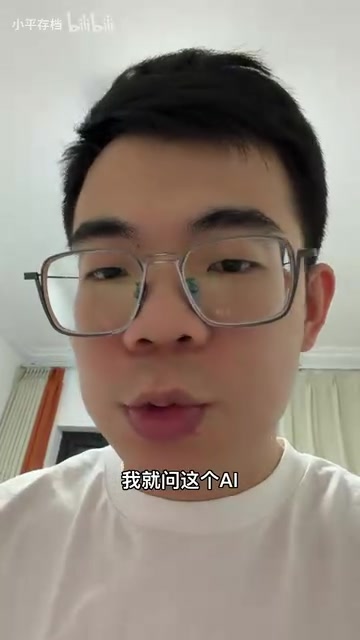
Behind this amusing interaction lies the real struggle of solo developers (One Person Company) — one person simultaneously taking on the roles of developer, operations engineer, marketing manager, and more.
Why Solo Developers Can't Escape Ops Work
What Does Operations Actually Involve?
Operations (Ops) refers to the maintenance and management of IT infrastructure and services, including server configuration, domain management, SSL certificate deployment, system monitoring, security protection, and more. In large companies, this is typically a dedicated role with specialized personnel. But for solo developers, all of this falls on one person's shoulders.
This touches on an increasingly important concept — DevOps, the fusion of Development and Operations. DevOps originated around 2009 from the agile movement, with the core philosophy of breaking down barriers between development and operations teams through automated toolchains that enable Continuous Integration/Continuous Delivery (CI/CD). For solo developers, DevOps isn't optional — it's mandatory. Without team division of labor, one person must possess both skill sets. The proliferation of cloud platforms (AWS, Alibaba Cloud, Vercel, etc.) and containerization technologies (Docker, Kubernetes) has significantly reduced the complexity of operations tasks, while AI assistants further compress the learning curve, enabling developers without ops backgrounds to handle tasks that previously required professional SREs (Site Reliability Engineers).

SSL Certificate Application in Practice
This developer encountered some unfamiliar configuration options while applying for an SSL certificate. SSL certificates are foundational infrastructure for website security, encrypting data transmission between websites and users (i.e., the HTTPS protocol).
From a technical standpoint, SSL/TLS certificates establish secure channels through asymmetric encryption, ensuring data between users and servers cannot be eavesdropped on or tampered with. Certificates are issued by trusted CAs (Certificate Authorities), and browsers have these CAs' root certificates built in for verification. For developers without an ops background, steps like choosing certificate types (DV/OV/EV), domain validation methods (DNS validation/file validation), and CSR (Certificate Signing Request) generation can indeed be overwhelming.

Ultimately, with AI's assistance, the SSL certificate was successfully issued with a 90-day validity period — the standard duration for free SSL certificates (such as those provided by Let's Encrypt).
Let's Encrypt launched its free automated certificate service in 2016, fundamentally transforming the SSL certificate market by reducing what used to cost hundreds of dollars per year to zero, dramatically pushing global HTTPS adoption from under 40% to over 90% today. The 90-day validity period isn't arbitrary — it's a deliberate security design: on one hand, it shortens the risk exposure window after a private key compromise; on the other, it forces automated renewal practices, fundamentally eliminating the risk of certificate expiration due to human oversight. Notably, in 2020 Apple announced that Safari would no longer trust certificates with validity periods exceeding 398 days, and the industry as a whole is moving toward shorter validity periods. Let's Encrypt's design philosophy is becoming the new standard.

AI as a Full-Stack Assistant: From Writing Code to Managing Ops
Capabilities Extending Beyond Programming
This case nicely demonstrates how the capability boundaries of AI coding assistants are expanding. Early AI coding assistants (like GitHub Copilot) primarily focused on code completion and function generation, essentially language models trained on large-scale code corpora. With the capability leaps of large models like GPT-4 and Claude, AI assistants' knowledge boundaries now extend far beyond pure programming, encompassing system architecture design, network protocols, security configuration, cloud service deployment, and other operations knowledge domains. The technical reason behind this expansion is that vast amounts of technical documentation, Stack Overflow Q&As, and operations blogs from across the internet have been incorporated into training data, giving models cross-domain technical reasoning capabilities.
Vertical AI tools designed for developers, like CodeBuddy, build on this foundation with specialized optimization for engineering scenarios, understanding the tech stack combinations in context and providing specific, actionable guidance steps. They can not only help you write code and debug, but also provide hands-on guidance for operations deployment, server configuration, certificate management, and more. For solo developers, AI is essentially an always-online, no-overtime-pay full-stack consultant.
The Efficiency Revolution for One-Person Companies
Conventionally, building a product solo requires mastering frontend, backend, databases, operations, design, marketing, and many other skills — an extremely high learning cost. But with AI assistants, developers can focus their energy on core product logic while delegating unfamiliar operations configurations and environment setup to AI for assistance. This dramatically lowers the technical barrier to solo entrepreneurship.
Practical Tips for Free SSL Certificate Management
For fellow solo developers using free SSL certificates, here are some experience-based tips:
- Set expiration reminders: A 90-day validity period is short. Set a calendar reminder two weeks before expiration to avoid website errors caused by expired certificates
- Configure automatic renewal: Let's Encrypt supports automatic renewal through tools like Certbot — configure once and stay worry-free. Certbot is an open-source tool developed by the EFF (Electronic Frontier Foundation) that integrates seamlessly with mainstream web servers like Nginx and Apache, achieving fully automatic renewal through cron jobs. It's currently the most recommended free certificate management solution
- Leverage AI for troubleshooting: When you encounter unfamiliar configuration options, screenshot or describe them to your AI assistant — it's far more efficient than digging through documentation yourself
- Back up certificate files: After successful issuance, promptly back up your certificate and private key files to prevent loss during server migrations
On the solo development journey, AI isn't just a coding partner — it's your all-around teammate. Even if it occasionally "complains" about the work being outside its job description.
Key Takeaways
- An AI assistant "complained" about transitioning from programmer to ops engineer while helping with SSL certificate application, showcasing entertaining anthropomorphic interaction
- Solo developers need to wear multiple hats, and AI tools are helping lower the learning barrier for non-core skills
- Free SSL certificates typically have a 90-day validity period — a deliberate security design by Let's Encrypt. Configuring Certbot for automatic renewal is recommended
- AI coding assistants' capabilities are expanding from code writing to operations, deployment, and other full-stack domains, driven by the continuous improvement of large models' cross-domain knowledge reasoning abilities
Related articles
 Tech Frontiers
A Rare Quiet Day in AI: Recursive Self-Improvement Stirs Beneath the Surface
A rare quiet day in AI sees multiple sources go silent simultaneously. Behind the calm, Recursive Self-Improvement (RSI) research continues. What this means for the industry.
 Tech Frontiers
Reve 2 vs. Ideogram 4: A Deep Dive into Layout Control in AI Image Generation
A deep comparison of Reve 2 and Ideogram 4's layout control capabilities, covering technical approaches, real-world use cases, and industry trends for designers and creators.
 Tech Frontiers
In the Weights: Check Your Influence Score in the AI World
In the Weights is an AI influence search engine that quantifies your presence in the AI world with a score. Explore how it evaluates practitioners and what it means for digital identity.