AI-Assisted Freelancing in Practice: Breaking Down 5 Web Scraping & Reverse Engineering Jobs

AI tools shrink scraping reverse engineering jobs from hours to minutes across 5 real freelance cases.
Bilibili creator James (老张) walks through 5 real freelance scraping jobs priced at ¥300–¥500, demonstrating how LLM-assisted coding compresses what once took hours into roughly ten minutes each. The cases cover encrypted parameter reverse engineering, news scraping, multi-condition hotel pricing, bulk file downloads, and sign parameter analysis. His core methodology: use AI to generate scraping code fast, pinpoint key API parameters, and focus on delivering results rather than hand-coding everything. He also stresses pragmatic thinking — find alternate data channels instead of forcing dead-end approaches. The article notes that lower barriers mean fiercer competition on small gigs, and flags data compliance risks around ID lookups and corporate data collection.
How AI Is Lowering the Bar for Scraping & Reverse Engineering Freelance Work
Traditional web scraping and reverse engineering often demands deep knowledge of JavaScript encryption logic, parameter signing, and CAPTCHA recognition — a single job could easily eat up several hours. With the help of large model-assisted coding tools, however, the turnaround time for these small gigs has been dramatically compressed. Bilibili creator James (老张) recently demonstrated five real freelance jobs he took on, admitting that each one took him "at most ten or so minutes" to complete.
The underlying logic is worth paying attention to: when AI can rapidly generate working scraping code and analyze API parameters, freelancers no longer need to write reverse engineering scripts from scratch. Instead, they can focus on pinpointing the core encrypted parameters and validating the business results. This means web scraping and reverse engineering — once a fairly hardcore technical niche — is having its entry barrier significantly lowered by AI tools.
Technical Breakdown of Five Real Jobs
Job 1: Practitioner Information Lookup (Encrypted Parameter Reverse Engineering)
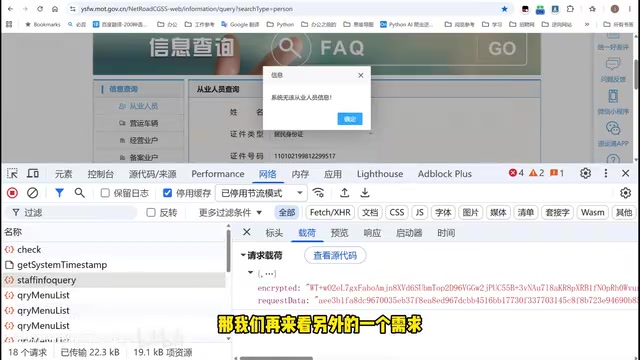
The first job involved scraping a practitioner information query system. Users enter a randomly generated ID number and name to query, and the system returns relevant practitioner data. James pointed out that the core challenge here comes down to just two API parameters: encrypted and request data. Once you figure out how those two parameters are generated, the entire scraping flow works.
The accompanying CAPTCHA wasn't particularly difficult — you can either solve it manually or try to automate it in code. James suggested that capable freelancers should handle the CAPTCHA too, noting that "the price for solving CAPTCHAs isn't that high, but being able to do it yourself is a real plus" — implying that this added capability boosts both your rate and your competitiveness.
"Encrypted parameter reverse engineering" is essentially the process of reconstructing how a website's frontend JavaScript encrypts request parameters. To prevent API abuse, modern web applications typically encrypt key parameters before sending requests — for example, encrypting the request body with AES/RSA, or computing an MD5/SHA hash of a concatenated string of timestamps, random values, and user IDs to use as a sign signature. Reverse engineers capture traffic in browser DevTools, locate the JS file containing the encryption logic, then use breakpoint debugging or AST de-obfuscation techniques to reconstruct the algorithm and keys — ultimately reimplementing that logic in Python so the scraping script can generate valid request parameters. The encrypted and request data parameters are textbook examples of this scenario: the former is typically the encrypted request body, while the latter may be a metadata object containing signature information. The value of large language models here is clear: paste in a chunk of obfuscated JS code, and the model can quickly infer the encryption method and generate the corresponding Python implementation, saving the time of manually analyzing every line.
Job 2: Hong Kong Jiangsu Enterprise Association News Scraping
The second job was relatively straightforward — a pure data collection task. The goal was to scrape the news page of the Hong Kong Jiangsu Enterprise Association: click into each article's detail page, extract the full content of every news item (title, publication date, body text, etc., varying in length), and compile everything into a single file.
James showed the AI-generated code, which was compact and handled the entire workflow automatically — from scraping to document aggregation. This type of job has no encryption to contend with; the core challenge is just paginating through lists and parsing detail pages. It's the ideal scenario where AI-assisted scraping delivers results most easily.
Scraping with Business Logic: Hotel Pricing Data
Job 3: Multi-Dimensional Hotel Room Rate Scraping (Quoted at ¥300)
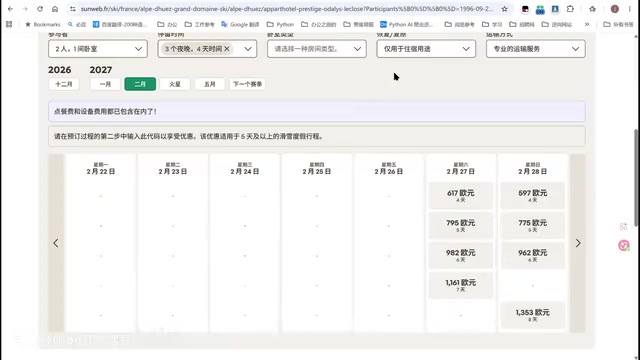
This hotel job was quoted at ¥300, with the goal of collecting room rate data from a hotel website under various conditions. The technical difficulty itself wasn't high, but the business logic required careful attention.
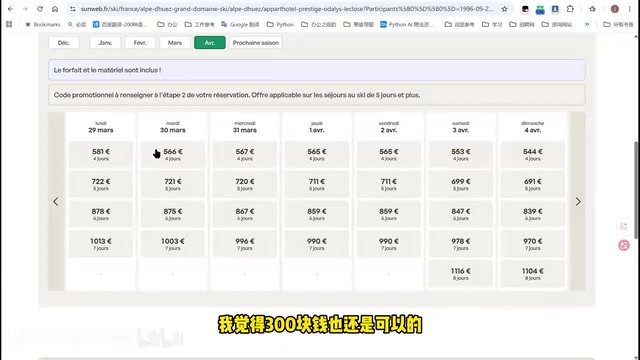
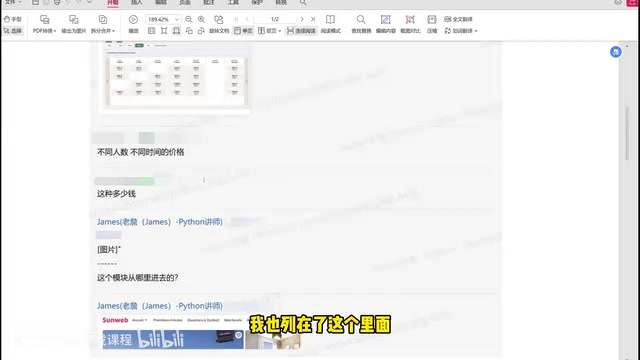
James highlighted several constraints around check-in conditions: the number of adults affects whether a room booking is valid (a single adult apparently can't book, requiring at least two per room); the combination of children (child) and infants (baby) also matters, as does the maximum occupancy per room. The scraping target is typically a set of price combinations for different lengths of stay within a given month.
With traditional programming, handling the multiple parameter combinations (dates, guest counts) and page interactions would be fairly involved. But with AI-generated code, you can quickly cover all these combination scenarios. For foreign-language pages that are hard to read, James recommended just using the browser's built-in translation feature to understand the job requirements.
File Downloads and the "Clever Shortcut" Mindset
Job 4: Bulk File Download (Quoted at ¥500)
The fourth job was quoted at ¥500 and involved file downloads on the surface — the site had download links, but clicking them directly didn't work (you couldn't get the actual link). The client's real need was simple: they didn't want to click manually; they wanted a script that would automatically collect all the data and files.
James made an important point here: don't "do technology for technology's sake" when solving a problem. Many developers instinctively go for the hardest, most direct reverse engineering path — but in real freelance work, "being able to solve the problem is what matters." He hinted that this job had a "clever shortcut" solution: rather than cracking that dead download link, you find another channel to access the data. This pragmatic problem-solving mindset is exactly what distinguishes a skilled freelancer from a pure technical researcher.
Job 5: reData Website Parameter Reverse Engineering (Quoted at ¥400)
The final job involved scraping the reData website, quoted at ¥400. The key parameters are content and sign. James acknowledged that the site had recently been updated — the parameters are now harder to locate than before, though the quoted price hadn't gone up much. This type of job is also well-suited for LLM-assisted reverse engineering.
The sign parameter is one of the most common API authentication mechanisms in scraping reverse engineering — short for "Signature." It's typically generated by sorting and concatenating request parameters according to a specific rule, appending a server-issued secret key or timestamp, then running the string through a hashing algorithm like MD5 or HMAC-SHA256 to produce a fixed-length string that gets attached to the request. The server receives the request, recalculates using the same algorithm, and rejects the request if the values don't match. The content parameter usually refers to the encrypted or encoded request body. When a site "makes changes," it typically means the key retrieval method has changed, the parameter concatenation order has shifted, or an additional JS obfuscation layer has been added on top of the original algorithm — all of which make it harder to locate the entry function. This also explains why reverse engineering work carries ongoing maintenance costs: once a site updates its anti-scraping strategy, existing scripts can break at any time and require re-analysis.
What This Demo Reveals About AI-Assisted Reverse Engineering
Throughout the entire demo, James repeatedly emphasized one thing: he used large model tools to generate all the code and saw "no reason to try writing everything from scratch the hard way." The generated code was well-structured and ready to use. This reflects the maturity of current AI coding tools for specific vertical tasks — for scraping jobs where the parameters are clearly identified and the logic isn't extremely complex, AI can compress development time from several hours down to ten-something minutes.
That said, a few things deserve a clear-eyed look. First, the quoted rates for these jobs are consistently in the ¥300–¥500 range — these are "small gigs," and while AI reduces delivery costs, it also means price competition will intensify. Second, the video is primarily a demonstration format with "comment 666 to get the resources" mechanics — the actual details of parameter reverse engineering (how sign is generated, what the "clever shortcut" for the download job actually is) aren't fully spelled out; it's more about pointing you in the right direction and letting learners implement it themselves. Third, for scenarios involving ID number lookups and corporate data collection, it's important to pay attention to the legal boundaries around data sourcing.
For developers looking to get into scraping and reverse engineering freelancing, the real value of this kind of breakdown isn't "getting ready-made answers" — it's building a pragmatic problem-solving framework: first locate the core parameters or data channel, then use AI to quickly validate feasibility, and finally focus on delivering results rather than showing off technical depth. As James put it, "you can only truly master something by implementing it yourself — that's what lets you use it in real work."
Data compliance is a legal boundary that cannot be ignored in scraping work. Under China's legal framework, the Data Security Law, Personal Information Protection Law, and Cybersecurity Law all impose clear constraints on the collection and processing of personal information. ID numbers are classified as sensitive personal data — bulk querying or storing them without authorization carries legal risk. Corporate information varies in its degree of public accessibility, and data scraped from official registration systems for commercial use also requires attention to authorization sources. Additionally, the Anti-Unfair Competition Law and the terms of service of many platforms place restrictions on automated data collection. When taking on these jobs, freelancers should evaluate not just technical feasibility but also the client's intended use of the data, the authorization status of the target website, and their own potential liability. There is a fundamental difference between "getting the script to run" and "getting it to run legally and compliantly."
Related articles

Chain of Thought Isn't Just for AI: How Humans Can Use CoT to Improve Thinking Quality
Chain of Thought isn't just a prompt trick for large models. Starting from a Hacker News discussion, this article analyzes why CoT works for human thinking too, breaks down actionable ways to transfer it, and highlights the key differences between human CoT and machine CoT.
Cloudflare Teams Up with OpenAI: Closi…
Cloudflare Teams Up with OpenAI: Closing the Loop from Vulnerability Discovery to Defense with AI
Cloudflare uses OpenAI Daybreak to investigate security vulnerabilities and generate reviewable remediation plans, while developers use Codex to boost coding efficiency and quality.

Orca Multi-Agent Orchestration in Practice: A Guide to Parallel Collaboration with Claude and Codex
Orca is Stable AI's free open-source agent workbench supporting 34 agents like Claude Code and Codex in parallel. Learn its Git worktree isolation, multi-model orchestration, and mobile management.