AI-Assisted Programming Goes Mainstream: A Paradigm Shift in Software Development
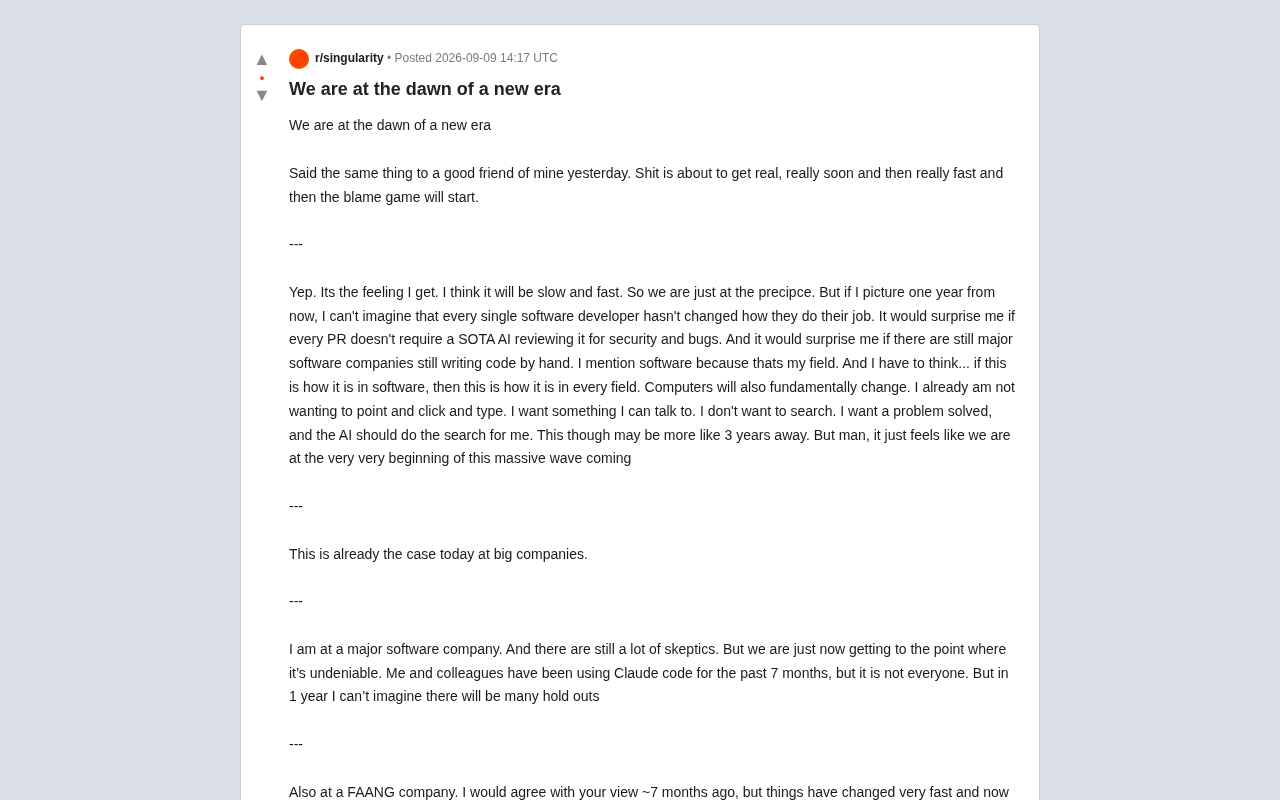
AI-assisted programming has gone from niche experiment to mainstream practice across major tech companies.
Based on firsthand accounts from FAANG engineers, AI-assisted programming tools have rapidly evolved from experimental to universal adoption in just seven months. This paradigm shift extends beyond code generation to encompass code review, security scanning, and human-computer interaction, signaling a fundamental restructuring of software development workflows that is approaching an exponential tipping point.
The Turning Point: From Skepticism to Acceptance
"We are at the dawn of a new era." This statement has resonated widely across the tech world recently. In a Reddit discussion, multiple senior software engineers at major tech companies shared their firsthand observations on how AI tools are reshaping the entire industry. This isn't just another round of tech hype — it's a profound transformation already underway.
One seasoned developer's sentiment was particularly representative: "If I look a year out, I can't imagine any software developer who hasn't changed how they work." This assessment isn't unfounded. According to multiple FAANG employees, over the past seven months, AI-assisted programming tools have expanded from a handful of early adopters to virtually every team member.
Big Tech in Practice: From Experimentation to Full-Scale Adoption of AI Programming Tools
The pace of change has exceeded most people's expectations. One FAANG employee admitted: "I would have agreed with you seven months ago, but things have changed very fast, and now everyone is using AI for most tasks." This shift isn't just a matter of individual preference — it's happening at the enterprise strategy level.
FAANG (Facebook/Meta, Apple, Amazon, Netflix, Google) represents the most influential group of tech giants globally, and their technology choices often serve as industry bellwethers. When engineers at these companies collectively pivot to AI-assisted programming, the signal is far stronger than typical enterprise technology adoption. Notably, these companies have extremely rigorous code review and tool approval processes. The fact that AI tools have cleared these hurdles and been deployed at scale speaks to their enterprise-grade maturity.
Multiple major international companies have made AI tool rollout and training a top priority. The key reason: "When AI can access all your apps and data, it works surprisingly well." This deep integration brings not just efficiency gains, but a fundamental restructuring of development workflows.
This observation touches on one of the core technical bottlenecks in current AI programming tools — contextual understanding. Early AI coding assistants could only handle local code within a single file, whereas modern tools have achieved holistic understanding of entire software projects through expanded context windows (from 4K tokens to 100K or more), RAG (Retrieval-Augmented Generation) technology for indexing entire codebases, and deep IDE integration for reading project structures and dependencies. This "deep integration" means AI is no longer an isolated code generator, but a collaborative partner that understands business logic, tech stacks, and team conventions.
Engineers who were once deeply skeptical are quietly changing their tune. As one developer observed: "I've seen such a massive shift from software engineers from constantly dunking on it to casually accepting AI integration." This evolution from resistance to embrace marks the formation of an industry consensus.
Beyond Coding: AI Reshaping How Software Development Works
More forward-looking perspectives suggest this transformation extends far beyond programming. One developer predicted that within a year, mainstream code review processes will integrate advanced AI to check for security vulnerabilities and bugs, and large software companies still writing code entirely by hand will be the exception. "If this is what it's like for software, then every field is going to be like this."
Traditional code review relies on manual inspection by senior engineers — a process that's both time-consuming and prone to oversight. AI applications in this area include enhanced static analysis, pattern matching to detect known vulnerability types (such as SQL injection, XSS attacks, buffer overflows), and logic error identification based on semantic understanding. Unlike traditional static analysis tools (such as SonarQube and Snyk), LLM-based AI code review can understand the semantic intent of code, thereby uncovering context-dependent vulnerabilities that conventional tools struggle to catch. GitHub has already launched Copilot code review features, and GitLab has integrated AI-driven security scanning, signaling that this field is moving from experimental to mainstream.
Human-computer interaction is also being restructured. Traditional clicking, typing, and searching are being replaced by more natural interaction patterns: "I don't want to click and type anymore, I want something I can talk to. I don't want to search, I want problems solved — AI should do the searching for me." While this vision may take three years to fully materialize, the direction is clear.
This shift from "clicking and typing" to "conversation" corresponds technically to a paradigm migration from traditional graphical user interfaces (GUI) to natural language interfaces (NLI). The deeper transformation lies in the rise of AI Agents — AI systems capable of autonomously planning and executing multi-step tasks. Unlike simple Q&A, AI Agents can decompose complex goals, invoke multiple tools and APIs, and self-correct during execution. OpenAI's GPT-4o, Anthropic's Claude, and Google's Gemini are all evolving toward agent-based architectures. When AI Agents can operate computer interfaces (Computer Use), manage file systems, and call external services, a vast amount of repetitive work in software development will be automated.
Multiple users expressed anticipation for something akin to the always-on voice assistant from the movie Her — not interacting with AI through copy-paste, but having an intelligent assistant that can access your computer (and smart home devices) and deploy agents to complete tasks. "This is coming. If it hasn't happened in two years, I'll be very surprised."
Spike Jonze's 2013 film Her depicted a deep emotional connection between a human and an AI operating system. The AI assistant Samantha could understand emotions, manage schedules, handle emails, and converse in an extraordinarily natural voice. The film is frequently referenced because current multimodal AI technology (combining speech recognition, natural language processing, speech synthesis, and visual understanding) is making this vision technically feasible. OpenAI's GPT-4o has demonstrated near-real-time voice conversation capabilities. Combined with smart home protocols (such as the Matter standard) and OS-level deep integration, an AI assistant that can "see your screen, hear your voice, and control your devices" faces no fundamental technical barriers — the remaining challenges lie more in privacy protection, data security, and building user trust.
From Gradual to Accelerating: Software Development's Approaching Tipping Point
Interestingly, the pace of change exhibits a "slow then fast" pattern. "We're on the edge of a cliff." While current changes may not yet feel dramatic enough, the consensus is clear: once a certain tipping point is crossed, the transformation will occur at exponential speed.
This "slow then fast" rhythm of change closely aligns with classic technology diffusion theory. Everett Rogers' S-curve model from Diffusion of Innovations posits that new technology adoption typically progresses through five stages: innovators (2.5%), early adopters (13.5%), early majority (34%), late majority (34%), and laggards (16%). When adoption crosses the roughly 16% threshold (transitioning from early adopters to early majority), the rate of diffusion accelerates dramatically. Based on FAANG engineers' descriptions, AI programming tools are at the critical juncture of leaping from early adopters to the early majority, which explains why participants in these discussions feel the urgency of being "on the edge of a cliff."
This assessment is based on multiple signals: the rapid penetration of AI coding assistants like Claude over the past seven months, strategic deployment at the enterprise level, and most critically — technical capabilities reaching an "undeniable" level. Claude is a large language model developed by Anthropic whose coding capabilities made significant breakthroughs during 2024–2025. Running in parallel are GitHub Copilot (based on OpenAI models), Cursor (an AI code editor integrating multiple models), and Google's Gemini Code Assist, among others. These tools are built on Transformer-based large language models, pre-trained on massive codebases and then refined through instruction tuning and Reinforcement Learning from Human Feedback (RLHF), enabling them to understand programming intent, generate code, debug errors, and even perform architectural design. The leap from simple code completion to handling complex cross-file refactoring tasks is the fundamental driver behind the industry's attitude shift. When even the skeptics start taking it seriously, the inflection point is near.
Interestingly, home smart assistants — "arguably the thing that kicked off the AI era" — have fallen far behind. This irony points precisely to the direction of the next wave of innovation: delivering already-mature AI capabilities to everyday users in smoother, more mainstream, and more accessible forms.
Final Thoughts
AI's impact on software development isn't future tense — it's present tense. From tool adoption to workflow restructuring, from individual efficiency to organizational transformation, change is happening simultaneously across multiple dimensions. For practitioners, the question is no longer "whether to use AI" but "how to collaborate with AI more effectively."
What makes this transformation unique is its recursive nature: AI tools themselves are being accelerated in development and improvement by AI. This phenomenon touches on a profound concept in artificial intelligence — Recursive Self-Improvement. Mathematician I.J. Good proposed the "intelligence explosion" hypothesis as early as 1965: when machines can design machines more intelligent than themselves, progress will no longer be constrained by human cognitive capacity. While current AI-assisted programming is still far from fully autonomous self-improvement, a clear positive feedback loop has already formed: AI tools help developers build better AI tools faster, and these better tools in turn further boost development efficiency. When the people building AI tools are themselves using AI to build those tools, the pace of evolution will exceed linear expectations. We truly stand at the dawn of a new era — and the sun may be rising faster than we imagine.
Related articles
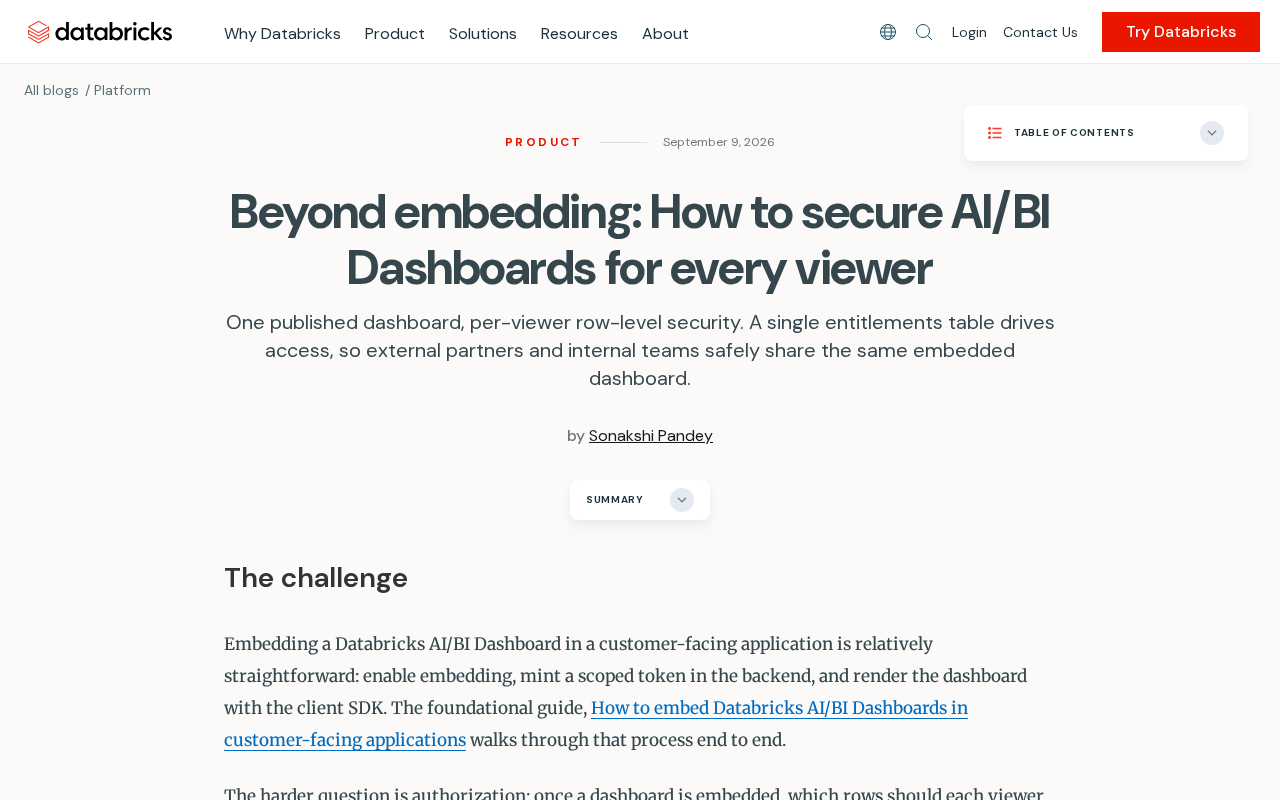
Security Guide for AI/BI Dashboard Embedding: Multi-Tenant Data Isolation and Access Control in Practice
Explore security challenges in AI/BI dashboard embedding, covering multi-tenant data isolation, row-level security, identity propagation, and defense-in-depth architecture for embedded analytics.
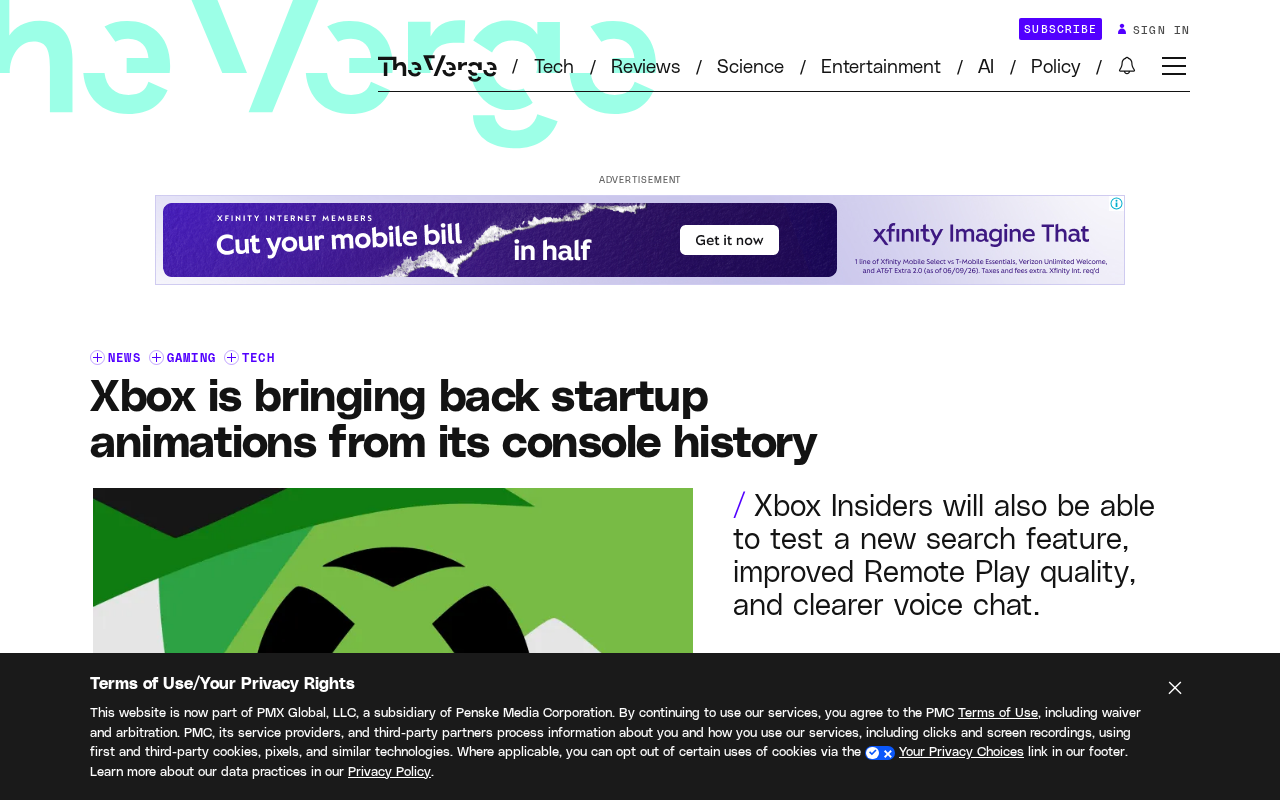
Xbox Classic Startup Animations Return: Personalization and Cloud Gaming Experience Get Major Upgrades
Microsoft rolls out classic console startup animations, badge customization, cloud gaming background downloads, and more for Xbox Insiders. Remote Play quality and voice chat also improved.

The Legend of Zelda: Ocarina of Time Remake Now Available for Pre-Order — $10 Off at Walmart
The Legend of Zelda: Ocarina of Time remake for Switch 2 is now available for pre-order. Walmart offers the physical edition at $59.88 — $10 off the standard price.