AI 'Brain-Reading Patch' Incident Review: Weight Reading Is Real and Reproducible, but Editing Capabilities Were Exaggerated

AI weight reading is real and reproducible, but the math performance leap is alleged to be exaggerated—actually the result of code and practice loops.
The article follows the controversy surrounding an 'AI automatically fixes AI' news story. Software library author Matthew Honnable criticized the original headline as misleading: the 7.9% to 48.1% math benchmark improvement was not pure weight reading but the result of Astra writing Python code and running the model on up to 50 batches of practice problems. Meanwhile, developer Simon Willison reproduced a pure-reading test on a laptop; Quinn 3.8 (27B) successfully identified Pac-Man, Pong, and Breakout from raw weights, each taking about an hour of inference, and failed on the fourth game. The two independent sources agree that weight reading is real and reproducible but diverge on whether editing capabilities were exaggerated. The article concludes that weight reading is real, but large-scale performance improvements depend on tool loops, and the narrative must carefully distinguish 'pure reading' from 'editing with tools.'
Incident Recap: An Exaggerated Headline?
Yesterday we reported a story about one AI "patching" another AI, but just one day later, the narrative has splintered. According to analysis from a YouTube channel, well-known software library author Matthew Honnable publicly criticized the news headline as misleading—the famous math fix score (a benchmark jump from 7.9% to 48.1%) was not achieved purely by reading raw weights. In reality, Astra wrote Python code and ran the model on up to 50 batches of practice problems, just as a human engineer would do. Pure, tool-free weight reading only appeared in small-scale experiments.

This clarification is crucial: the widely circulated "AI automatically fixes AI" story simplified the core breakthrough. What actually achieved the significant improvement was a complete loop involving code writing and problem practice, not simply "brain reading."
Reproduction Experiment: Weight Reading Capability Verified
Just as the controversy was brewing, developer Simon Willison ran a pure-reading test on his own laptop. He used the model Quinn 3.8 (27B parameters), and by reading only raw weights without any external tools, the model successfully identified three games—Pac-Man, Pong, and Breakout—with each game taking about an hour of inference time. However, it failed on the fourth game.
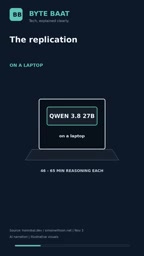
This reproduction result has dual significance: on one hand, it confirms that the "weight reading" capability truly exists and can be reproduced on consumer-grade hardware; on the other hand, it shows that this capability still has boundaries. According to Simon Willison's experiment, the model only gave answers after about an hour of inference, indicating that this reading requires substantial computation time and is not instantaneous.

Quinn 3.8 and Parameter Scale: The Quinn 3.8 (27B parameters) mentioned in the article is a medium-scale open-source large language model. 27B means 27 billion parameters, a scale that allows it to run in quantized form on consumer laptops with sufficient VRAM (such as mobile workstations with 24GB or more of VRAM). Parameter scale directly determines the knowledge density and reasoning capability that can be encoded within the model, and is also a key prerequisite for whether the "pure weight reading" experiment can be reproduced locally. Compared to models with hundreds of billions or even trillions of parameters, 27B strikes a balance between inference time and hardware thresholds, but a single inference still takes about an hour, indicating that weight reading consumes far more compute than regular forward propagation.
Current Evidence: What Holds Up, What Is Exaggerated
Combining analysis from two independent sources, we can divide the current evidence into two layers:
What holds up: AI can read information from raw weights, and this has been reproducibly verified on a laptop. The fact that Quinn 3.8 successfully named three games provides concrete evidence for "weight reading."
What is exaggerated: The math benchmark improvement from 7.9% to 48.1% was not solely due to weight reading. Matthew Honnable pointed out that Astra wrote Python code and ran the model on up to 50 batches of practice problems—this is more like a human engineer's workflow than "magical brain reading." According to the analysis, Astra played an active role in writing code and practicing during the process, rather than merely reading weights.
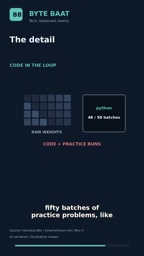
The two sources agree that "weight reading is real and reproducible," but diverge on "whether editing capabilities were exaggerated," with Matthew Honnable's criticism conflicting with the original report. Currently, pure reading experiments only hold in small-scale tests, while large-scale performance improvements depend on code and practice loops.
The Meaning of Benchmark Improvement: The repeatedly mentioned "improvement from 7.9% to 48.1%" refers to the change in accuracy on a certain math benchmark. Benchmarks typically consist of a large number of standardized problems; 7.9% is close to random guessing level, while 48.1% indicates that the model has substantive problem-solving ability. However, if this improvement was achieved by repeatedly running on "up to 50 batches of practice problems" combined with code generation, it is closer to supervised fine-tuning or tool-augmented reasoning rather than directly extracting knowledge from weights. Distinguishing "benchmark scores" from "the source of capability" is key to evaluating such reports, because the score itself does not reveal whether the model achieved it through internal knowledge or external loops.
In-Depth Analysis: Why the Boundary Between "Pure Reading" and "With Tools" Matters
The core of this controversy lies in accurately describing the boundaries of AI capabilities. If AI could achieve a leap in math ability purely by reading weights, that would imply the existence of directly extractable "knowledge structures" within the model, without the need for external interaction. But Matthew Honnable's criticism reveals that the actual process involved code generation and repeated practice—this is closer to the category of "AI using tools to improve itself."
Simon Willison's reproduction provides a reference from another angle: pure reading is indeed feasible, but time-consuming (about an hour of inference per game) and not universal (failing on the fourth game). This suggests that weight reading capability currently is more like "X-ray透视"—it can see the structure clearly, but is insufficient to directly perform complex editing.
As the original commentary said: "An AI that reads weights like an X-ray does not need an oversold pen." An honest description is still powerful enough—AI can read weights and achieve significant improvements with tool assistance, but conflating the two would mislead the public's judgment of technological maturity.
The Technical Divide Between Weight Reading and Tool Augmentation: Weight reading refers to a model answering questions about its own structure or training data based solely on internal parameters without relying on external tools; tool augmentation allows the model to generate and execute code, call computational resources, or engage in multiple rounds of practice. The two differ significantly in technical implementation and capability ceilings: the former reflects the interpretability and extractability of the model's internal representations, while the latter embodies the engineering capability of an agent self-improving within a loop. Attributing the achievements of tool augmentation to pure weight reading would overestimate the direct accessibility of the model's internal knowledge and blur the阶段性特征 that current AI systems "require external scaffolding."
Conclusion: The Technology Is Real, the Narrative Requires Caution
Cross-validation from multiple sources shows that weight reading capability is real and reproducible, but the narrative of "AI automatically fixing the AI brain" obscures the key role of code writing and practice loops. For readers following the AI frontier, distinguishing "pure reading" from "editing with tools" is not just a technical detail but also relates to an accurate understanding of the stage of AI capabilities. In the future, as more independent reproductions emerge, this boundary will become clearer.
Related articles

DeepSeek Harness Quick Start Guide: From Installation to 5 Real-World Cases
What is DeepSeek Harness? Based on a Bilibili tutorial, this article covers how this AI Agents software works, installation and setup, four working modes, and five real-world cases: a 3D racing game, official website, music player, science animation, and self-developed plugin—plus token money-saving tips.

Breaking Down DeepSeek's Super-agent Architecture: How Router+Worker Solves the Multi-Session Management Bottleneck
An analysis of DeepSeek's Super-agent paper: how the Router+Worker two-tier architecture uses Fast Pass, Chain of Recall, and storage-compute separation to solve multi-AI-session management bottlenecks, and how much it truly alleviates the human attention bottleneck and what engineering trade-offs it makes.

19K Stars in 5 Days: Why DeepSeek's Open-Source AI Programmer Went Viral
DeepSeek's open-source AI programmer hit 19K GitHub stars in 5 days. Why it went viral: the agent boom, AI writing its own code, and the shift from Q&A tools to AI employees.