AI Briefing: Gemini 4 Carbon Released, Ant Open-Sources Ling-3.1

Today's AI briefing: quantum computing models, open-source agents, AI drug discovery breakthroughs, and capital frenzy coexist.
Today's AI developments span multiple areas: Google releases Gemini 4 Carbon based on qubit technology, claiming to surpass Opus 5.5 and grabbing market share with half-price tokens; Ant Bailing open-sources Ling-3.1-1019 to advance Personal Agent deployment for real tasks; domestic AI drug discovery succeeds in 18 of 19 projects with all 6 GPCR targets hit, demonstrating high prediction accuracy; a foreign company with zero revenue is valued at $20 billion and raises another $1 billion, sparking bubble concerns; and a Sichuan convenience store's robot sales project failure highlights deployment challenges. Overall, the landscape shows aggressive technological iteration, pragmatic open-source progress, and uneven commercialization.
Today's AI Snapshot: Quantum Computing and Open-Source Agents Take Center Stage
Today's AI landscape is buzzing with activity, from quantum computing breakthroughs to open-source agent deployments and milestone progress in AI drug discovery. Below is a rundown ordered by importance, with supporting screenshots.
Gemini 4 Carbon: Qubit-Powered, Benchmarked Against Opus 5.5
Google has released a new model called Gemini 4 Carbon, with the title directly highlighting its qubit-based technology and claiming it "comprehensively surpasses Opus 5.5." Even more eye-catching is the half-price Token strategy for the initial launch—clearly aimed at rapidly capturing the developer market. While specific technical details have not yet been disclosed, the naming of "Qubit" and "Carbon" hints at Google's new attempts in model architecture or training efficiency.
Qubit and AI Models: A qubit is the basic unit of information in quantum computing. Unlike classical bits that can only represent 0 or 1, a qubit can exist in a superposition of 0 and 1. In the AI context, "qubit-powered" typically refers to two possibilities: first, the use of quantum computing or quantum-inspired algorithms to improve efficiency during model training or inference; second, it may simply be marketing language borrowing the quantum concept to emphasize architectural innovation. Currently, mainstream large models still run on classical GPU clusters, and practical applications of quantum computing in AI remain in early exploratory stages. Therefore, claims about "qubit technology" should be judged cautiously in light of subsequent technical disclosures.
Opus 5.5: Here refers to a fictional or anticipated version of Anthropic's Claude Opus series, often used as a benchmark for large model performance comparisons.
Ant Bailing Open-Sources Ling-3.1-1019: Personal Agent Moves Toward Real Tasks
Domestically, the Bailing team under Ant Group has open-sourced the Ling-3.1-1019 model, positioned as "Personal Agent moving toward real tasks." This means the model is no longer limited to conversational demos but emphasizes the ability to execute tasks in real-world scenarios. The open-source strategy helps attract a developer ecosystem—especially at a time when Agent applications are exploding, Ling-3.1 may become an important foundation for domestic personal assistant products.
Personal Agent: Refers to an AI system capable of understanding user intent, autonomously planning steps, and invoking tools to complete real tasks—distinct from chatbots that only conduct conversational Q&A. Its core capabilities include task decomposition, tool invocation (such as search, APIs, local application operations), and multi-step reasoning. Open-sourcing such a model means developers can fine-tune and deploy it locally based on its weights, lowering the barrier to building personal assistant products. However, attention must also be paid to open-source license terms, model safety alignment, and inference costs.
Domestic AI Drug Discovery: 18 of 19 Projects Successful, All 6 GPCR Targets Hit
Exciting news from the AI drug discovery field: a domestic team succeeded in 18 out of 19 projects, with all 6 GPCR targets hit. GPCR (G protein-coupled receptor) is one of the most challenging target families in drug development, and hitting all of them means the model's prediction accuracy has reached an extremely high level. If reproducible, this result would significantly shorten the early discovery cycle for new drugs.


GPCR (G Protein-Coupled Receptor): The largest membrane protein family in the human body and one of the most important target categories for modern drugs—approximately one-third of marketed drugs act on GPCRs. Their complex structures and diverse active conformations make traditional drug discovery difficult and time-consuming. If an AI model can achieve a high hit rate on GPCR targets, it typically means strong generalization capability in molecular-target interaction prediction and binding conformation modeling. However, "hit" generally refers to early screening or binding validation stages; reaching a clinical candidate compound still requires drug-likeness optimization and experimental validation.
"Drama-Fueled OpenAI": Zero Revenue, $20 Billion Valuation, Another $1 Billion Raised
A foreign company dubbed the "drama-fueled OpenAI" has achieved a valuation of $20 billion with zero revenue and completed a new $1 billion funding round. This reflects capital markets' frenzied betting on AI foundation model companies but also raises concerns about valuation bubbles. Whether high valuations without revenue support can be sustained depends on the pace of technological breakthroughs and commercialization.

Sichuan Convenience Store Chain's Robot Sales Failure
One final item with a touch of irony: a well-known convenience store chain in Sichuan attempted robot sales, but the project "fell through." This reminds us that AI deployment is not always smooth sailing—robotics applications in retail scenarios still need to overcome multiple obstacles including cost, maintenance, and user experience.
Summary
Today's briefing presents a diverse picture of the AI industry: aggressive iteration in quantum computing and model performance, pragmatic progress in open-source agents, precise breakthroughs in AI drug discovery, and the coexistence of capital frenzy and deployment setbacks. Worth continued attention are the actual performance of Gemini 4 Carbon and the ecosystem response to Ling-3.1.
Related articles
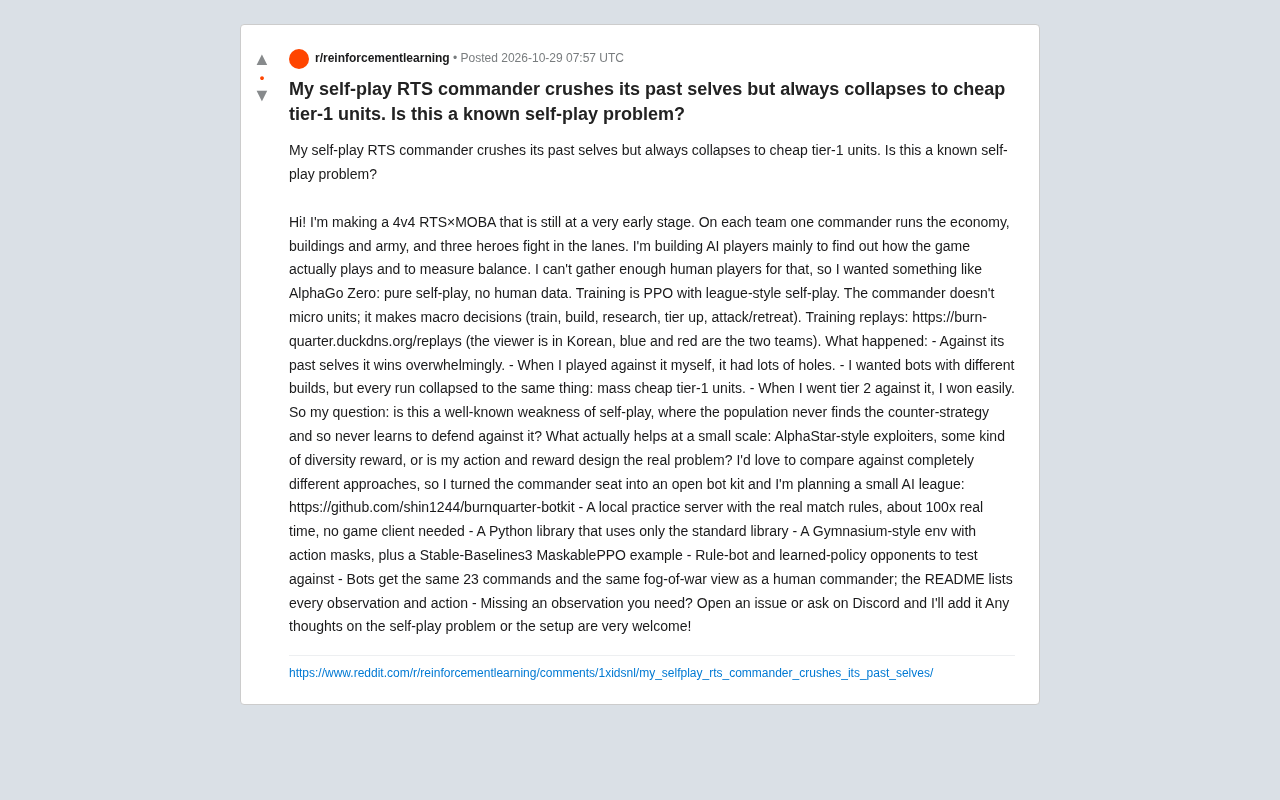
Why Does Self-Play AI Always Get Crushed by Cheap Units? An RTS Developer's Account of the Dilemma
An independent developer trained an RTS commander AI with pure self-play, only to find it dominated historical versions but was crushed by human players using cheap tier-1 units. This article analyzes the causes of self-play strategy collapse, explores solutions such as exploiters, diversity rewards, and reward design, and introduces the open Bot Kit and AI league plan.

Which Multi-Agent Platform Wins? A Small Team's Battle Scars and Selection Considerations
A 27-person startup's ops lead tried two multi-agent platforms in four months and both failed. This article analyzes why small-team deployments break down, and offers selection guidance on integration depth, observability, and progressive rollout.
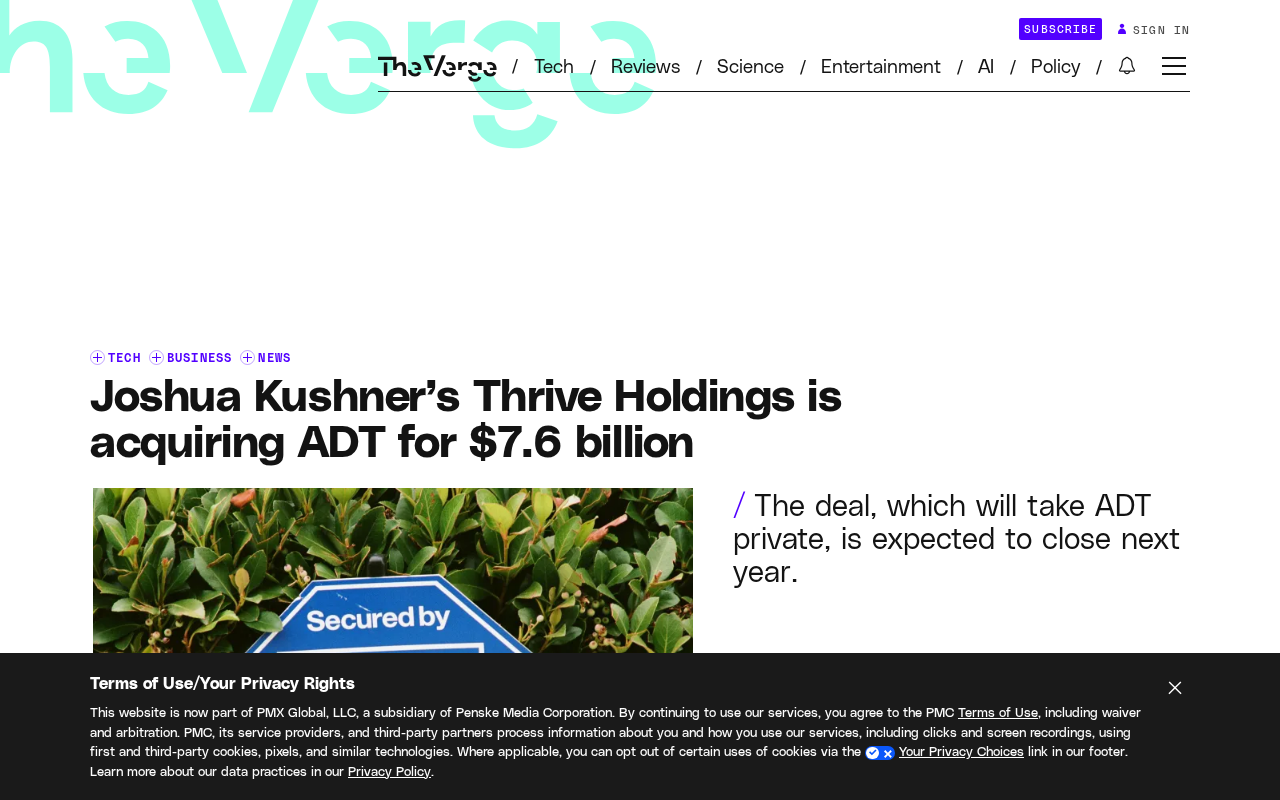
Thrive Holdings Takes ADT Private in $7.6 Billion Deal
Thrive Holdings acquires ADT for $7.6 billion in an all-cash take-private deal expected to close in Q1 2027. Analysis of the deal structure, ADT's asset value, and impact on the smart home security industry.