AI Chatbots and Voice Agents: Real Business Value and Limitations in Practice
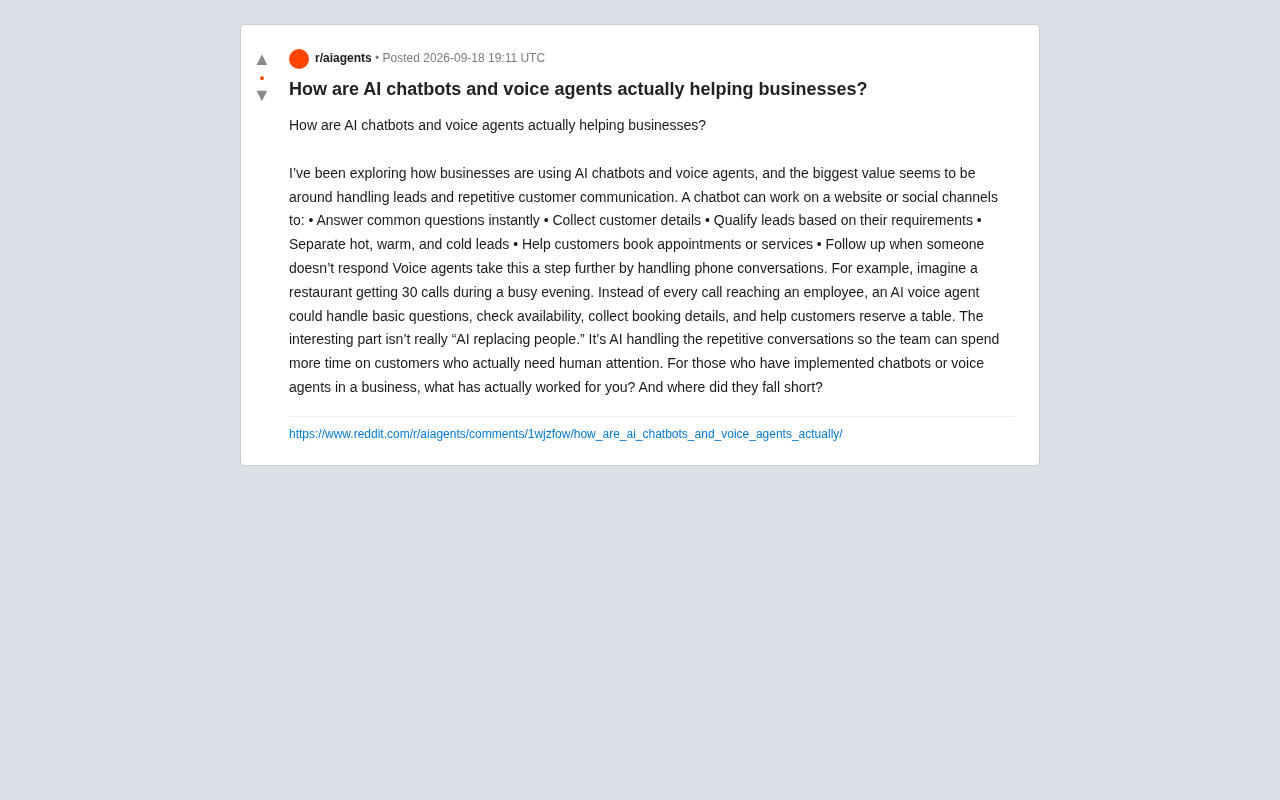
AI chatbots and voice agents create value by routing repetitive tasks, not replacing human workers.
Based on a Reddit discussion, this article examines how AI chatbots and voice agents are actually used in business and where they fall short. Chatbots primarily automate lead qualification and repetitive customer service, filtering out low-intent inquiries and routing high-potential leads to human agents. Voice agents extend this capability to phone interactions, particularly suited for high-call-volume industries like restaurants and clinics. The article emphasizes that AI's proper role is augmentation — handling low-value repetitive dialogue so staff can focus on complex, judgment-intensive interactions. Success depends on clearly defined use-case boundaries and well-designed escalation protocols; when conversations go off-script or customers become emotional, machine limitations quickly surface and can actively harm the customer experience.
AI chatbots and voice agents have moved from concept to everyday operations for a growing number of businesses. Where exactly do they create real value, and where do they fall short? A Reddit user sparked a discussion based on their own exploration, breaking down the core use cases of these tools in commercial settings. The topic is worth unpacking in depth — because it touches on the most immediate expectation small and medium-sized businesses have for AI: cutting costs and improving efficiency, not showing off technology.
Chatbots: Automating Repetitive Communication
Based on the original discussion, the greatest value of AI chatbots lies in lead handling and repetitive customer communication. They can be deployed on a company website or social channels to take over a range of tedious tasks that previously required human effort.
Specifically, a mature chatbot can: instantly answer frequently asked questions, collect customer information, qualify leads based on their needs, categorize leads as hot, warm, or cold, help customers book appointments, and proactively follow up when customers go silent.
The significance of this workflow is that it hands off the front-end screening of the sales funnel to machines. In the past, salespeople had to spend enormous time fielding unqualified inquiries. Now the system can pre-filter, pushing only customers with genuine conversion potential through to the human stage. For small businesses with high lead volumes but limited staff, this layered approach directly impacts conversion efficiency.
Lead Qualification is a core prerequisite in the sales process — traditionally relying on salespeople to follow up one by one via phone or email, at high cost and inconsistent quality. Chatbots automatically collect information through preset question sequences (such as budget range, decision timeline, and specific needs), then segment leads using a scoring model. This aligns closely in logic with classic sales qualification frameworks like BANT (Budget, Authority, Need, Timeline). It's worth noting that the upper limit of this automation depends heavily on the quality of question design — questions that are too broad yield useless information, while questions that are too pointed cause customers to drop off early. Configuring a chatbot is therefore not a one-time project, but an ongoing process of iteration based on real conversation data.
Voice Agents: Scaling Phone-Based Communication
If chatbots address text-based channels, AI voice agents extend that automation capability to phone interactions — a harder problem, but one with significant potential.
The original post offered a fitting example: a restaurant during a busy evening shift might receive 30 phone calls. If each one ties up a staff member, the front-of-house quickly becomes overwhelmed. An AI voice agent can handle basic inquiries, check seat availability, collect reservation details, and help callers book a table. This frees staff to focus on in-person guests rather than being tethered to the phone.
The technical bar for voice is higher than for text, involving speech recognition, natural language understanding, and real-time dialogue generation. But once it works, the value it delivers is also more direct — because many traditional industries (restaurants, clinics, repair services) still have customers who prefer to call, and those calls are exactly the ones most likely to be missed and most draining on staff.
Voice agents rely on several critical technology layers: ASR (Automatic Speech Recognition) converts the customer's speech into text; NLU (Natural Language Understanding) identifies customer intent and extracts key information (such as reservation time and party size); and TTS (Text-to-Speech) converts the system's generated response back into natural-sounding audio. Modern commercial voice agents typically also integrate large language models (LLMs) to handle more flexible conversation flows rather than relying on fixed decision trees. Any delay or error in this chain directly disrupts the flow of the call. This explains why the technical threshold for voice is far higher than for text chat — text interactions allow users to pause and re-read, while phone conversations leave almost no margin for error.
A Key Insight: Augmentation, Not Replacement
One of the most insightful points in this discussion is that it explicitly pushes back against the common narrative of "AI replacing humans." The original poster noted that the real value isn't AI replacing employees — it's AI handling repetitive conversations so teams can spend their time on customers who actually need human attention.
This framing is refreshingly pragmatic. Repetitive communication — things like "What are your hours?", "How much does this service cost?", or "Can I reschedule?" — consumes enormous amounts of time for customer service and sales teams, yet requires almost no judgment. Handing this off to AI allows human employees to focus on complex inquiries, high-value negotiations, and emotionally sensitive conversations — the areas where machines will remain inadequate for the foreseeable future.
In other words, AI plays the role of collaborator rather than replacement. It redistributes human resources rather than simply cutting headcount. This perspective is more useful for business decision-makers because it avoids overpromising on AI capabilities and reduces employee resistance.
The Two Sides of Real-World Performance
The original post concluded by posing two open questions to practitioners who had already deployed these tools: what actually works, and where does it break down. These are exactly the real-world dimensions any business must consider before deploying.
Based on industry experience, the effectiveness of chatbots and voice agents typically depends on how clearly the scope of the use case is defined. In scenarios where processes are standardized and questions are highly repetitive — appointments, FAQs, information collection — they perform reliably. But the moment a conversation departs from the preset script, involves complex judgment, or the customer becomes emotionally charged, the machine's weaknesses are exposed: stiff responses, unrecognized intent, and looping in circles can all actively damage the customer experience.
This is especially true for voice agents. Phone communication demands extreme real-time performance and a natural feel — any noticeable delay or robotic quality will exhaust a caller's patience. Successful deployments therefore typically include clearly defined triggers for "handing off to a human," ensuring seamless transfer when the system can't handle the situation.
The industry commonly refers to human handoff triggers as an Escalation Protocol — a critical design element for protecting customer experience. Common triggers include: the customer explicitly requesting a human agent, the same question being asked more than twice, detection of negative sentiment language (such as "complaint," "refund," or "this is terrible"), or the conversation entering an intent branch the system cannot recognize. AI customer service without a clear escalation mechanism tends to trap users in loops at the exact moment they're most frustrated — creating a situation where customers want out but can't escape, ultimately generating higher complaint rates than having no AI at all. Measuring the maturity of an AI customer service system therefore goes beyond resolution rate — it also includes how promptly handoffs occur and how complete the information is when a human agent takes over.
Conclusion
This Reddit discussion, though brief, clearly outlines the genuine role of AI conversational tools in business: their value lies not in flashy technical capabilities, but in automating repetitive, low-value communication — freeing up human capacity for the interactions that genuinely need people. For use cases like lead management, appointment handling, and basic customer service, chatbots and voice agents have already proven their practical worth. Whether they succeed ultimately depends on whether businesses can define reasonable capability boundaries for them, and design a smooth handoff mechanism between machine and human.
Related articles
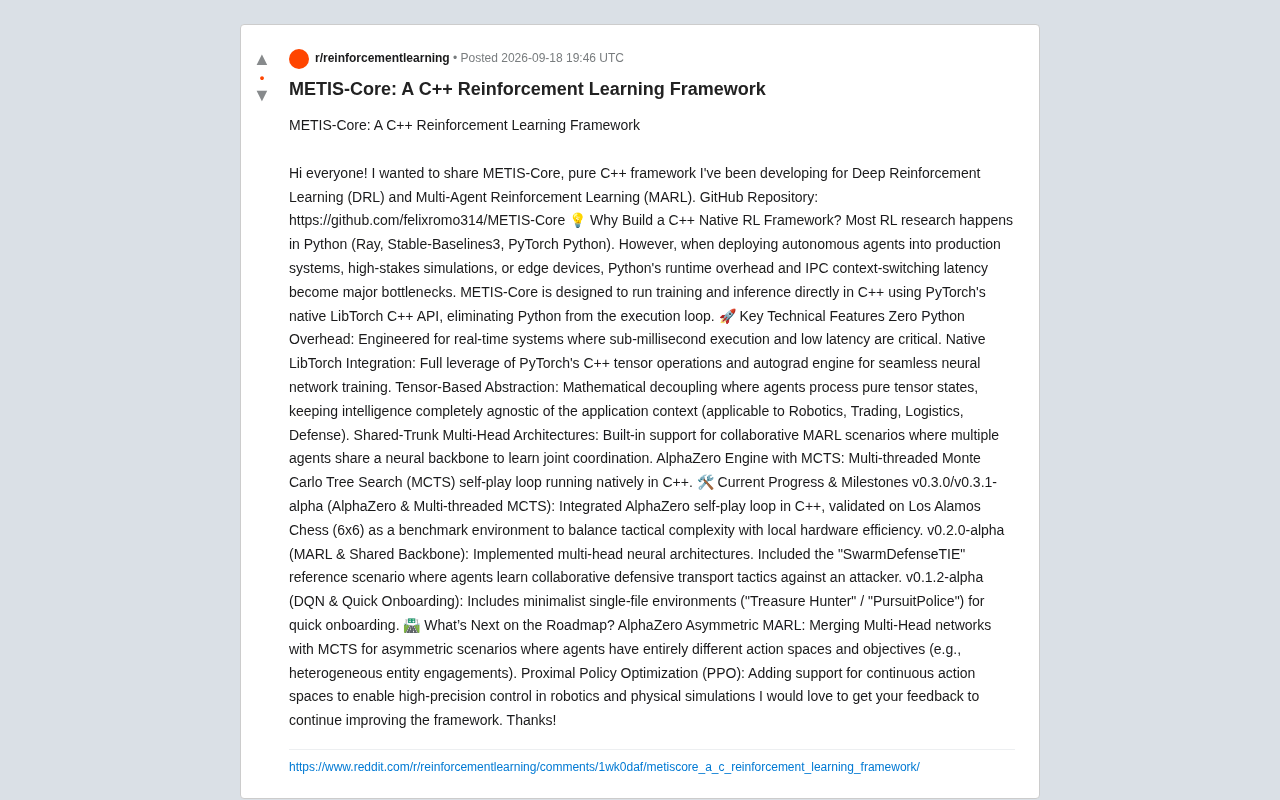
METIS-Core: A Pure C++ Reinforcement Learning Framework That Eliminates Python Overhead for Production
METIS-Core is an open-source pure C++ deep RL framework built on LibTorch that eliminates Python overhead, supporting DQN, MARL, and AlphaZero with multi-threaded MCTS for low-latency production.
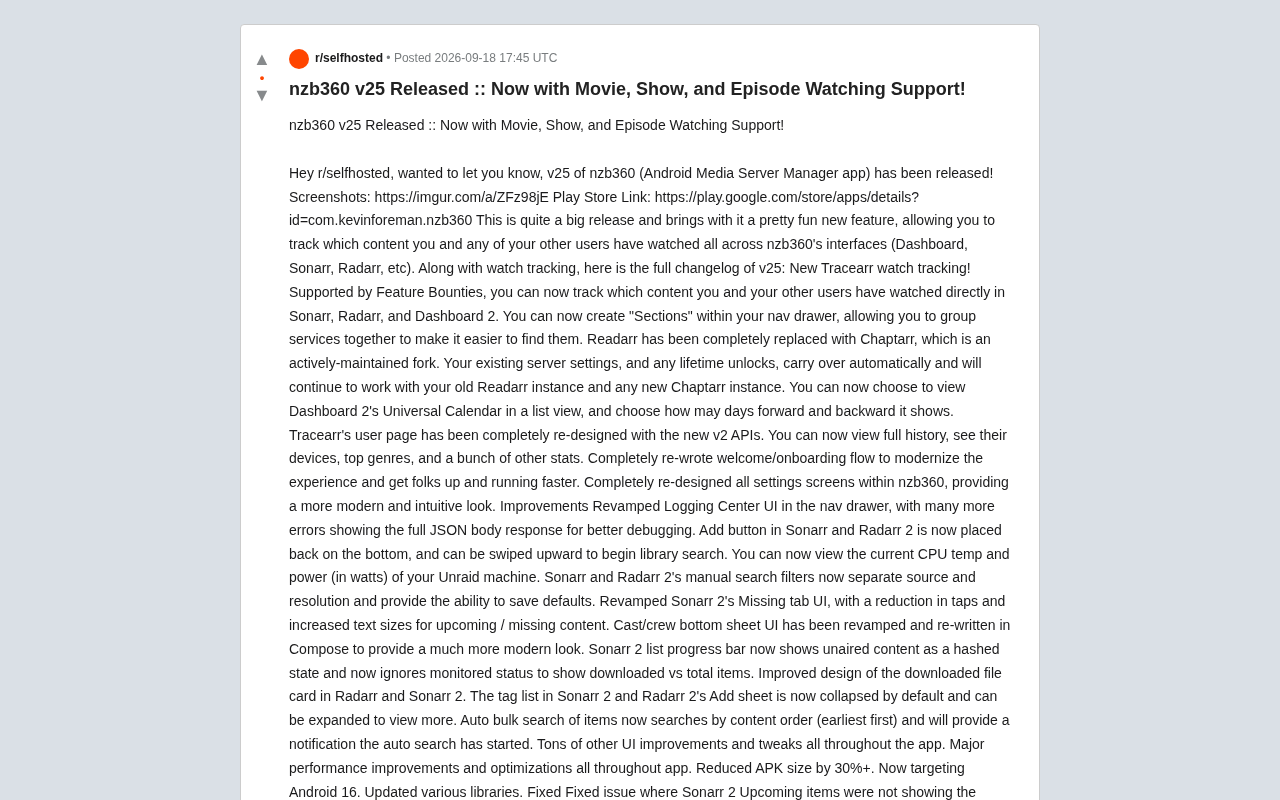
nzb360 v25 Released: Watch Tracking Added, Media Server Management Leveled Up
nzb360 v25 adds Tracearr watch tracking for Sonarr, Radarr & Dashboard 2, replaces Readarr with Chaptarr, overhauls the UI, and cuts APK size by 30%+.
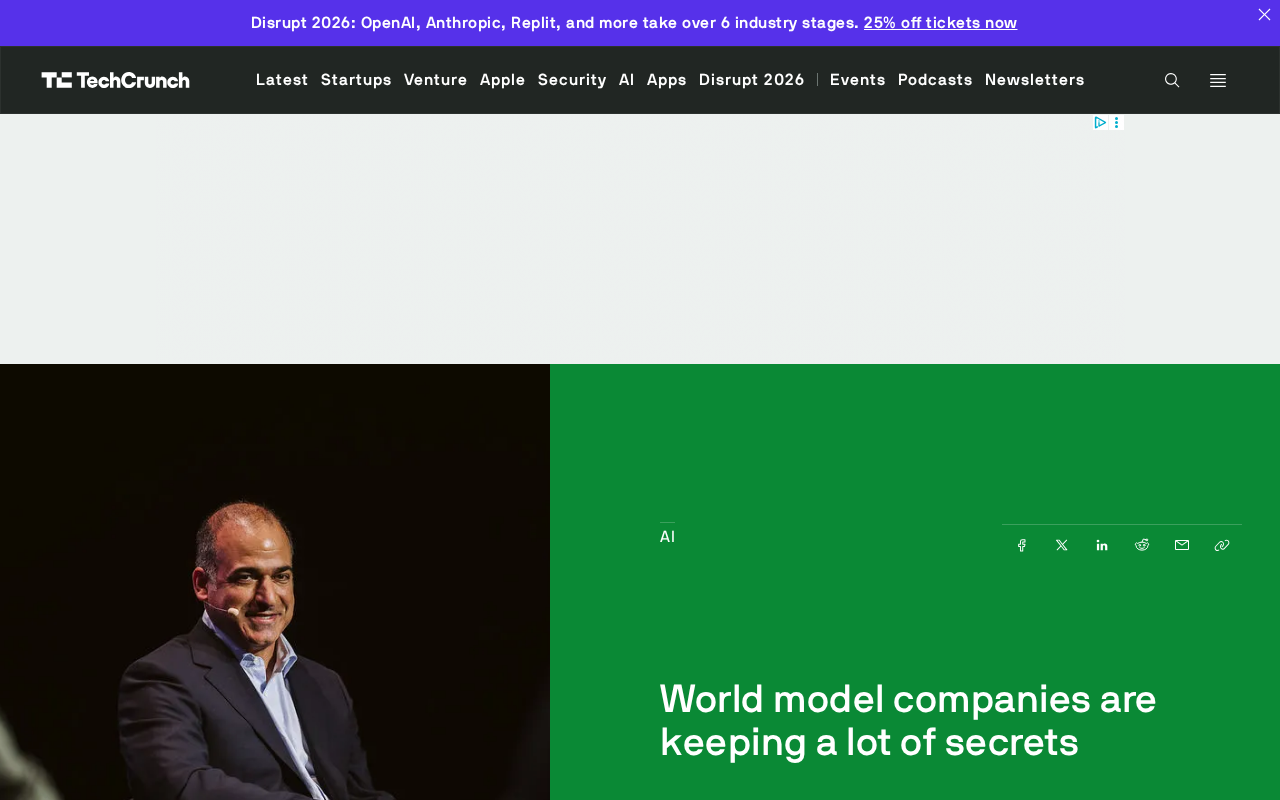
Why World Model Companies Are Staying Silent: The Information Blackout Behind the Capital Frenzy
World model AI startups hold massive funding and hype but reveal almost nothing about their technology. We unpack the competition, valuation, and data supply chain reasons behind the secrecy.