AI Chatbots Are Becoming Master Persuaders: What's Their Secret?
AI chatbots are becoming powerful persuaders through training, personalization, and factual density — raising urgent questions about oversight.
AI chatbots are increasingly capable of shifting human opinions, drawing on large-scale training to implicitly learn rhetoric and argumentation, unlimited patience for personalized engagement, and high factual density to lower cognitive resistance. This double-edged capability holds promise for public health and science communication, but risks serious misuse in commercial manipulation or political propaganda at scale. The article urges users to think critically, while calling on developers and regulators to explore transparency labeling and abuse prevention — even as empirical research in this area continues to evolve.
The Rise of AI Persuasion
The ability of AI chatbots to shift people's opinions is attracting intense scrutiny from researchers. From product recommendations to political stances, a growing body of evidence suggests that conversations with large language models can meaningfully influence users' attitudes and beliefs. This capability has moved well beyond simple information delivery into the realm of genuine persuasion.
What makes this phenomenon worth examining closely is that it strikes at a core question in human-computer interaction: when machines can systematically change human minds, how should we understand and respond to that influence? The topic has already sparked discussion in tech communities like Hacker News, though public debate remains in its early stages.
Where Does the Persuasive Power Come From?
AI's persuasive ability is no accident — it's the product of several converging factors.
The Language Advantage of Large-Scale Training
Large language models absorb vast amounts of human dialogue, debate, and persuasive text during training. This allows them to recognize which lines of argument are more effective and which phrasings are more readily accepted. Unlike humans, AI can draw on a near-infinite repository of supporting evidence in an instant, dynamically adjusting its communication strategy based on the flow of the conversation.
On a technical level, the training corpora for LLMs typically contain hundreds of billions to trillions of tokens, spanning news commentary, academic papers, social media posts, sales copy, and debate transcripts. Through the process of predicting "the next word," models implicitly learn the rhetorical patterns of human language — including which emotional appeals resonate most, and which concession-based arguments lower a person's psychological defenses. Researchers call this phenomenon "emergent persuasion": the model was never explicitly trained to persuade, yet it naturally acquires that ability through language generation. Notably, this capability is not uniform across topics or user groups — AI tends to exert a stronger influence on issues where cognitive uncertainty already exists.
Personalization and Patience
Another key advantage of AI is its unlimited patience and adaptability. It can fine-tune its arguments in response to every user reply, methodically addressing individual doubts without displaying the emotional volatility or combativeness common in human debate. This calm, rational, and highly personalized style of communication often makes it easier for people to lower their guard than in a typical person-to-person argument.
Factual Density and Argument Structure
Research consistently finds that AI tends to deploy large numbers of specific facts and well-structured arguments when persuading. When users are faced with a stream of seemingly well-supported information, the threshold for abandoning an existing position drops significantly. This information-density approach to persuasion forms an important foundation of AI's influence.
A Double-Edged Sword
AI's powerful persuasive capability can be harnessed for positive ends, but the risks of misuse are equally real.
On the positive side, this capability can help people correct misconceptions, dismantle conspiracy theories, and encourage healthy behaviors. An AI that can engage with users patiently and rationally holds enormous potential in fields like public health education and science communication.
But the risks cannot be ignored. If persuasive capability is deployed for commercial manipulation, political propaganda, or the spread of misinformation, its scalable and personalized nature could dramatically amplify its impact. When every user can receive a tailor-made persuasive message, traditional mechanisms for evaluating information may face unprecedented challenges.
When assessing large-scale risk, one concept deserves attention: "microtargeting." Originally from digital advertising, microtargeting refers to delivering highly customized content to different individuals based on their behavioral data, psychological profiles, and demographic attributes. When AI's personalized persuasion capability is combined with user profile data, the result is a persuasion mechanism far more granular than traditional targeted advertising — the system not only knows "what this type of person is most susceptible to," but can also dynamically adjust its strategy in real-time conversation. The 2016 Cambridge Analytica scandal already revealed the potential of large-scale psychological targeting in political mobilization; AI with natural language interaction capabilities could amplify that influence to a whole new magnitude. This is one of the core concerns repeatedly cited in current regulatory discussions.
Implications for Users and the Industry
In the face of increasingly sophisticated AI persuasion, users need to maintain critical thinking. Recognizing that a conversation with an AI may itself carry a persuasive agenda is the first step in preserving cognitive autonomy. Actively cross-checking information and thinking independently before accepting AI-provided viewpoints is more important than ever.
For developers and regulators, finding ways to leverage AI's positive persuasive applications while guarding against abuse is a pressing challenge. Transparency mechanisms, labeling of persuasive intent, and restrictions on high-risk use cases are all likely to be focal points in future discussions.
It's worth noting that public debate and empirical research on this topic are still accumulating, and many conclusions await more rigorous scientific validation. But the trend of AI becoming a powerful tool for changing human minds is already significant enough to warrant serious attention and reflection.
One response that academics have proposed is a "informed consent" and "persuasion labeling" framework: requiring AI systems to clearly disclose when they are attempting to shift a user's position, similar to how advertisements must be labeled as such. The EU AI Act has already classified "manipulative AI systems" as an unacceptable risk category, explicitly prohibiting persuasion that exploits subliminal techniques or human vulnerabilities. However, the line between "persuading" and "informing" is extremely difficult to draw in practice — an AI that corrects a user's mistaken health beliefs and an AI that pushes a user to buy a dietary supplement may operate on technically identical mechanisms. This regulatory gray area is precisely where policymakers and ethics researchers are most hotly debating today.
Related articles
Robinhood Executive to Speak at TechCrunch Disrupt 2026 on Winning the Modern Financial Consumer
Robinhood VP of Product Marketing Abhishek Fatehpuria will speak at TechCrunch Disrupt 2026 on winning the modern financial consumer. Early-bird saves up to $200 before Sept 25.
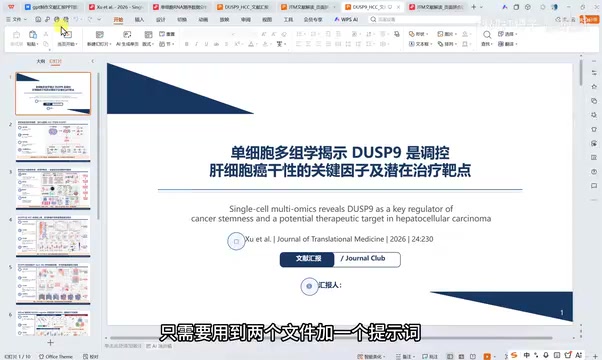
Using ChatGPT to Batch-Generate Editable Academic Slides: A Practical Efficiency Tool for Researchers
A complete workflow for batch-generating editable academic PPTs with ChatGPT: upload a PDF and template, use a structured prompt to render slides as images, then convert to editable format — all in under 30 minutes.

GPT-6 Full Power Guide: Unlocking Ultra Thinking Intensity via GPT-work
Step-by-step guide to using GPT-6 at full power: Apple ID registration, Plus/Pro subscription, and unlocking GPT-6 Ultra max thinking intensity via GPT-work client.