AI Coding Addiction: The Hidden Price Engineers Are Paying
AI Coding Addiction: The Hidden Price …
AI coding tools are addictive by design — and the hidden costs to engineer skills and judgment are real.
AI coding tools like GitHub Copilot and Cursor deliver instant gratification through variable-ratio feedback loops that trigger dopamine release. But beneath the productivity gains, engineers face three compounding risks: skill atrophy from reduced hands-on practice, dangerous code comprehension gaps from accepting AI output without scrutiny, and a gradual dulling of engineering judgment. The solution isn't to abandon these tools, but to use them with deliberate, active engagement.
When Programming Becomes a Dopamine Game
AI coding tools are reshaping software development at an unprecedented pace. From GitHub Copilot to Cursor and countless LLM-powered assistants, engineers can now generate blocks of usable code from just a few lines of prompt. This instant positive feedback loop has many developers openly admitting they're "hooked" — every successful code completion delivers a small reward that continuously triggers dopamine release in the brain.
It's worth noting that dopamine isn't only released when a reward is received. Neuroscience research shows it surges most powerfully in the moment of anticipating a reward. Variable-ratio rewards (like a slot machine) stimulate dopamine release more persistently than fixed rewards — and AI code completion fits this pattern perfectly: you never know whether the next suggestion will be a perfect answer or something that needs tweaking. This intermittent reinforcement makes it far more addictive than traditional programming tools.
Yet, as a recent article that sparked heated debate on Hacker News pointed out: beneath the addictive pull of AI-assisted coding, engineers are quietly paying a price — one that seeps into skill levels, cognitive depth, career development, and the long-term health of code quality.
Why AI Coding Is So Addictive
Instant Gratification and Deferred Costs
Traditional programming is a process that demands deep thinking: understanding the problem, designing the architecture, writing the implementation, debugging and verifying — each step requires engineers to invest significant cognitive resources. AI coding tools dramatically compress this chain, outsourcing the "thinking" to a model and leaving only the lightweight decision of "accept or reject."
This shift delivers instant gratification while concealing deferred costs. As developers grow accustomed to accepting AI-generated answers, they gradually lose the opportunity to actively construct solutions themselves. Just as long-term reliance on navigation apps erodes one's sense of direction, over-dependence on AI completion may quietly degrade an engineer's core capabilities.
Neuroplasticity research offers a biological basis for this concern: "use it or lose it" is a fundamental principle of neural circuit organization. The synaptic connections responsible for higher-order cognition — algorithm design, debugging reasoning — gradually weaken when left unactivated for extended periods. The classic study of London taxi drivers has already demonstrated measurable shrinkage in the spatial memory regions of drivers who rely heavily on GPS navigation. If AI coding systematically bypasses an engineer's core cognitive processes, the same mechanism of atrophy quietly kicks in.
The Illusion of Flow
Many developers report that using AI tools puts them in a state of "high-velocity output" that feels like being in a flow state. But it's worth unpacking what flow actually means. Psychologist Mihaly Csikszentmihalyi's Flow theory holds that genuine optimal experience requires a close match between skill level and task difficulty, accompanied by deep concentration and immediate feedback. The sense of fluency created by AI-assisted coding is fundamentally different: it manufactures a smooth experience by lowering the cognitive difficulty of the task, rather than by raising the engineer's ability to meet a real challenge. Substituting this "pseudo-flow" for genuine cognitive challenge over the long term caps an engineer's skill ceiling — and when they encounter complex scenarios that AI can't handle, they find themselves at a loss.
The Three-Layered Cost Engineers Are Paying
Skill Atrophy: The Invisible Erosion
The most direct cost is the degradation of foundational skills. As algorithm implementation, edge case handling, and performance optimization are increasingly handed off to AI, engineers have fewer opportunities to hone these abilities themselves. For experienced developers, AI may simply be an efficiency tool. But for junior engineers, becoming dependent on AI too early may mean never building truly solid engineering fundamentals.
Code Comprehension Gaps: Burying Black Box Risks
Another widely discussed problem is whether developers actually understand the code AI generates. To appreciate this, it helps to understand how these tools work under the hood. Tools like GitHub Copilot and Cursor are built on large language models (LLMs) whose code generation is fundamentally a process of statistical pattern matching over massive code corpora — not genuine logical reasoning. The model generates code by predicting "the most likely next token given the current context." This means LLMs often excel in common scenarios but tend to fail on complex business logic, rare edge cases, or situations requiring a global, cross-file understanding of a codebase. These happen to be exactly the situations that demand the deepest engineering judgment.
Under pressure to ship quickly, many developers will adopt code that appears to "work" without digging into the underlying logic. This boosts short-term output while planting long-term maintenance landmines. When a system breaks down, a block of code that no one truly understands becomes a black box that's nearly impossible to debug.
The Dulling of Aesthetic Sense and Judgment
Great engineers don't just write code — they know how to judge what good code looks like. Accepting AI's default output over time can gradually dull a developer's sensitivity to code quality and architectural soundness. When "good enough" becomes the norm, the standard for engineering excellence is quietly lowered without anyone noticing.
How to Use AI Coding Tools Responsibly
The Tools Themselves Aren't the Problem
It must be acknowledged that the productivity gains from AI coding tools are real and substantial. They can free developers from repetitive, mechanical work and allow them to focus on more creative challenges. The key question isn't whether to use these tools — it's how to use them.
Stay in "Active Drive," Not "Cruise Control"
A healthy approach is to treat AI as a co-pilot, not an autopilot. The name "Copilot" is no accident — it reflects an ideal vision of human-machine collaboration. The aviation world offers a sobering parallel: NASA and FAA research found that pilots who over-rely on automated flight systems fall into a "skill decay trap" — their manual flying abilities deteriorate, and their emergency response slows when systems fail. For this reason, both agencies mandate regular manual flight as a required safety practice. Software engineering faces a structurally similar challenge: the more powerful the automation tools become, the more deliberately an engineer's active engagement must be maintained.
Developers should understand the logic behind a suggestion before accepting it, actively review code after adopting it, and treat AI output as a starting point rather than a final answer. It's also worth deliberately reserving time for "manual coding" to keep core skills sharp.
Shared Responsibility at the Team and Organizational Level
For engineering teams, it's important to establish clear norms: code review should not be relaxed because AI was involved — if anything, it should be more rigorous. Developing junior engineers also requires striking a balance between efficiency and capability-building. Organizations cannot focus solely on the short-term speed gains AI delivers while ignoring the deeper value of long-term engineer growth and codebase health.
Closing: Don't Let Addiction Accelerate Atrophy
The claim that "AI coding is addictive" is less a critique of the tools themselves and more a warning about how they are used. Technological progress has always been a double-edged sword, and AI coding tools are no exception — they can serve as a lever that amplifies an engineer's abilities, or as a slow-acting corrosive that erodes professional foundations.
The real challenge is whether we can enjoy the productivity dividends while maintaining clear self-awareness: not letting convenience slide into dependency, and not letting addiction accelerate atrophy. Learning to wield AI rather than be wielded by it may be one of the most important professional questions every engineer faces in this era.
Related articles
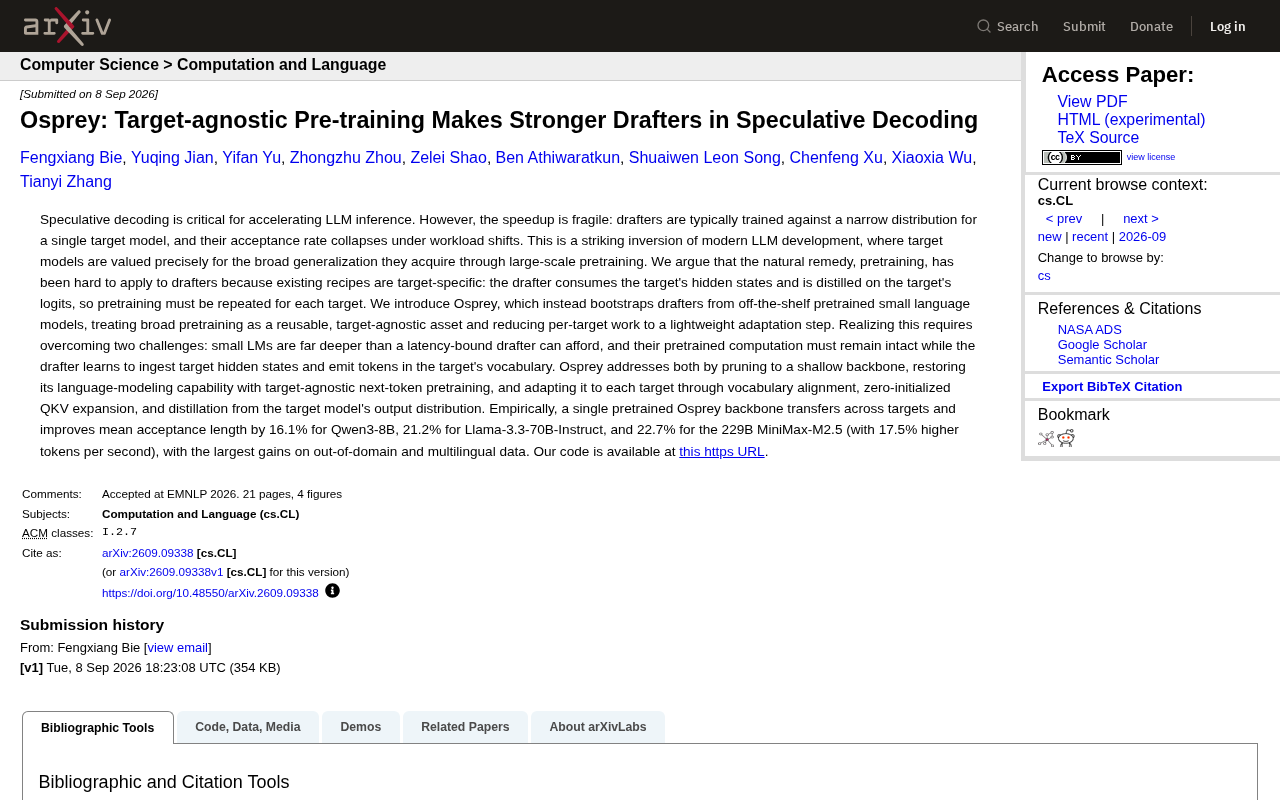
Osprey: General-Purpose Pretraining Makes Speculative Decoding Draft Models More Efficient
Osprey treats pretraining as a reusable, target-agnostic asset. Through pruning and lightweight adaptation, a single draft model transfers across multiple LLMs, boosting mean acceptance length by 16%-22%.
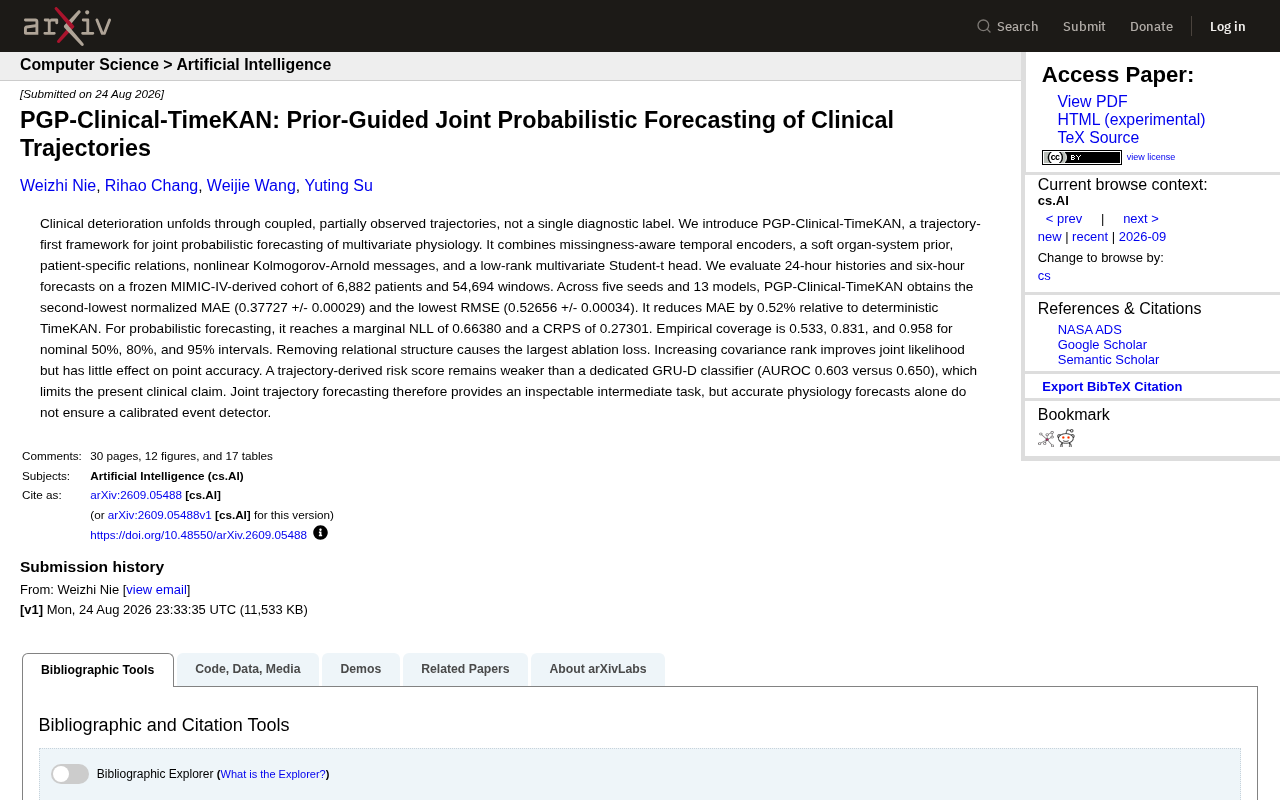
PGP-Clinical-TimeKAN: A Detailed Guide to the Multivariate Physiological Indicator Joint Prediction Framework
An in-depth analysis of the PGP-Clinical-TimeKAN framework for joint probabilistic prediction of multivariate physiological indicators, covering trajectory-first paradigm, KAN message passing, MIMIC-IV validation, and ablation studies.
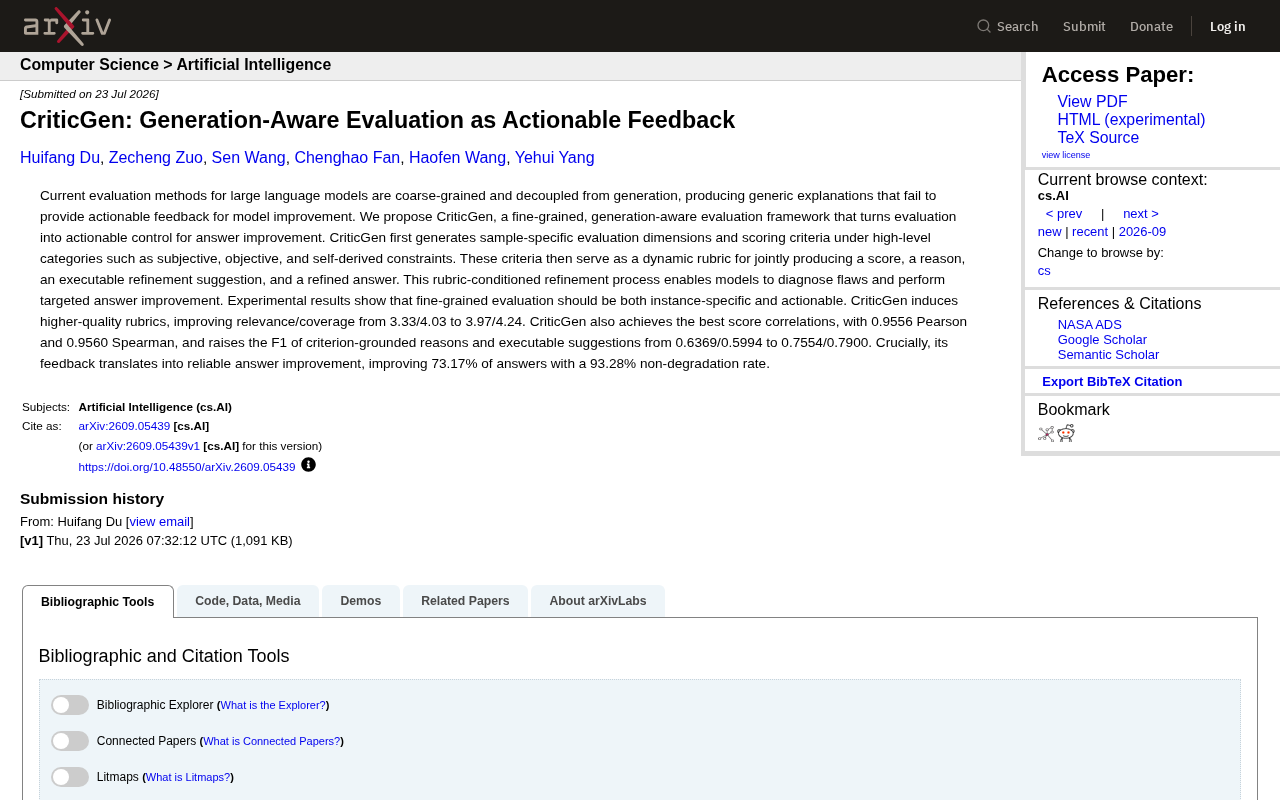
CriticGen: A New Framework That Transforms AI Evaluation into Actionable Improvement Feedback
CriticGen proposes a generation-aware evaluation framework that transforms AI assessment from passive scoring to an active optimization loop, achieving 73.17% answer improvement and 93.28% non-degradation rate.