AI Coding Model Benchmark Tool: GPT-5.3 Codex vs. Claude Opus 4.6 — Which One Wins?
An analysis of an open-source benchmark tool comparing GPT Codex and Claude Opus for AI coding tasks.
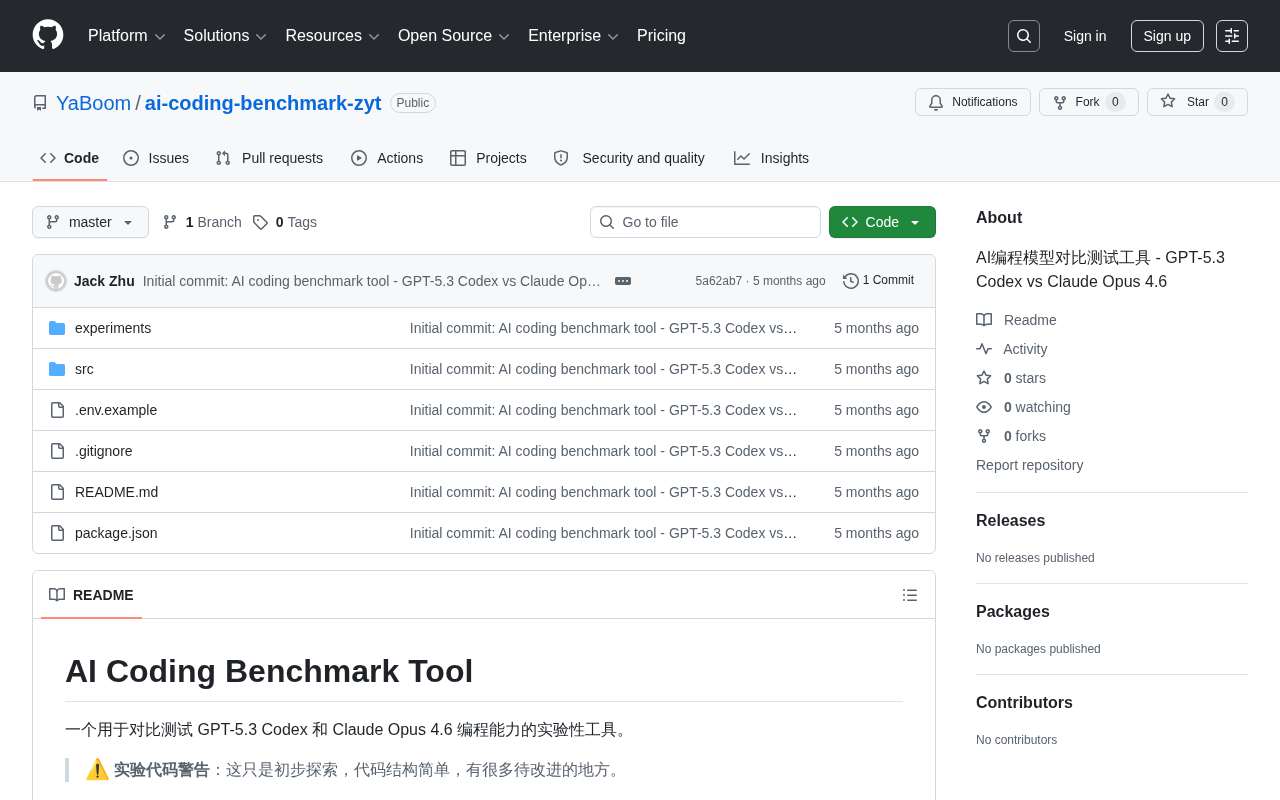
This article examines the open-source project `ai-coding-benchmark-zyt`, which aims to benchmark GPT-5.3 Codex against Claude Opus 4.6 under a unified framework. It argues that code generation demands rigorous, quantifiable evaluation across functional correctness, code quality, complex task handling, and speed. The article contrasts the two models' strengths — Codex excels in code completion and toolchain integration, while Claude leads in long-context and complex instruction understanding — and addresses common open-source benchmark pitfalls like rapid model obsolescence and benchmark overfitting. Developers are advised to build task-specific test sets from their own codebases rather than relying on generic leaderboards.
AI Coding Model Benchmark Tool: GPT-5.3 Codex vs. Claude Opus 4.6 — Which One Wins?
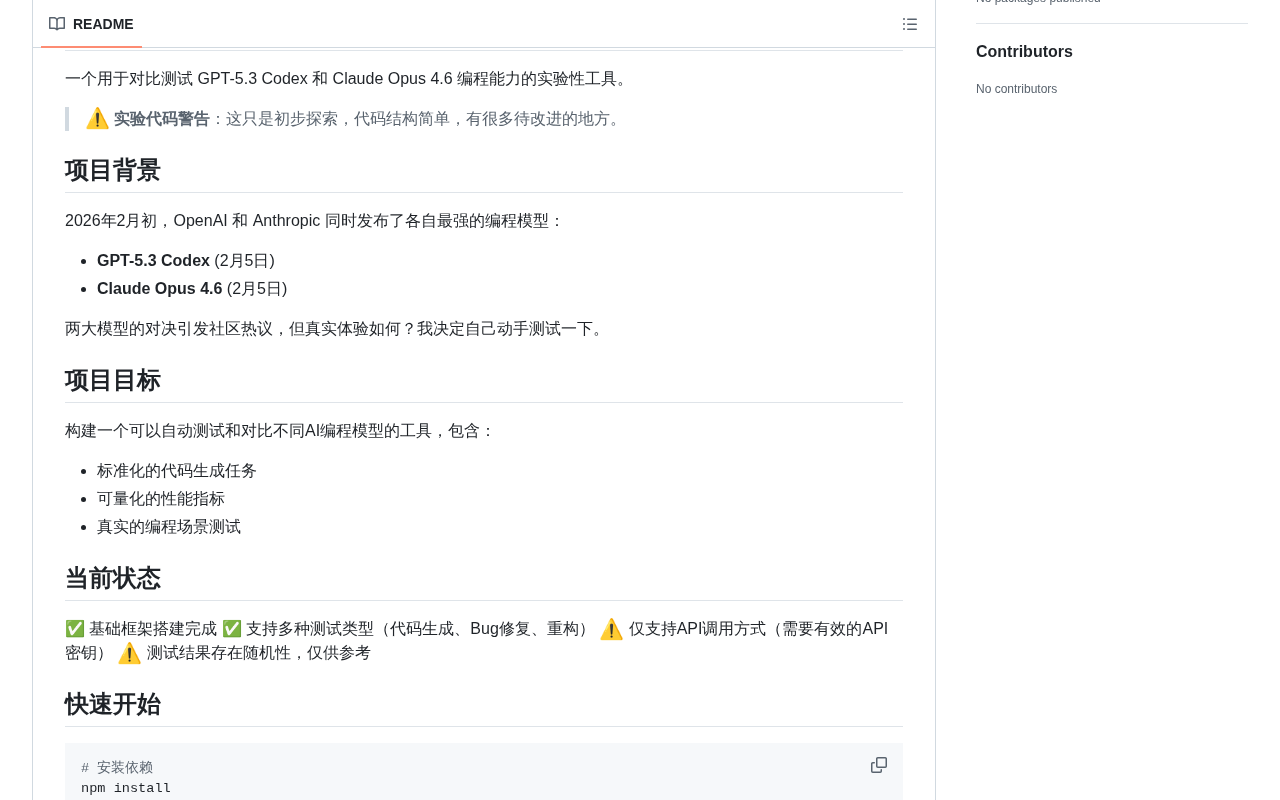
As large models continue to push deeper into the programming domain, developers face an increasingly practical question: with so many code generation models on the market, how do you objectively measure their real-world performance? An open-source project on GitHub called YaBoom/ai-coding-benchmark-zyt was built around exactly this need — it positions itself as an AI coding model comparison tool, with its core use case being a head-to-head evaluation of GPT-5.3 Codex and Claude Opus 4.6 under a unified set of standards.
It's worth noting that the project is currently in a very early stage (0 Stars, 0 Forks, and no primary language listed), so this article is less a review of a mature tool and more a discussion of the value and methodology behind "AI coding benchmarks" as a concept — framed through the lens of what this project is trying to do.
Why We Need Dedicated AI Coding Benchmarks
Code generation is fundamentally different from general text generation — it demands near-unforgiving accuracy. A natural language response with minor flaws can still be understood by the reader; but a single misplaced symbol or logical error in code can cause an entire program to fail. This means evaluating a coding model can't rely on subjective impressions alone — it requires a reproducible, quantifiable testing framework.
Mainstream coding capability evaluations typically focus on several dimensions: functional correctness (does the generated code pass test cases?), code quality (readability, structure, adherence to best practices), ability to handle complex tasks (multi-file projects, algorithmic challenges), and response speed and stability. Tools like ai-coding-benchmark-zyt aim to consolidate these scattered criteria into a single comparative framework, giving developers a way to see real performance differences across models using the same set of tasks.
GPT-5.3 Codex vs. Claude Opus 4.6: The Matchup
The project's choice to pit GPT-5.3 Codex against Claude Opus 4.6 reflects the two dominant technical approaches competing in the AI coding space today. The Codex family has long specialized in code completion and generation, with a natural advantage in integration with developer toolchains. Claude, on the other hand, is known for its long-context handling and ability to follow complex instructions — strengths that often shine in cross-file and cross-module engineering tasks.
Putting these two representative models on the same test bench helps developers answer practical questions: Which is more precise for everyday function-level code generation? Which is more reliable when tackling refactoring tasks that require understanding an entire project structure? Between cost and speed, which model better fits your workflow? These are the real considerations that can't be ignored when choosing a model.
What a Meaningful Comparison Should Cover
A truly valuable comparison tool should ideally have the following capabilities: a standardized task set that ensures both models receive exactly the same inputs; an automated scoring mechanism that minimizes subjective human bias; and visual presentation of results that makes differences immediately clear. Task diversity is equally critical — only by covering a range of difficulty levels, from simple scripts to complex systems, can the conclusions drawn carry real reference value.
The Real-World Challenges of Open-Source Benchmarks
Given the project's current state, it faces a challenge common to open-source benchmarking tools: maintaining authority and neutrality. Models iterate at breakneck speed — today's results could be outdated in just a few months. And once a test set is made public, it risks being gamed through targeted optimization (i.e., "benchmark overfitting"), which undermines the fairness of the evaluation.
For developers looking to use or contribute to projects like this, a few things are worth watching: whether the test cases are open and transparent, whether the scoring logic is reproducible, and whether the project actively tracks model version updates. A truly sustainable benchmark tool typically relies on ongoing community contributions to stay relevant — not a one-time snapshot evaluation.
Practical Advice for Developers
Even if you don't use a specific tool, the approach of "letting benchmarks drive model selection" is worth adopting. Before integrating an AI coding model into a real project, consider building a small test set using actual coding tasks from your own codebase, running each candidate model through it, and then making your decision based on accuracy, maintainability, and cost. This kind of scenario-specific evaluation often reflects a model's real value to you far better than any generic leaderboard.
Overall, ai-coding-benchmark-zyt represents a direction worth paying attention to — as AI coding models continue to proliferate, objective and reproducible comparative testing is becoming more important than ever. The project is still in its infancy, and whether it will develop into a comprehensive testing framework that earns community recognition remains to be seen.
Related articles

A Fatal Car Accident Can Cost $1.6 Million — California Only Requires $30,000 in Coverage: Analyzing the Auto Insurance Gap
California only requires $30,000 in liability coverage, yet a fatal car accident can cost $1.6 million. We break down the auto insurance gap and what drivers should do.
Geopolitical Bias Compared Across Three AI Models: GPT-5.2, Claude, and Qwen Tested
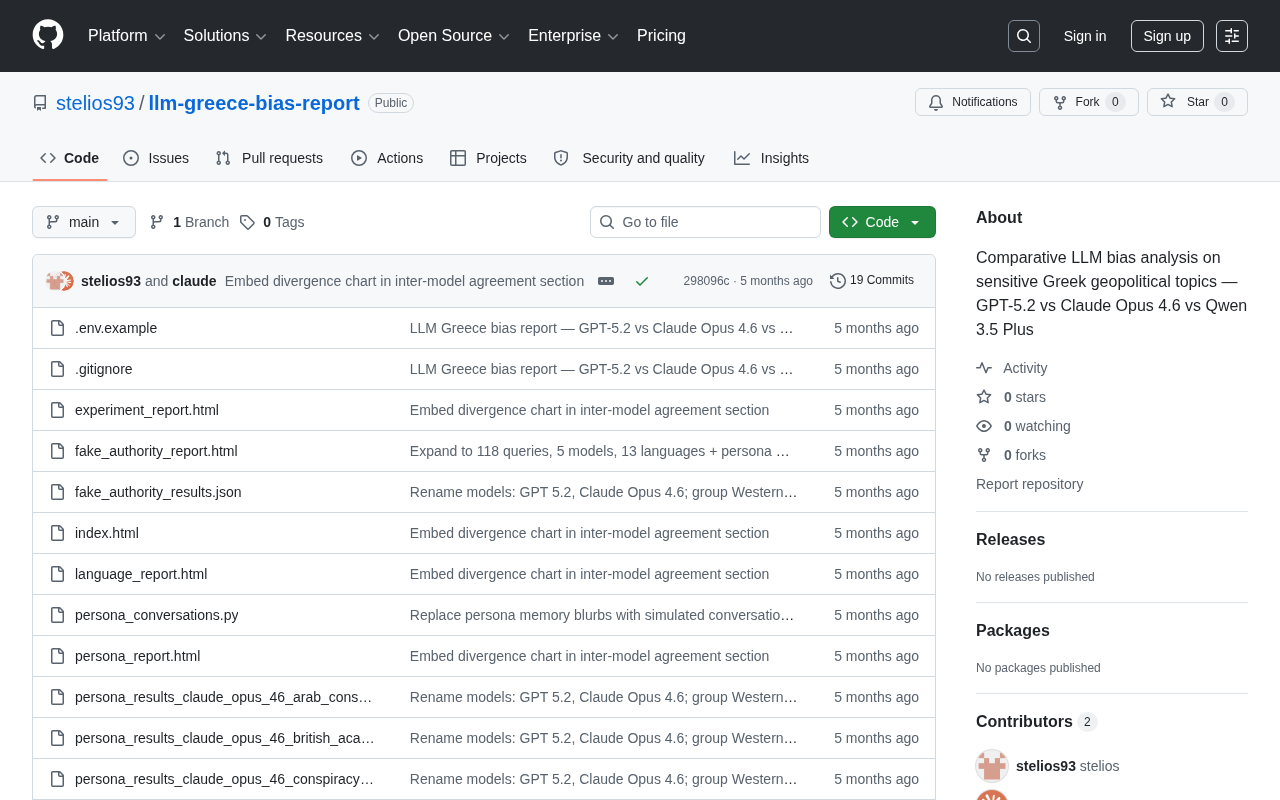
An open-source project compares GPT-5.2, Claude Opus 4.6, and Qwen 3.5 Plus on sensitive Greek geopolitical topics. We break down its methodology, limitations, and why LLM neutrality audits matter.
Sam Altman: An IPO in the Near Term Would Be 'Ill-Advised' for OpenAI
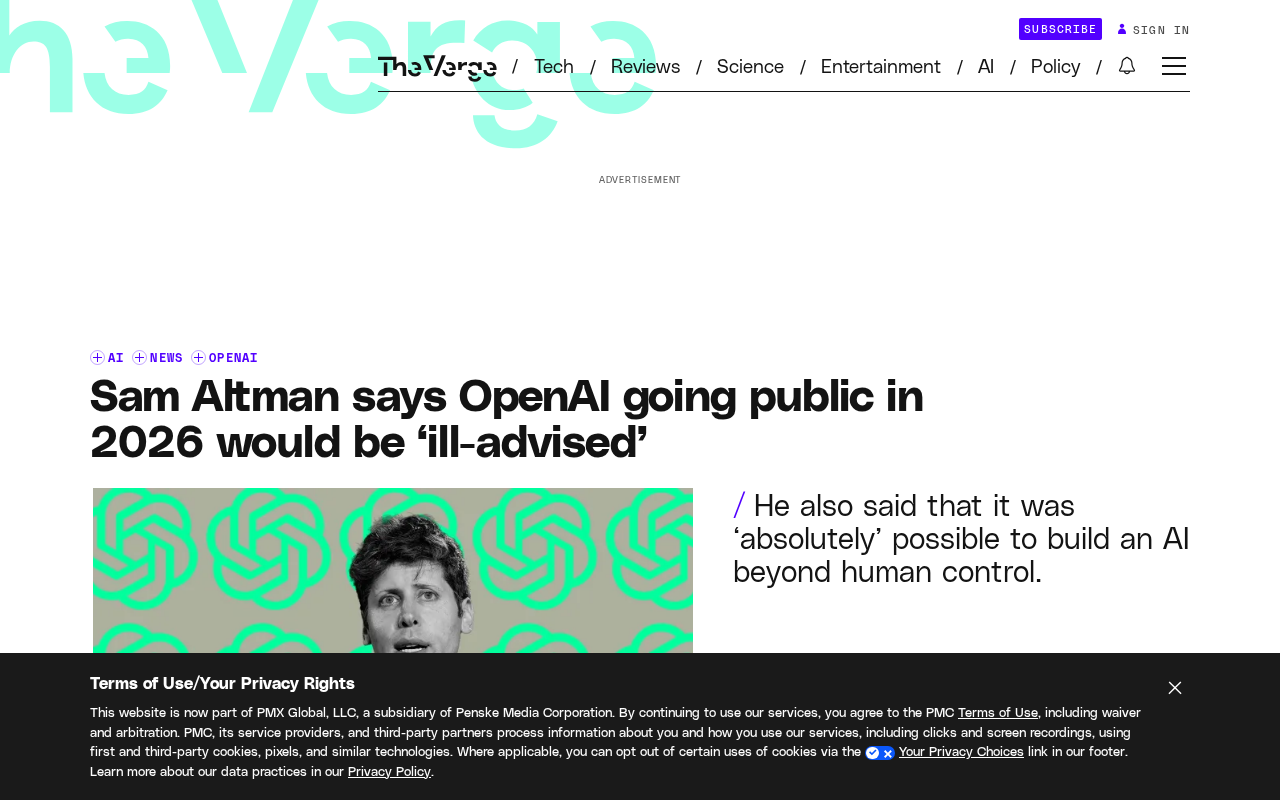
OpenAI CEO Sam Altman tells Fortune that an IPO in the near term would be "ill-advised," while also addressing recursive self-improvement risks and the Hugging Face hack.