AI Coding's New Turning Point: Building Your Own Software Is Cheaper Than Buying

Model capabilities, token costs, and agent autonomy have matured simultaneously, making it economically feasible for consumers to build their own software.
A developer, frustrated by Adobe Acrobat's bloat and upsells, built his own lightweight open-source PDF reader Folio, and from this drew a larger conclusion: the era of consumers building their own software is arriving. He believes three conditions—model capabilities, token costs, and agent autonomy—have matured simultaneously: the latest models can clone a fully functional Excel end-to-end in an hour or two, token costs are about $10, while a standalone Excel license is about $180. Projects like ArtCraft in the community even use AI to clone the entire Adobe suite. Regarding concerns about maintenance and security, he believes the cost of continuous AI maintenance may be lower than buying commercial software, and predicts that software value is approaching zero and that future software will be open source by default.
From Being Driven Crazy by Adobe Acrobat to Building His Own PDF Reader
A developer recently found himself setting up a new computer, just wanting to open a PDF, but was forced to download Adobe Acrobat. After installation, he was faced with bloated software, a bunch of features he didn't need, product upsell pop-ups, and even a requirement to log in. "I just want to read a PDF, maybe edit it a bit, that's it," he said in the video. This led him to make a decision: rather than putting up with it, he'd write his own.
He spent time building a PDF reader called Folio, which supports reading, editing, electronic signatures, and even asking AI questions about the PDF content. The software is lightweight, starts fast, is completely free, and open source. "I will never pay for software again; there's no reason to download Adobe Acrobat anymore."
This sounds like a small project, but he believes there's a huge trend behind it: consumers are starting to build their own software, and this is becoming feasible.

Three Conditions Mature Simultaneously, Making "Building Your Own Software" Economically Viable
This developer believes that for ordinary people to build their own software, three things need to happen at the same time, and in the past month, he thinks they have all come together.
First, the models need to be good enough. He has been testing model capabilities for the past two years, starting from "write a snake game in Python" and later upgrading to "make a Rubik's Cube simulator." When those tests became too easy, he designed a new stress test: have the model clone Microsoft Excel. Early models could get close but had many rough edges and incomplete features; the latest generation of models can clone Excel end-to-end in an hour and a half to two hours, with full functionality running in the browser.
Second, the cost needs to be low enough. If you spend tens of millions of tokens to build software that costs $10 to buy, that makes no sense. But now, he rebuilt a fully functional Excel clone with about $10 worth of tokens. In comparison, a standalone Excel license costs about $180, or a Microsoft 365 subscription is $7 to $10 per month.
Third, it needs to be simple enough. Once models are wrapped in agents, their autonomy is strong enough that "you tell it what to do, and it can complete it on its own."
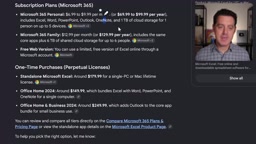
He proposes an ongoing cost calculation: the cost of building and maintaining software yourself versus the long-term expense of purchasing subscription software. He believes a tipping point has been reached—building and maintaining software with tokens is cheaper than buying it outright. And the benefit of building your own is that you get features that perfectly fit your needs, even if those features are unattractive to others.
What is an "agent"
The phrase "models wrapped in agents" mentioned multiple times in the article refers to the fact that large language models themselves only generate text, while an agent adds an "execution framework" around the model: it can call tools, read and write files, run code, plan tasks step by step, and self-correct when errors occur. For example, when asking a model to clone Excel, the agent will first break down the requirements, generate the front-end interface, write back-end logic, run tests, and then iterate repeatedly based on error reports until it works. It is this framework that turns a "chatting model" into a "collaborator that can independently complete engineering tasks," and it is also a key link from idea to finished product in building your own software.
Why token cost is a key variable
A token is the basic billing unit for text processed by a model; both input and output are charged by token count. Building software requires the model to repeatedly read code, generate modifications, and run debugging, often consuming millions or even tens of millions of tokens. Therefore, the claim of "building an Excel clone for $10" essentially means that lower per-token prices plus improved model efficiency have brought the total bill for a complete software build down to an acceptable range. This is also why the article lists "cost low enough" as one of the three mature conditions—no matter how powerful the model, if a build costs tens of thousands of dollars, building it yourself isn't worth it.
Not Just a Personal Toy: The Entire Adobe Suite Gets Open-Source Clones
He didn't just build a PDF reader. He once used a tool called 1of10 to view performance data for other videos and channels. Later, the tool kept adding features he didn't need, started requiring authentication, collecting information, and the plugin would take up about 30% of the YouTube page. So he spent about 30 minutes making his own version called Outlier Tracker, keeping only the video data tracking and channel analysis features he needed.
"Now it's mine," he said.
Even more striking are other projects in the community. A project called ArtCraft has open-source cloned the entire Adobe suite, including Photocraft (for Photoshop), VectorCraft (vector design), and FilmCraft (for Adobe Premiere). According to him, the author's approach was to point AI at existing software and iterate until the clone was identical.
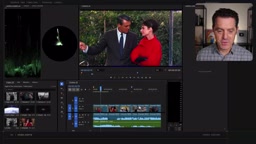
He sees these projects as a signal: the value of software is approaching zero. As long as someone is willing to pay $200 a month for a Claude or ChatGPT subscription, they can build any software they want and publish it; others can modify it on that basis at a fraction of the original build cost. He believes that in the future, all software will effectively be open source.
What is "vibe coding"
Vibe coding, mentioned later, refers to describing the desired effect to AI in natural language, with AI generating and modifying code, and the human mainly responsible for "does it feel right" and continuously making requests, rather than writing the implementation line by line. Its advantages are an extremely low barrier to entry and rapid iteration—a usable tool can be made in an afternoon; the cost is that code quality and security depend heavily on the model's level and human review. The concern in the article that "vibe-coded software may be full of vulnerabilities" is precisely about this development approach—it turns software development from "engineering" partly into "description plus acceptance," so the responsibility for maintenance and security review falls more concentratedly on the user.
Maintenance and Security: The Most Substantive Objection
A common argument against consumers building their own software is: building it is only the first step; afterward comes maintenance, security, and continuous updates. With increasing hacker attacks, vibe-coded software may be full of vulnerabilities, and long-term maintenance is a burden.
He acknowledges this concern is valid but believes that AI's ability to write software is improving rapidly; the stronger the model, the more robust and secure the software will become. He also suggests an approach: continuously running an agent to keep updating software and scanning for security issues may still cost less than buying commercial software.
Another alternative is to directly use software maintained by others as open source. Projects like ArtCraft have developers continuously investing tokens in maintenance. "As token costs continue to fall, approaching zero, there will be a pure desire to build," he said.
From SaaS to a Personal Software Renaissance
A few years ago, he made a video called "SaaS is Dead," arguing that enterprise software would collapse into two layers: the agent layer and the traditional database layer. But at the time, he didn't anticipate that consumers would build their own software. Now he believes the situation has changed.
He mentions Omarkey, a new operating system created by the creator of Ruby on Rails, with AI embedded at the system level, allowing the OS to be customized to whatever you want at any time. Although Windows can currently do some customization, a fully customizable operating system makes him think that space for new operating systems may really exist.
His advice is direct: go look at open-source projects, try building a small app for yourself, and see how far you can go.

Note: This article is based on personal projects and opinions shared by a YouTube creator. The model names, product names, and cost data involved are from his original narrative and have not been independently verified. The actual cost and maintenance burden of building software yourself will vary greatly depending on project complexity, security requirements, and long-term usage scenarios.
One-line Summary
Model capabilities, token costs, and agent autonomy have matured simultaneously, making it economically feasible for consumers to build their own software.
Paragraph Summary
A developer, frustrated by Adobe Acrobat's bloat and upsells, built his own lightweight open-source PDF reader Folio, and from this drew a larger conclusion: the era of consumers building their own software is arriving. He believes three conditions—model capabilities, token costs, and agent autonomy—have matured simultaneously: the latest models can clone a fully functional Excel end-to-end in an hour or two, token costs are about $10, while a standalone Excel license is about $180. Projects like ArtCraft in the community even use AI to clone the entire Adobe suite. Regarding concerns about maintenance and security, he believes the cost of continuous AI maintenance may be lower than buying commercial software, and predicts that software value is approaching zero and that future software will be open source by default.
Related articles

AI Coding Enters the Team Collaboration Era: Interpreting Three Major Moves from Meta, GitHub, and Mistral
Meta acquires Conductor, GitHub Copilot Fusion becomes available, Mistral opens Large 4 weights—three moves show AI coding shifting from code generation to organizing development workflows. This article explains task orchestration, model collaboration, and cost control for developers.

Building a RAG Assistant with Dify: A Practical Guide to Knowledge Bases, Workflows, and Agent Nodes
How should knowledge bases, workflows, and Agent nodes connect in a Dify RAG assistant? We break down the division of labor and wiring logic for a shippable app.
 Tech Frontiers
The AI Industry Doesn't Lack Marketing—It Lacks Good Products
AI faces market selloffs and public skepticism—is marketing really the problem? This analysis of market signals and product experience argues the core困境 is incomplete products and a gap between promises and experience; the only way to change perceptions is to ship better products.