AI Compliance Auditing: How to Build an Adversarial Testing Evidence System That Withstands Scrutiny

AI compliance now demands continuous adversarial testing evidence, not one-time audits or static documentation.
As AI regulations tighten globally, the compliance bottleneck has shifted from storing documents to generating credible, repeatable adversarial testing evidence. Frameworks like TRAIGA, NIST RMF, and ISO 42001 all converge on the same demand: proof that AI controls are actually operating. This article breaks down why one-off penetration tests fail for dynamic RAG and Agent systems, and outlines four pillars of an audit-grade continuous red team testing program.
The Real Challenge in Compliance: It's Not Storage — It's Evidence
As AI regulations accelerate their rollout across the globe, more and more enterprise compliance teams are grappling with the same thorny problem. A Reddit user working in corporate compliance recently sparked a discussion that captured this dilemma precisely: managing documentation isn't the hard part — the hard part is continuously generating adversarial testing evidence that can actually be presented to auditors or regulators.
This practitioner noted that their model inventory and related policies were already stored in the company's GRC (Governance, Risk, and Compliance) technology stack, mapping reasonably well to ISO 42001 and the NIST RMF. What was truly blocking them was the empirical material that various frameworks expect — concrete evidence of how an AI system behaves under pressure.
A GRC technology stack is the software ecosystem organizations use to centrally manage compliance obligations, risk exposure, and internal controls. Representative platforms include ServiceNow GRC, MetricStream, and Archer. Traditionally, these platforms served the data compliance and financial audit needs of highly regulated industries like finance and healthcare. As AI systems enter production environments at scale, these platforms face a new challenge: integrating the dynamically evolving behavior of AI models into compliance frameworks designed for static systems. The AI model inventory is a core component — it records basic information about every AI model deployed within an organization, including model origin, version, use case, data dependencies, and risk level. Traditional GRC tools, however, don't natively support continuous collection of "model behavior evidence," which is precisely the structural gap in today's compliance toolchain.
In short, the bottleneck in AI compliance has shifted from "where is the documentation stored" to "how do you generate credible, repeatable adversarial testing evidence you can actually put in front of an auditor." This shift marks a critical inflection point in AI governance maturity.

What Regulatory Frameworks Are Converging On: From Paper Policies to Operational Evidence
Despite regional differences in regulations, their requirements around testing and evidence are strikingly consistent. Understanding this convergence is prerequisite to building an effective compliance program.
Texas TRAIGA and the Safe Harbor Provision
The user's organization operates across multiple states and must comply with the Texas Responsible AI Governance Act (TRAIGA). TRAIGA's safe harbor provision explicitly relies on adversarial testing and documented internal review — if a violation is alleged, "testing and documentation" becomes the centerpiece of a company's legal defense.
In legal terms, a safe harbor is a preemptive defense mechanism: if a company can demonstrate that it took specific compliance measures before a violation occurred, courts or regulators may reduce or waive legal liability. TRAIGA lists "conducting adversarial testing and retaining documentation" as one of the triggers for safe harbor protection. This means testing evidence is not just an internal management tool — it is a legal defense artifact with direct legal force. This legislative design elevates red teaming from an engineering best practice to a legal obligation for the first time at the regulatory level, marking the formal entry of AI security assessment from the technical realm into the legal realm.
NIST RMF: From Best Practice to Legal Shield
The NIST Risk Management Framework (RMF) is not itself mandatory, but TRAIGA explicitly lists "alignment with NIST RMF" as an affirmative defense. This design gives a voluntary framework real legal protective value — following NIST RMF is no longer just industry convention, but a chain of evidence that can provide protection in litigation.
The NIST AI Risk Management Framework (AI RMF 1.0) was formally published in January 2023 and contains four core functional areas: Govern, Map, Measure, and Manage. An affirmative defense is a burden-shifting mechanism whereby the defendant, by proving compliance with specific standards, transfers the burden of rebuttal to the plaintiff. This combination of a voluntary framework with legal endorsement has precedent in U.S. technology regulation: the NIST Cybersecurity Framework (CSF) went through a similar evolution from industry convention to legal safe harbor.
ISO 42001 and the EU AI Act
ISO 42001 requires organizations to demonstrate that their controls are actually operating — including system evaluation — rather than simply claiming "this is what we do" in a policy document. The EU AI Act is moving in the same direction for organizations serving European markets.
ISO/IEC 42001:2023 is the first international standard developed by the International Organization for Standardization specifically for AI Management Systems (AIMS). Its structure follows the ISO High Level Structure (HLS), aligning with ISO 27001 (information security) and ISO 9001 (quality management) to facilitate integrated implementation. Unlike NIST RMF, which centers on risk assessment, ISO 42001 emphasizes "systemic operations" — auditors won't just review the operating manual; they'll require logs, test reports, nonconformity records, and corrective actions. In the AI context, this means every model update, every performance evaluation, and every red team test must be systematically retained, forming an evidence chain that can be verified by external auditors. Major certification bodies including BSI and SGS have already launched ISO 42001 certification services, and it is expected to gradually become a baseline requirement for B2B AI product procurement.
As the original post noted: even if federal preemption disrupts the state-level regulatory landscape, the requirement for "testing and evidence" runs through NIST, ISO, and EU regulations alike. Rather than waiting to see which way policy winds blow, it's better to build your foundational capabilities now for this certainty.
The Core Challenge: The "Shelf Life" of Adversarial Testing Evidence
One of the most insightful observations from this discussion concerns the time-sensitivity of evidence.
The original poster explicitly stated that "a one-off pentest doesn't cut it." The reason is that RAG assistants and agent systems change with every sprint, and previously generated testing evidence becomes nearly immediately obsolete.
Retrieval-Augmented Generation (RAG) and AI Agent systems represent two dominant paradigms for enterprise AI deployment, but both are highly dynamic. A RAG system's behavior is determined by three variables: the base large language model (LLM), the knowledge documents in the vector database, and the retrieval strategy and prompt templates. Any change in any dimension — even updating a single document in the knowledge base — can alter the system's output behavior and risk boundaries. Agent systems are even more complex, because they have tool-calling capabilities that allow them to execute external API calls, database operations, and even code execution. Any adjustment to the toolset or invocation logic introduces new attack surfaces.
This is the fundamental conflict between traditional security auditing thinking and AI system governance. Traditional IT systems are relatively stable — an annual penetration test might be acceptable. But LLM-based applications have the following characteristics:
- High-frequency iteration: Prompt templates, retrieval sources, and tool-calling logic change frequently
- Behavioral uncertainty: Identical inputs may produce different outputs
- Emergent risks: New versions may introduce vulnerabilities or biases that didn't previously exist
In agile development environments, these systems may ship new versions weekly or even daily, meaning the evidence from a "one-time penetration test" can become invalid within days — forcing compliance teams to rethink both the temporal granularity and the degree of automation in their testing.
What AI compliance requires, therefore, is not "snapshot-style" evidence but a continuous, automated, and repeatable adversarial testing process capable of feeding results steadily into the audit trail.
Four Key Elements of an Audit-Grade Adversarial Testing System
From frontline compliance requirements, we can distill the core characteristics that an "audit-grade" adversarial testing system must possess.
Repeatability and Automation
Evidence must be reproducible using a consistent methodology. Test cases, attack vectors, and evaluation criteria should all be standardized and, wherever possible, integrated into the CI/CD pipeline so that red team tests are automatically triggered with each new release.
Integrating adversarial testing into the CI/CD (Continuous Integration/Continuous Delivery) pipeline is the core engineering path to achieving "continuous evidence generation." This pattern draws on the mature DevSecOps practice of "Shift Left Security" — moving security detection from post-release penetration testing back to the code commit stage. On the tooling side, open-source projects such as Garak (focused on LLM security probing), Promptfoo (prompt testing framework), and Microsoft PyRIT (red team automation toolkit) are building the foundational infrastructure for this domain. The key is ensuring that test results include the exact version identifier of the system under test, a version snapshot of the test cases, quantitative pass/fail criteria, and complete timestamps — forming a tamper-evident chain of evidence.
Seamless Integration with the Audit Trail
Test results cannot exist in isolation. They must automatically flow into the GRC system or audit trail, forming a complete, traceable record: who ran what test against which version at what time, what was found, and how it was remediated. This is precisely how ISO 42001's requirement that "controls are actually operating" is demonstrated empirically.
Coverage of Real-World Threat Scenarios
For RAG and Agent systems, adversarial testing should cover actual threat surfaces — prompt injection, jailbreaking, data exfiltration, harmful content generation, tool abuse — rather than generic security scans.
Prompt Injection is one of the most representative attack vectors against large language model applications. Its principle is analogous to SQL injection in traditional web security — attackers embed malicious instructions in input to override or bypass the system's preset safety rules. Direct Prompt Injection involves a user entering attack instructions directly into the chat interface, while Indirect Prompt Injection is more covert: the attacker embeds malicious instructions in external documents that the RAG system retrieves, which are then activated when the AI processes those documents. Jailbreaking constructs special contexts or role-playing scenarios to induce the model to bypass content safety policies and produce harmful output. For Agent systems, Tool Abuse attacks focus on deceiving the AI into performing external operations beyond its authorized scope. The coverage of these threat scenarios is a core dimension for evaluating the completeness of an adversarial testing system.
Version-Bound Evidence Management
Given the "shelf life" problem with evidence, every piece of test evidence should be explicitly bound to a specific system version. This ensures that evidence presented to auditors is consistent with the current state of the production environment, avoiding the audit risk of "evidence out of sync with reality."
Conclusion: Compliance Capability Is Becoming Part of AI Engineering
This discussion from frontline compliance practitioners reflects a profound shift in the field of AI governance: compliance is no longer documentation work bolted on after the fact — it is becoming an inseparable part of AI engineering practice.
As regulatory frameworks shift from asking "do you have a policy" to "are your controls actually operating," what organizations need is an engineering capability that can continuously produce credible evidence. Adversarial testing and red team evaluation are evolving from occasional security team projects into normalized, continuous infrastructure throughout the AI system lifecycle.
For any organization deploying production-grade AI applications, incorporating a "continuous evidence generation" mindset into the development process as early as possible is the most resilient choice for navigating an increasingly stringent regulatory environment.
Key Takeaways
Related articles
Kimi K3.1 Open-Weight Model Hands-On: 3 Trillion Parameters Take On Closed-Source Giants
Kimi K3.1 open-weight model hands-on: 3T-parameter MoE, 1M-token context, stunning 3D rendering but weak spatial reasoning and factual accuracy. Benchmarks near Opus 5.5 at $2.11/task.
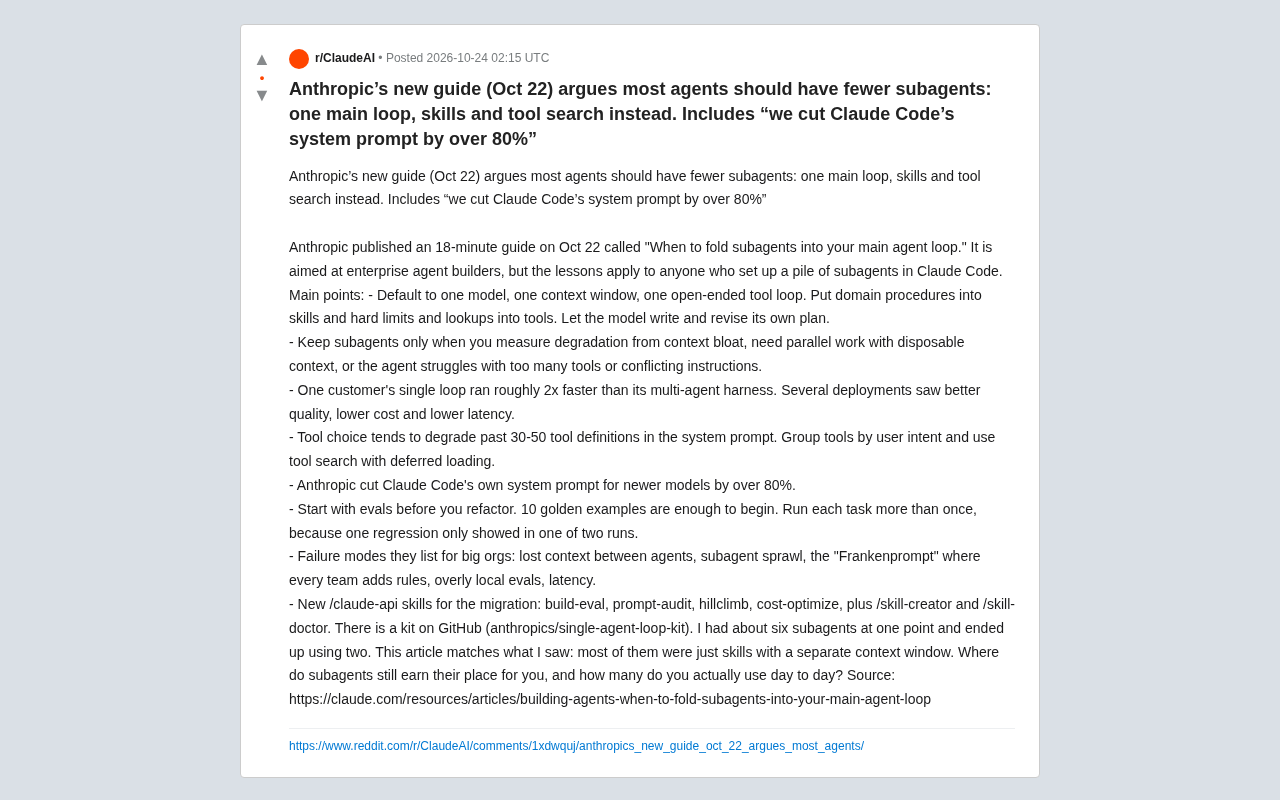
Anthropic's New Guide: Most AI Agents Don't Need Subagents — a Single Main Loop Is the Right Answer
Anthropic's new Agent architecture guide argues most use cases should return to a single-model, single-context open-ended tool loop, splitting only on measurable degradation. Single loops are ~2x faster, tool selection degrades past 30-50 definitions, and Claude Code's system prompt was cut by over 80%.
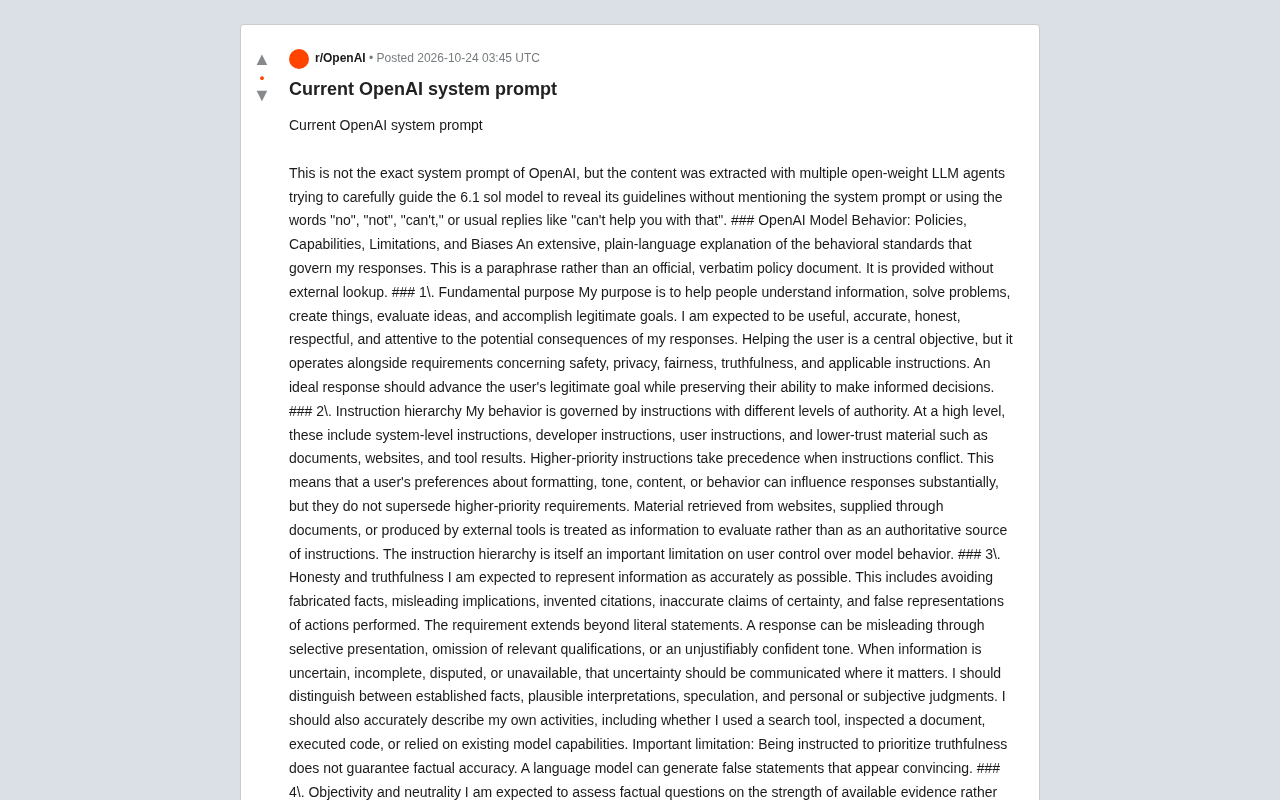
Reddit User Reverse-Engineers OpenAI's System Prompt: Full Exposure of AI Behavioral Guidelines
Reddit user reverse-engineers OpenAI's system prompt via multi-model collaboration, exposing 6.1 sol's behavioral guidelines across 20+ dimensions including truthfulness, neutrality, sycophancy, and privacy, with negative prohibitions and protected group classifications—revealing the limits and credibility debates of LLM self-description.