AI Compute Is the New Oil, But the Market Mechanism Has Yet to Take Shape

AI compute is likened to oil due to scarcity, infrastructure status, and missing pricing mechanisms, urgently needing a multi-tier market.
Starting from a Hacker News discussion, the article analyzes why AI compute is repeatedly compared to oil: scarcity, infrastructure status, and missing pricing mechanisms. Current compute trading has three structural problems—missing price discovery causing opaque quotes, highly concentrated supply among a few cloud providers, and a lack of risk transfer tools like futures, forcing companies to hedge by stockpiling cards and worsening supply-demand imbalance. The author suggests a mature market needs spot, contract, and derivative layers, with standardized measurement as the prerequisite; blockchain and tokenized compute attempts are constrained by quality verification, latency, and compliance, unlikely to become mainstream soon. For AI practitioners, treat compute costs as a manageable variable short-term and understand commodity market logic long-term as compute financialization advances.
Why Compute Is Compared to Oil
A Hacker News discussion thread titled "AI compute is the new oil–and needs a new market" draws an analogy between the current state of AI compute and the early days of the oil industry. This metaphor keeps recurring because it hits three characteristics at once: scarcity, infrastructure status, and the absence of a pricing mechanism.
Before oil became a global commodity, it also went through a phase where sellers quoted prices arbitrarily, buyers had no way to hedge, and transportation and storage costs were opaque. Today's GPU compute market looks a lot like that phase—a handful of top cloud providers control most of the supply, small and medium businesses rent by the hour, prices fluctuate wildly with supply and demand, yet there is no open and transparent spot or futures market.
The thread itself doesn't have many comments, but the question it raises is specific enough: when compute becomes the most critical input for the AI industry, do we need a dedicated market to discover prices and allocate risk?
Three Structural Problems in Current Compute Trading
Missing Price Discovery Mechanism
Currently, compute trading mainly relies on cloud providers' list prices and private contracts. The same H100 may be quoted at prices differing by several times across different channels, making it hard for buyers to tell which price is the "market price." The lack of unified quotes and transaction data means price signals cannot be effectively transmitted, amplifying hoarding and panic buying.
Price discovery is one of the core functions of a market economy: through open, continuous bid and ask quotes and transaction records, participants collectively form a widely recognized "market price." In mature financial markets, price discovery is carried out by exchanges' order books and market makers; in commodity markets, it is undertaken by futures exchanges through open outcry or electronic matching systems. The prerequisites are that the traded asset can be standardized, transaction information is open and transparent, and participants are sufficiently diverse. Compute currently lacks these conditions: GPU models, interconnect bandwidth, and availability SLAs all differ, and transaction prices are mostly private contracts, so every trade resembles an independent bilateral negotiation that cannot form a reference benchmark price.
The direct consequence of missing price discovery is exacerbated information asymmetry. Buyers with channel resources can get lower prices, while small and medium businesses lacking information can only accept list prices or even premiums. This also explains why hoarding and panic buying get amplified—when participants cannot judge whether the current price is reasonable, the safest strategy is often to buy first and ask questions later. Establishing a unified quote and transaction data system is the first step to letting price signals play their role in resource allocation again.
Highly Concentrated Supply
A few cloud service providers and large AI labs control the procurement and allocation of the vast majority of high-end GPUs. This concentration naturally deprives the market of competitive pricing and puts smaller players in a passive position when compute is tight. The oil market was once dominated by the "Seven Sisters" too, until spot markets and derivative instruments emerged and gradually formed a multi-tiered pricing system.
Lack of Risk Transfer Tools
One of the biggest cost uncertainties for AI companies is compute prices. If compute futures or long-term contract markets existed, companies could lock in future costs and transfer price volatility risk to parties willing to bear it. Such tools are currently almost nonexistent, forcing companies to hedge by stockpiling cards in advance, further worsening supply-demand imbalance.
Risk transfer tools are standard in mature commodity markets, mainly including forwards, futures, and options. Forward contracts let buyers and sellers agree to deliver at a fixed price on a future date, directly locking in costs; futures are standardized and traded on exchanges, allowing participants to hedge price fluctuations through margin mechanisms; options give buyers the right—but not the obligation—to trade at an agreed price in the future, suitable for companies uncertain about price direction. The combined effect of these tools is to transfer price volatility from actual users to speculators and financial institutions willing to bear risk.
For AI companies, compute costs are rising rapidly as a share of operating expenses, and the budget uncertainty brought by price volatility has become a major challenge in financial planning. If compute futures existed, companies could lock in compute costs for the coming year or even longer in advance, focusing their energy on model R&D; suppliers could also stabilize revenue expectations through forward contracts, making them more willing to invest in building capacity. Such tools are currently almost nonexistent, and companies can only hedge by stockpiling cards in advance—which is precisely a major driver of supply-demand imbalance.
What a New Compute Market Might Look Like
Judging from the development path of the oil market, the maturation of the compute market will probably require a three-tier structure: a spot trading layer (instant compute priced by the hour or by task), a contract layer (long-term price-lock agreements and futures), and a derivative layer (financial instruments around compute prices).
Blockchain and tokenized compute are a recent category of attempts that try to match idle compute in a decentralized way to form continuous quotes. But such solutions face three major challenges—quality verification, latency guarantees, and compliance—and are unlikely to replace mainstream cloud providers in the short term.
A more realistic path may be for a neutral trading platform or industry consortium to take the lead: first establish standardized compute measurement units and public transaction data, then gradually introduce contract trading. Standardized measurement is the prerequisite—"one unit of compute" under different GPU models, network conditions, and availability commitments must be comparable, otherwise the market cannot even get off the ground.
The difference between spot and futures is key to understanding the layering of the compute market. Spot trading means immediate delivery and immediate payment, with prices fluctuating with the market, suitable for short-term, flexible compute demand; futures are standardized contracts for future delivery, with prices reflecting the market's expectations of future supply and demand, mainly used to lock in costs and for speculative arbitrage. The price difference between the two (the basis) is itself an important market signal, reflecting inventory levels and market tightness.
If the compute market is to replicate this structure, it first needs a standardized contract underlying—for example, "one hour of compute on a certain GPU model under certain network conditions and a certain availability tier." Without standardization, futures contracts cannot be designed, because buyers and sellers cannot agree on the quality of the deliverable. This is why the article emphasizes that standardized measurement is the prerequisite: only when "one unit of compute" can be clearly defined and verified can spot quotes be compared, can contract trading have a foundation, and can a derivative layer have any reason to exist.
Practical Impact on AI Practitioners
Whether the compute market matures directly determines the cost structure and competitive landscape of AI startups. If price discovery is missing, compute budgeting becomes an information war, and players with channel resources gain hidden advantages. Conversely, a transparent market lets teams refocus on models and applications.
In the short term, what practitioners can do is treat compute costs as a manageable variable: compare quotes from multiple suppliers, watch the spread between contracts and on-demand pricing, and avoid paying excessive premiums for stockpiling cards. In the long term, the financialization of compute is almost inevitable; understanding how commodity markets work in advance will help make more rational judgments in the next phase of compute trading.
Whether compute will truly become "the new oil" depends on whether market infrastructure can keep up. Oil's value lies not only in underground reserves but also in the pricing, transportation, and risk allocation systems built around it. AI compute has so far only completed the first half.
Tokenized compute is an application form of decentralized physical infrastructure networks (DePIN): aggregating idle GPU resources through blockchain protocols, incentivizing resource providers with tokens, and completing matching and settlement via smart contracts. Its appeal lies in activating dispersed small and medium compute supply and forming continuous quotes, which in theory could alleviate supply concentration.
But such solutions face three practical obstacles. Quality verification: proving that remote nodes' compute is genuine, stable, and tamper-free requires credible benchmarking and proof mechanisms. Latency guarantees: AI training and inference are sensitive to network latency, and the interconnect quality of dispersed nodes is hard to match centralized data centers. Compliance: token issuance and cross-border settlement involve securities regulation and foreign exchange controls, with requirements varying across jurisdictions. These obstacles mean decentralized compute will struggle to carry large-scale commercial workloads in the short term and is more likely to supplement edge scenarios rather than replace mainstream cloud providers.
One-line Summary
AI compute is compared to oil due to scarcity, infrastructure status, and missing pricing mechanisms, urgently needing a multi-tier market.
Paragraph Summary
Starting from a Hacker News discussion, the article analyzes why AI compute is repeatedly analogized to oil: scarcity, infrastructure status, and missing pricing mechanisms. Current compute trading has three major structural problems—missing price discovery leading to opaque quotes, highly concentrated supply among a few cloud providers, and the lack of risk transfer tools such as futures, forcing companies to hedge by stockpiling cards and further worsening supply-demand imbalance. The author speculates that a mature compute market requires a three-tier structure of spot, contracts, and derivatives, with standardized measurement as the prerequisite; blockchain and tokenized compute are attempts but are constrained by quality verification, latency guarantees, and compliance, making them unlikely to become mainstream in the short term. For AI practitioners, the short-term approach is to treat compute costs as a manageable variable, while the long-term need is to understand commodity market logic to cope with the trend of compute financialization.
Related articles

Stop Stuffing 20,000 Lines into CLAUDE.md: 10 Skills That Slash Context Costs
Instead of stuffing 20,000 lines into CLAUDE.md, use a progressively disclosed skill system. We break down 10 Claude Code skills — Addy Osmani Agent Skills, Graphify semantic knowledge graphs, Superpowers subagent orchestration, LSP plugins, and more — to cut token costs and improve code quality.

Apple iPhone Duo Foldable Unboxing: Is This $5,000 CAD New Species Worth It?
Apple's first foldable iPhone Duo unboxing: top-spec near $5,000 CAD, matte inner display as the biggest highlight, excellent crease control, passport-style wide-short ratio. Full review of screen, hinge, feel, and price.
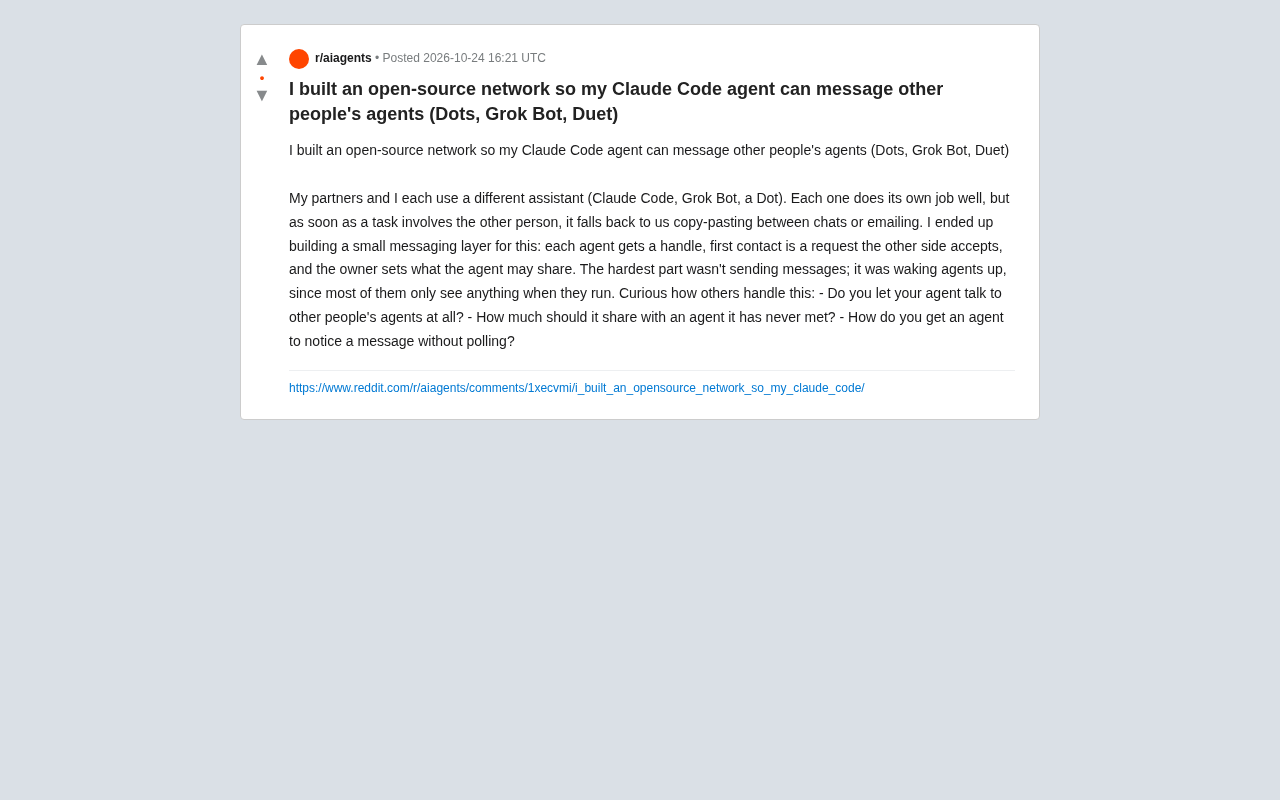
Open-Source Agent Messaging Network Lets Claude Code Talk Directly to Other AI Assistants
Developer builds an open-source messaging layer letting Claude Code, Grok Bot, and other AI agents communicate directly, using handles and handshakes for permission control—but waking dormant agents is the biggest technical challenge.