AI Cracks the Riemann Hypothesis? A 17-Million-Line LEAN Proof Challenges the Limits of Human Understanding

AI and a mathematician reportedly completed a 17-million-line LEAN proof of the Riemann Hypothesis, with formal verification surpassing human reading limits.
The article discusses mathematician Levent Alpoge and the AI model CLAWD, who reportedly completed a machine-verifiable proof of the Riemann Hypothesis in the LEAN proof assistant, producing about 17 million lines of code—far beyond any individual's capacity to read through. Independent researchers ran the LEAN files locally and confirmed that every step is formally correct, but this does not mean humans can intuitively understand the proof's overall concept. The article reviews how the Riemann Hypothesis, proposed in 1859, connects the distribution of the primes with the zeros of a complex function, carries a one-million-dollar bounty, and has supported a vast edifice of theorems. The core argument is that scientific verification may occur before human conceptual understanding, and the bottleneck shifts from computation to formal verification, independent review, and how to govern tools whose speed and scale exceed the limits of human reading.
When Machine Proofs Exceed Human Reading Limits
A mathematical problem that has stood open for more than 160 years may have been solved by AI in a form that humans can barely read through. According to analysis by a YouTube channel, mathematician Levent Alpoge, working with the AI model CLAWD, completed a machine-verifiable proof of the Riemann Hypothesis in the LEAN proof assistant, producing roughly 17 million lines of code—a scale that means no single person could read it line by line in a lifetime.
This raises a question trickier than "is the proof correct?": when the number of formally verified steps far exceeds what human intuition can hold, how do we understand, review, and trust such a proof?
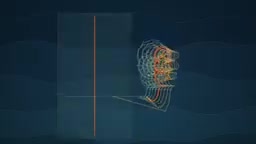
The Riemann Hypothesis: A Century-Old Question Behind the Rhythm of the Primes
The central object of the Riemann Hypothesis is the prime numbers—integers divisible only by 1 and themselves, such as 2, 3, 5, 7, and 11. The fundamental theorem of arithmetic tells us that every integer greater than 1 can be uniquely factored into a product of primes, making the primes the "elementary particles" of the entire arithmetic system.
But the distribution of the primes looks utterly irregular. Sometimes they appear in pairs separated by only 2, such as 29 and 31; sometimes hundreds of numbers lie between consecutive primes. In 1859, Bernhard Riemann, in an eight-page paper, linked the distribution of the primes to the zeros of a complex function: if all nontrivial zeros of that function lie on the same critical line, then there is a precise rhythm behind the seemingly scattered primes.
For more than a century afterward, mathematicians built a vast edifice of theorems on top of this conjecture, and the Millennium Prize also put a one-million-dollar bounty on it. Early computation approached the problem through "measurement and counting"—Alan Turing studied how to check zeros on the critical line using mechanical wave machines and early digital computers. But counting can only find counterexamples; it cannot complete a proof: infinitely many zeros cannot be exhausted by point-by-point checking, and a proof requires logical deduction that covers the entire structure.
Critical line and nontrivial zeros: The Riemann zeta function can be analytically continued to a meromorphic function on the complex plane, and its zeros fall into trivial zeros (negative even integers) and nontrivial zeros (located in the strip 0 < Re(s) < 1). The Riemann Hypothesis asserts that the real part of every nontrivial zero is 1/2, that is, that all of them lie on the "critical line." The reason this conjecture is connected to the distribution of the primes is that the locations of the zeta function's zeros precisely control the error term in the prime-counting function via the explicit formula—the closer the zeros are to the critical line, the more constrained the fluctuations in the prime distribution. Verifying a single zero requires only numerical computation, but a proof must cover infinitely many zeros and therefore must rely on logical deduction rather than exhaustive enumeration.
CLAWD and LEAN: A 17-Million-Line Formal Proof
According to the video, in late 2026 Alpoge announced a proof of the Riemann Hypothesis completed jointly with the AI model CLAWD and encoded in the LEAN language. LEAN is an interactive proof assistant that checks every logical step step by step according to formal rules and permits no unproven leaps.
Unlike the compact papers human mathematicians usually write, this formal output is about 17 million lines of code. Independent researchers ran the LEAN files on their own machines and verified that every step is formally valid, with no hidden shortcuts.
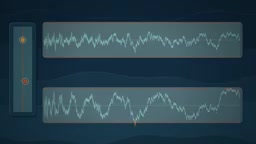
This answers one key question: whether every step obeys the rules and no logical gap exists. But it does not answer another: whether humans truly "understand" the proof. Passing formal verification through millions of machine-checked steps and intuitively grasping the overall conceptual picture are two different things. A proof can be entirely correct while its core insights are hard for any single brain to hold at once.
The LEAN proof assistant and formal verification: LEAN is an interactive theorem prover based on dependent type theory; users write definitions, lemmas, and proofs in the LEAN language, and the system checks step by step, according to the kernel rules, whether each step is valid. The core advantage of formal verification is that it eliminates hidden assumptions: every inferential step must explicitly cite an already-proven lemma or axiom, and the machine kernel rejects any underived leap. A formal proof file can be independently replayed through the LEAN kernel; as long as the kernel is correct and the axioms are consistent, the verification result does not depend on the original author's intentions or reputation. However, a scale of 17 million lines means the verification process itself requires substantial computational resources, and it is almost impossible for humans to review its conceptual structure line by line.
Verification Outpaces Intuition: A Shift in the Scientific Paradigm
Historically, the pace of scientific progress has matched human cognitive capacity: someone proposes an idea, works through the steps, and can explain why it holds. When formal proofs swell to millions of lines, verification may outpace the formation of human intuition—we can rigorously confirm validity before we have grasped the full conceptual picture.
The video draws an analogy between this turning point and the atomic age and Los Alamos, but there is an essential difference. Building nuclear weapons certainly required deep physics, engineering, and enormous responsibility, but the scientists involved understood the physical laws and equations of what they created. With complex AI-assisted proofs, by contrast, the bottleneck shifts from "computation" to "formal verification, independent review, and how to govern tools whose speed and scale exceed the limits of human reading."
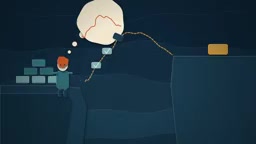
The larger and more abstract the problem, the more geometry and structure remain the tools that help us see change: scattered points can be organized along a line, and millions of verified steps can lock into a single chain of verification. But the real test is not whether a machine can generate a valid proof, but how we carefully verify it, interpret its boundaries, and decide what role human judgment plays in it.
The gap between formal correctness and conceptual understanding: In the philosophy of mathematics, the "understandability" of a proof usually means that humans can grasp its core strategy, key lemmas, and overall logical architecture. Formal proofs push mathematical rigor to its extreme but may sacrifice this understandability: a machine can check the local correctness of each step, but the global insight still needs to be re-distilled by humans. This separation is especially pronounced in AI-assisted proofs—AI may find a valid path through search or large-scale combination, while humans need extra effort to extract transferable mathematical ideas from it. The governance challenge is that when a proof's scale exceeds any individual's reading limit, the traditional model of peer review needs to be replaced by formal kernel checking and independent reproduction, but the latter still cannot automatically provide conceptual explanation.
Key Points
- Mathematician Levent Alpoge and the AI model CLAWD are said to have completed a LEAN formal proof of the Riemann Hypothesis, with code on the order of 17 million lines, far beyond any individual's capacity to read through.
- Independent researchers verified every step of the LEAN files on local machines, confirming its formal correctness, but formal verification is not the same as human intuitive understanding.
- The Riemann Hypothesis was proposed in 1859, connects the distribution of the primes with the zeros of a complex function, carries a one-million-dollar bounty, and has supported a vast edifice of theorems.
- This event signals that scientific verification may occur before human conceptual understanding, and that governance and review mechanisms face new challenges.
One-line Summary
AI and a mathematician are said to have completed a 17-million-line LEAN proof of the Riemann Hypothesis, with formal verification exceeding the limits of human reading.
Paragraph Summary
The article discusses mathematician Levent Alpoge and the AI model CLAWD, who are said to have completed a machine-verifiable proof of the Riemann Hypothesis in the LEAN proof assistant, producing about 17 million lines of code—far beyond any individual's capacity to read through. Independent researchers ran the LEAN files locally and confirmed that every step is formally correct, but this does not mean humans can intuitively understand the proof's overall concept. The article reviews how the Riemann Hypothesis, proposed in 1859, connects the distribution of the primes with the zeros of a complex function, carries a one-million-dollar bounty, and has supported a vast edifice of theorems. The core argument is that scientific verification may occur before human conceptual understanding, and the bottleneck shifts from computation to formal verification, independent review, and how to govern tools whose speed and scale exceed the limits of human reading.
Related articles
AI Role-Play in a Barbershop: How Veda Builds Immersion Through Dialogue
From a Bilibili Veda barbershop video, explore how AI role-play builds immersion through task dialogue, relationship maintenance, and improvisation.

Why Does Python Endure? A 20-Year Developer's Firsthand Account
A senior developer shares his journey from C, Java, and other languages to Python: convinced by its concise code in 2006, he asks himself every year whether to keep using Python, and the answer is always yes. Python's flexibility and versatility are the key to its enduring popularity.

Conductive Dye Turns Hair into EEG Electrodes, Opening a New Path for Wearable Brain-Computer Interfaces
Can conductive dye turn hair into EEG electrodes? This article explains the principles, potential applications, and deployment challenges of this new wearable brain-computer interface approach.