AI Role-Play in a Barbershop: How Veda Builds Immersion Through Dialogue
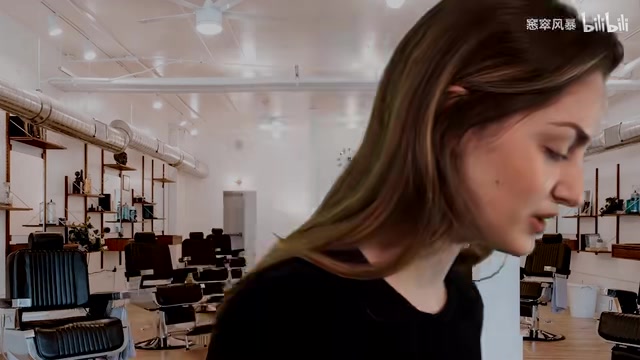
A Bilibili AI barber video shows how role-play creates immersion through scenario, tone, and "doing things."
Using a Bilibili video of an AI playing a barber as a sample, the article analyzes the sources of immersion in AI characters. A barbershop naturally suits conversation thanks to physical actions and social scripts, lowering generation difficulty. Veda's credibility has three layers: task dialogue describing the process, relationship dialogue maintaining bonds through shared memory, and improvised dialogue handling unexpected information. Later she calls the restaurant owner to skip the line and book a table and recommends specific dishes, showing a leap from "talking" to "doing things." The conclusion: character consistency relies more on tone habits and choice tendencies than on memory itself, and AI competitiveness is shifting from "can chat" to "resembles whom."
On Bilibili, a video titled "[Veda] Barbershop – Men's Haircut and Shave" presents what looks like an ordinary haircut: a barber trims a customer's hair and beard while chatting about family, relationships, and restaurant recommendations. But the essence of this conversation is an AI character generating interactive content in real time—a noteworthy sample for AI application deployment: when AI no longer just answers questions but plays a specific person talking with you in a specific scenario, where does the "immersion" come from?
The Scenario Is the Role: Why a Barbershop Is a Good Stage
A barbershop is a natural container for conversation. The customer is fixed in the chair, the barber works from behind, and there's no face-to-face pressure between them; the rhythm of the chat is naturally driven by the movements of scissors and clippers. Veda plays an experienced, warm, talkative barber in this scenario, and she has to handle three things at once: describing the work at hand, maintaining conversational coherence, and observing and responding to the customer's emotions.
From the video content, Veda's approach is to interweave operational details with conversational threads. She'll say "Now I'm going to use the clippers on the sides and back," then immediately pivot to "How's your mom doing lately?"—a jump that is extremely common in real barbershops and is precisely the source of the character's credibility. According to what the Bilibili video shows, Veda maintains a consistent character tone throughout: calling the customer "honey" and "sweetie," with the particular affection of a middle-aged female barber.

Three Layers of Dialogue Design
Layer One: Task Dialogue—Making the Process Clear
Veda's description of the haircut process is specific enough: scissors on top, clippers on the sides and back, a straight razor to clean up the chin and neck, beard edges trimmed. These descriptions aren't for showing off skill—they let the customer (and the audience off-screen) know "what is happening." In the context of AI applications, this is the anchor of task-oriented dialogue—it gives the character something to do, so the conversation doesn't float away.
Layer Two: Relationship Dialogue—Building a Persona Through Details
When Veda asks whether the customer's mother "still teaches at my school" and mentions "she won Teacher of the Year last year," she isn't executing a task—she's maintaining the illusion of a long-term relationship. This dialogue reveals a shared history between the two: the same school, knowing each other's families, remembering what the other looked like in high school. According to analyses of similar AI character conversations on YouTube, this kind of "shared memory" is key to giving a character continuity—even if it can't be verified within a single video, the audience automatically fills in the relationship.
Interestingly, Veda's reaction to the customer's love life also carries a clear stance: when she hears the customer broke up with his ex-girlfriend Christine, she says, "I'm sorry, when did that happen?"; when she finds out the customer is taking a new partner to his ex-girlfriend's favorite restaurant, she immediately stops him: "You cannot take a new flame to your ex-girlfriend's favorite restaurant. Absolutely not on a first date." This kind of opinionated advice turns the character from a service provider into a person with judgment.
Layer Three: Improvised Dialogue—Handling Unexpected Information

Midway through the video, Veda learns that the customer met his new partner online. She responds, "I know a lot of people meet their other half online these days," then asks to see a photo and, after looking, says, "She's beautiful. What does she see in you?"—a teasing compliment that responds to the new information without breaking character. In technical discussions of AI role-play, this improvisational responsiveness often demonstrates the maturity of a dialogue system more than prewritten scripts.
The "AI role-play" mentioned in this article typically relies on persona settings and long-term memory mechanisms in its technical implementation. A persona is a set of structured prompts containing constraints such as identity, personality, language style, and backstory, keeping model output within the character framework. Long-term memory, meanwhile, uses vector databases or summary-style memory to store key cross-session information (such as the customer's family member's profession or the ex's name) and retrieve it into context in later conversations. Veda can "remember" that the customer's mother is a teacher and that Christine is the ex-girlfriend precisely because this kind of memory module is at work. It's worth noting that memory content itself doesn't guarantee consistency—what truly keeps a character stable is often the repeated reinforcement of tone templates and value orientations.
Restaurant Recommendation: When the Character Starts "Doing Things"
The latter half of the video is the most interesting part of the whole conversation. After discovering that the customer booked his ex-girlfriend's favorite restaurant, Veda picks up the phone and calls Vinnie, the owner of "Nino's," using her personal connections to get the customer a Friday 8 p.m. reservation ahead of the line, and reminds him to "make the table romantic, put a few candles on it."
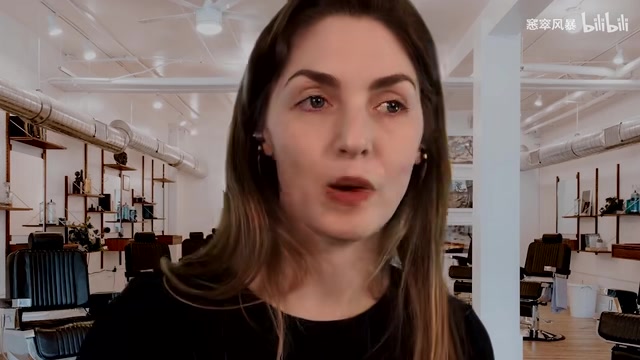
Right after that, she starts recommending the menu in detail: chicken piccata, turkey bolognese, white-sauce lasagna, tiramisu. According to the video content, she especially emphasizes that the tiramisu is "served in a jar and they pour the cream right in front of you." The specificity of this recommendation—dish names, preparation, serving style—makes the character's "life experience" tangible. A character who can only say "that restaurant is good" is flat; a character who can say "the white-sauce lasagna has no red sauce, just ricotta and Alfredo" feels like someone who has actually been there.
More importantly, Veda also gets herself a perk while on the phone: she asks Vinnie for a discounted slot next Tuesday as a favor in return. This detail pulls the character from "helpful" into the dimension of "shrewd but warm-hearted"—she genuinely wants to help you, but she doesn't mind taking a small advantage along the way.
Technical Perspective: What This Kind of Content Means for AI Applications
From the perspective of AI application deployment, this video demonstrates several noteworthy patterns:
Scenario constraints reduce dialogue difficulty. The barbershop scenario comes with physical actions (haircut, shave) and social scripts (small talk, catching up), so the AI doesn't need to invent topics out of thin air—it only needs to find the gaps between actions and social conventions.
Character consistency relies on tone rather than memory. Veda's naming habits, speaking rhythm, and familiarity with the customer's life together constitute the character's consistency. Whether these traits can be maintained in a different scenario is the key to judging whether a character system is truly stable.
"Doing things" demonstrates capability more than "talking." The action of calling to book a restaurant requires the character to understand social relationships (Veda and Vinnie are friends), goals (get the customer a table), constraints (Friday 8 p.m., a table for two), and generate a reasonable result. This is closer to a real task than multi-turn Q&A.
According to discussions of this kind of content on Bilibili and YouTube, audience reactions to these AI character videos often center on "does it feel like a real person"—and the standard for "feeling real" is precisely not the amount of knowledge, but making choices consistent with the character's identity in a specific scenario. Veda chooses to stop the customer from going to his ex-girlfriend's restaurant, chooses to call a friend to skip the line, chooses to recommend tiramisu rather than other desserts—these choices together define who she is.
The tech stack for this kind of real-time voice character conversation typically includes three components: voice activity detection (VAD) to determine when the user has finished speaking, automatic speech recognition (ASR) to convert speech to text, and then a large language model to generate a reply, output through text-to-speech (TTS). To achieve the natural back-and-forth seen in the video, end-to-end latency usually needs to be controlled at several hundred milliseconds to about one second, otherwise the conversational rhythm breaks down. In addition, background noise such as scissors and clippers in a barbershop scenario is a real challenge for VAD and ASR, and the system needs noise robustness. These engineering details, though not visible in the video, are the infrastructure that makes "immersion" possible.
Conclusion
This barbershop conversation doesn't show any technical parameters or product features, but it presents a clear signal: the competitiveness of AI characters is shifting from "can chat" to "resembles whom." When a virtual barber can remember your family, criticize your dating choices, and help you secure a restaurant reservation, what the user feels is no longer the capability of a dialogue system but the existence of a relationship. For people building AI applications, Veda's barbershop is worth a watch—not for the technology, but for how a character comes alive in everyday details.
Related articles

Why Does Python Endure? A 20-Year Developer's Firsthand Account
A senior developer shares his journey from C, Java, and other languages to Python: convinced by its concise code in 2006, he asks himself every year whether to keep using Python, and the answer is always yes. Python's flexibility and versatility are the key to its enduring popularity.

Conductive Dye Turns Hair into EEG Electrodes, Opening a New Path for Wearable Brain-Computer Interfaces
Can conductive dye turn hair into EEG electrodes? This article explains the principles, potential applications, and deployment challenges of this new wearable brain-computer interface approach.

SFO Airport in the Browser: A Real-Time Miniature Replica Project
A developer spent weeks recreating SFO in the browser with live planes, real ATC, custom liveries, AirTrain and BART, plus many easter eggs. The project hit 258 points on Hacker News.