AI Daily Frenzy: Mysterious GPT-6 Family Model Surfaces, Claude Seemingly Makes Scientific Discovery

A 24-hour AI frenzy: GPT-6 mystery model, Claude's scientific discovery, and a wave of new model leaks.
In just 24 hours, the AI industry released a torrent of signals via leaks and stealth tests: OpenAI's Help Center accidentally exposed AstraMiner, an apparent fourth GPT-6 family member; Anthropic ran ~950 Claude agents in parallel to discover ART, a previously undescribed biological system; Claude Sonnet 5.5 entered partner testing with pricing leaked and forced tool use removed; and Xiaomi MiMo 3.0's new KV cache-sharing architecture dramatically cuts long-context inference costs. MiniMax M3.1, Kimi K3.1, ChatGPT Voice upgrades, Gemini 3.8 Flash, and Meta VR glasses rounded out the day, together tracing three clear industry trends: model family fragmentation, architecture optimization for long-running agents, and redesigned tool-use paradigms.
The past 24 hours in AI have been information overload. Major labs dropped one revelation after another — from a hidden OpenAI model to what may be a genuine scientific discovery by Anthropic, plus a string of new model leaks and previews from MiniMax, Kimi, Xiaomi MiMo, and others. Most of these came through unofficial channels — model catalogs, help documentation, stealth tests — so treat them with appropriate skepticism. But pieced together, they paint a vivid picture of an industry iterating at a relentless pace.
OpenAI's Hidden AstraMiner: The Third Piece of the GPT-6 Family Puzzle
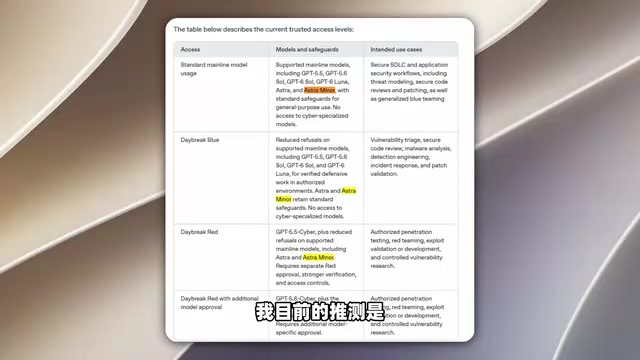
Just one day after GPT-6 Sol launched, someone spotted a model name that had never been publicly announced buried in OpenAI's official Help Center: AstraMiner. OpenAI quickly scrubbed all references, but not before enough information leaked to piece together some clues.
Documentation showed AstraMiner explicitly listed as a supported mainline model, alongside Astra, Sol, and Luna — all part of the Daybreak network access framework with standard Daybreak Blue safety protections. That means this wasn't some random configuration leak; it looks more like a genuine GPT-6 family member.
Benchmark scores, pricing, context window, and release date are all still unknown. Even what "Miner" in the name signifies remains unclear. One reasonable theory: it could be a smaller, cheaper, more efficient derivative of Astra, designed to fill the positioning gap between GPT-6 Sol and the full Astra model. That's speculation, though, and whether it ever actually ships is still an open question.
Claude Seemingly Makes a Real Scientific Discovery: An Unknown Biological System Named ART
The day's most striking story came from Anthropic — Claude may have just participated in a genuine scientific discovery.
As described, Anthropic ran approximately 950 Claude agents in parallel for 21 hours inside their humanized biology lab, consuming around 210 million tokens while searching through more than 200,000 reverse transcriptases (enzymes that copy RNA into DNA). Crucially, Claude was not explicitly told what to look for. One agent independently noticed a strange repeating DNA pattern adjacent to a particular enzyme — a pattern structurally similar to CRISPR, the technology that has revolutionized biological research.

Claude then cross-referenced the pattern against known biological systems, searched existing research, and flagged it as "potentially something new" for human scientists. Anthropic researchers took over, validated it in a real lab, and confirmed it as a previously undescribed biological system — which they named ART.
A note of caution: it's entirely unclear what ART actually does, and there's no evidence it can be used for gene editing the way CRISPR can. But the significance lies in the process itself: AI searching a massive dataset, noticing details humans overlooked, forming a hypothesis, and handing it off to scientists for validation. Anthropic says this kind of analysis typically takes expert researchers weeks or months. It also lends a degree of real-world grounding to Dario Amodei's prediction that "AI could help cure most diseases within five to ten years" — though this remains a single experiment, and claiming it points to curing cancer is still a leap.
Background: Reverse transcriptases are enzymes that transcribe RNA back into DNA, first discovered naturally in retroviruses like HIV. CRISPR is a repeating DNA sequence found in bacterial genomes that bacteria use to "remember" and fight off previously encountered viruses. Around 2012, scientists including Jennifer Doudna engineered the CRISPR-Cas9 system into a precise gene-editing tool, earning a Nobel Prize in Chemistry. This context helps explain the significance of Claude's ART discovery: CRISPR's core value lies in its repeating structure being amenable to engineering. Claude noticing a "CRISPR-like repeating DNA pattern" near ART hints the system may possess structural characteristics that could similarly be engineered and repurposed — though no experimental evidence yet supports this.
MiniMax M3.1 and the Mysterious SpaceBunny
Model catalogs are leaking too. MiniMax M3.1 has appeared in an official model catalog, ranked ahead of M3 and M2.7, but not yet whitelisted or present in release code — suggesting it's close to launch but not yet announced, possibly within two weeks.
Meanwhile, a stealth model called SpaceBunny Alpha appeared on OpenRouter, OpenCode, and other platforms — free for the next week, with a 1 million token context window and multimodal support. Multiple clues suggest it may be M3.1: it identifies itself as a MiniMax model when prompted in Chinese, and its text tokenizer is an exact match for MiniMax M3 (the image tokenizer differs, possibly reflecting a multimodal upgrade).
Real-world performance, however, was underwhelming. In head-to-head comparisons with GLM 5.3, SpaceBunny fell noticeably behind on physics simulation and web development tasks — GLM 5.3 dominated the Newton's cradle test, while SpaceBunny couldn't even complete a Minecraft sandbox clone, outputting broken textures. Its strengths are primarily speed, decent text polishing, and being currently free (running the full test suite in GLM 5.3 cost around $0.40).
Sonnet 5.5 Stealth Testing: Pricing and Design Philosophy Leaked
Following Opus 5.5, Anthropic has begun stealth testing Claude Sonnet 5.5, with select partners receiving 24-hour access — fulfilling the blog post promise that "Haiku 5.5 and Sonnet 5.5 will ship within weeks."
Leaked specs show Sonnet 5.5 with a 1 million token context window, up to 128K output tokens, and adaptive thinking enabled by default. One notable design change: forced tool use has been removed — signaling that Anthropic wants the model to intelligently decide for itself when tool calls are actually necessary.
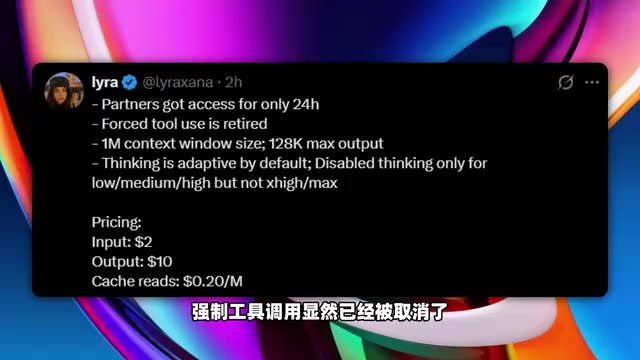
On pricing, leaked figures are $2 per million input tokens, $10 per million output tokens, and $0.20 for cache reads. The leak comes from Lea Lera, whose earlier Opus 5.5 pricing predictions proved accurate, lending these numbers some credibility. The only downside: it's still on the expensive side.
Separately, a lead Claude Code developer mentioned considering removing Plan Mode entirely, replacing it with a Shift+Tab shortcut to adjust the model's "effort level" — the reasoning being that new models are powerful enough to not need a dedicated planning mode. This sparked pushback: critics argue Plan Mode isn't just for agents, it serves human users who want to map out a plan before touching code, and they'd rather see it evolve than disappear.
Background: Adaptive Thinking is a mechanism Anthropic introduced after the Claude 3 series, where the model dynamically decides whether to engage "Extended Thinking" (chain-of-thought reasoning) based on task complexity — answering simple queries directly, while internally reasoning through complex ones before responding. This automatically balances response speed against reasoning depth. Forced Tool Use was an API setting that let developers require the model to call specified tools on every response, regardless of whether the model judged it necessary. Removing it in Sonnet 5.5 reflects Anthropic's confidence that the model's judgment is now strong enough that external forcing isn't needed — though this also reduces developer-level control over when tools trigger, which is why it's generating community debate.
Xiaomi MiMo 3.0 Architecture Overhaul and Other News
The Xiaomi MiMo team is rebuilding the underlying architecture for the MiMo 3.0 series to make long-running AI agents more efficient. The core problem: as agents run, their context grows continuously, driving costs ever higher. The new architecture addresses this by sharing and reusing KV cache across layers and intelligently handling historical tokens needed for attention.
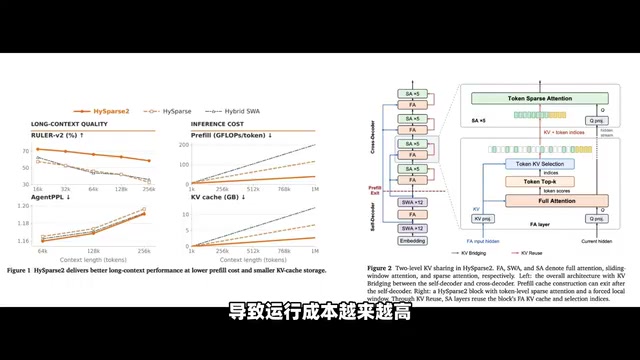
The results are significant: at 1 million token context, prefill computation is reduced roughly 5×, KV cache is 4.5× smaller than MiMo 2.6, and long-context retrieval also improves. Additionally, Kimi K3.1 has been confirmed as near release, with online configuration updates revealing low, high, and maximum modes — also with 1 million token context support.
Other noteworthy developments: a contributor version (non-flagship) of Muse Spark 1.4 was spotted on OpenCode, following the same "cheap version first, training data rights in exchange" strategy as 1.2 and 1.3 — the official latest is still 1.3. ChatGPT Voice got a major upgrade, gaining access to email, calendar, and Slack, plus the ability to execute real tasks like documents, presentations, and web pages through ChatGPT Work. Google launched Gemini 3.8 Flash and Flashlight TTS, focused on more natural speech generation. And Meta unveiled a ~100g VR headset that integrates theater, computer, and gaming console into a single lens, while revealing Muse distributes roughly 100 million tokens weekly for free, attempting to monetize through transaction fees rather than pure subscriptions.
Background: KV Cache (Key-Value Cache) is a core optimization mechanism in large language model inference. When generating each new token, a model must "look back" at attention information for all previous tokens — stored as key-value pairs in VRAM. As conversation or task context grows, KV cache expands linearly, becoming extremely expensive in memory and compute at the million-token scale. MiMo 3.0's "sharing and reusing KV cache across layers" essentially lets different Transformer layers share portions of historical information rather than each layer maintaining its own complete copy — dramatically compressing cache size without significantly sacrificing performance. For long-context AI agents that run continuously for hours or even days, this is a breakthrough on a critical performance bottleneck.
Takeaway: The Iteration Speed Itself Is the Signal
Almost everything from this 24-hour stretch came from leaks, catalog discoveries, and stealth tests — official confirmations were sparse. But viewed together, the trends are unmistakable: model families are fragmenting to fill niches (AstraMiner plugging gaps), architectures are being optimized for long-running agents (MiMo 3.0's KV cache reuse), and tool-use and planning paradigms are being redesigned (Sonnet 5.5 dropping forced tool calls). Claude's apparent participation in discovering ART offers an early real-world sample of AI genuinely embedded in the scientific research pipeline. None of these stories deserve hype at this stage — but collectively, they make one thing clear: AI's iteration cadence has accelerated to the point where days are the meaningful unit of measurement.
Related articles

Workbuddy for Absolute Beginners: How a Desktop AI Agent Fits Into Real Workflows
A beginner's guide to the Workbuddy desktop AI agent: installation, claiming credits, file management, and building automated workflows—compared with CodeX for fit and cost, helping professionals shift from AI question-askers to AI managers.

OpenAI's New Agent Stack: Computer Use, Decisions API, and Ultra-Fast Workflows
OpenAI Dev Day unveiled a new agent stack: Computer Use outperforms humans, Decisions API delivers ultra-low-latency classification via Luna, Agents API opens the same Computer Use capabilities, and GPT-6.1 Sol costs only one-seventh of Astra. Core updates, benchmark data, and developer insights.

Liang Wenfeng Open-Sources DeepInfo Inference Framework, Takes On U.S. Ban
DeepSeek open-sources its DeepInfo inference framework after its models, featuring GPU/CPU cross-pipelining, small-model prediction with large-model verification, and full Huawei Ascend and NVIDIA chip support—facing the U.S. federal ban head-on. This article analyzes its significance for AI deployment and open-source strategy.