AI Development for Java Engineers: A Complete Guide to LangChain4j Agents

A complete guide to LangChain4j for Java developers covering RAG, Agents, and Function Calling.
LangChain4j brings AI application development to Java engineers by mirroring LangChain's architecture with Java-native patterns like annotations and Spring Boot integration. This guide covers core concepts including RAG (Retrieval-Augmented Generation), AI Agents, Tools, and Function Calling, illustrated with a practical medical appointment booking assistant project.
Why Java Developers Can Master AI LLMs Too
When most people think of AI development, Python comes to mind first. That's the mainstream path — Python has a mature ecosystem, and the LangChain framework got an early start, becoming the de facto choice for AI application development. LangChain was originally open-sourced by Harrison Chase in October 2022 as a Python library, designed to standardize the integration of large language models with external data sources and tool chains. It abstracted core modules like Chain, Agent, and Memory, dramatically lowering the barrier to building AI applications. For the vast Java developer community, however, the learning cost of switching to Python is anything but trivial.
The good news is that the Java ecosystem now has its own answer: LangChain4j. LangChain4j not only carries forward LangChain's core architectural philosophy, but also adapts it to Java developers' habits — leveraging annotation-driven configuration and deep Spring Boot integration. There are two mainstream technical routes for AI application development:
- Route 1: Python + LangChain (the most foundational, earliest combination)
- Route 2: Java + LangChain4j (an integration framework designed for Java engineers)
For Java developers already familiar with Maven, MySQL, MyBatis, and Spring, choosing LangChain4j means reusing existing skills and avoiding learning a new language from scratch. Think of it as "the MyBatis connecting Java to large models" — encapsulating all LLM calls within the framework so Java engineers can build AI applications in a familiar way.
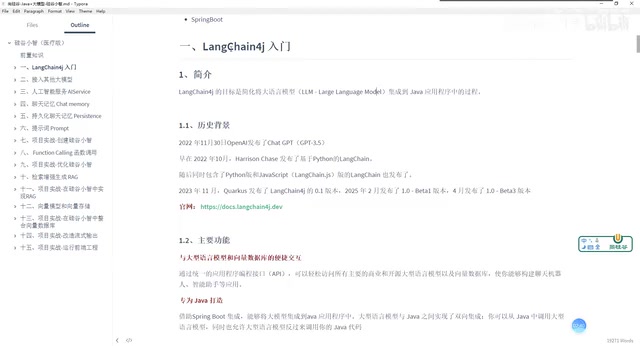
What LangChain4j Is and What It Can Do
LangChain4j has one core goal: simplifying the integration of Large Language Models (LLMs) with Java applications.
Large Language Models are massive neural networks built on the Transformer architecture, trained on enormous text corpora via self-supervised pretraining to learn statistical patterns and semantic relationships in language. GPT series models, LLaMA, DeepSeek, and others all fall into this category. Their core capability lies in "next token prediction" — the model doesn't truly "understand" language; instead, it predicts the probability distribution of the next word in a sequence with remarkable accuracy. This mechanism grants LLMs powerful text generation, reasoning, and instruction-following capabilities, but also means their knowledge is bounded by the cutoff date of their training data.
If you've browsed recent AI-related job postings, "familiarity with LLMs" is practically a baseline requirement. LangChain4j's role is to package large language model capabilities into a framework form that Java developers recognize.
From a timeline perspective, this space has evolved quickly:
- November 2022: OpenAI releases GPT-3.5, igniting global interest
- November 2023: LangChain4j officially launches
- Ongoing: Versions have reached 1.0 and beyond, with active official development
Notably, the framework supports a wide range of models — Ollama, OpenAI, and other mainstream commercial and open-source models can all be connected through a unified interface. This means developers can flexibly switch underlying models without rewriting business logic.
Unified API: Seamless Integration with Vector Databases
One of LangChain4j's standout features is its unified application programming interface (API). Just as naturally as using Java collection classes, developers can connect to various large models and vector databases, quickly building chatbots, intelligent assistants, and other AI applications.
Vector databases are database systems specifically designed for storing high-dimensional vectors and performing similarity searches. Unlike the exact-match queries of traditional relational databases, they excel at "fuzzy" semantic similarity retrieval. The core technology is Approximate Nearest Neighbor (ANN) search algorithms, with common implementations including HNSW (Hierarchical Navigable Small World graphs) and IVF (Inverted File Index). Mainstream products include open-source options like Milvus, Qdrant, and Weaviate, as well as commercial offerings like Pinecone — all of which LangChain4j provides unified adapter support for.
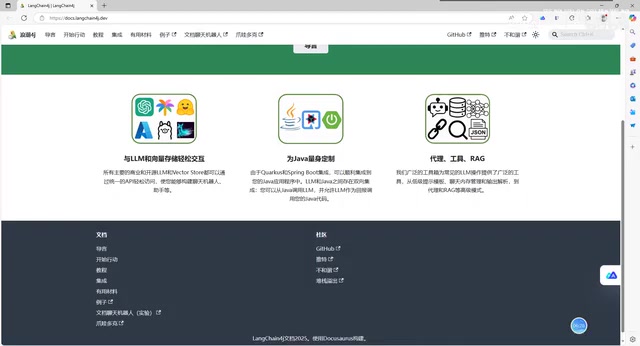
RAG: Extending the Knowledge Boundaries of Large Models
Understanding AI application development means coming to grips with one core concept: RAG (Retrieval-Augmented Generation).
When we use tools like DeepSeek or Tongyi Qianwen, all answers come from the model's internal knowledge base. But here's the problem: large models have knowledge boundaries. Once a question falls outside the coverage of their training data, the model simply cannot answer.
RAG's solution is to give the large model a "plugin":
Once the internal knowledge base of a large model is fixed, you can attach an external "knowledge reservoir." When the model can't find an answer internally, it retrieves relevant content from this external knowledge pool and uses it to generate a response.
This is the essence of "retrieval augmentation" — without modifying the large model itself, dynamically expanding its capability boundaries through an external knowledge base. The complete RAG pipeline consists of two phases: offline indexing and online retrieval. During the offline phase, external documents (such as enterprise knowledge bases or product manuals) are split into fixed-size text chunks, converted into high-dimensional vectors via an Embedding Model, and stored in a vector database. During the online phase, user queries are similarly converted into vectors and used to retrieve the most relevant text chunks via cosine similarity or ANN algorithms. Those chunks are then combined with the original question to construct a Prompt, which is fed into the LLM to generate the final answer. This "retrieval + generation" hybrid architecture is the dominant pattern for enterprise-grade AI applications. LangChain4j provides Java developers with a complete toolkit for implementing RAG, supporting multiple vector databases for storing and retrieving external knowledge.
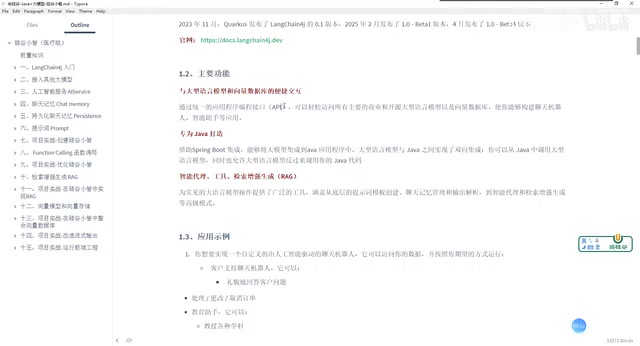
Agents, Tool Calling, and Functions: Three Key Concepts
Building a truly functional AI agent requires clarity on three core terms and how they relate.
What Is an Agent?
An agent can be simply understood as: a program that understands natural language instructions and automatically completes corresponding business operations. You describe what you need in plain language, and it gets the job done — no manual clicking required. The core operating mode of an Agent comes from the ReAct (Reasoning + Acting) framework — the model works through a cycle of "think → call tool → observe result → think again" to progressively complete complex tasks, rather than generating a one-shot answer.
There are already numerous dedicated agent-building platforms on the market, such as Alibaba's Bailian and ByteDance's Coze, both centered on the pitch of "reshaping productivity with Agents."
Tools and Function Calling
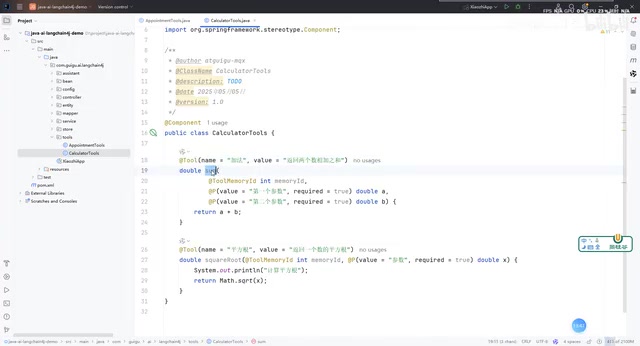
Tools are the key vehicle for agent capabilities — essentially Java methods wrapped with semantic descriptions.
Function Calling was first introduced by OpenAI in June 2023 in the GPT-4 API. The mechanism works as follows: developers include a set of function JSON Schema descriptions in the API request (covering function names, parameter types, and capability descriptions). When generating a reply, if the model determines it needs to call a function, it outputs a structured JSON object rather than natural language text. The application parses this JSON, executes the corresponding function, returns the result to the model, and the model then synthesizes the tool output to generate the final answer.
Take an addition method as an example: add the @Tool annotation to the sum method and describe its functionality in natural language within the annotation — the large model can then understand what this method does and automatically decide when to call it.
@Tool("Calculate the sum of two numbers")
int sum(int a, int b) {
    return a + b;
}
This is the core mechanism of Function Calling: the large model no longer just generates text — it can proactively call your Java methods to carry out real business operations. This "think → call → observe → think again" looping capability is the technical foundation for building AI agents.
Hands-On Project: Intelligent Appointment Booking Assistant
With the concepts clear, applying them to a concrete project — an Intelligent Medical Appointment Booking Assistant — vividly demonstrates the practical value of AI agents.
Users simply tell the assistant in natural language:
"My name is [name], my ID number is [number], and I'd like to book an appointment for a specific time slot."
The assistant then automatically completes the booking process. When they want to cancel, saying so is enough — the agent handles it automatically. Throughout the process, the agent interacts with the database in real time, recording user information in the system and completing the full business workflow — this is precisely the core value that distinguishes an Agent from an ordinary chatbot.
Beyond customer service applications, LangChain4j supports a broader range of content generation scenarios:
- Text generation: Compose customized emails for clients, generate blog posts or product descriptions
- Image generation: Call models to generate image content
- Video generation: Generate video assets
These capabilities combined form a complete Java AI application development framework.
Learning Path for Java Engineers Entering AI Development
For Java engineers, the path into AI application development is logically clear:
- Build prerequisite foundations: Get comfortable with Maven, MySQL, MyBatis, Spring, and other core technology stacks
- Establish framework awareness: Position LangChain4j as "the MyBatis connecting Java to large models"
- Master core concepts: Deeply understand the relationships and principles behind RAG, Agent, Tools, and Function Calling
- Dive into hands-on projects: Start by creating a project, then progressively build a complete AI intelligent assistant
A complete learning system covers modules including the MCP protocol, tool calling, workflow orchestration, and project practice. MCP (Model Context Protocol) is a standardized protocol open-sourced by Anthropic in November 2024, designed to solve the "N×M integration problem" between AI models and external tools — the explosion of integration costs when N models each need to independently adapt to M different tools. MCP defines a unified client-server communication specification, analogous to how the USB interface standardized the hardware ecosystem. LangChain4j has added support for it, making it a key infrastructure evolution worth close attention.
For developers who want to enter the AI application development field without abandoning their Java stack, LangChain4j is a pragmatic path that balances technical reuse with career competitiveness.
Note: AI frameworks evolve extremely fast, and LangChain4j updates its versions frequently. During the learning process, it's recommended to stay close to the official documentation and focus on understanding underlying principles — that's far more valuable in the long run than memorizing specific APIs.
Key Takeaways
Related articles
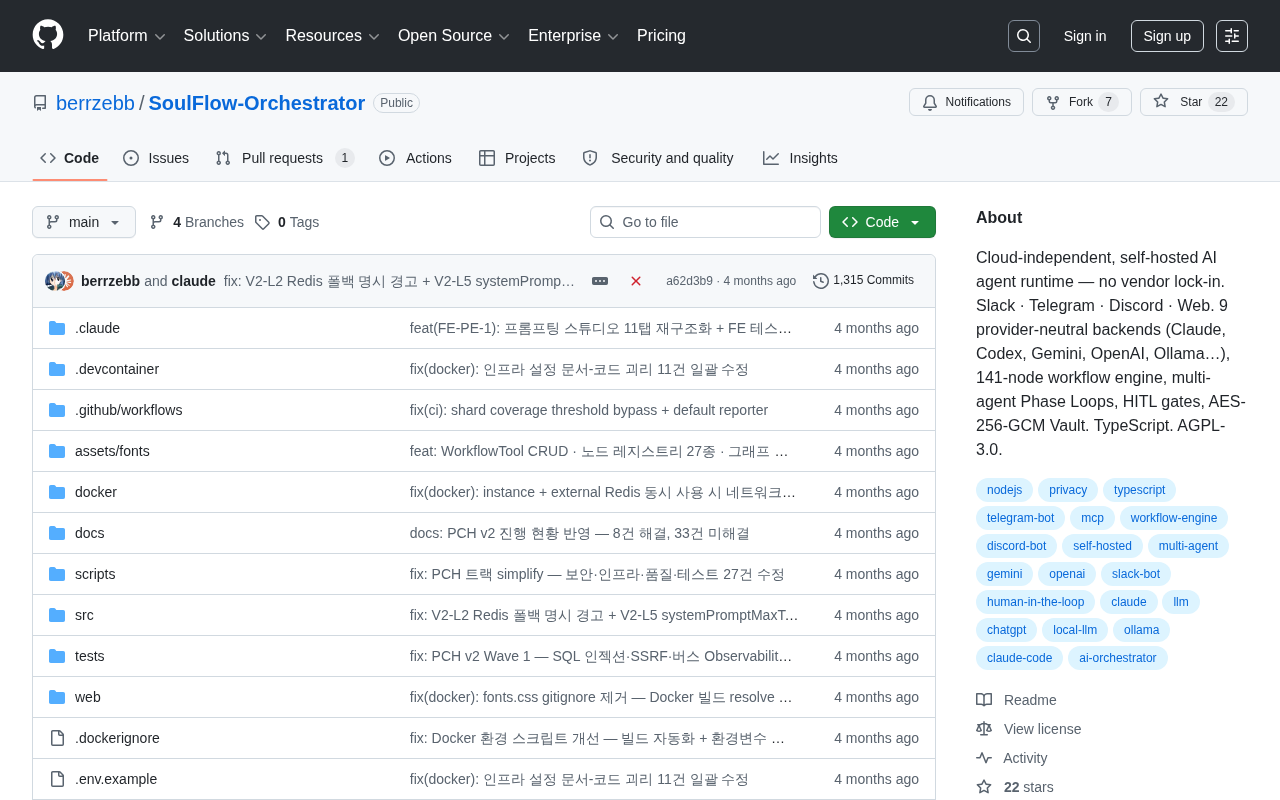
SoulFlow-Orchestrator: A Self-Hosted, Vendor-Lock-In-Free AI Agent Runtime
SoulFlow-Orchestrator is an open-source, self-hosted AI agent runtime with no vendor lock-in. Supports 9 neutral backends (Claude, OpenAI, Ollama), 141-node workflow engine, multi-agent loops, and HITL gates.
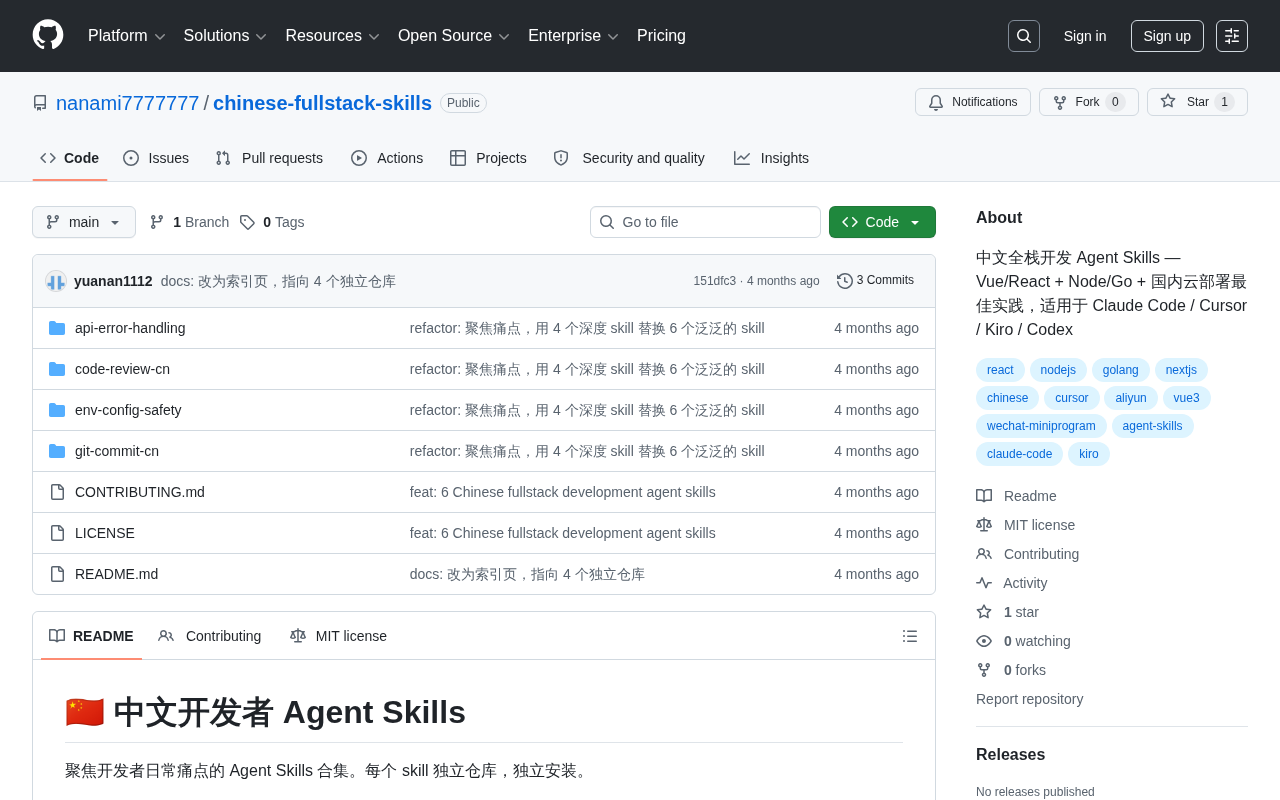
Chinese Full-Stack Agent Skills: A Skill Library Tailored for Domestic AI-Assisted Development
chinese-fullstack-skills is an Agent Skills library for Chinese full-stack development, covering Vue/React, Node/Go, and domestic cloud deployment best practices. Compatible with Claude Code, Cursor, Kiro, and Codex.
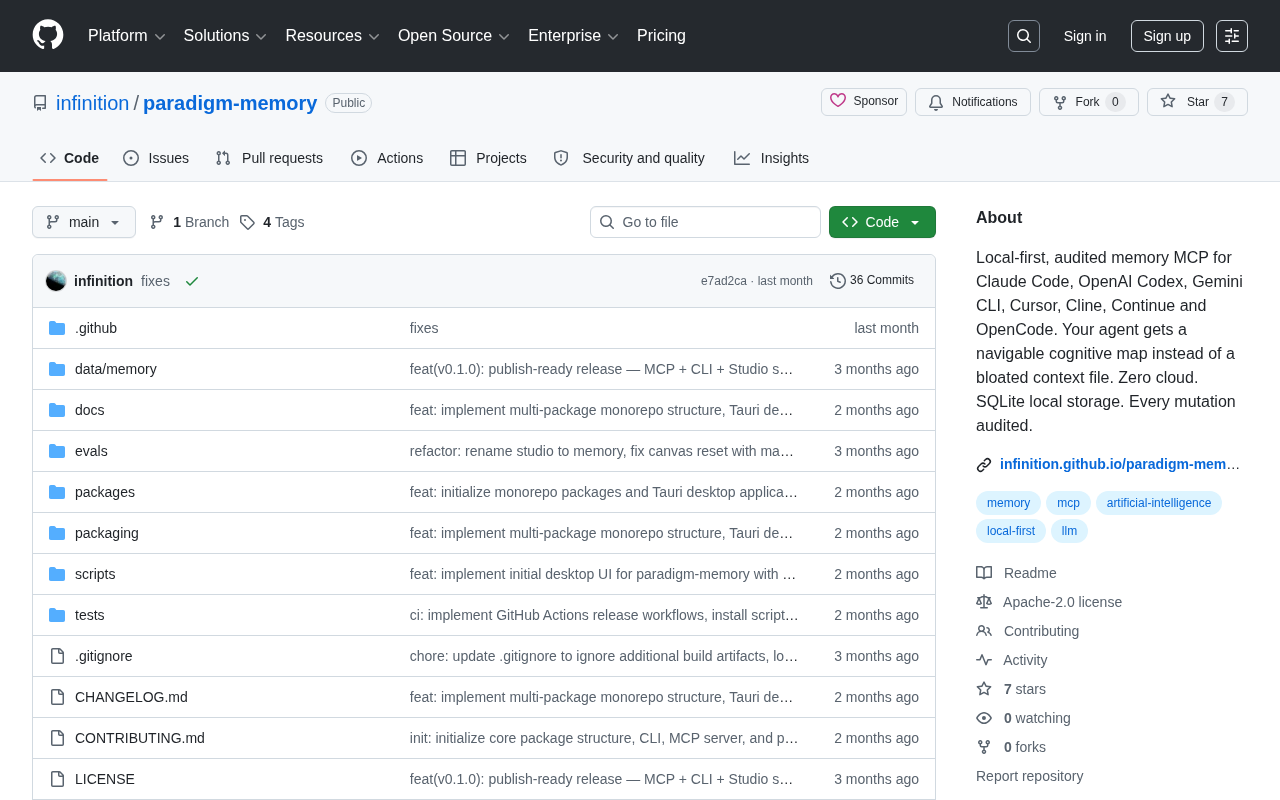
Paradigm Memory: A Local-First Memory System for AI Coding Assistants
paradigm-memory is a local MCP memory tool for Claude Code, Cursor, and Cline. It uses SQLite local storage, zero cloud, full audit trails, and a navigable cognitive map instead of bloated context files.