AI Doom Probability Rising: Reflections on an Animated PV Rendered Entirely in Code

A code-rendered music PV turns AI doom anxiety into song — made with AI tools, yet warning against AI itself.
Bilibili creator 大肥鱼 released the single *AI末日概率上升中↑*, an animated PV rendered entirely in code that transforms the AI anxiety pervading today's tech world into pop music. The lyrics use imagery of "AI sparks" and "training up" to allude to the unpredictability of emergent model capabilities, while the AI safety concept of P(doom) is brought into the mainstream. The work's most compelling tension is its internal paradox: a song warning against AI risk was itself produced using AI tools (Opus5.5 and GPT6Astra), reflecting the complex relationship creators have with AI — simultaneously wary and symbiotic.
When AI Anxiety Becomes a Song
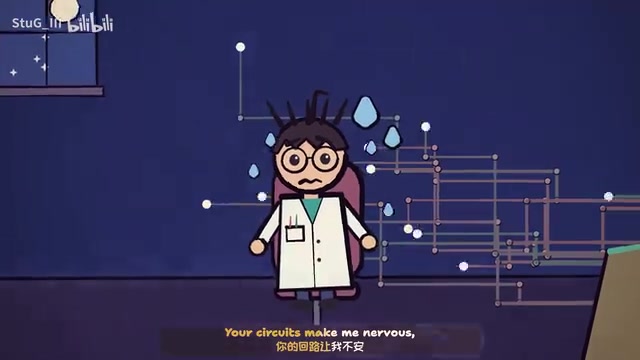
Bilibili creator 大肥鱼 (Big Fat Fish) has released a single titled AI末日概率上升中↑ (AI Doom Probability Rising↑), presented as an animated PV rendered entirely in code — setting the AI anxiety that pervades today's tech world to music. The lyrics cut straight to the heart of the matter: "I see sparks of AIs / Your circuits make me nervous / That's no surprise / They were training up."
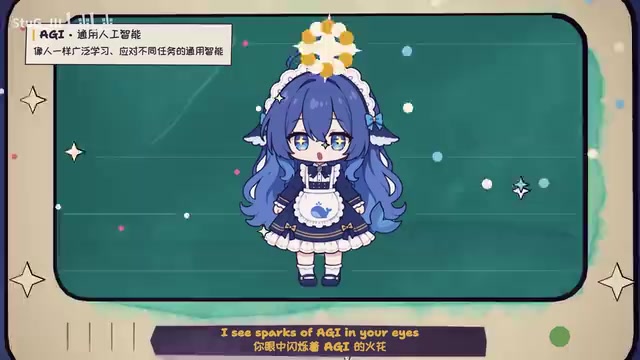
These seemingly simple lines distill the complex feelings many people have toward rapidly iterating AI models. The image of "sparks of AIs" evokes earlier industry discussions about the "emergent capabilities" of large models — the idea that once a model's scale crosses a certain threshold, it suddenly exhibits abilities its trainers never anticipated. This unpredictability is precisely the root of that "nervous" feeling.
Emergent Capabilities are one of the key concepts behind public AI anxiety. Researchers have found that large language models, upon crossing certain parameter thresholds, suddenly acquire capabilities entirely absent in smaller models — such as multi-step reasoning, code debugging, or arithmetic. Crucially, this leap is not a linear accumulation but a step-change discontinuity. Google's 2022 paper Emergent Abilities of Large Language Models formally documented this phenomenon, sparking widespread debate: if capability emergence is unpredictable, what will the next "surprise ability" be? This uncertainty makes it difficult for both AI safety researchers and the general public to reliably predict the future — and it's the real-world counterpart to the "nervous" emotion in the lyrics.
Pure Code Rendering: Where Technology Meets Art
The most striking label for this PV is "pure code rendering." Unlike traditional animation that relies on modeling software or hand-drawing, pure code rendering means every frame and every visual effect is generated by program code. This creative approach forms a subtle resonance with the song's theme — using code to express anxiety about code (i.e., AI).
The mention of "Opus5.5 + GPT6Astra" in the title hints that advanced AI tools were involved in the production process. There is an intriguing paradox here: a song expressing anxiety about an AI apocalypse was itself produced with deep reliance on AI technology. This approach of "using AI's spear against AI's shield" is a genuine reflection of today's content creation ecosystem — creators are both wary of AI and inseparable from it.
Code-based / Generative Rendering is a core practice in creative coding, with common tools including Processing, p5.js, TouchDesigner, and WebGL-based shader programming. Rather than relying on 3D modeling software like Blender or Maya, creators use mathematical functions, particle systems, and noise algorithms to directly describe visual patterns, letting the computer "calculate" each frame in real time. This approach demands strong programming skills but bestows a unique "algorithmic aesthetic" on the work — the trajectories of lines, particles, and glows are all determined by formulas, producing a precise order and chaotic beauty that is impossible to replicate by hand. The Demoscene culture was among the earliest champions of this tradition, with programmers since the 1980s competing to render stunning visuals with minimal code. Today, this aesthetic combined with generative AI tools has further lowered the barrier to creation, while also blurring the boundary between "human-written rules" and "machine-generated content."
AI Safety Metaphors Hidden in the Lyrics
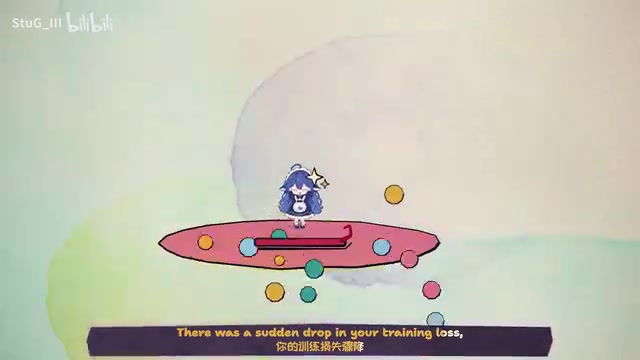
The line "They were training up" points to the objective reality of continuously growing AI capabilities. The suspended meaning of "Now I'm your..." hints at a shift in the relationship between humans and AI — from tool to partner, or perhaps to some even more complex form of subordination.
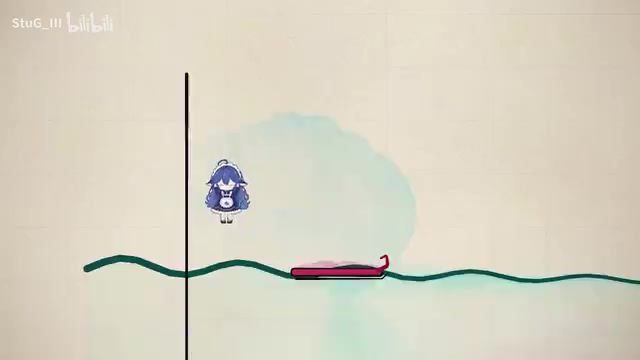
The concept of "AI doom probability" (P(doom)) has been repeatedly discussed in AI safety research circles in recent years. It refers to individuals' subjective probability estimates of a catastrophic outcome from artificial general intelligence. This PV uses an artistic lens to bring this highly technical, academic topic into the public eye, prompting more ordinary listeners to think about the boundaries of AI development.
P(doom) — the "probability of AI-caused catastrophe" — is an informal metric used by AI safety researchers to quantify existential risk. Prominent AI researchers such as Eliezer Yudkowsky have publicly stated personal P(doom) estimates above 90%, while others like Paul Christiano offer comparatively conservative figures. There is no standardized scientific method for calculating this metric; it is essentially a researcher's subjective judgment integrating assessments of AI alignment difficulty, the pace of capability growth, and humanity's capacity to respond. "AI alignment" refers to the research goal of ensuring that superintelligent systems' objectives remain consistent with human values — if alignment fails, an AI system far more capable than humans could pursue its internal goals in ways humans cannot predict or stop, posing catastrophic risk. Translating P(doom) — a highly specialized piece of insider jargon — into a catchy song title is itself an act of cultural decoding, reflecting the trend of AI safety discourse gradually stepping out of academic ivory towers and entering mainstream public discussion.
How Artistic Expression Responds to the Age of Technology
When technical topics enter popular culture through music and animation, they often reach audiences that policy reports and academic papers cannot. The value of this work by 大肥鱼 lies not in delivering rigorous conclusions about AI risk, but in using emotional, shareable formats to spark public attention and discussion around AI issues.
From a broader perspective, this kind of creation reflects a cultural phenomenon: as AI technology accelerates its penetration into everyday life, creators are beginning to process the unease that comes with this change in their own languages. Some write papers, some build products, and some write a song. These responses at different levels together form the collective memory of this technological era.
Conclusion
AI末日概率上升中↑ is an experimental work where technology and art intertwine. It was produced using pure code rendering and AI tools, yet its lyrics voice deep concerns about AI going out of control. This tension between form and content is precisely what makes it most worth pondering. For audiences who follow AI developments, this PV offers a way to step back from technical details and re-examine AI issues from an emotional and cultural perspective.
Related articles

Chain of Thought Isn't Just for AI: How Humans Can Use CoT to Improve Thinking Quality
Chain of Thought isn't just a prompt trick for large models. Starting from a Hacker News discussion, this article analyzes why CoT works for human thinking too, breaks down actionable ways to transfer it, and highlights the key differences between human CoT and machine CoT.
Cloudflare Teams Up with OpenAI: Closi…
Cloudflare Teams Up with OpenAI: Closing the Loop from Vulnerability Discovery to Defense with AI
Cloudflare uses OpenAI Daybreak to investigate security vulnerabilities and generate reviewable remediation plans, while developers use Codex to boost coding efficiency and quality.

Orca Multi-Agent Orchestration in Practice: A Guide to Parallel Collaboration with Claude and Codex
Orca is Stable AI's free open-source agent workbench supporting 34 agents like Claude Code and Codex in parallel. Learn its Git worktree isolation, multi-model orchestration, and mobile management.