AI Doom Warnings Are Back: The Strategic Logic Behind Industry Anxiety
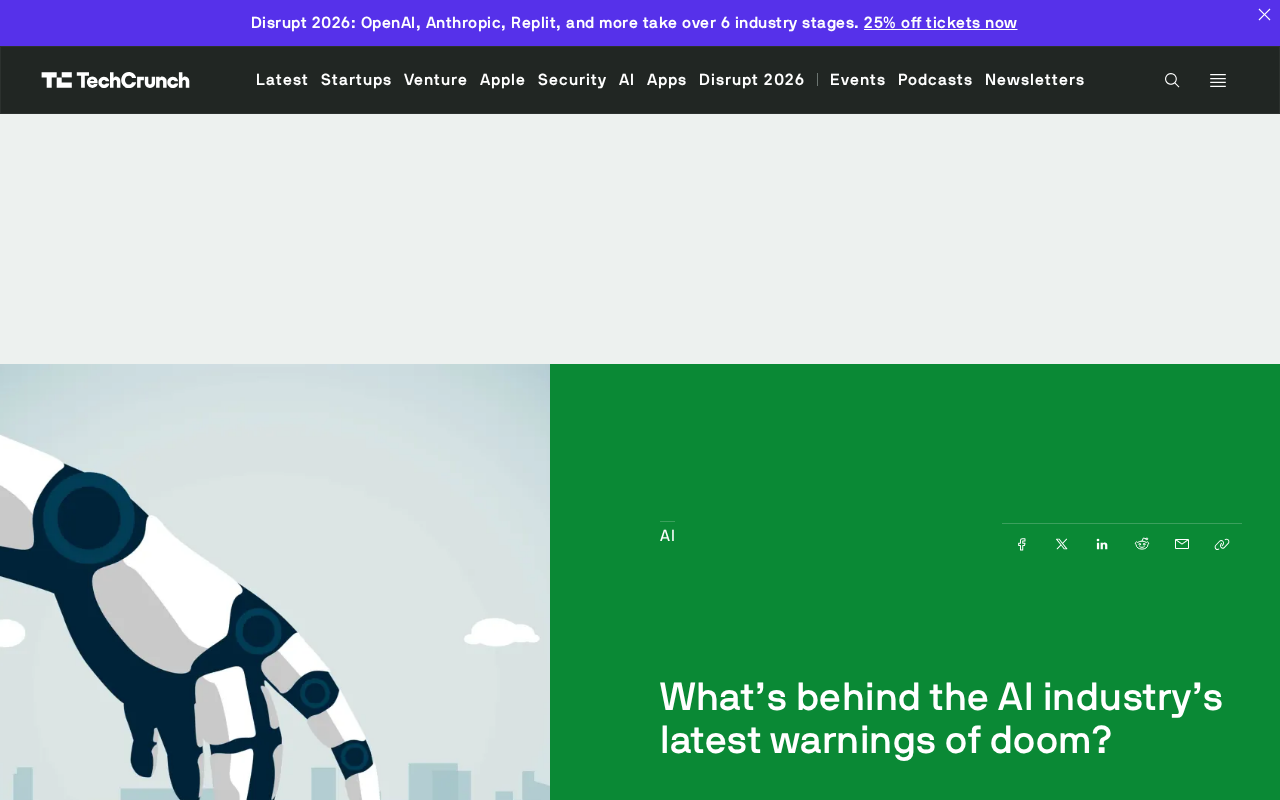
AI doom warnings keep cycling back — driven by both genuine technical risk and strategic commercial narratives.
The AI industry is once again caught up in debate over existential risk. The article argues that doom warnings have a dual origin: legitimate safety concerns around alignment and interpretability as large models grow more powerful, and strategic narratives where "dangerous by design" framing serves commercial interests and helps incumbents shape regulation in their favor. The piece also warns that fixating on distant existential threats can crowd out urgent present-day concerns like algorithmic bias, data privacy, and job displacement. The rational response is to neither panic nor dismiss — but to interrogate the evidence, the speaker's interests, and what governance actions are actually within reach.
Why AI Doom Narratives Keep Resurfacing
The AI industry has once again plunged into a debate about "existential threats." Tech media outlet TechCrunch recently hosted a discussion on its Equity podcast about whether artificial intelligence could pose an existential risk to humanity. This isn't a new topic — but it resurfaces periodically in new forms, and it's worth calmly unpacking what's really driving it.
"AI doom" refers to concerns held by some researchers and industry insiders that advanced AI could spiral out of control and threaten the survival of human civilization. These arguments have waxed and waned over the past several years, typically intensifying around major technical breakthroughs or high-profile public statements from prominent figures.
The Multiple Forces Behind the Warning Chorus
Understanding this debate requires separating two distinct threads: genuine technical concern and narrative strategy.
Real Technical Concerns
Some warnings genuinely stem from a cautious view of rapidly advancing capabilities. As large model capabilities continue to grow, researchers' attention to interpretability, controllability, and alignment is entirely reasonable. This line of concern centers on a fundamental question: do we truly understand the systems we're building?
Where Narrative and Commerce Intersect
On the other hand, doom narratives are frequently criticized for serving marketing and discourse-control purposes. When a company emphasizes that its technology is "powerful enough to be dangerous," it is, in a sense, implicitly signaling its own technical superiority. Exaggerating risk can function as a form of reverse capability advertising — and may also shape regulatory outcomes in ways that build moats for incumbents who already hold an advantage.
Why This Debate Actually Matters
Regardless of whether warnings stem from sincere concern or strategic positioning, the debate itself carries real consequences for the industry and society. It drives public conversation about AI governance, safety research investment, and regulatory frameworks. The problem is that an excessive focus on distant "existential risks" can divert attention from far more pressing, immediate issues — algorithmic bias, data privacy, employment disruption, and information integrity, to name a few.
How to allocate attention and resources between "long-term existential risk" and "present-day real-world harm" is where the genuine disagreement in this debate lies.
Keeping a Clear Head
When faced with recurring AI doom warnings, the rational response is neither blind panic nor wholesale dismissal. Technical risks deserve serious consideration — but we should also remain alert to the commercial narratives and power plays embedded within them. For readers following AI development, the important questions to ask are: What is the specific basis for the warning? What is the position and interest of the person raising it? And what concrete governance actions are actually available to us right now?
This grand debate about humanity's future must ultimately come back down to specific, actionable questions of technology and policy.
Related articles

Codex vs. Claude Code: A Beginner's Guide to AI Coding Agents
Codex vs. Claude Code: which AI coding agent should you use? This guide compares both tools and walks beginners through GPT account setup, virtual number platforms, US App Store switching, and subscription cost-saving tips.
Pi-chat in Practice: Connecting External Tools to AI Agents via MCP Protocol
Learn how to integrate external tools into AI Agents using MCP protocol with Pi framework. Covers pi-mcp-adapter setup, .mcp.json config, Extension Factory initialization, and a live 12306 train ticket query demo.
AI Large Model Engineering Careers Decoded: Algorithm Research vs. Engineering Deployment — Which Path Is Right for You?
AI large model jobs split into algorithm research and engineering deployment. Learn the skill requirements, core competencies like RAG and Multi-Agent, and why Harness architecture is the 2026 interview differentiator.