AI Eliminates Information Asymmetry: Is the Era of Programmers Making Money Through Outsourcing Over?

AI eliminates information asymmetry; the winter for programmers' outsourcing side gigs has arrived, requiring a shift from selling skills to selling judgment.
Starting from a programmer's video viewpoint, the article analyzes the judgment that the winter for outsourcing and side gigs has arrived. The author points out that outsourcing is essentially a dual arbitrage of information asymmetry and skill gap, and AI is compressing both layers: students and novices turn to AI tools for self-learning, while merchants use low-code and AI-assisted development to build lightweight systems themselves, diverting standardized demand. But the author doesn't argue programming is useless—programmers' system understanding, industry cognition, and internet thinking remain relative advantages. Skills have shifted from sellable products to efficiency levers. The article distills directions like charging by results, treating AI as capacity, deepening vertical industry know-how, and shifting from executor to solution designer, while noting the judgment comes from a single creator's observation without data support.
A programmer stated bluntly in a video: the "winter" for taking on outsourcing work and side gigs has arrived. His judgment is not an isolated case—as AI capabilities become more accessible, the path of monetizing information asymmetry is being systematically eliminated. This article does not discuss panic, but rather breaks down the logic behind this judgment and what cards programmers still have left to play.
The Underlying Logic of the Outsourcing Business Is Loosening
The video author's core point is: the era of programmers making money through outsourcing "is gone and never coming back." He specifically mentioned that in the first year or two after AI emerged, many people still had the courage to try, but "by this year" courage has plummeted—because more and more people know about this, even college students are starting to understand it, and naturally fewer people are willing to pay for such services.
This observation touches on a key mechanism: the essence of the outsourcing business is a dual arbitrage of information asymmetry + skill gap. The client doesn't understand technology or know how to implement it, which is why they need to pay someone. AI is simultaneously compressing both layers of this gap—on one hand, enabling non-technical people to build prototypes themselves; on the other hand, dramatically lowering the barrier to accessing technical information. The author puts it directly: "AI will eliminate all kinds of information asymmetry."
Information asymmetry arbitrage refers to profiting from the unequal mastery of the same information between two parties in a transaction. In traditional outsourcing scenarios, the client typically doesn't understand the difficulty, cost, and available options for technical implementation, while the service provider possesses professional knowledge. This asymmetry allows the provider to close deals at prices higher than actual cost. The characteristic of information-asymmetry businesses is that they don't create additional value but rely on cognitive barriers to maintain premiums. Once the barrier is weakened—for example, when AI tools allow clients to assess feasibility themselves, or public tutorials lower the learning curve—the premium space rapidly shrinks. This is why AI's spread has such a direct impact on outsourcing: it attacks precisely the cognitive asymmetry that such businesses depend on for survival.
Who Is Squeezing Programmers' Outsourcing Space

The author identifies two types of demand-side groups being squeezed.
The first group is students and novice users. In the past, they might have purchased courses, tutorials, or done-for-you services. Now AI tools themselves serve as the "teacher," and willingness to pay has declined.
The second group is merchants and enterprises. The author observed that some merchants want to build a system and "no longer need a dedicated programmer to do it—they can build it themselves." This aligns with the industry trend of low-code and AI-assisted development tools becoming widespread—demand hasn't disappeared, but a portion of it has been absorbed by tools.
It's important to stay calm here: "building it yourself" typically applies to lightweight, standardized needs; complex systems, long-term maintenance, and architecture design still require professional capabilities. But for programmers whose main income source is "taking small orders and building lightweight systems," the impact is indeed real.
Low-code/no-code platforms are a category of tools that enable non-professional developers to build applications through visual drag-and-drop, pre-built components, and configurable workflows. Representative products include Jiandaoyun and Mingdao Yun in China, as well as Bubble and Retool overseas. These platforms excel at handling standardized needs such as forms, approval workflows, and data dashboards, highly matching the scenario mentioned in the article where "merchants can build it themselves." Their limitation is that when business logic is complex and requires high performance or deep customization, the platform's scalability quickly hits its ceiling, ultimately still requiring professional developers to step in. Therefore, they divert lightweight demand rather than replacing the entire outsourcing market.
After the Information Asymmetry Dividend Disappears, Are Skills Still Valuable?

The author is quite candid about his own situation: in the past, "frankly speaking, we made money off our information asymmetry," and this approach "no longer works." He can only find another way out and research other tracks.
But he doesn't slide into "programming is useless." He explicitly says: "We still have this programming skill, although it has become dispensable after AI." The turn that follows is even more noteworthy—programmers "will always know more and understand more than those zero-foundation novices," have deeper industry understanding, and internet thinking can better help observe things.

This is actually the most valuable part of the entire piece: what AI replaces is execution-layer coding labor, but the judgment of "understanding how systems work and how to translate requirements into solutions" has not been replaced—it simply can no longer serve as a standalone reason to charge. In other words, skills have shifted from "product" to "leverage"—they don't directly make money on their own, but they can amplify your efficiency on other tracks.
The distinction between execution layer and judgment layer is often used in software engineering to describe different types of labor. The execution layer refers to tasks that can be explicitly instructed, such as writing code according to established plans, debugging, and deployment. These workflows are clear and results verifiable, making them most easily replaced or accelerated by AI-assisted tools. The judgment layer involves requirement trade-offs, architectural decisions, risk identification, and cross-department coordination, relying on understanding of business context and accumulated experience—difficult to formalize into prompts. What the article calls "skills shifting from product to leverage" is essentially the commoditization of execution-layer capabilities—they are no longer scarce, but those who master them can more quickly translate judgment into deliverable results.
The Programmer's Next Step: From Selling Skills to Selling Judgment
The author says he has "recently been exploring such a track and has currently achieved zero-to-one," with the next step being "one-to-one-hundred," and invites interested people to connect. He didn't reveal the specific track, but this posture of "first acknowledging the old path has failed, then taking action to find a new one" is more valuable as a reference than any specific answer.
Combining his arguments, several directional judgments can be distilled:
- Stop selling time; sell results. Hourly billing will be continuously undercut by AI; charging by deliverables and business value has more room.
- Treat AI as production capacity, not an opponent. For the same requirement, the speed and cost of completing it with AI is several times better than before. The question becomes "how to get enough demand" rather than "how to write faster."
- Deepen industry understanding in vertical domains. General coding ability is depreciating, but the combination of "business know-how in a specific industry + technical implementation capability" remains scarce.
- Shift from executor to solution designer. Merchants can build systems themselves, but whether they're building them right and whether they should build them this way still requires someone to judge.
Summary
The conclusion that "making money through outsourcing no longer works" basically holds true for programmers who only handle standardized lightweight requirements; for those with industry depth and solution capabilities, a more accurate statement is "the model of charging based on information asymmetry no longer works." The author's video doesn't provide a complete answer, but the direction he points to deserves serious attention: when AI eliminates information asymmetry, the remaining competitiveness can only come from judgment, industry understanding, and speed of action.
As for what track he ultimately explores, the author says he will continue to share—which itself is a public validation process.
One-line Summary
AI eliminates information asymmetry; the winter for programmers' outsourcing side gigs has arrived, requiring a shift from selling skills to selling judgment.
Paragraph Summary
Starting from a programmer's video viewpoint, the article analyzes the judgment that "the winter for taking on outsourcing and side gigs has arrived." The author points out that the essence of the outsourcing business is a dual arbitrage of information asymmetry and skill gap, and AI is simultaneously compressing both layers: students and novice users are turning to AI tools for self-learning, and small-to-medium merchants can also use low-code and AI-assisted development to build lightweight systems themselves, diverting standardized lightweight outsourcing demand. However, the author does not slide into the "programming is useless" argument, but emphasizes that programmers' understanding of systems, industry cognition, and internet thinking remain relative advantages—skills have simply shifted from directly sellable products to levers that amplify efficiency. Based on this, the article distills directions such as charging by results, treating AI as production capacity, deepening vertical industry know-how, and shifting from executor to solution designer, while noting that this judgment comes from a single creator's observation and lacks data support.
Related articles
 Tech Frontiers
MuJoCo: An Analysis of DeepMind's Open-Source General-Purpose Physics Simulator
An in-depth analysis of Google DeepMind's open-source physics simulator MuJoCo: high-performance C++ kernel, MJCF modeling format, contact solving principles, MJX GPU acceleration, and robot reinforcement learning use cases.
 Tech Frontiers
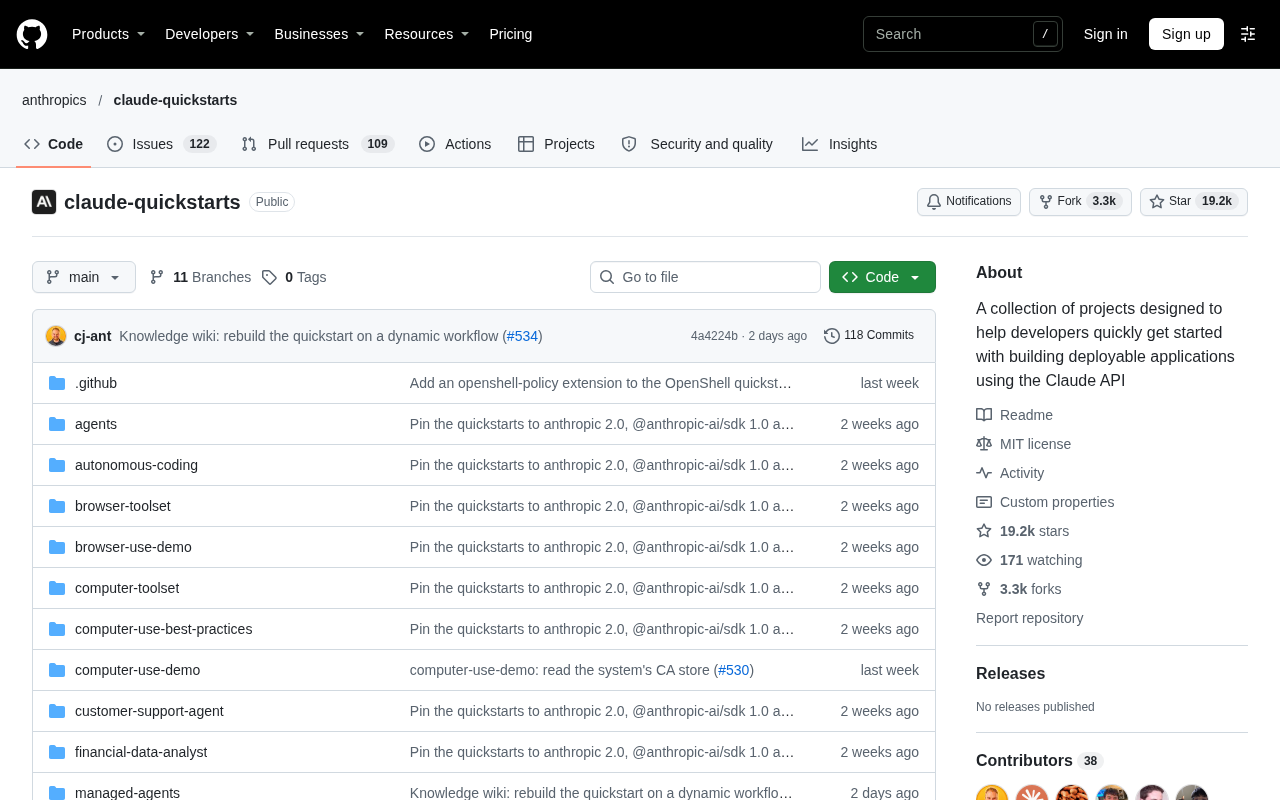
Claude API Quick Start: The Official Quickstarts Project Collection
Anthropic's official claude-quickstarts project collection helps developers quickly build deployable apps with the Claude API. Nearly 20k stars, Python-based, great for beginners and prototyping.
 Tech Frontiers
AI Agents Connecting Directly to APIs: Which Calls Can Be Safely Allowed?
AI agents can call any API, but the real challenge is deciding which calls can be safely allowed. This article analyzes allowance decisions from three dimensions—intent matching, least privilege, and controllable impact—and argues that the control layer should sit outside the agent, combined with audit traceability to build a trustworthy API call governance mechanism.