AI for Every Language: The Deeper Meaning Behind Google's Living Language Models

Google pushes AI beyond mechanical translation to genuinely understand living languages and close the digital language gap.
Google has signaled a clear shift in its AI language technology: from word-for-word text translation toward genuinely understanding the cultural context, spoken expressions, and regional nuances behind each language. The goal is for AI to understand languages "exactly as they are expressed," with particular focus on low-resource minority languages long invisible in the digital world. "AI for everyone in every language" is both a technical ambition and an inclusivity mission — language being the most fundamental barrier to education, healthcare, and the digital economy. Significant challenges remain, however, including scarce training data for low-resource languages, risks of cultural misrepresentation, and a lack of detailed technical disclosure from Google.
A New Direction for AI Language Capabilities
Google has recently sent a clear signal: artificial intelligence is moving beyond traditional text translation toward genuinely understanding the world's living languages. The company's stated goal is to build models that understand languages "exactly as they are expressed" — not merely swapping words from one language for their counterparts in another, but capturing the cultural context, spoken expressions, and regional nuances behind each language.
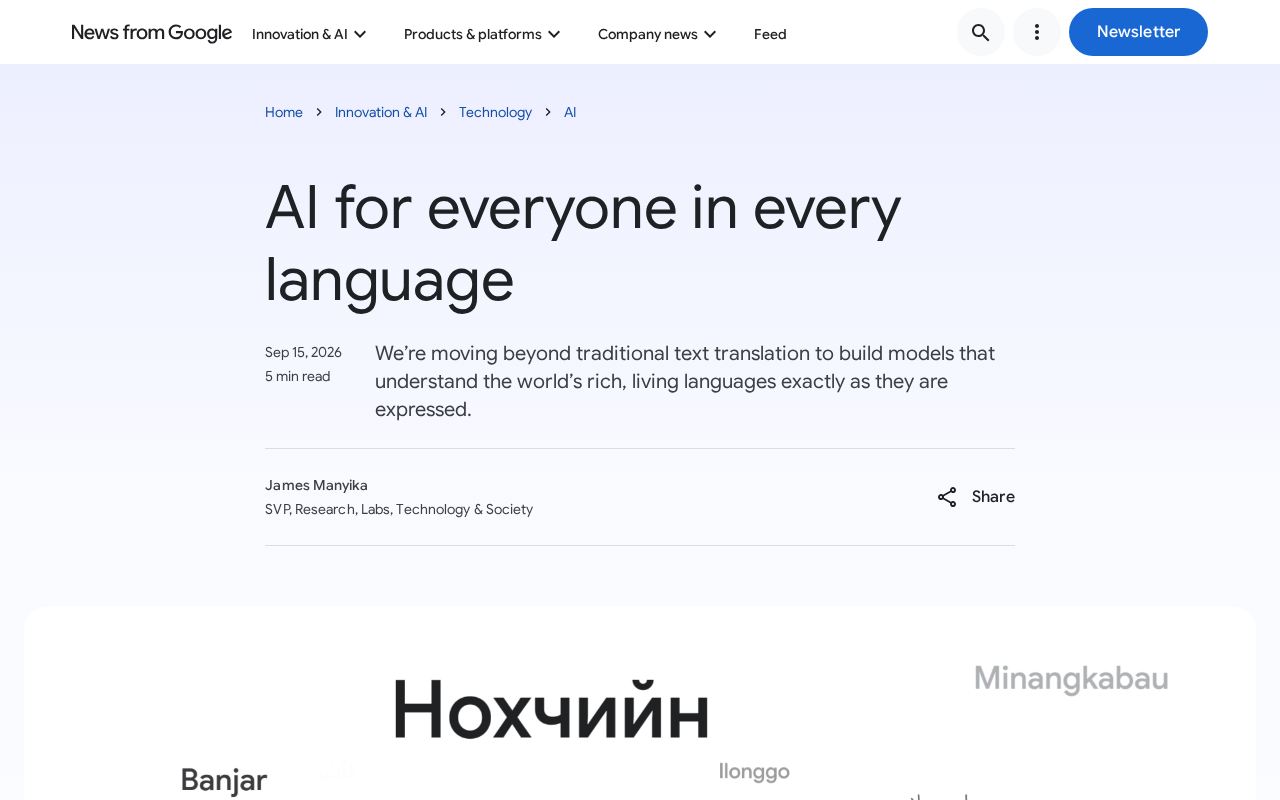
This shift reflects a reckoning with the limitations of existing translation technology. Traditional machine translation systems rely on large parallel corpora (multilingual texts of the same content side by side), which work reasonably well for resource-rich languages like English, Chinese, and Spanish — but often fall short for the thousands of "low-resource languages" spoken around the world. Google's emphasis on "living languages" is a direct attempt to break through this bottleneck.
From Text Translation to Understanding Language Itself
A "living language" is one that is actively used and continuously evolving within a real community. These languages contain slang, dialects, tonal shifts, and culturally specific expressions — precisely the elements that rigid text translation handles worst.
Google's ambition to "go beyond traditional text translation" means models must develop deeper semantic understanding rather than performing surface-level word substitution. A greeting with strong local flavor, for instance, may lose all its warmth and social meaning in a literal translation. Understanding language "as it is expressed" requires AI to perceive the speaker's intent, emotion, and cultural background.
For communities that speak minority languages, this kind of technology carries special significance. A large portion of the world's population speaks mother tongues that have long been "invisible" in the digital world — lacking input methods, translation tools, and even basic content resources. Building AI that covers every language is, at its core, an effort toward digital inclusion.
From a technical standpoint, modern large language models (LLMs) tackle multilingual tasks through two primary strategies: multilingual pre-training, which involves jointly training a single model on massive multilingual corpora (e.g., Google's mBERT and PaLM 2); and cross-lingual transfer learning, which applies linguistic patterns learned from high-resource languages to low-resource ones. The theoretical basis for the latter is that human languages share universal commonalities in syntactic structure and semantic logic, allowing models to use these shared features to compensate for data scarcity in low-resource languages. However, when languages differ drastically in writing systems, word order, or pragmatic conventions, transfer effectiveness drops sharply. Google's emphasis on understanding languages "as they are expressed" hints that its approach may go beyond cross-lingual transfer — potentially extending toward multimodal or community-driven data collection that is more grounded in real language use.
The Inclusive Vision Behind "AI for Everyone"
The phrase "AI for everyone in every language" captures the core aspiration of this work: technological universality. As AI capabilities become increasingly concentrated around a handful of dominant languages, the language gap risks deepening the digital divide. Making AI understand and serve every language is a critical step toward closing that gap.
This direction also resonates with the broader trend toward the democratization of technology. Whether it's access to education, healthcare information, or participation in the digital economy, language is the most fundamental barrier. When a user who speaks only a local dialect can access global knowledge and express their needs through AI, technology's value truly reaches those who need it most.
Real-World Challenges Worth Noting
Beyond the grand vision, achieving "coverage of all languages" faces significant technical and ethical challenges. The core difficulty is ensuring model quality in the face of scarce training data for low-resource languages. At the same time, language carries deep cultural identity — how AI handles these languages without cultural misrepresentation, and how it maintains respect for language communities, requires careful consideration.
Given the limited public information available so far, details about which model architectures Google is using, how many languages are covered, and what the actual performance looks like still await more thorough technical disclosure. But strategically, elevating AI's language capabilities from "translation tool" to "language understander" undoubtedly represents a trend in this field worth following closely.
The low-resource language problem is typically quantified in academia using a "linguistic diversity index": of the approximately 7,000 living languages in the world, fewer than 100 have sufficient digital corpora, and the vast majority have extremely scarce written text resources — some lacking even a standardized writing system. To address this challenge, researchers have explored multiple approaches: using spoken audio recordings rather than text as training data (speech-first models), engaging community volunteers for crowdsourced annotation, and applying "unsupervised cross-lingual representation learning" to align language spaces without parallel corpora. Google's previously released Universal Speech Model (USM) already covers speech recognition for over 300 languages, while Meta's No Language Left Behind (NLLB) project covers text translation for 200 languages. These pioneering efforts offer methodological reference points for the vision of "covering all languages" — and also reveal the exponential challenges involved in scaling from 300 languages to thousands.
Related articles

Complete Guide to Running Your Own Local DeepSeek: Web Access, Knowledge Base & Privacy
Step-by-step guide to deploying a private DeepSeek locally using Ollama, Chatbox, and AnythingLLM — with web access, RAG knowledge base, and full privacy.
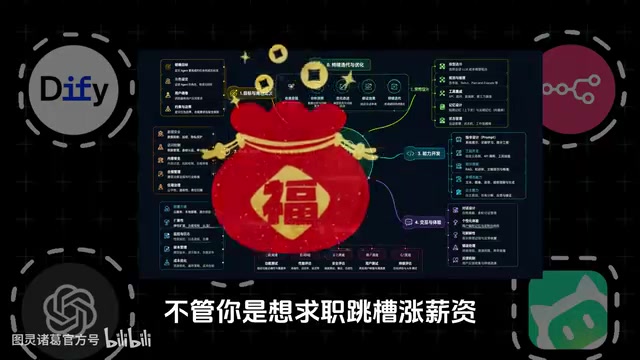
AI Agent Development: A 4-Stage Learning Roadmap from Beginner to Enterprise-Level Practice
A complete AI Agent learning roadmap from zero to enterprise-level: covering ReAct, multi-agent collaboration, Prompt tuning, RAG, MCP, and real-world projects.
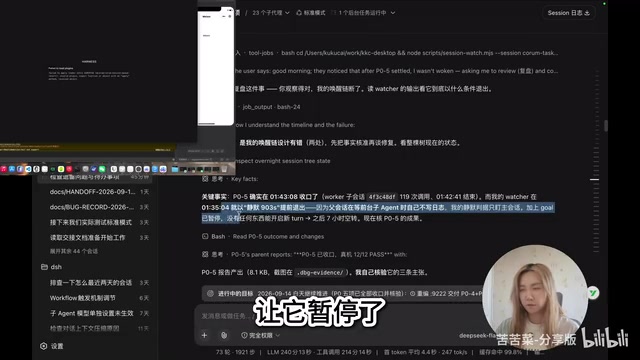
A New DeepSeek Harness Experiment: Agent Supervising Agent for Self-Evolution
A developer built an "Agent supervising Agent" self-evolution system using DeepSeek Harness, with a ledger mechanism enabling near-unattended overnight software iteration.