GitHub Daily·Nov 07: Agent-Ready and Context Compression

meta's astryx brings agent-ready design systems, billion-context compresses context 5x for month-long sessions, and veteran sherlock nears 100k stars.
Today's GitHub Trending reveals two hidden threads: agent adoption and local self-control. meta's astryx makes design systems agent-ready, billion-context compresses context fivefold to fit month-long sessions, sherlock nears 100k stars with 1,700+ daily gain, localthings connects Samsung appliances locally without cloud, and nvke orchestrates GPUs on bare metal.
Today's Overview
Today's GitHub Trending is quite interesting. Five projects made the list, spread across completely different domains, but if you look closely you'll notice a hidden thread.
On one side is meta's astryx, an "agent-ready" design system. On the other is ranxianglei's billion-context, a plugin that compresses context to one-fifth. These two projects seem worlds apart, but they're both answering the same question: how do we get AI agents to actually do work?
There's also the veteran project sherlock, which has surged to nearly 100k stars. A tool for tracking social accounts that can still gain over 1,700 stars in a single day in 2026—that alone is worth discussing.
The remaining two, localthings and nvke, one manages your Samsung appliances at home, the other manages your data center's GPU cluster. One goes left, one goes right, but both are about "local" and "self-control."
Let's go through them one by one.
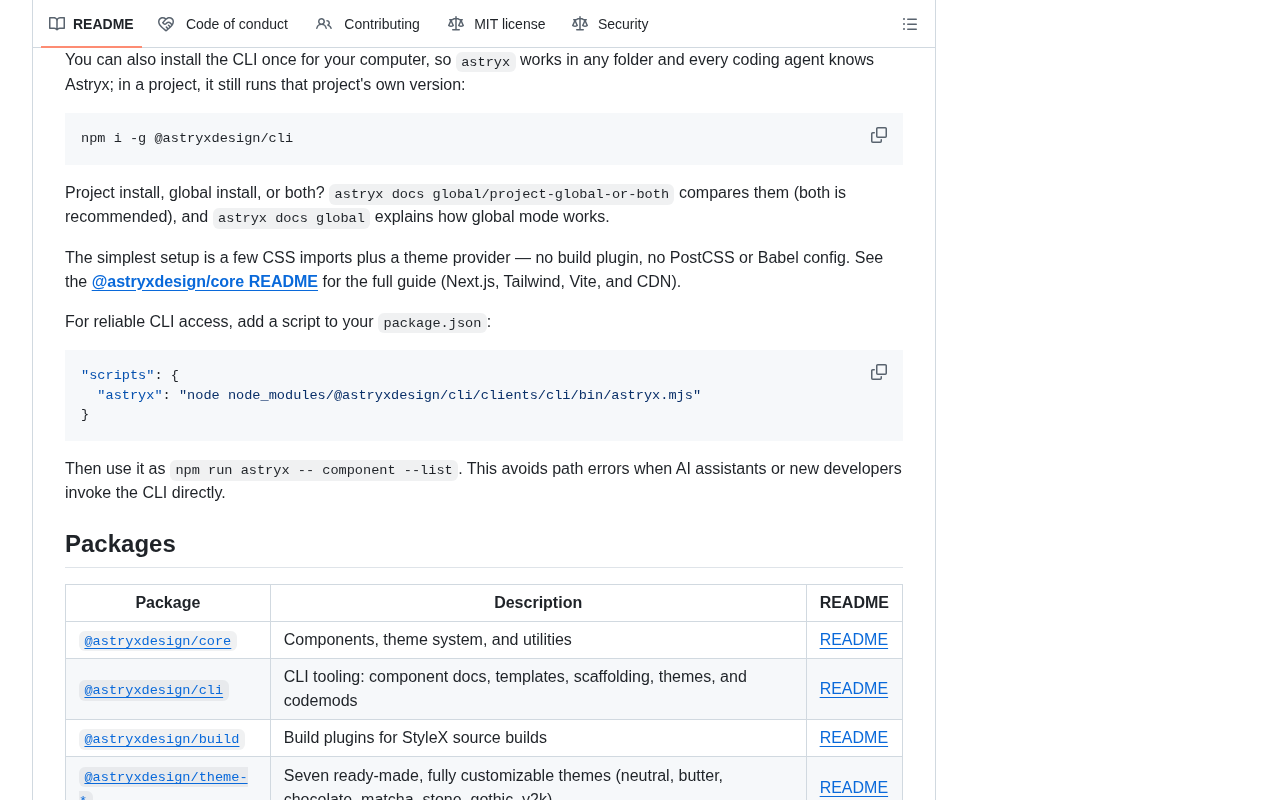
meta/astryx: Design Systems Now Serve Agents Too
Project Positioning
This is a design system open-sourced by meta, built around two keywords: fully customizable, and agent-ready.
Problem It Solves
Design systems have been for humans for the past decade. Component libraries, color specs, spacing standards—the goal is to give designers and frontend engineers a shared language.
But by 2026, not all code is written by humans. When your agent generates an interface, what does it need? It needs a set of rules machines can understand, not a pile of documentation for people.
astryx fills this gap. It turns design constraints into something agents can directly consume.
Core Features
First, full customization. Not the kind where you just change the primary color—you can swap everything from the token layer to the component layer.
Second, agent-ready. This term is key. It means the system was designed with agent invocation in mind from the start, rather than bolting on an API afterward.
Use Cases
Imagine a team of ten people, three of whom are using Claude Code or Cursor to write interfaces. Without a unified agent-readable spec, will the three generate consistent styles?
astryx is here to solve that chaos.
Tech Stack
TypeScript. No surprise there—frontend design systems basically all go this route. The reference value lies in how it makes "human-readable specs" and "machine-readable specs" come from the same source.
Stars Analysis
Over 14,000 stars, up 198 in a single day. For a design system that just emerged, that's not explosive, but it's steady. It shows the people paying attention have clear needs—they're not just here for the hype.
sherlock-project/sherlock: A 100k-Star Veteran Still Growing
Project Positioning
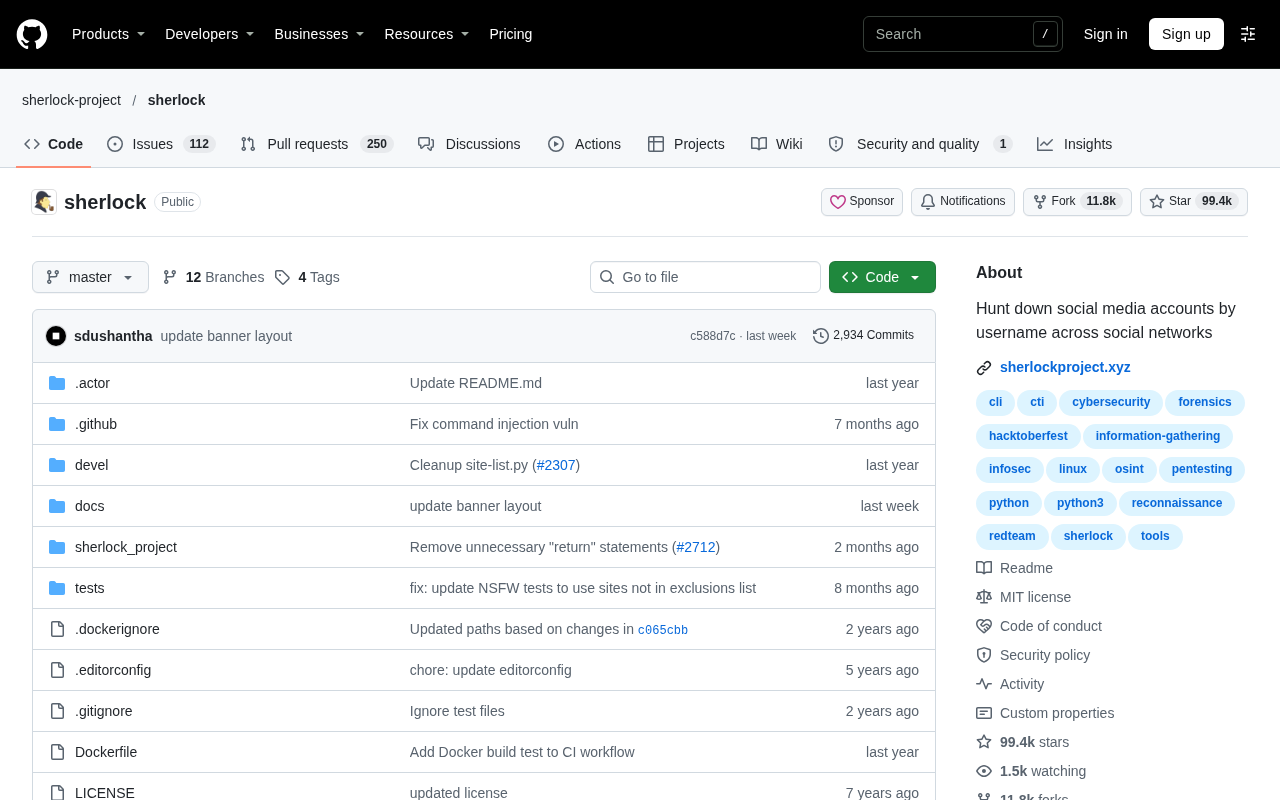
Enter a username, and it checks across hundreds of social networks whether this person has an account.
Problem It Solves
The need is simple. Security researchers, background checkers, or even just people who want to see which platforms their name is registered on—all need it.
The gap it fills: manually trying platform by platform is too slow.
Core Features
Broad coverage is its foundation. The number of supported sites keeps growing, which is where it pulls ahead of similar tools.
And it's a command-line tool, so it can be scripted and run in batches.
Use Cases
Security researchers doing open-source intelligence gathering use it. Companies doing brand protection to see if someone is impersonating them use it.
Of course, ordinary people checking their own digital footprint can use it too.
Tech Stack
Python. For scraping and request distribution, the Python ecosystem is the handiest. Its reference value for developers: a tool that does one thing to perfection, even with an ordinary tech stack, can grow into a 100k-star project.
Stars Analysis
Over 99,000 stars, up 1,761 in a single day. That growth rate for an old project is a bit unusual.
My judgment is that some hot event or influencer recommendation likely brought a wave of traffic. But the characteristic of such projects is that people who come stay, because the need is real.
mbillow/localthings: Manage Appliances Without the Internet
Project Positioning
Connect Samsung appliances to Home Assistant via the local network, no cloud account needed.
Problem It Solves
Have you ever wondered why your washing machine needs to connect to Samsung's servers to be controlled?
When the vendor's cloud goes down, your smart appliances become bricks. When the vendor changes an API, your automations all break.
localthings solves this feeling of being "held hostage."
Core Features
The core is one word: local. It uses your home LAN, doesn't go through any external servers, and doesn't require account registration.
Privacy and stability are its biggest selling points.
Use Cases
Home Assistant enthusiasts will love this. You want to create an automation like "turn off the lights when the washing machine finishes," but don't want to hand your home data to the vendor—this is the answer.
Tech Stack
Python. The Home Assistant ecosystem is Python's domain, so this choice is natural.
Stars Analysis
Over 900 stars, up 184 in a single day. The absolute number isn't large, but look at the ratio. Nearly 20% star growth in a day is a very strong signal for a new project. It shows the Home Assistant community is quickly discovering it.
ranxianglei/billion-context: Compress Context Fivefold
Project Positioning
A context compression plugin aimed at fitting month-long sessions—billions of tokens—into a 100k window.
Problem It Solves
This is the most interesting one today, in my opinion.
Everyone building long-session agents is struggling with one thing: no matter how big the context window is, it's never enough. You chat for a month, history piles up like a mountain, and the model's window can't hold it.
billion-context is saying: you don't need a bigger window, you need better compression.
Core Features
Two numbers are straightforward. 100k context is enough, and tokens are saved fivefold.
What does that mean? It means lower cost, higher speed, and the continuity of long sessions is preserved.
Use Cases
Those building long-term companion agents, personal assistants, or customer service systems that need to remember months of history—these are its target users.
Tech Stack
TypeScript. As a plugin-form project, TypeScript makes it easier to embed into existing agent frameworks.
Its reference value lies in pulling "compression" from the model layer to the engineering layer. You don't have to wait for the model vendor—you can optimize it yourself.
Stars Analysis
Over 4,300 stars, up 185 in a single day. For such a new project, that starting point is quite high. It shows the context cost problem has hit a nerve for too many people.
dsx-ai-factory/nvke: GPU Orchestration on Bare Metal
Project Positioning
NVIDIA Kubernetes Engine, a management plane for GPU clusters on bare metal.
Problem It Solves
Anyone running GPU training knows: using Kubernetes on the cloud is one thing, managing GPUs on bare metal in your own data center is another.
The latter lacks a mature, out-of-the-box management solution. nvke fills this gap.
Core Features
It's called NVKE, but note this is not official from NVIDIA. It's made by an organization called dsx-ai-factory.
Its value lies in bringing Kubernetes' orchestration capabilities to self-built GPU cluster scenarios.
Use Cases
AI companies building their own training clusters, university labs, or anyone who doesn't want to put all their compute in one cloud vendor.
Tech Stack
Go. The standard language of the Kubernetes ecosystem—no suspense there.
Stars Analysis
Over 300 stars, up 125 in a single day. Small base, but a high growth ratio. Infrastructure projects like this usually don't go viral, but they slowly accumulate a group of hardcore users.
Today's Trends: Two Hidden Threads
The first thread is agent adoption. astryx says design systems must be agent-ready, billion-context says context must be compressible. Both are solving engineering problems between agents "being able to demo" and "being able to work."
The second thread is local self-control. localthings doesn't let you use a cloud account, nvke lets you manage GPUs on bare metal yourself. Everyone is moving toward "keeping data and control in your own hands."
These two threads are actually the same thing. For agents to truly enter production, the prerequisite is controllable infrastructure and controllable costs. Today's list is a footnote to that statement.
Today's Must-See TOP3
Number one, billion-context. Context cost is an unavoidable hurdle for all agent developers, and this project's approach is very pragmatic.
Number two, astryx. Agent-ready design systems are a new category, worth a look for both frontend and agent developers.
Number three, localthings. Fewest stars, but the purest philosophy. If you use Home Assistant, go try it today.
See you tomorrow.
Related articles
 Tech Frontiers
Sherlock: An Open-Source Tool for Tracking Usernames Across Social Networks
Sherlock is an open-source Python tool that tracks social accounts across networks by username. This article covers its core features, why developers love it, typical use cases, and privacy compliance considerations.
 Tech Frontiers
Buoyant Open-Sources Kinference: An Inference Control Plane for vLLM on K8s
Buoyant open-sources Kinference, an inference control plane for vLLM on Kubernetes, with declarative routing, KV-cache-aware load balancing, and per-tenant metrics—claiming 95% lower median TTFT in official benchmarks.
 Tech Frontiers
The Truth Behind Anthropic's 2x R&D Speedup: A Deep Dive into the METR Report
METR's external evaluation shows Anthropic's AI testing progress over the past year roughly equals the prior two years, with R&D accelerating about 2x—and roughly 80% likely from AI assistance. The report also admits key evidence was redacted, the range spans 1.3x to 3x, and Anthropic says it hasn't doubled yet, diverging from METR's judgment.