AI-Generated Singer Likeness Sparks Controversy: Israeli Promotional Video Uses IAMDDB Without Authorization

Israeli promotional video uses AI-generated IAMDDB likeness without authorization, sparking debate on AI likeness rights and deepfake governance.
An unauthorized AI-generated likeness of British singer IAMDDB appeared in an Israeli promotional video, sparking heated discussion on Hacker News. The incident exposes ethical risks of using AI face-swapping and voice cloning for political propaganda: the technology is neutral, but context determines morality, and high-quality synthesis suggests organized operations. Legally, cross-border rights protection is difficult, and legislation varies on protecting AI-synthesized likenesses; the EU AI Act requires deepfake labeling but enforcement remains challenging. Industry responses include digital watermarking, content credentials, and collective management organizations. The article calls for platform labeling obligations, cross-border judicial collaboration, and technical protection, urging users to stay critical.
Event Overview: AI-Generated Content Crosses the Line on Celebrity Likeness Rights
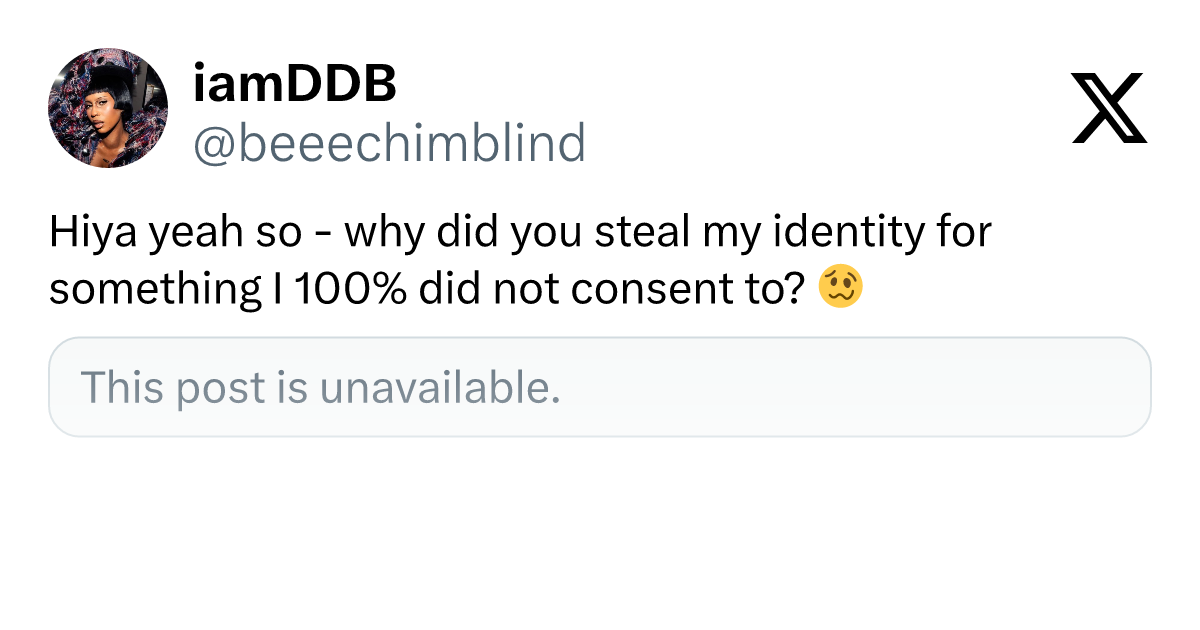
According to discussions in the Hacker News community, a recently released Israeli promotional video featured an AI-generated likeness of British singer IAMDDB (real name Diana De Brito) without her authorization. The incident quickly sparked debate about the ethics and legal boundaries of AI-generated content. Although the original post contained limited information, the tenor of comments on Hacker News reveals widespread concern within the tech community about such practices: when AI can convincingly replicate the likeness of public figures, who protects an individual's right to their own image and reputation?
Tech Ethics: The Risk of Misusing AI Face-Swapping and Voice Cloning
AI-generated singer likenesses are nothing new, but using them for political propaganda strikes a more sensitive nerve. As an independent musician, IAMDDB had her likeness embedded into a state propaganda apparatus, which could not only mislead viewers into thinking she endorses that position but also cause uncontrollable damage to her personal artistic reputation. Hacker News commenters pointed out that such practices are essentially the same as the misuse of "deepfake" technology—the technology itself is neutral, but the context of use determines its moral character.
From a technical implementation standpoint, generating a realistic singer likeness requires high-quality image generation models (such as diffusion models) and potentially audio synthesis technology. This demands considerable technical skill and resources from the creators, suggesting possible organized operations behind it. This also raises a question: if state actors can freely use AI to replicate the likenesses of foreign citizens, is the existing international legal framework sufficient to respond?
Diffusion Model is the mainstream technical architecture for image generation today. Its core idea is to progressively add noise to an image until it becomes pure noise, then train a neural network to learn the reverse denoising process; during generation, the model starts from random noise and gradually restores a clear image through multiple denoising steps. Combined with a text encoder, diffusion models can achieve text-to-image generation and also perform identity transfer and style control based on reference images. Compared with earlier generative adversarial networks (GANs), diffusion models have clear advantages in detail restoration, identity consistency, and training stability—which is also the technical foundation for the recent surge of realistic synthetic celebrity images. Their limitations include high computational cost, slow multi-step inference, and heavy dependence on the portrait distribution in training data.
Deepfake originated from 2017 Reddit discussions about face-swapping using deep learning, and now broadly refers to technologies and their outputs that synthesize or tamper with faces, voices, and video content based on generative AI. Typical methods include autoencoder-based face swapping, facial landmark driving, and voice cloning with lip-sync. Deepfake detection currently relies mainly on biological signals (such as subtle skin color changes caused by blood flow), detection of generation artifacts, and digital watermark tracing, but there is an ongoing arms race between detection and generation. Many countries have enacted legislation requiring labeling of deepfake content or prohibiting malicious use; however, cross-platform propagation and cross-border enforcement still limit governance effectiveness.
Legal Perspective: The Tug of War Between Likeness Rights and Freedom of Expression
In most jurisdictions, using someone's likeness for commercial or promotional purposes without permission constitutes infringement. But when state propaganda is involved, legal application becomes complicated. As the publisher, Israel's actions may be subject to its own domestic laws, but the victim, IAMDDB, is a British citizen, making cross-border rights protection extremely difficult. In the Hacker News discussion, some users mentioned the possibility of a "propaganda exemption"—that is, governments may enjoy certain immunity when using images for public information dissemination purposes, but this typically does not apply to fabricating someone's endorsement.
More noteworthy is that the legal characterization of AI-generated content remains inconsistent. Traditional likeness rights law targets real photos or videos, but whether AI-generated "synthetic likenesses" receive equal protection varies by country. The EU AI Act attempts to require labeling of deepfakes, but enforcement still faces challenges.
The EU AI Act was formally adopted in 2024 and uses a risk-based regulatory framework, classifying AI applications into four categories: unacceptable risk, high risk, limited risk, and minimal risk. Deepfakes fall into the category requiring transparency obligations: content that generates or manipulates images, audio, or video must clearly disclose that it is artificially synthesized, though limited exemptions may apply for artistic creation, satire, and similar scenarios. The act also sets separate obligations for general-purpose AI models, requiring technical documentation and copyright compliance statements. Notably, the transparency provisions mainly bind system providers and deployers offering services in the EU market, have limited direct binding force on foreign state actors, and enforcement agencies and penalty standards in member states are still being developed.
Content Credentials is an open technical standard proposed by the Coalition for Content Provenance and Authenticity (C2PA), which embeds cryptographically signed metadata into files to record the content's creation tools, editing history, and publishing entity. Organizations such as Adobe, Microsoft, and the BBC have participated in promoting it, and mainstream cameras and image software have begun to support writing it. Its value lies in providing a verifiable identifier for "official releases," helping platforms and users distinguish real captures from AI synthesis. Its limitation is that metadata may be lost during transcoding or screenshotting, and malicious parties can choose not to write it or forge credentials, so it must be used in conjunction with platform-side verification mechanisms.
Industry Impact: How Musicians Can Respond to AI Infringement
IAMDDB's experience is not an isolated case. With the spread of AI generation tools, public figures such as musicians and actors are increasingly becoming victims of deepfakes. Industry response strategies are taking shape: on one hand, some artists have begun adopting "digital watermarking" or "content credentials" technology to add verifiable identifiers to officially released content; on the other hand, lawsuits are also increasing—for example, singer Grimes once publicly stated she was willing to share copyright revenue from AI-generated voices, but only on the condition of authorization.
For independent musicians, limited resources make rights protection even harder. Some Hacker News commenters suggested establishing an "AI likeness rights collective management organization," similar to music copyright collective management, where the organization monitors and pursues unauthorized AI use on behalf of artists. This idea is worth exploring but requires international collaboration and technical support.
Conclusion: Technology for Good Requires Rules First
The capabilities of AI-generated content are outpacing the adaptation speed of existing legal and ethical frameworks. The IAMDDB incident reminds us that the tech community, while driving innovation, should also actively participate in rule-making. From platform labeling obligations to cross-border judicial collaboration, from technical protection to industry self-regulation, a multi-pronged approach is needed to prevent more tragedies of "being spoken for." For content creators and ordinary users, maintaining vigilance and critical thinking toward AI-generated content may be the most practical form of self-protection at present.
One-line Summary
An Israeli promotional video used an AI-generated likeness of IAMDDB without authorization, sparking discussion on AI likeness rights and deepfake governance.
Paragraph Summary
An unauthorized AI-generated likeness of British singer IAMDDB appeared in an Israeli promotional video, sparking heated discussion on Hacker News. The incident exposes the ethical risks of using AI face-swapping and voice cloning for political propaganda: the technology is neutral, but the context of use determines its moral character, and high-quality synthesis suggests possible organized operations behind it. Legally, cross-border rights protection is difficult, and legislation varies on whether AI-synthesized likenesses are protected by traditional likeness rights; although the EU AI Act requires deepfake labeling, enforcement remains challenging. At the industry level, digital watermarking, content credentials, and collective management organizations are seen as possible countermeasures. The article calls for a multi-pronged approach involving platform labeling obligations, cross-border judicial collaboration, and technical protection, and reminds users to maintain critical thinking.
Related articles

Kimi K3.1 Hands-On Test: Open-Source Model Nears Opus, Video Generation Steals the Show
Kimi K3.1 completed motion graphics, 3D rendering, mini-games, and video generation in a live test. Analysis of its 2.8T MoE architecture, gap vs Opus/GPT, and hidden video generation.

Sam Altman: Why Life's Biggest Advice Should Still Come from Humans
OpenAI CEO Sam Altman on the limits of AI advice: AI can talk you out of an impulsive email, but life's biggest advice should still come from humans.

"Black October": Did AI Uncover 3% of All Critical Vulnerabilities Ever?
A Reddit post claims 3% of all critical software vulnerabilities ever were found in the past month, dubbed 'Black October.' We break down the statistical issues, how AI-assisted code auditing accelerates discovery, and how developers should respond.