AI Historical Comic Drama Goes Viral: Why the Zhu Yuanzhang Theme Outperforms Real Actors
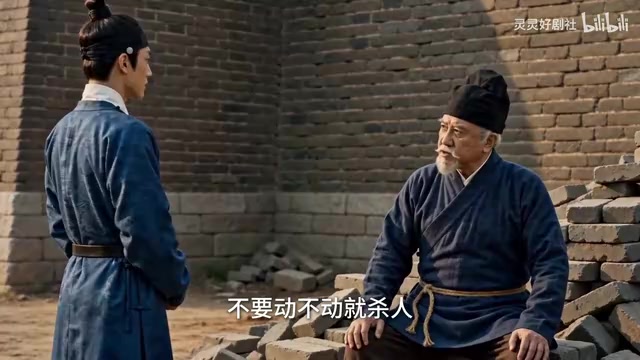
An AI historical comic drama breaks out with its "acting," showing how tech plus thrill-driven storytelling is reshaping the short-drama ecosystem.
An AI-generated Hongwu-era historical comic drama went viral on Bilibili, astonishing viewers with character expressions and vocal rhythm that seem "better than real people." The article dissects its technical pipeline—LLMs writing dialogue, text-to-image/image-to-video generating visuals, TTS synthesizing voices, and advances in lip-sync and micro-expressions—and notes that historical subjects, with abundant material and high audience tolerance, have become a priority track for AI video. In content, the drama applies the mature "time travel + history + business" thrill formula, weaving high-density dialogue with real historical details to give viewers a "learn while watching" experience. At the industry level, AI comic dramas sharply compress production cost and cycle, and audience aesthetics have shifted from visual refinement to plot thrills and character building. But the article also notes limitations: AI traces remain, history is simplified into thrill fare, and core creation still relies heavily on human script orchestration—"AI acting" is essentially the result of creator tuning.
When AI Comic Dramas Start "Out-Acting" Real Actors
An AI-generated historical comic drama has sparked heated discussion on Bilibili, with the uploader stating outright in the title that "this acting is better than real people." This extended-cut work, set during the Hongwu era, uses AI technology to recreate historical figures such as Zhu Yuanzhang, Crown Prince Zhu Biao, and Duke of Cao Li Jinglong, weaving together court intrigue and everyday street life through dense dialogue and tightly paced plotting.
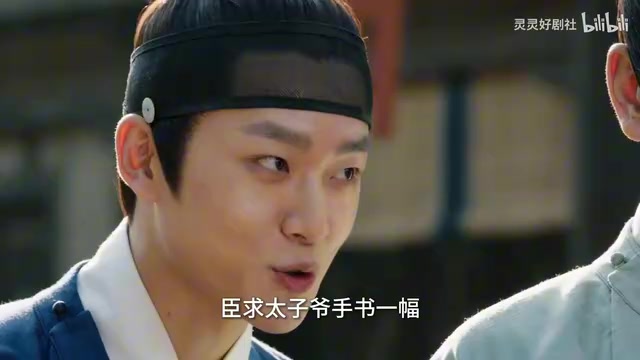
What's most surprising about this drama isn't the visual fidelity but the AI's grasp of character expression and vocal rhythm. Zhu Yuanzhang's irascibility and scheming, Li Jinglong's cleverness and caution, Crown Prince Zhu Biao's benevolence and restraint—all are rendered to a considerable degree in the AI-generated dialogue and facial expressions. Comments like "this expression is absolutely spot-on" and "the tone is just right" appear frequently in the danmaku, showing that audiences' acceptance of AI performance is rising rapidly.
The Technical Foundation: How AI "Acts" Like a Veteran Performer
A Complete Pipeline from Text to Expression
Behind this kind of AI comic drama is a complete workflow spanning script generation, character modeling, motion capture, and speech synthesis. Creators typically first use a large language model to generate or polish the dialogue script, then use text-to-image/image-to-video tools to generate character visuals, and finally use TTS speech synthesis to give the characters voices. The entire process requires no real actors, no on-location shooting, and not even a professional animation team.
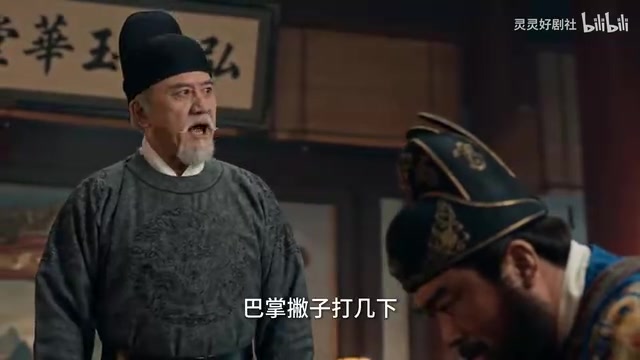
Compared with early AI videos that suffered from "stiff characters and mismatched lip-sync," current works have made clear progress in lip-sync and micro-expressions. Viewers have screenshotted and discussed details like the shifts in Zhu Yuanzhang's eyes as he berates his ministers and the red swelling on Li Jinglong's forehead as he kowtows. This kind of "detail acting" is precisely the key selling point that distinguishes AI comic dramas from traditional animation.
TTS (Text-to-Speech) speech synthesis mentioned in the article refers to the technology that automatically converts a text script into natural speech. Modern TTS systems have evolved from early concatenative synthesis to deep learning-based neural speech synthesis, capable of imitating specific timbres, tones, and emotions. In AI comic dramas, creators can select or customize voices for different characters and adjust speech rate, pauses, and stress to match personality traits—this is the key technical step in achieving that "spot-on tone."
Lip-sync is a specialized technique in AI video generation aimed at precisely matching a character's mouth movements to the speech audio. Early methods relied on manual mapping of phonemes to mouth shapes and produced stiff results; current mainstream approaches mostly use audio-driven facial animation models that analyze the temporal features of speech to automatically generate corresponding mouth poses. The quality of lip-sync directly affects viewers' perception of "acting" and is an important indicator of AI video's evolution from "watchable" to "good-looking."
Why Historical Subjects Are a Goldmine for AI Comic Dramas
Historical dramas are naturally suited to AI comic dramas: character appearances have abundant reference material, scenes can be generated based on historical descriptions, and dialogue can be handed directly to language models to write. More importantly, audiences of historical dramas are more tolerant of "does it look right"—as long as the characters' temperament is right and the lines have flavor, viewers are willing to buy in. By contrast, AI videos on modern subjects easily break immersion because they seem "too fake."
Content Level: The Narrative Logic of a "Thrill-Fest" Drama
Historical Reenactment from a Time-Traveler's Perspective
The core premise of this drama is that the protagonist Li Jinglong is reborn with memories of a past life and, as a sixteen-year-old young duke, navigates the power vortex of the Hongwu court. In the story he must contend with Zhu Yuanzhang's suspicion, manage relations with Crown Prince Zhu Biao and the Huaixi noble cliques, and advance a commercial renovation plan for the "Number One Street Under Heaven." This mashup of "time travel + history + business" is exactly the most proven thrill-formula in today's web literature and short-drama market.
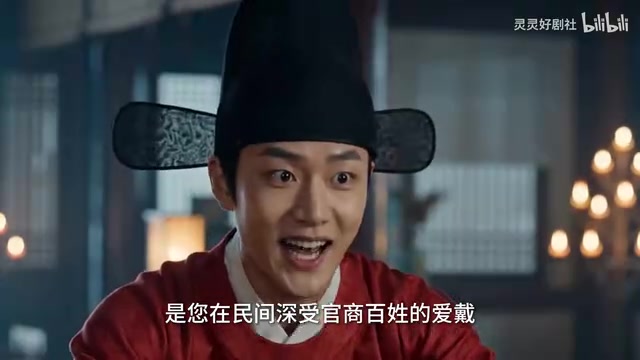
As a detail, the drama extensively cites details recorded in the History of Ming, such as Zhu Yuanzhang venting his anger on imperial physicians over the death of Li Wenzhong, the historical background of the Lan Yu case, and Li Jinglong inheriting the title of Duke of Cao—these real historical events are cleverly woven into the fictional plot, giving viewers the experience of "learning something while watching a thrill-fest."
The Lan Yu case was a major case in the twenty-sixth year of Hongwu (1393) in the early Ming, in which Zhu Yuanzhang executed the general Lan Yu on charges of treason and implicated tens of thousands of people; it is a landmark event of early Ming political purges. Together with the Hu Weiyong case, it is known as the "Hu-Lan purges," reflecting Zhu Yuanzhang's suspicion of the meritorious elite and his concentration of power in his later years. In time-travel fiction, the Lan Yu case is often used as a backdrop for the protagonist's political risks; because of its broad reach and tragic outcome, it naturally carries dramatic tension, but it is also easily reduced to a black-and-white narrative of power games.
Dialogue Density and Information Load
The dialogue density in this drama is extremely high—almost every exchange advances the plot or shapes character. Zhu Yuanzhang's line "You're better than me," Crown Prince Zhu Biao's "One must not have the mercy of a woman, but one must have human feeling," and Li Jinglong's "Only by taking one step at a time can you walk steadily" are all quotable lines that get repeatedly spammed in the danmaku. This high-information-density writing is in fact an area where AI-assisted creation excels—large language models are good at quickly generating dialogue that fits a character once the character设定 is given.
Industry Signals: AI Content Is Reshaping the Short-Drama Ecosystem
Reconstructing Production Cost and Cycle
Traditional historical film and TV productions have extremely high costs for costumes, makeup, and props; a decent period drama often requires months of preparation. The production cycle of AI comic dramas, by contrast, can be compressed to weeks—a single creator with a set of AI tools can complete the entire process from script to finished film. This shift in cost structure is drawing large numbers of small and mid-sized creators into the historical genre.
Shifting Audience Aesthetics
In the danmaku and comment sections, what viewers discuss most is not "the visuals aren't refined enough" but "is the plot thrilling enough" and "do the characters hold up." This shows that the audience for AI comic dramas has already completed an aesthetic migration—they no longer judge AI content by the standards of traditional film and TV, but by the standards of short dramas and web fiction. For creators, this is both an opportunity and a challenge: the technical barrier has been lowered, but the ability to tell a story has become more important.
Limitations and Controversies: AI Comic Dramas Have Not Yet "Ascended to Godhood"
Objectively speaking, this drama still has obvious shortcomings. Some scenes bear heavy traces of AI generation, character movements are occasionally stiff, and the continuity of long shots is inferior to traditional animation. In addition, the drama's "thrill-ification" of historical figures—for example, simplifying the complex Lan Yu case into a time traveler's personal observation—increases watchability but also simplifies the complexity of history.
More importantly, AI comic dramas still rely heavily on the creator's "manual" orchestration. Pace control in the script, the design of character relationships, and the selection of historical details—these core creative steps still cannot do without human judgment. So-called "AI acting" is in essence still the result of creators "training" it through prompts and post-production adjustments.
Conclusion
The popularity of this AI historical comic drama is less a victory of technology than a victory of the combination punch of "technology + thrill-driven narrative." It proves that AI content has crossed the threshold of "watchable" and is evolving toward "good-looking." For AI content creators, the real moat is not how advanced a model they use, but whether they can use AI to tell a story that keeps people from stopping.
Related articles
Has the AI Bubble Burst? A 45-Day, $6 Trillion Loss Post-Mortem
US stocks shed $6 trillion in 45 days—averaging $225B daily for 31 sessions. Has the AI bubble burst? A deep-dive post-mortem of six converging headwinds and what's already priced in.

Bin's Live Stream Highlights: Hilarious Interactions from "You Came at the Right Time" to "I'll Support You From Now On"
Bin's hilarious live stream highlights: from "You came at the right time" to "I'll support you from now on," featuring Championship skins, wigs, and other game memes that showcase Bilibili's unique streaming culture.

Hunter Rescues Educated Youth: The Mountain-Chasing System Launches a New Warm-Hearted Viral Drama Formula
Bilibili's early-access period short drama *Everyone Thinks I'm a Poor Hunter* opens with a snowy-night rescue of an educated youth. Hunter Chen Shan activates the mountain-chasing system, using realistic hypothermia first-aid details and mutual-probing character dynamics to deliver a warm-hearted period drama without the sleaze.