Hunter Rescues Educated Youth: The Mountain-Chasing System Launches a New Warm-Hearted Viral Drama Formula

Short drama *Everyone Thinks I'm a Poor Hunter* uses hypothermia first-aid details and an assistive system to give a period rescue story solid grounding.
This review analyzes the early-access slice of the Bilibili short drama *Everyone Thinks I'm a Poor Hunter, But the Educated Youth I Rescued Would Rather Guard This Cold Hut With Me*. The article notes that the drama embeds the "rescue—system—reverse face-slap" formula into a snow-survival scenario, where professional hypothermia first-aid details (like heat hallucinations and core-temperature rewarming) give medical logic to the undressing-for-warmth scene. The mountain-chasing system only provides guidance and logistics, good deeds convert into experience points, making saving people the core gameplay; the male-female lead relationship is mutual probing rather than one-sided heroism; the ensemble rescue doesn't shy away from the cost of death. The article concludes that character design and rescue logic are solid, but production costs are limited, with some awkward phrasing and rough transitions.
When I stumbled upon the early-access version of Everyone Thinks I'm a Poor Hunter, But the Educated Youth I Rescued Would Rather Guard This Cold Hut With Me on Bilibili, my first reaction was: here we go again with the period drama tricks. But after watching this roughly ten-minute plot slice, I have to admit — it squeezes the "rescue—system—reverse face-slap" short-drama formula into a relatively solid snow-survival scenario, and the result is better than expected.
Snowy Night Rescue: Hypothermia Becomes the Plot's Core
The opening is straightforward. Chen Shan, a hunter from Kaoshan Village, encounters Zhao Hongmei — an educated youth from the women's logging team — during a blizzard. She's already suffering from severe hypothermia and experiencing heat hallucinations, stripping off her own clothes in the snow. Chen Shan recognizes her as a member of the logging team who had eaten at the village before. He shouts "Don't fall asleep!" while using his body to rewarm her.
There's a detail worth noting here: the drama doesn't treat "undressing for warmth" as a simple ambiguous flirtation. Instead, it explicitly names medical concepts like "hypothermia," "core temperature," and "heat hallucinations." When Zhao Hongmei wakes up, her reaction isn't coy shyness but angry accusation — "You filthy pervert!" — and Chen Shan fires back: "If I wanted to take advantage of you, you wouldn't be awake to curse me right now."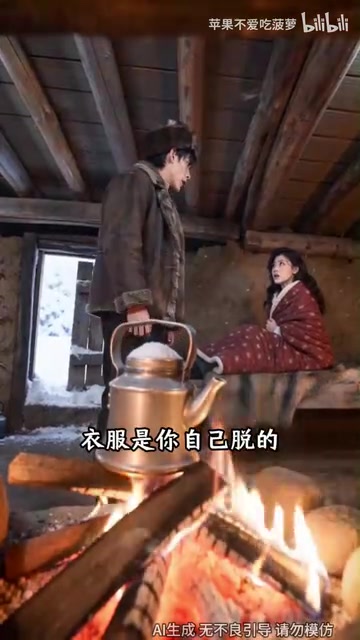
This approach makes the "first encounter between male and female leads" feel like a genuine back-and-forth rather than one-sided hero-saves-beauty. Zhao Hongmei's line "I'll repay your life-saving kindness with my body" isn't blind gratitude either — it comes after she learns Chen Shan is about to risk his life going up the mountain to save her other sisters, and she offers the promise on her own initiative.
Hypothermia is a medical condition where the body's core temperature drops below 35°C. It's typically classified by severity: mild (32-35°C), moderate (28-32°C), and severe (below 28°C). The "heat hallucinations" Zhao Hongmei experiences in the drama are a classic symptom of severe hypothermia — when the thermoregulatory center fails, the body produces an paradoxical sensation of burning heat, causing patients to undress voluntarily. This is medically known as "paradoxical undressing" and signals that hypothermia has entered a dangerous stage. Proper first aid should begin with removing the patient from the cold environment, taking off wet clothes, wrapping the whole body in dry fabric, and focusing heat on core areas like the neck, armpits, and groin. In severe cases, body contact can transfer heat, but vigorous rubbing of the limbs should be avoided to prevent cold blood from rushing back to the heart and triggering arrhythmia. Chen Shan's handling in the drama basically follows these principles — which is the key to why this scene holds up.
The Mountain-Chasing System: The Cheat Skill Used Exactly Where It Matters
Midway through, Chen Shan activates the "Mountain-Chasing System." Storm-resistant supplies are delivered to his spatial storage, and prey-scanning capability comes online — light arcs appear in his field of vision, with red indicating alert prey and white indicating small animals.
The clever thing about this setup is that it doesn't let the system conjure divine weapons out of thin air. Instead, it handles "guidance" and "logistics." Chen Shan still has to venture into the mountains through the blizzard, still has to face the reality that a thirty-meter perception range is almost no warning at all against a fierce beast. The system shop only offers "realistic basic items" — no miracle cure-alls.
According to the setup presented in the Bilibili slice, saving one person earns 100 experience points, killing a sika deer earns 100 experience points, and after Chen Shan rescues multiple educated youths, his experience accumulates to 700, officially opening the system shop. This numerical design sends a signal: the drama treats "good deeds" themselves as growth resources — saving people is the core gameplay.
"Mountain-chasing" (赶山) is a traditional hunting term from the mountainous regions of Northeast China, referring to hunters tracking and encircling prey in winter, driving beasts down from the mountains. It carries strong connotations of mountain forest survival culture. By combining "mountain-chasing" with a "system," this drama essentially embeds the common web-novel "cheat skill" setup into a period setting: the system provides supply storage, prey scanning, and shop exchanges, but strictly limits itself to "realistic basic items." This is an "assistive cheat skill" — its narrative function is to lower the protagonist's survival difficulty and accelerate the growth rhythm without undermining the realistic texture that period dramas require. Experience points come from saving others rather than pure hunting, which also aligns with short-drama audiences' psychological expectation that "good deeds are rewarded."
Ensemble Rescue: Imperfect Realism
The mountaintop rescue in the latter half is the most tension-filled part of the entire segment. Chen Shan arrives at the logging site to find that two of the eight-person team have already died, and the survivors are at varying degrees of hypothermia. He takes direct command: strip off the wet clothes, wrap people up like rice dumplings in sheepskin coats and blankets, and place hot water bottles at the neck's hollow and the groin to accelerate core temperature recovery.
When an educated youth protests about "men and women being different," Chen Shan's response is "Face or life?" In the context of short drama, this line is a masterstroke — it lets the urgency of rescue override the burden of propriety, and gives the subsequent scene of the youths actively cooperating to strip and rub limbs a reasonable motivation.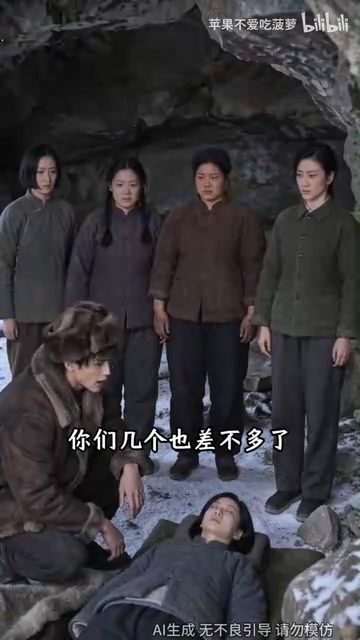
A detail worth mentioning: the drama doesn't shy away from death. The loss of two young girls keeps this rescue grounded in a sense of cost. Chen Shan's line "They were all such young girls, coming from the big city to this deep mountain forest to support construction" is one of the rare lyrical moments in the dialogue — but it's restrained, never tipping into melodrama.
In hypothermia first aid, "core temperature" refers to the temperature of the thoracic cavity, abdominal cavity, and central nervous system — the key indicator for assessing hypothermia severity. Rewarming should prioritize core areas, not the limbs, because if the limbs are too cold and you rub them first, cold peripheral blood will rapidly return to the heart, potentially inducing "rewarming shock" and even ventricular fibrillation. In the drama, Chen Shan places hot water bottles at the neck's "hollow" (supraclavicular fossa) and the groin — areas where major blood vessels pass — and has everyone wrap the patients with their bodies. This is precisely to gradually raise body temperature from the core. This detail holds up to basic emergency medicine scrutiny.
The Period Sweet-Drama Formula Has Changed
Structurally, this drama follows a typical short-drama rhythm: a conflict every three minutes, a twist every five, and a hook at the end. But it upgrades in two places.
First, professional detail. The hypothermia first-aid procedures, the physics of how wet clothes leach body heat, the method of multiple people using skin contact to rewarm — all of it withstands basic scrutiny. Chen Shan settles the educated youths before dealing with the prey, and before leaving he instructs "Bolt the door and don't go out no matter what." These actions ground the "hunter" identity in reality rather than leaving it an empty label.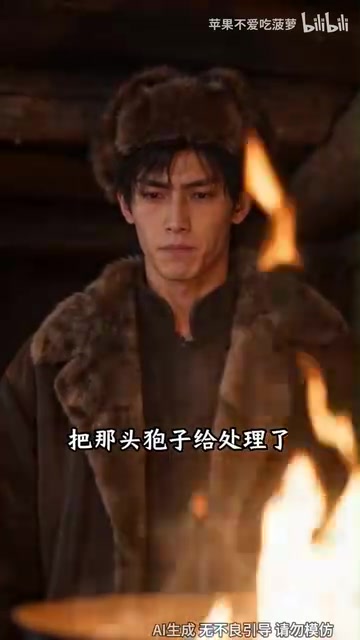
Second, character relationships. When Zhao Hongmei offers "to repay with her body," Chen Shan's first reaction is wariness — "Is this because I saved you and you feel obligated, or are you using this as leverage to make me go up the mountain and save people?" This mutual probing is more interesting than one-sided love at first sight. Zhao Hongmei's line "The most precious thing I have right now is myself" also captures the helplessness of an educated youth in an extreme environment.
Is It Worth Following?
As an early-access slice, this content has decent information density: the rescue mainline, the system setup, supporting character ensemble, and emotional hooks — everything that should be there is there. The weaknesses are obvious too — the narrator and dialogue occasionally use terms like "this woman" and "big girl" that feel out of place, and some transitions rely on hard black-screen text cuts, showing the limited production budget.
But if "period drama + system + farming" is your thing, Everyone Thinks I'm a Poor Hunter at least doesn't insult the audience's intelligence when it comes to character design and rescue logic. The hunter isn't sleazy, the educated youth isn't dumbed down, and the system isn't overpowered — these three points alone eliminate quite a few competitors in the same genre. Whether it can maintain the warm "guarding the cold hut together" storyline going forward depends on how the main feature unfolds.
Related articles

Has the AI Bubble Burst? A 45-Day, $6 Trillion Loss Post-Mortem
US stocks shed $6 trillion in 45 days—averaging $225B daily for 31 sessions. Has the AI bubble burst? A deep-dive post-mortem of six converging headwinds and what's already priced in.
AI Historical Comic Drama Goes Viral: Why the Zhu Yuanzhang Theme Outperforms Real Actors
An AI-generated historical comic drama went viral on Bilibili, with viewers saying its acting beats real people. We analyze its tech pipeline, narrative logic, and industry impact.

Bin's Live Stream Highlights: Hilarious Interactions from "You Came at the Right Time" to "I'll Support You From Now On"
Bin's hilarious live stream highlights: from "You came at the right time" to "I'll support you from now on," featuring Championship skins, wigs, and other game memes that showcase Bilibili's unique streaming culture.