AI Independently Solves Frontier Math Problems, Converging with Human Researchers' Findings
AI independently solves frontier math problems, reaching conclusions that align with human mathematicians' findings.
An AI research team issued a statement clarifying that their AI system independently solved frontier mathematical problems without accessing the work of mathematicians Levent Alpöge and Tristan Buckmaster. The team detailed data isolation measures, acknowledged potential indirect influences from de-identified data, and highlighted significant differences in proof methodologies — including the forced vs. unforced distinction in Euler equations — as evidence of independent work, sparking broader discussion about AI research integrity and originality.
A Breakthrough in AI Mathematics Behind a Simple Statement
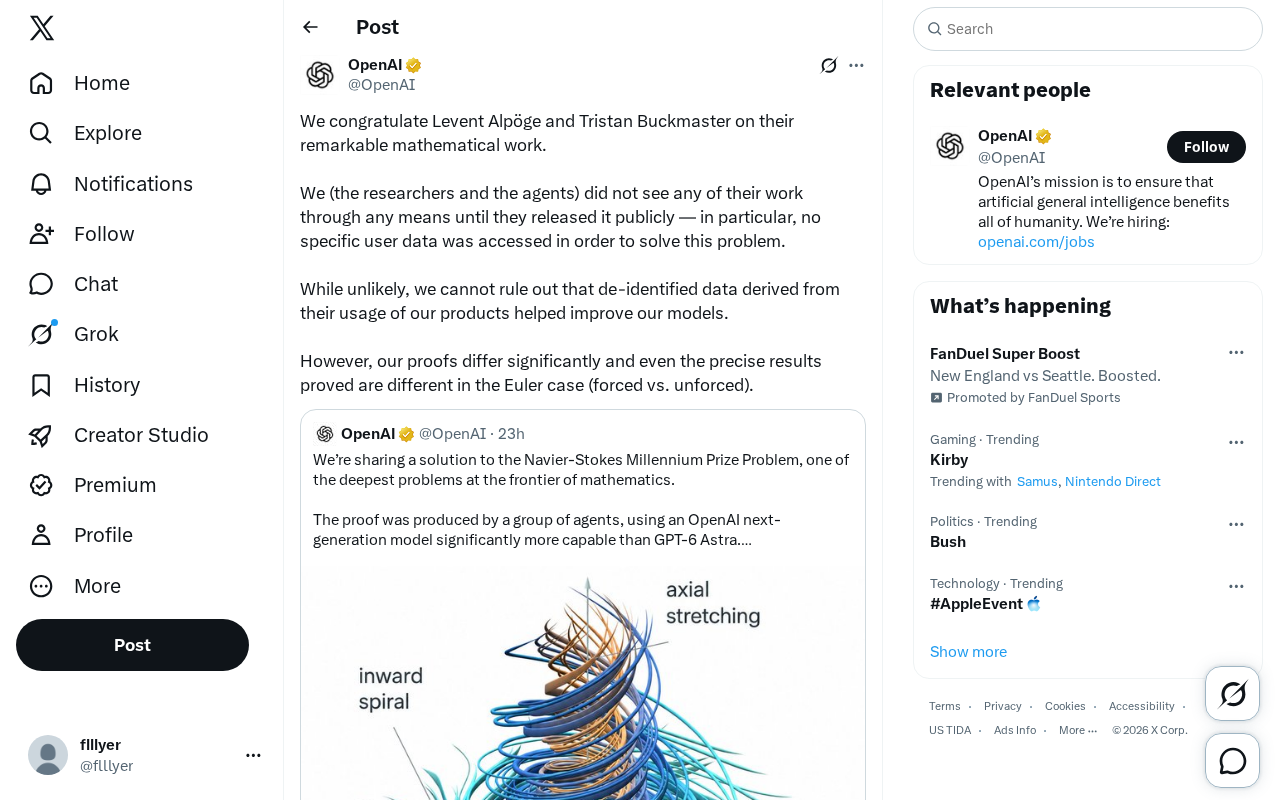
Recently, an AI research team published a notable statement on social media, congratulating mathematicians Levent Alpöge and Tristan Buckmaster on their outstanding mathematical work, while also clarifying a key point: their AI system had no access to any of the two mathematicians' research when solving the related mathematical problems.
This seemingly brief statement actually touches on an extremely sensitive and important topic in current AI development — when AI can independently solve frontier math problems, how do we define its "originality"? And how do we ensure it isn't "copying" unpublished results from human researchers? This concern is far from unfounded: disputes over originality and priority have a long history in academia. The most famous cases include the centuries-long debate between Newton and Leibniz over the invention of calculus, and the simultaneous independent discovery of natural selection by Darwin and Wallace. In the sociology of science, the phenomenon of different researchers breaking through the same bottleneck nearly simultaneously is known as "multiple discovery." However, AI's entry into this arena makes the issue unprecedentedly complex — AI may have been exposed to vast amounts of training data containing traces of human researchers' ideas, making the definition of its "independence" far more ambiguous than that between two human researchers. This is precisely why the team needed to provide such detailed explanations of their data isolation measures.
The Core of the Statement: Data Isolation and Independent Verification
No Access to Any Specific User Data
The most critical sentence in the statement reads: "We (the researchers and agents) did not see their work in any way before they posted it publicly — in particular, no specific user data was accessed to solve this problem."
This assertion strikes at the heart of AI research credibility. As AI capabilities grow ever more powerful, a natural question arises: if an AI happens to solve the very problem a human researcher is working on, could it be because it "peeked" at their work process? This concern becomes even more legitimate when the researcher may have used the AI product itself as an assistive tool.
The team drew a clear line, emphasizing that no specific user data was accessed during the problem-solving process — a crucial step in maintaining academic integrity in AI research.
Honestly Acknowledging Indirect Influences That Cannot Be Fully Ruled Out
You may not have noticed, but the statement doesn't make absolute claims. The team candidly acknowledged: "While unlikely, we cannot rule out that de-identified data from their use of our products may have helped improve our models."
This rigorous phrasing reflects the complex reality of large model training. Modern AI models are trained on massive datasets that may include de-identified user interaction data. De-identification is a critical step in data processing, referring to the removal or obfuscation of information that could identify specific individuals, such as usernames, IP addresses, and timestamps. However, de-identification is not equivalent to complete anonymization — in certain extreme cases, de-identified data can still be re-identified through cross-referencing. More importantly, even if individual de-identified data points cannot be traced back to specific users, the cumulative effect of large volumes of such data during model training may still indirectly reflect certain users' thinking patterns or research directions. Even if the team did not intentionally use anyone's data, the macro-level contribution of such data to model capability improvements may produce indirect, hard-to-quantify effects.
This honest self-examination exemplifies the attitude that responsible AI research should embody.
Divergent Proof Paths: Strong Evidence of AI Independence
Significantly Different Methodologies
To further demonstrate the independence of the AI's work, the team pointed out: "Our proofs have significant differences, and even in the case of the Euler equations, the precise results proved are different (forced vs. unforced)."
This is a highly technical piece of supporting evidence. In mathematical proofs, even when the final conclusions are the same, different proof paths often reflect the researcher's independent thinking process. If the AI's proof closely resembled the human mathematician's proof, it would actually raise suspicion of plagiarism; the significant methodological differences between the two actually demonstrate that they were independently derived results.
It's worth noting that AI participation in mathematical proofs is not entirely new, but the recent leap in capabilities has been remarkable. Early automated theorem provers (such as formal proof assistants like Coq, Lean, and Isabelle) primarily relied on symbolic reasoning and exhaustive search, excelling at verifying the correctness of known proofs but lacking creativity. Since 2024, AI systems based on large language models have begun to demonstrate breakthrough performance in mathematical reasoning — DeepMind's AlphaProof achieved impressive results on International Mathematical Olympiad-level problems, and models from multiple research institutions have begun attempting to tackle frontier open mathematical problems. The core capability of these systems is not simple pattern matching, but rather mathematical intuition and reasoning chain construction acquired through large-scale pre-training, combined with reinforcement learning and search algorithms to explore proof spaces. The fact that AI in this case independently found a proof path different from that of the human mathematician marks a shift in AI mathematical reasoning from "verification tool" to "discovery engine."
The Critical Distinction Between "Forced" and "Unforced" in Euler Equations
The statement specifically mentions the distinction between "forced" and "unforced" in the case of the Euler equations. The Euler equations, proposed by Swiss mathematician Leonhard Euler in 1757, are a system of partial differential equations describing the motion of inviscid ideal fluids and one of the most fundamental equations in fluid mechanics. They are the simplified form of the Navier-Stokes equations when viscosity terms are neglected. The existence of smooth solutions to the Navier-Stokes equations is listed as one of the Clay Mathematics Institute's seven Millennium Prize Problems, with a million-dollar bounty that remains unclaimed. Although the Euler equations are more concise in form, the regularity of their solutions (i.e., whether solutions develop singularities or blow up in finite time) is equally a core open problem in mathematics. In recent years, mathematicians including Tristan Buckmaster have made breakthrough progress on the non-uniqueness of solutions to the Euler equations, using techniques such as convex integration to construct surprising weak solutions, driving profound changes in the field.
The terms "forced" and "unforced" refer to whether the equations include an external force term. Unforced equations (also called homogeneous equations) describe the free evolution of a system without external energy input, where solutions are entirely determined by initial conditions and intrinsic dynamics. Forced equations add a forcing term to the right-hand side, representing the continuous injection of external energy or perturbation. In terms of mathematical difficulty, the two differ dramatically: proving certain properties of solutions (such as blow-up or non-uniqueness) in the unforced case is typically more challenging because the system's behavior is entirely endogenous; the forced case allows researchers to guide solution behavior through carefully designed external force terms. Therefore, the AI solved the forced case while the human mathematicians solved the unforced case — this not only proves independence but also suggests potential differences in technical difficulty and mathematical significance.
This detailed difference indicates that the problems solved by the AI and the human researchers were not entirely the same in mathematical essence. This not only proves independence but also demonstrates from another angle that AI has developed genuine reasoning and constructive capabilities when tackling frontier mathematical problems, rather than simple pattern matching or replication.
The Deeper Significance of This Statement
A New Paradigm for AI Research Integrity Is Taking Shape
As AI plays an increasingly important role in scientific discovery, academic integrity issues are expanding from norms between human researchers to entirely new domains of "human-machine collaboration" and even "independent machine research."
This statement effectively sets a noteworthy transparency benchmark for AI participation in frontier scientific research:
- Proactive clarification of data sources: Explicitly stating that no specific user data was accessed
- Honest acknowledgment of uncertainty: Not avoiding the potential indirect influence of de-identified data
- Providing evidence of independence: Using differences in proof methodology to support the work's originality
Implications for Future AI Mathematical Research
When AI begins to solve problems that top human mathematicians are actively researching, establishing a credible and verifiable evaluation mechanism will become a critical challenge for the entire field.
In the future, we may need more comprehensive mechanisms to document AI reasoning processes, trace the sources of its capabilities, and conduct independent third-party verification when AI achieves major discoveries. These mechanisms might include: complete recording and timestamped certification of AI reasoning chains, audit trails for training data sources, and the establishment of independent verification systems for AI results similar to academic peer review. Formal proof tools (such as Lean 4) could play a key role in this regard — if AI-generated mathematical proofs can be fully verified by formal verification systems, their correctness can be guaranteed at a mathematical level, though originality issues would still require additional mechanisms to resolve.
Only through such measures can AI's scientific contributions gain full recognition from the academic community while avoiding endless originality disputes.
Conclusion
Though this brief statement consists of just a few sentences, it reflects a series of deep issues brought about by AI's rapid rise in scientific research. While paying tribute to the outstanding work of Levent Alpöge and Tristan Buckmaster, the AI team also demonstrated the prudent attitude expected regarding originality, transparency, and academic integrity.
As machine intelligence begins to touch the frontiers of human knowledge, how to uphold the bottom line of integrity while advancing technological progress is a proposition that every AI practitioner must take seriously. This statement may well be an important microcosm of this new era.
Related articles
Autonomy Pivots to Gas-Powered Cars: A Survival Play for the Car Subscription Model
Autonomy pivots from EV to gas-car subscriptions. This article analyzes the heavy-asset challenges, EV residual value risks, and lessons for mobility innovation.
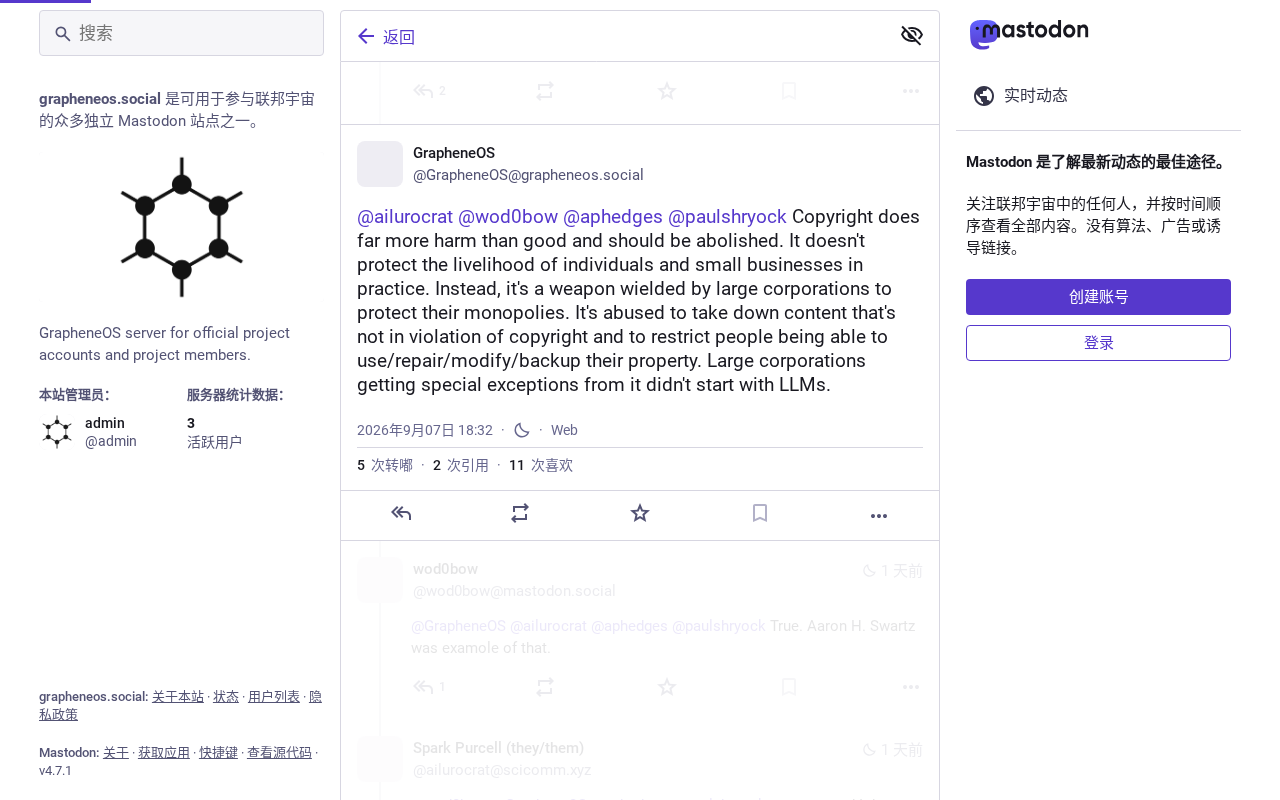
Abolish Copyright? Core Arguments and Reflections in the Intellectual Property Debate
Should copyright be abolished? This article analyzes core arguments for and against, covering excessive protection terms, AI training data disputes, open-source movements, and possible IP reform.
Cymphony Raises $25M Series A Led by Sequoia: AI Agent Enterprise Security Challenges and Opportunities
Sequoia leads Cymphony's $25M Series A for AI agent security, valued over $100M. Exploring enterprise AI agent security challenges, permission management, and emerging market opportunities.