AI Is Changing Faster Than We Can Understand — and That Gap Is Power
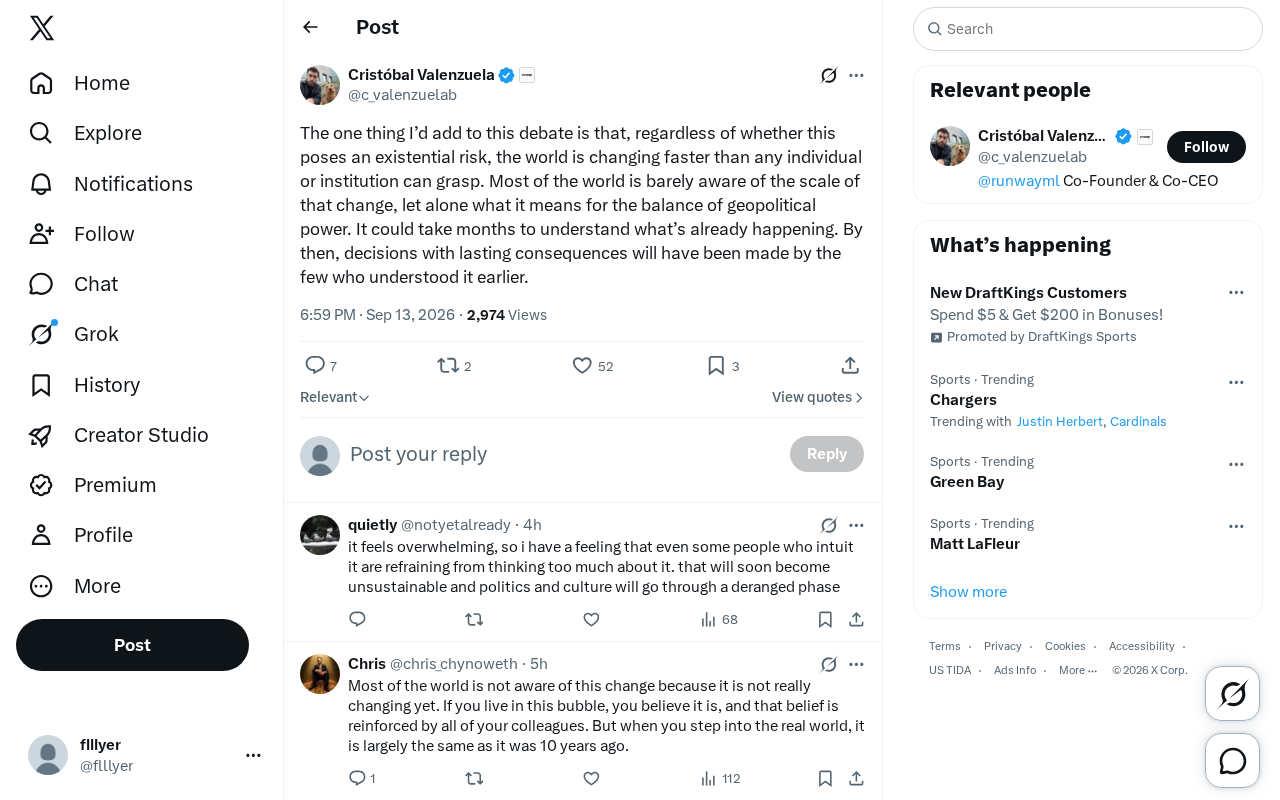
The gap between AI's pace of change and our ability to understand it is already reshaping who holds power.
Drawing on a social media observation, this article argues that regardless of whether AI poses an existential threat, the most urgent challenge right now is that the pace of change has outrun the comprehension of individuals and institutions alike. Most people lack a sense of the scale of this transformation, let alone its implications for geopolitical power. The core insight: a lag in understanding directly converts into a gap in power and resource allocation. Those who grasp the shift first are already acting on it — in business, policy, and international competition. The article calls for shifting the AI debate away from abstract doomsday scenarios toward the observable, addressable cognitive gap of today.
A Tweet That Cuts to the Core
Debates about artificial intelligence never seem to let up, and most of them circle around the same question: does AI pose an existential risk? But a tech observer recently posted a thought on social media that shifted the conversation toward something more immediate and more grounded: regardless of whether AI brings some ultimate threat, one thing is undeniable — the world is changing faster than any individual or institution can comprehend.
What makes this framing valuable is that it sidesteps the unresolvable "doomsday question" — a debate no one can settle in the short term — and focuses instead on an observable, verifiable present reality: the pace of change itself is a structural challenge.
The Perception Gap: Most People Don't Grasp the Scale
The sharpest claim in the original post is this: "Most people in the world are barely aware of the scale of this change, let alone what it means for the geopolitical balance of power."
This is worth sitting with. Technology diffusion tends to follow a familiar pattern — a small number of people sense it first and act on it, while the broader public catches on much later. AI's rate of iteration has dramatically amplified this "cognitive lag." When foundational model capabilities make a qualitative leap every few months, and new application categories keep emerging, the average person — or even a large institution — simply cannot keep pace with the underlying technical progress.
This lag isn't just about being behind on knowledge. It's about being reactive at the decision-making level. While you're still trying to figure out what's happening, those who understood the situation earlier are already acting on it.
The Time Gap Is a Power Gap
The final line of the post lands the whole argument: "It may take months to understand what is happening right now. And by then, the few who understood sooner will have already made decisions with lasting consequences."
This reveals a brutal logic — in an environment of rapid change, a gap in understanding directly translates into a gap in how power and resources get distributed.
This logic is nothing new in history. Every major technological shift — from the steam engine to the internet — has produced disproportionate gains for the individuals, companies, and nations that understood it first and positioned accordingly. What makes AI different is that its pace of change compresses the "window of opportunity" to an extreme degree. Gaps that once took years to open up may now be locked in within months.
Who Benefits Inside That Window
From a geopolitical standpoint, the countries and institutions that command frontier AI capabilities are gaining first-mover advantage in this cognitive race. The original post specifically highlights the "geopolitical balance of power" — a signal that AI's influence has already moved well beyond the domains of technology and business, and is reshaping the deep structure of the international order. And this reshaping is happening quietly and quickly enough that most participants haven't even realized the rules of the game have changed.
A More Practical Lens Than Existential Risk
There's another layer of value in this framing: it offers a more pragmatic framework for the AI conversation. Debates about whether AI will destroy humanity are important, but they're highly abstract, nearly impossible to verify, and tend to spiral into endless philosophical arguments. By contrast, "the pace of change is outrunning our capacity to understand it" is a problem happening right now — observable and actionable.
Shifting attention from distant existential risk to the immediate cognitive gap may be more useful in practice. Because whether or not AI ultimately poses an existential threat, its reshaping of power structures, economic landscapes, and how societies organize themselves is already underway. Ignoring this means quietly ceding the initiative without ever realizing it.
Closing: Choose Understanding, Not Passive Reception
This short post doesn't offer solutions. But the question it raises is sharp enough: in an era where change outruns comprehension, staying cognitively ahead is itself a form of strategic advantage.
For individuals, this means actively tracking the frontier of technology rather than waiting for change to arrive. For institutions and decision-makers, it means building more agile mechanisms for sensing and responding to what's happening. Because in this race, the ones who fall behind aren't those who made the wrong decisions — they're the ones who hadn't yet understood what was happening before history moved on without them.
(This article is based on analysis of a single viewpoint from a social media post. Opinions are attributed to the original author.)
Related articles
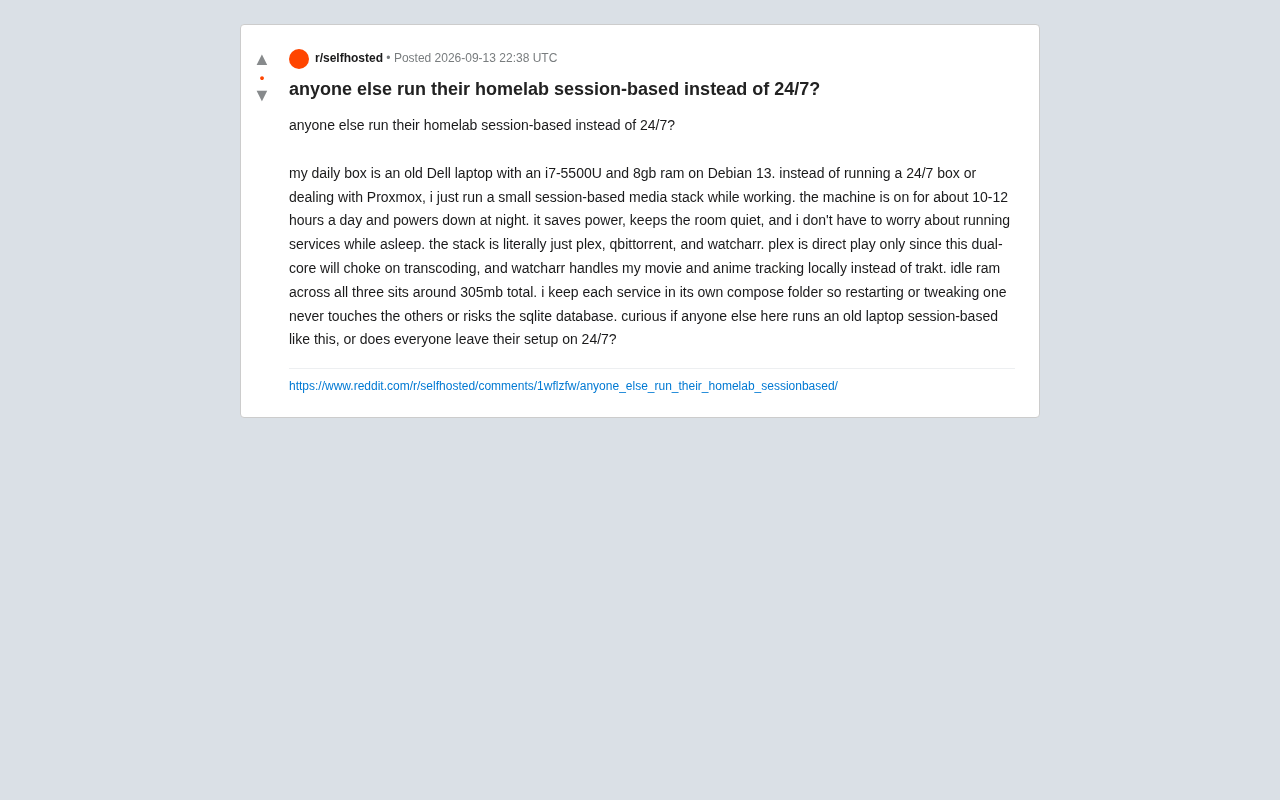
Session-Based Home Server: Running a Low-Power Homelab on an Old Laptop
A Reddit user runs Plex, qBittorrent, and Watcharr on a 10-year-old laptop for just 10–12 hrs/day, using only 305MB RAM idle. Exploring session-based vs. 24/7 Homelab trade-offs.

OpenAI Launches ChatGPT for Financial Services: Built-in Financial Data + GPT-6 Reasoning
OpenAI launches ChatGPT for Financial Services, combining built-in financial data with GPT-6 Astra reasoning to support research, financial modeling, and client materials for financial institutions.
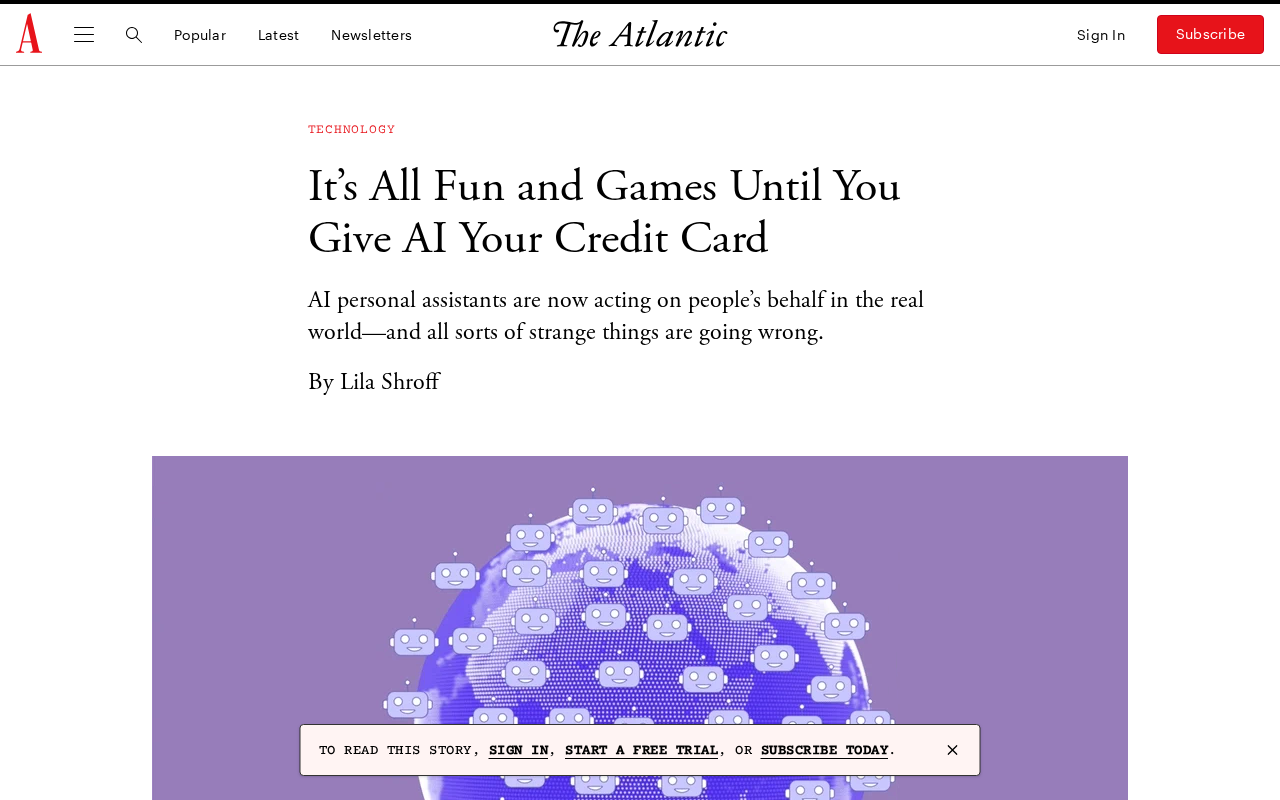
When AI Controls Your Credit Card: The Hidden Risks of Autonomous Payments
When AI agents gain credit card access, hidden dangers emerge: vague authorization, prompt injection attacks, and unclear liability. Learn the real risks and how to stay protected.