AI Is Not a Silver Bullet: Good Culture Is the Real Engine of Productivity

Good team culture, not AI tools, is the real driver of lasting productivity gains.
As companies rush to adopt AI coding tools, a viral Hacker News discussion argues that the biggest productivity lever is good team culture, not technology. Psychological safety, trust, clear communication, and developer autonomy eliminate far more waste than AI can optimize. AI works best as a culture amplifier — supercharging healthy teams while potentially accelerating dysfunction in broken ones. Leaders should fix culture first, then layer on tools.
When Everyone's Talking About AI Productivity, What Are We Overlooking?
As generative AI sweeps through the software industry, nearly every company is searching for that "silver bullet" to double their team's efficiency. GitHub Copilot, various coding assistants, and automated workflow tools are emerging left and right, with managers hoping AI can solve the productivity problems that have plagued their teams for years. Yet an article that garnered 199 upvotes and sparked 37 in-depth discussions on Hacker News offers a contrarian take: The biggest productivity lever isn't AI — it's good team culture.
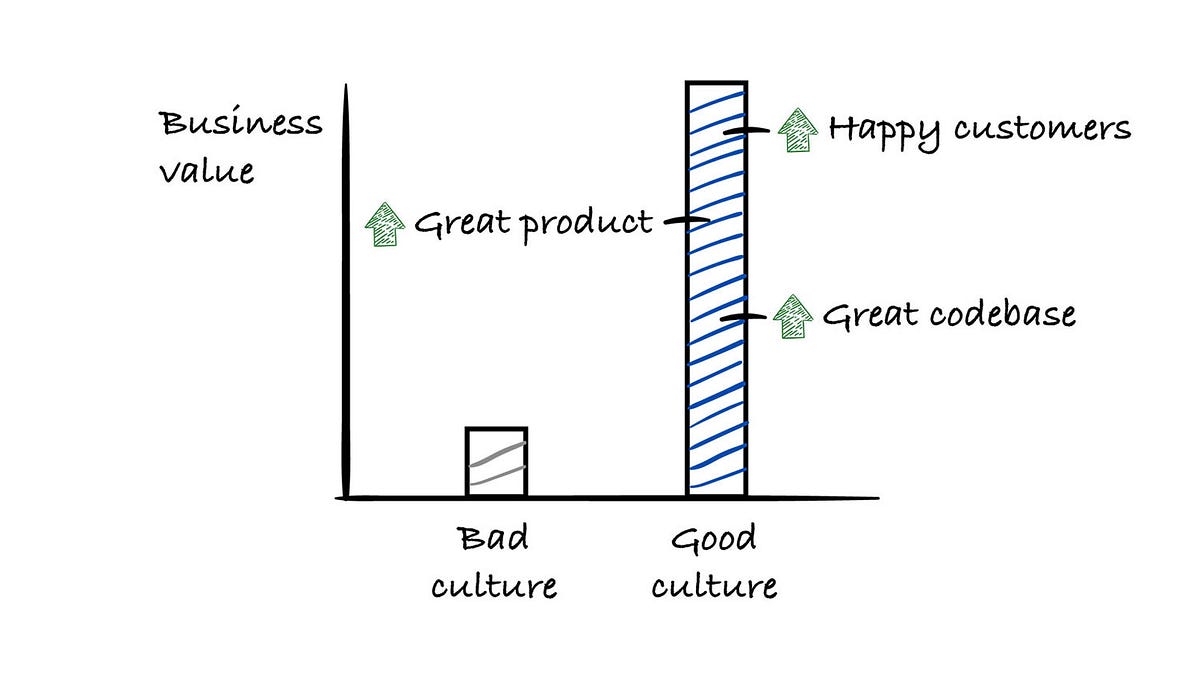
This might seem like an obvious point, but it strikes at the heart of a pain felt by many engineering teams. When a team is plagued by lack of trust, poor communication, slow decision-making, and psychological insecurity, even the most advanced tools only add more complexity on top of an already inefficient system. AI can speed up writing code, but it can't fix a dysfunctional organization.
Why Tools Can't Compensate for Cultural Deficiencies
The Bottleneck Is Rarely in the Coding Itself
A significant portion of the real cost of software development doesn't happen during the hours spent writing code. It happens in endless meetings, in the long queues waiting for code reviews, in the rework cycles caused by unclear requirements, and in the approval chains that exist because of a lack of trust.
AI coding assistants can indeed help developers write code faster, but if a feature takes three weeks to pass review, if team members are too afraid of making mistakes to make decisions, and if every change requires sign-off from five people, then the speed improvement in code writing is virtually negligible across the entire delivery pipeline. This is a consensus among many in the discussion: Optimizing locally while ignoring the system is the biggest trap in productivity improvement.
Psychological Safety Is an Invisible Accelerator
Google's famous "Project Aristotle" research demonstrated long ago that the most critical trait of high-performing teams isn't the individual capability of their members, but psychological safety — the ability for team members to express ideas, admit mistakes, and raise objections without fear of punishment.
In a team with psychological safety, problems surface early, poor designs are openly questioned, and rework and technical debt are significantly reduced. In a fear-driven team, people hide problems, avoid accountability, and write defensive code — hidden costs that far exceed the time any tool could save.
How Good Culture Actually Boosts Productivity
Trust Reduces the Friction Cost of Collaboration
Trust is at the core of team culture. When team members trust each other and managers trust their reports, many approval layers, monitoring mechanisms, and defensive documentation become unnecessary. Developers can make autonomous decisions and iterate quickly without waiting for multiple levels of approval.
This "low-friction" collaborative environment yields compounding efficiency gains. Every eliminated approval, every unnecessary meeting canceled, and every decision where someone is empowered to act independently frees up valuable time and energy for the entire team.
Clear Communication Eliminates Rework
Much of rework stems from poor communication — misunderstood requirements, misaligned goals, missing context. Good team culture emphasizes transparent communication, clear documentation, and consistent goal alignment. When everyone understands the "why" and the "what," the probability of heading in the wrong direction drops dramatically.
Interestingly, AI can play a supporting role here — for example, helping organize meeting notes or generating documentation drafts — but it cannot replace the communication norms and trust foundations a team has built. Tools amplify culture; they don't replace it.
Autonomy and Purpose Fuel Intrinsic Motivation
Psychological research shows that autonomy, mastery, and purpose are the three key elements that drive intrinsic motivation. A team that grants developers autonomy and helps them see the value in their work will see far greater engagement and creativity than a micromanaged team.
The productivity gains from intrinsic motivation are something no external tool can match. A truly engaged engineer delivers exponentially better output quality and innovation.
The Right Role for AI: Amplifier, Not Savior
The discussion also includes dissenting voices. Some argue that in teams that already have a strong culture, AI can indeed deliver significant efficiency gains — the two aren't contradictory but complementary. AI is a culture amplifier: in a healthy team, AI empowers great engineers to do even greater things; in a dysfunctional team, AI might just accelerate movement in the wrong direction.
In other words, if you think of a team as a machine, culture determines the architecture and how well-lubricated it is, while AI is like swapping in a more powerful engine. If the machine itself is falling apart, a more powerful engine will only make it break down faster.
Implications for Leaders
For technical leaders, this article raises a priority question worth pondering: before rushing to purchase various AI tools, should you first assess the health of your team's culture?
- Do team members feel safe expressing their honest opinions?
- Is the decision-making process efficient and transparent?
- Are there too many unnecessary approvals and meetings?
- Do members feel trusted and empowered?
The answers to these questions may determine your team's ultimate output far more than any tool selection could.
Fix the Culture First, Then Talk About Tools
AI is undoubtedly a revolutionary technology that is profoundly changing how software is developed. But we shouldn't mythologize it as a cure-all for every productivity problem. Truly lasting productivity improvements come from healthy organizational culture — trust, psychological safety, clear communication, and empowered autonomy.
As this widely discussed article reminds us: before spending a large budget on the latest AI tools, ask yourself whether your team's culture is ready to let those tools deliver real value. The best productivity hack has never been a tool — it's always been healthy collaboration between people.
Related articles

Workbuddy for Absolute Beginners: How a Desktop AI Agent Fits Into Real Workflows
A beginner's guide to the Workbuddy desktop AI agent: installation, claiming credits, file management, and building automated workflows—compared with CodeX for fit and cost, helping professionals shift from AI question-askers to AI managers.

OpenAI's New Agent Stack: Computer Use, Decisions API, and Ultra-Fast Workflows
OpenAI Dev Day unveiled a new agent stack: Computer Use outperforms humans, Decisions API delivers ultra-low-latency classification via Luna, Agents API opens the same Computer Use capabilities, and GPT-6.1 Sol costs only one-seventh of Astra. Core updates, benchmark data, and developer insights.

Liang Wenfeng Open-Sources DeepInfo Inference Framework, Takes On U.S. Ban
DeepSeek open-sources its DeepInfo inference framework after its models, featuring GPU/CPU cross-pipelining, small-model prediction with large-model verification, and full Huawei Ascend and NVIDIA chip support—facing the U.S. federal ban head-on. This article analyzes its significance for AI deployment and open-source strategy.