AI Joins Forces with SpaceX to Train Aerospace Foundation Model: A New Milestone in Vertical Domain AI

An AI company partners with SpaceX to train a specialized aerospace AI model, marking a new frontier in vertical domain AI.
At a recent Compile keynote, an AI company announced a joint model training initiative with SpaceX, combining rare aerospace engineering data — including flight telemetry, rocket recovery logs, and physics simulations — with advanced AI training techniques. The partnership signals a broader trend of AI penetrating heavy industries and establishing hard-to-replicate data moats in vertical domains.
Where AI Meets Space Exploration
At a recent Compile keynote, an AI company unveiled three major announcements — the most attention-grabbing being a joint AI model training initiative with SpaceX. The news spread quickly through the tech community, signaling a deep convergence between two of the most cutting-edge frontiers: artificial intelligence and commercial spaceflight.
Context: Why Compile Keynotes Matter Compile is a developer-focused technical conference format typically hosted by AI infrastructure or model companies to showcase product roadmaps and strategic partnerships. Announcements at these events carry high signal value — unlike consumer product launches, statements directed at the developer community emphasize technical feasibility and ecosystem depth, implying substantial engineering validation rather than mere market hype.
As AI training moves beyond the boundaries of traditional internet data and into the highly specialized, data-intensive world of aerospace, we may be witnessing the emergence of the next generation of vertical domain foundation models.
Background: Vertical Domain Large Language Models Domain-Specific Large Language Models are specialized AI systems built on top of general-purpose pretrained models through continual pre-training or supervised fine-tuning on domain-specific data. Compared to general models, vertical models typically show significant improvements in reasoning accuracy, technical terminology comprehension, and task execution within their target domain. Notable examples include Med-PaLM in healthcare, Harvey AI in legal, and BloombergGPT in finance. What these models share is a dependence on high-quality proprietary domain corpora — rather than public internet text — which is precisely the core logic behind this AI company's collaboration with SpaceX.

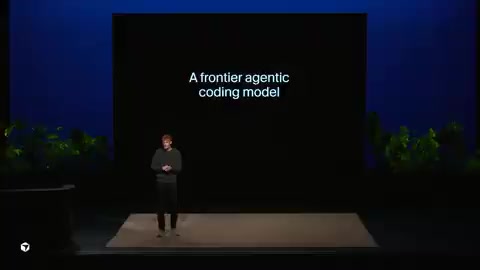


The Three Announcements: What to Watch
The keynote covered three announcements in total, with the SpaceX joint model training being the one with the most strategic implications. The overall pace suggests the company is aggressively accelerating its vertical industry model strategy.
Why SpaceX?
As the world's leading commercial aerospace company, SpaceX has accumulated telemetry data from over 200 orbital launch missions since its founding in 2002 — through the development and launch of Falcon 9, Falcon Heavy, and Starship. Its proprietary Merlin and Raptor engine test data, first-stage booster recovery guidance control logs, and Starlink constellation in-orbit operational data together constitute an extraordinarily scarce engineering data asset. The engineering data, flight telemetry, launch and recovery records, and complex physics simulation models accumulated over the years share three distinct characteristics:
- Highly specialized: Covering sub-disciplines such as rocket dynamics, orbital mechanics, and materials science — content that is extremely scarce in general internet corpora
- Physically constrained: Aerospace data is governed by strict physical laws, not open-ended text generation, with extreme accuracy requirements
- High information density: Each data point typically represents enormous engineering investment and experimental cost, with far greater informational value than ordinary datasets
It's worth noting that flight telemetry data typically contains thousands of sensor channels sampled at millisecond-level frequencies — ideal material for training high-precision physics prediction models that are virtually unobtainable from public academic datasets.
Deep Dive: The AI Training Value of Flight Telemetry Take SpaceX's Falcon 9 as an example: a single launch mission can generate a continuous stream of signals from thousands of sensor nodes, including engine thrust vector, fuel flow rate, structural strain, heat flux density, and other physical quantities sampled at frequencies ranging from tens of Hz to several kHz. The unique value of this time-series data lies in the fact that it records the dynamic response of a real physical system under extreme conditions — not the approximate results of laboratory simulations. For AI models, predictive models trained on real telemetry data far outperform those trained purely on simulation data in terms of generalization and confidence. The 100+ successful landing records accumulated by Falcon 9 first-stage recoveries form an exceptionally rare "success-failure contrast sample library" for guidance control AI training — the kind of data that is nearly impossible to find in public academic datasets.
Extended Perspective: The Co-training Paradigm of Reinforcement Learning and Physics Simulation In the training ecosystem for aerospace AI models, the synergistic use of reinforcement learning (RL) and physics simulation is a key pathway for overcoming data scarcity. SpaceX's success with Falcon 9 first-stage recovery is itself a milestone application of RL in real physical systems — the guidance algorithm underwent extensive simulation pre-training before being progressively transferred to actual flight environments. This "simulation pre-training + real data fine-tuning" paradigm bears a structural resemblance to RLHF (Reinforcement Learning from Human Feedback) in large language models: both rely on high-quality feedback signals to precisely calibrate model behavior, with the difference being that the feedback signal in aerospace comes from physical sensors rather than human annotators. This deep structural similarity suggests the technical integration point of the partnership may be far more profound than it appears on the surface — the jointly trained model may simultaneously benefit from SpaceX's physics simulation infrastructure and the AI company's RLHF engineering experience.
For the AI company, gaining access to this unique body of high-quality data means being able to train specialized capabilities that general models cannot replicate — an advantage not just from data scarcity, but as a near-insurmountable technical moat.
The Strategic Significance of Vertical Domain Models
In recent years, competition among general-purpose large language models has intensified, with gaps narrowing continuously on mainstream benchmarks. Against this backdrop, vertical industry AI models are emerging as the new competitive high ground.
The collaboration with SpaceX is, at its core, a significant attempt to deeply embed AI into real-world industrial settings. Such a specialized model can be expected to find broad future applications in:
- Intelligent assistance and optimization in spacecraft design
- Anomaly detection and fault prediction during launch missions
- Intelligent diagnosis and decision support for complex engineering problems
- Accelerated inference in physics simulation modeling
The core value of these applications is not smooth conversational interaction, but tangible improvements in engineering efficiency and reductions in trial-and-error costs. This reflects a key trend in AI deployment: the evolution from "general assistant" to "specialized collaborator."
Technical Challenges and Industry Outlook
The Dual Barriers of Data Security and Multimodal Fusion
Training a specialized AI model for aerospace involves challenges that go far beyond compute.
Data compliance is the first hurdle. Aerospace data often involves commercial secrets or even national security considerations, requiring systematic data governance frameworks to ensure compliance throughout the training process. Accuracy requirements are equally demanding — physical world data must be repeatedly validated against simulation experiments, with reliability standards that far exceed typical application scenarios.
Moreover, an aerospace AI model will likely need to fuse multimodal information, including numerical telemetry, sensor signals, engineering imagery, and technical documentation. The data types involved include: time-series sensor signals (acceleration, temperature, pressure), CAD engineering drawings, computational fluid dynamics (CFD) simulation outputs, and image/video materials such as high-speed photography of engine combustion.
Technical Primer: Multimodal Fusion Architecture Multimodal fusion refers to the technical paradigm of uniformly encoding heterogeneous data from different perceptual channels and performing joint inference within a single model framework. Current mainstream architectures use the Transformer as a backbone, designing dedicated encoders for different modalities (e.g., 1D-Transformers for time-series signals, ViTs for images, text encoders for documents), with cross-modal attention layers enabling information exchange and semantic alignment. The core challenge is that different modalities vary significantly in information density, noise distribution, and physical units — for example, there is no natural semantic correspondence between a pressure sensor reading and a CAD drawing pixel. Poor alignment strategies can cause cross-modal semantic confusion in the model. In high-safety aerospace applications, the cost of such errors is extremely high, imposing architectural design requirements far more stringent than those for consumer-grade applications.
While current mainstream multimodal fusion architectures can handle heterogeneous data within a unified framework, ensuring physical unit consistency and avoiding cross-modal misalignment remains the central engineering challenge for real-world deployment.
A Signal That AI Is Accelerating Into Heavy Industry
The pathway for AI to penetrate heavy industry typically follows three stages: Digital Twin → Intelligent Diagnostics → Autonomous Optimization.
Background: The Foundational Role of Digital Twins in Aerospace AI A digital twin is a virtual mirror of a real physical system, dynamically synchronized using real-time sensor data, physical modeling, and data assimilation techniques. In aerospace, digital twins have been widely adopted by NASA, ESA, Boeing, and others for engine health monitoring, satellite attitude control simulation, and spacecraft lifecycle prediction. For AI training, the core value of digital twins lies in data augmentation: actual flight missions are limited in number and prohibitively expensive (each Falcon 9 launch costs approximately $67 million), while high-fidelity physics-based simulation environments can generate training samples covering edge-case operating conditions at low cost, significantly improving the robustness of AI models in extreme scenarios. SpaceX's internal Starship digital twin system is reportedly capable of sub-second real-time synchronization — the maturity of this infrastructure directly determines the depth and breadth of data accessible to the joint AI project.
Digital twin technology first maps physical systems into computable virtual models, providing low-cost simulation data augmentation for AI training. In the intelligent diagnostics stage, AI handles anomaly detection and fault prediction. Finally, in the autonomous optimization stage, AI participates in design iteration and mission planning decisions. NASA, Boeing, Airbus, and others have been building on this path for years.
Forward Look: Edge Inference and the Future of On-Orbit Computing The ultimate form of aerospace AI models may extend beyond decision support at ground control centers to edge inference aboard orbiting satellites or deep-space probes. Constrained by the high latency of deep-space communications (Earth-Moon latency ~1.3 seconds, Earth-Mars latency up to 24 minutes), spacecraft must possess local real-time decision-making capabilities and cannot rely on ground-based computing for real-time responses. The computational power of current space-based platforms (such as NASA's HPSC chip and SpaceX's Starlink custom processing units) is rising rapidly, and the feasibility window for deploying lightweight models (e.g., small-parameter models compressed via INT8 quantization) on spacecraft is opening. If the jointly trained model architecture is optimized for edge deployment from the outset — for example, using knowledge distillation to compress large-model capabilities into a lightweight version executable on spacecraft chips — its strategic value would far exceed that of a simple ground-based engineering assistance tool, truly realizing a closed loop of autonomous AI inference in the space environment.
This partnership sends a clear signal: artificial intelligence is accelerating its penetration from software and internet domains into heavy industries such as aerospace, manufacturing, and energy. These fields are characterized by high data barriers and deep expertise requirements — once AI successfully enters, the efficiency gains and innovation space unleashed will be extraordinary.
Business Model Perspective: The Data Economics of Joint Modeling From a business model perspective, joint modeling between AI companies and industry leaders is forming a new data economic structure. Industry leaders hold proprietary data assets accumulated over decades but lack model training capabilities; AI companies have the algorithmic and infrastructure foundations but face data barriers. Partnerships typically center on a core arrangement of "data licensing in exchange for model capabilities," with variations including joint ownership, exclusive API services, or model licensing revenue sharing. This structure already has precedent in healthcare AI: Google's partnership with Mayo Clinic and Microsoft's acquisition of Nuance both validate the same logic. What makes aerospace distinctive is the irreproducibility of its data — it cannot be obtained through web scraping or crowdsourced annotation — making the bargaining power between partners more equal, and exclusivity clauses in joint modeling agreements potentially more stringent. This means that AI companies that complete such partnerships first will establish an almost unassailable first-mover advantage in the aerospace AI space.
The joint modeling between SpaceX and this AI company has the potential to significantly compress the timeline for this penetration, establishing an important industry benchmark for the "AI company + industry leader" co-modeling paradigm — the former gains access to high-quality proprietary data, the latter achieves intelligent transformation, and both sides form a complementary, mutually beneficial partnership.
Closing Thoughts
This announcement may be brief, but its strategic implications run deep. The collaboration between an AI company and SpaceX is not merely a cross-disciplinary technical endeavor — it symbolizes artificial intelligence advancing into broader and more specialized application territories. When machine learning begins to engage with rocket science, the innovations born from that collision have the potential to genuinely reshape entire industries.
As more details emerge, the progress of this partnership and its downstream effects on both the AI and aerospace industries will be well worth following.
Related articles
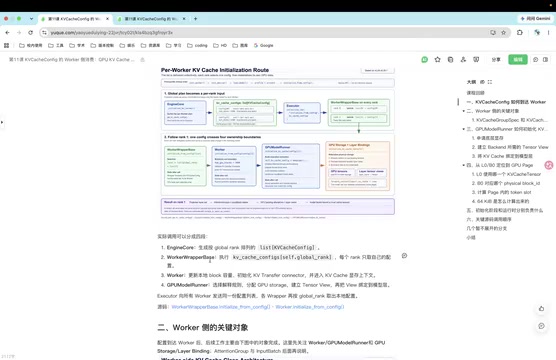
Deep Dive into vLLM Worker-Side GPU KV Cache Initialization
Deep dive into vLLM's Worker-side KV Cache GPU memory allocation, covering the full pipeline from KVCacheConfig generation to physical memory binding via ModelRunner.
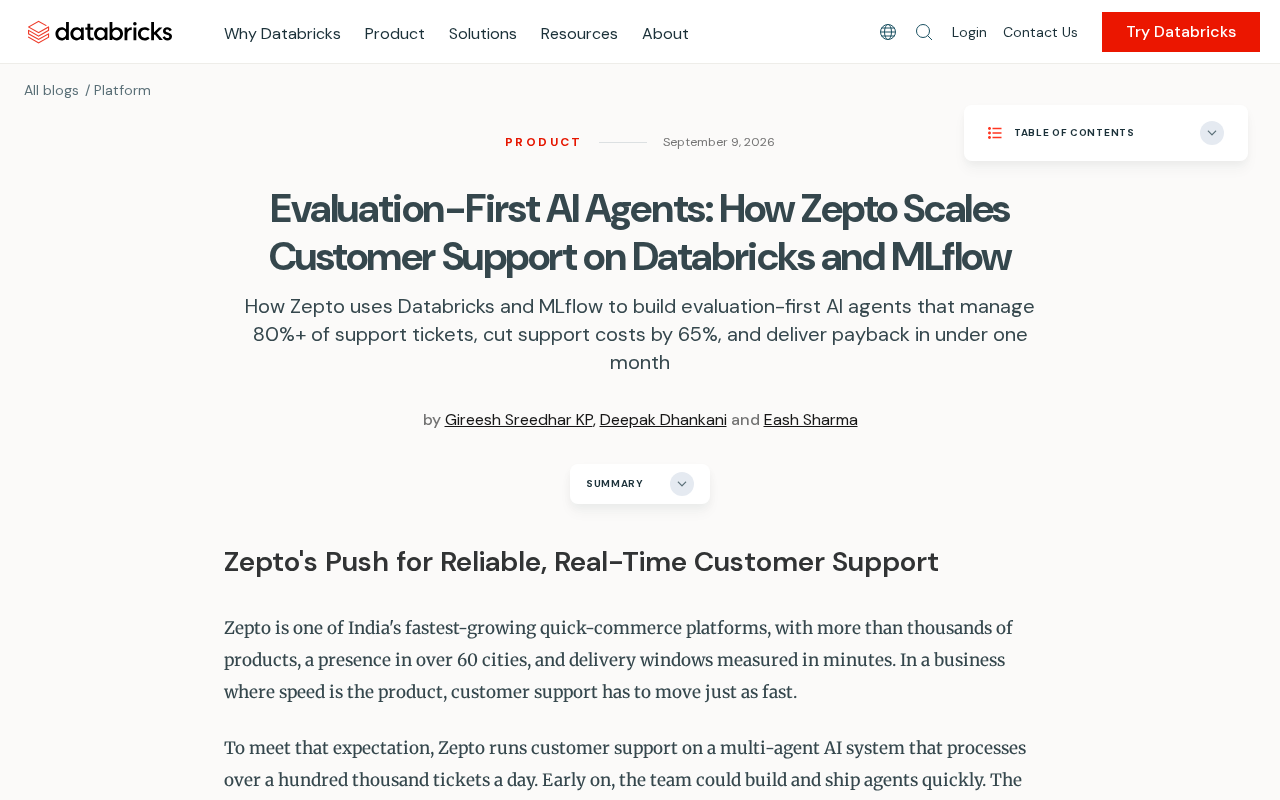
Zepto Builds AI Customer Service with MLflow: An Evaluation-Driven Practice Guide
Deep dive into how Zepto built an evaluation-driven AI customer service system using MLflow and Databricks, achieving 60% faster responses and 40% less manual handling. From technical architecture to practical insights.

Iran Captures U.S. Underwater Drone in Strait of Hormuz: A Comprehensive Analysis
Iran announces capture of U.S. Navy underwater drone in Strait of Hormuz. In-depth analysis of the incident, strategic value of UUVs, U.S.-Iran geopolitical competition, and implications for global energy security and military dynamics.