AI Learning Roadmap for Everyday Programmers: From Math Fundamentals to Hands-On Agent Development

A five-stage AI roadmap taking programmers from math basics to shipping Agent projects in six months.
This comprehensive learning roadmap helps everyday programmers go from zero to building production-ready AI projects. It covers five stages: essential math foundations (matrices, gradient descent, probability), deep learning fundamentals with PyTorch, core model literacy (CNN, RNN, Transformer, Diffusion), LLM engineering skills (fine-tuning with LoRA/QLoRA, RAG pipelines, AI Agents), and using LLMs as learning coaches. The guide targets the engineering level — enough to independently ship real projects.
Why Programmers Must Start Learning AI Now
If you're still on the fence about whether artificial intelligence truly matters, this article probably isn't for you. Anyone with even a slight pulse on tech trends can feel that AI is permeating virtually every industry at 10 times the speed of the internet.
This claim is backed by data. It took the internet roughly 15 years from commercialization in the 1990s to reach one billion users. ChatGPT, launched in November 2022, hit 100 million monthly active users in just two months, making it the fastest-growing consumer application in history. McKinsey's 2023 report estimates that generative AI could create $2.6 to $4.4 trillion in annual value for the global economy — a figure on par with the entire GDP of the United Kingdom. More critically, AI doesn't require massive infrastructure buildouts like the internet did. It can be embedded into existing systems through API calls, with a far lower deployment barrier.
This article answers one question: How can an everyday programmer go from zero to actually shipping AI projects? This isn't an inspirational story — it's a practical roadmap that works in the real world. The core logic is simple: learn primarily through video courses, get your feet wet in two weeks, build your own small projects within six months, and develop production-ready engineering skills within a year.
What matters isn't whether you're smart enough, but whether you're willing to carve out consistent time for structured learning. Knowledge in the AI field is expanding exponentially — what you need to learn today may be only half of what's required three months from now, and every day you delay raises the cost of catching up. Hesitation and waiting on the sidelines are the biggest hidden costs of our era.
Define Your Goal: Which Level Do You Need to Reach?
Many people immediately declare, "I want to understand AI from the ground up," but without being honest with yourself, your learning loses direction. There are really only three levels you might need:
Entry Level: Understand It, Dare to Use It
Know what a Transformer is, be able to call LLM APIs and tools, and assemble simple demos with existing components.
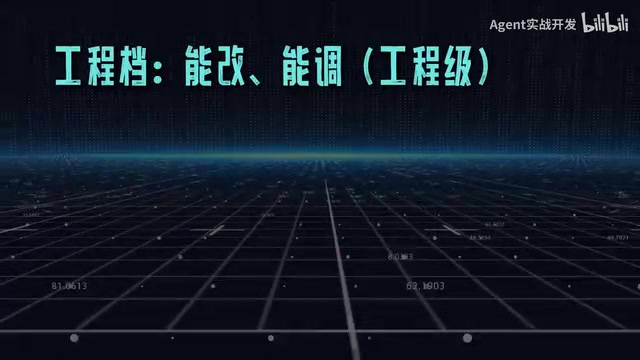
Engineering Level: Modify It, Tune It
Read and understand model code, write training scripts on your own, and independently complete RAG, fine-tuning, and Agent projects.
Research Level: Publish Papers
Derive formulas, modify network architectures, and propose novel methods.
The vast majority of programmers only need to reach the second level — Engineering Level. The entire roadmap that follows is designed around "enabling an average engineer to ship projects." It's divided into five stages, and I recommend doing a quick pass through all of them first, then circling back to fill in gaps as needed.
Stage 1: Nail the "Just Enough" Math Foundations in Three Days
The goal here is to learn only the math you actually need — not to re-study calculus and linear algebra from scratch. You only need to understand three things:
-
Intuition for matrix operations: A matrix is essentially a tool that applies linear transformations to a batch of vectors simultaneously. You just need to understand the role of matrix multiplication in neural networks. In a neural network, the computation at each layer is fundamentally matrix multiplication plus bias plus activation function. For example, a fully connected layer that takes a 768-dimensional input vector and outputs a 3072-dimensional vector is essentially performing a 768×3072 matrix multiplication. Once you grasp this, you understand the physical meaning of "forward propagation" in neural networks.
-
Calculus and gradient descent: Don't start by grinding through advanced calculus. Just build one core intuition — what gradient descent actually does and why it makes models progressively more accurate. Think of gradient descent as searching for the lowest valley in a mountainous landscape while blindfolded: you can't see the full terrain, but you can feel the slope (gradient) at your current position with your feet, then take a small step in the steepest downhill direction. Repeat this process, and you'll very likely end up in some valley. In neural networks, the "landscape" is a high-dimensional surface formed by the loss function, the "position" is the set of all model parameter values, and the "slope" is the partial derivative of the loss with respect to each parameter. The learning rate controls how far each step goes — too large and you'll overshoot the optimum or diverge; too small and convergence will be painfully slow. In practice, the commonly used Adam optimizer adds momentum and adaptive learning rate mechanisms on top of this, significantly improving training stability.
-
Probability and noise: You don't need to master a pile of derivations — just understand three concepts: noise, sampling, and softmax probability distributions. The Softmax function is the standard method for converting a set of arbitrary real values into a probability distribution — it exponentiates each value (raises e to that power), then divides by the sum of all exponentiated values, ensuring all outputs are between 0 and 1 and sum to 1. In large language models, the final layer outputs a vector the same size as the vocabulary (called logits), which after Softmax becomes probabilities that determine the most likely next token. The Temperature parameter controls output randomness by scaling logits before Softmax: low Temperature makes the distribution sharper (more deterministic output), while high Temperature makes it flatter (more random and creative).
At this point, your math preparation is sufficient to support all subsequent stages. Digging deeper into advanced math offers diminishing returns for most people focused on engineering applications. The real issue is usually not whether you've studied it, but whether you've studied the right things.
Stage 2: Master the Deep Learning Fundamentals in Three Days
The goal is to understand "the essence of neural networks + the training pipeline + a minimal CNN" so the black box no longer intimidates you.

Day 1: Neural Network = Function Approximator. Write a two-layer MLP in PyTorch, classify 2D toy data, experiment with different activation functions like ReLU, Sigmoid, and Tanh, observe training speed and results, and plot the loss curve. PyTorch is an open-source deep learning framework developed by Meta (formerly Facebook) AI Research and has become the most popular deep learning tool in both academia and industry. Its core advantage is dynamic computation graphs (Define-by-Run) — you define models and training logic with standard Python code, and the framework automatically builds the computation graph and computes gradients at runtime, making debugging and experimentation as intuitive as writing regular Python. PyTorch's core data structure is the Tensor, essentially a multi-dimensional array with GPU acceleration and automatic differentiation support. The torch.nn module provides convenient building blocks for various neural network layers, and torch.optim offers implementations of mainstream optimizers.
Day 2: Master the full training pipeline. From forward propagation to loss function to backpropagation — you need to be able to write a complete training loop from scratch. This is the real watershed moment in understanding deep learning.
Day 3: Introduction to CNNs. CNNs are the gateway to computer vision and help you build intuition for spatial feature extraction. Run through a complete MNIST handwritten digit recognition pipeline and experience how convolution operations capture image features. The essence of convolution is sliding a small weight matrix (called a kernel or filter, typically 3×3 or 5×5) across the input image. At each position, it performs element-wise multiplication with the corresponding region and sums the results, producing a single value in the output feature map. Different kernels learn to detect different features — shallow layers typically capture low-level features like edges and textures, while deeper layers combine these into higher-level semantic features. Pooling operations reduce the spatial resolution of feature maps by taking the maximum or average value within a region, reducing computation and enhancing translation invariance.
Stage 3: Core Model Literacy — Building the Right Mental Models
In this stage, you don't need to master every model — just build the correct "mental models" so you can dive deeper based on project needs later. Four categories of core models to cover:
-
CNN (Convolutional Neural Network): The fundamental building block for the visual domain. Understand the concepts of convolution, pooling, and feature maps. From AlexNet (the 2012 ImageNet competition winner, considered a milestone in the deep learning renaissance) to ResNet (which introduced residual connections to solve the degradation problem in deep networks), CNN's evolution clearly illustrates how architectural innovations continuously push performance boundaries.
-
RNN (Recurrent Neural Network): A relic from the pre-Transformer era — understanding this history helps you appreciate why Transformers are superior. RNNs model sequential dependencies by passing hidden states between time steps, but suffer from two critical weaknesses: vanishing gradients and the inability to parallelize computation. LSTM and GRU mitigated the vanishing gradient problem through gating mechanisms, but the inherently sequential nature of computation limited their ability to handle very long texts.
-
Transformer: The foundation of all current large language models, covering core concepts like self-attention, positional encoding, and multi-head attention. This is the section most worth investing your time in. The Transformer was proposed by a Google team in the 2017 paper Attention Is All You Need, originally for machine translation. Its core innovation is the self-attention mechanism, which allows the model to attend to all other elements in a sequence simultaneously when processing each element, completely solving both the long-range dependency problem and the parallel computation bottleneck caused by RNNs' sequential processing. The essence of self-attention is computing attention weights for every pair of elements through dot-product operations on three sets of vectors: Query, Key, and Value. Multi-Head Attention repeats this process multiple times, allowing the model to capture different types of relationships from different representation subspaces. Positional Encoding uses sine and cosine functions to inject position information into each token, compensating for self-attention's inherent inability to perceive order. Today's GPT, BERT, LLaMA, Claude, and virtually all major models are built on the Transformer architecture.
-
Diffusion Models: The dominant architecture for image and video generation. Understand the basic principles of adding and removing noise. The training process of diffusion models has two steps: the forward process gradually adds Gaussian noise to real images until they become pure noise, and the reverse process trains a neural network to learn how to progressively recover clear images from noise. Stable Diffusion, DALL-E 3, Midjourney, and the video generation model Sora are all based on diffusion model architectures.
You don't need to fully reproduce each model's code. Just understand the architecture diagrams and have a clear mental Pipeline overview.
Stage 4: The Three Pillars of LLM Engineering — Fine-Tuning, RAG, and Agents
From here on, the focus shifts from "understanding principles" to "building production-ready projects." You're standing at the threshold of engineering-level capability.
Fine-Tuning: Adapting Large Models to Your Business
Several common fine-tuning approaches are worth mastering:
-
SFT (Supervised Fine-Tuning): Training a model on Q&A pair datasets for targeted adaptation. SFT is the critical step that transforms a pretrained LLM from "general text completion" capability into "following instructions and providing useful answers." ChatGPT's success was largely driven by high-quality SFT datasets and the subsequent RLHF (Reinforcement Learning from Human Feedback) stage.
-
LoRA (Low-Rank Adaptation): Adds a small trainable low-rank matrix alongside the large weight matrix, dramatically reducing the number of trainable parameters. LoRA is based on a key hypothesis: during fine-tuning, the rank of the parameter change matrix is far lower than its dimensions. For example, a 4096×4096 weight matrix has 16.77 million parameters, but the changes during fine-tuning can be approximated by the product of two small matrices (e.g., 4096×16 and 16×4096), requiring only 130,000 trainable parameters — a reduction of over 99%. The original weights are completely frozen, and during inference, the LoRA weights are simply added to the original weights, introducing no additional latency.
-
QLoRA: Quantizes the original weights to 4-bit before applying LoRA, further reducing VRAM usage. QLoRA quantizes original model weights to 4-bit precision (using the NormalFloat4 data type), drastically shrinking memory footprint, while mounting LoRA modules on top of the 4-bit weights for fine-tuning. This makes it possible to fine-tune 65B-parameter models on a single consumer GPU (e.g., an RTX 4090 with 24GB VRAM), dramatically lowering the hardware barrier for fine-tuning.

When should you use fine-tuning? When your task is highly vertical (e.g., domain-specific Q&A), when RAG can't adequately address generation style and reasoning logic, or when you need the model to output in a fixed style.
RAG: Giving the Model Access to Your Private Knowledge
The core RAG (Retrieval-Augmented Generation) workflow is: User query → Text Embedding → Vector search for relevant documents → Concatenate into Prompt → Feed to LLM → Generate answer.
The real engineering work concentrates on the following areas:
-
Document cleaning and chunking strategy: Chunking directly impacts retrieval quality — fixed-length splitting (e.g., 500 tokens per chunk) is simple but may break semantic completeness, while paragraph-based or semantic-unit splitting produces better results but is more complex to implement. A common production strategy is to use overlapping windows (e.g., 500 tokens per chunk with 50-token overlap between adjacent chunks) to reduce information loss.
-
Choosing the right Embedding model: Text Embedding converts natural language text into high-dimensional vectors, where semantically similar texts are closer in vector space. Popular Embedding models include OpenAI's text-embedding-3, BGE (open-sourced by BAAI), and GTE. When choosing, consider the model's language support, vector dimensions, and performance on retrieval benchmarks (such as MTEB).
-
Choosing a vector database (Faiss, Milvus, PGVector, etc.): Faiss is Meta's open-source local vector indexing library, ideal for rapid prototyping and small-to-medium-scale scenarios; Milvus is a distributed vector database supporting millisecond-level retrieval across billions of vectors, suitable for large-scale production environments; PGVector is a PostgreSQL extension, ideal for teams with existing PostgreSQL infrastructure and moderate data volumes.
-
Improving retrieval quality with Rerank and Query Rewrite: Rerank uses cross-encoders to re-score initial retrieval results, significantly improving the relevance of retrieved documents to the user's question. Query Rewrite uses an LLM to reformulate vague user queries into search-friendly forms — for example, converting colloquial questions into keyword-rich query statements.
-
Add caching and logging to make it a production-ready system.
In practice, 80% of enterprise-level needs — knowledge base Q&A, internal assistants — can be met with a RAG solution.
Agent: Making the Model Not Just Talk, But Execute
An AI Agent is essentially the combination of "LLM + Tool Set + Planning Capability." The concept isn't entirely new, but large language models have given it truly general reasoning ability. AutoGPT's viral success in 2023 brought the Agent concept into public awareness, demonstrating that LLMs can autonomously decompose tasks, invoke tools, and iteratively execute. A complete Agent typically includes the following components:
- Planner: Plans task steps. The ReAct (Reasoning + Acting) paradigm, which alternates between reasoning and action execution, is one of the most mainstream planning methods.
- Tools: Execute specific actions such as search, API calls, and code execution. The Function Calling mechanism allows LLMs to output tool invocation requests in structured JSON format, greatly improving the reliability of tool calls.
- Memory: Remembers conversation context and key information, typically split into short-term memory (current conversation context) and long-term memory (persistently stored key facts and user preferences).
- Executor: Actually executes each step.
- Reflection: Reviews and self-corrects — when a step fails, it can analyze the cause and adjust the strategy for a retry.
Mainstream Agent frameworks include LangChain, LlamaIndex, and Microsoft's AutoGen. The core challenge for Agents is reliability — LLM hallucination can cause errors in task planning or inaccurate tool call parameter generation. In production environments, Agent systems typically require Human-in-the-Loop review nodes and strict error handling mechanisms to ensure reliability.
Start practicing with the simplest scenarios — for example, build an Agent that automatically generates daily reports by calling calendar and task management APIs to summarize the day's events into a draft. Then gradually scale up to more complex scenarios like automated Excel data analysis, auto-generating reports from databases, or auto-searching literature to assist writing.
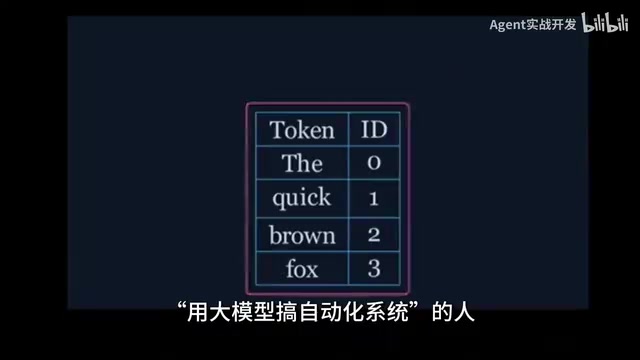
Once you reach this stage, you've evolved from "playing around with LLMs" to being an "engineer who builds automated systems with LLMs."
Leverage LLMs: Turn AI Into Your Personal Programming Coach
In the past, self-taught programmers rarely had access to a senior engineer who was available on demand and patient enough to explain things. That's completely changed now — models like DeepSeek and GPT serve as your 24/7 learning coaches.
Specific use cases include:
- Don't understand a math formula? Have it explain the underlying intuition in plain language.
- Can't write the code? Have it start from a minimal runnable demo.
- Can't get through a paper? Have it translate into language a non-expert can understand.
- Can't make sense of an error message? Have it analyze the cause line by line.
The one thing to keep in mind is to learn how to ask good questions. Don't ask "Tell me about Transformers." Instead, ask "Draw me a Transformer architecture diagram with only one block, and label the tensor dimensions at every step's input and output." The more specific and well-bounded your question, the more effective the help you'll receive and the faster you'll progress. This is actually an important engineering skill in itself — clearly defining the problem is often harder and more valuable than solving it.
Common Pitfalls: How Most People Fail at Learning AI
If you've read this far and are ready to take action, here are some traps to avoid:
- Biting off more than you can chew: Enrolling in a dozen online courses at once without ever completing a single real project.
- Math anxiety: Fixating on "my math isn't good enough" and using it as an excuse to never start.
- Rote memorization: Trying to memorize formulas and network architectures instead of building understanding.
- Staying at the prompt level: Only playing with prompt engineering and never actually installing PyTorch.
- Theory-practice disconnect: Only reading papers without writing code, or only using frameworks without understanding principles.
- Consuming without producing: Never writing a single line of experimental code, only reading articles and watching videos.
This kind of learning produces almost zero lasting value. Not everyone will profit from this wave of AI, but nearly everyone who seriously invests their time will be pushed significantly forward.
You don't actually have the choice of "whether or not to learn AI" — you only have the choice of "being in the group that gets replaced, or the group that embraces the tools." The biggest fear in learning AI isn't that it's hard, but that you take detours — unclear roadmaps, scattered information, not knowing what to study deeply versus what to just skim. The value of this five-stage roadmap is cutting out those detours and getting you onto the right learning track in the shortest possible time.
Key Takeaways
Related articles
Google Antigravity + Gemini 3.7 Flash: An Efficient Approach to Multi-Agent Collaboration
Explore how Google's Antigravity orchestration platform and Gemini 3.7 Flash model work together to solve complex multi-agent math and engineering problems.
Max Plan Shifts from Subscription to Credits — Has Your Usage Actually Shrunk?
AI coding subscriptions shift from session-time to API credits. A $100 Max plan now offers $300 in credits at a 3:1 ratio — has actual usage really shrunk?

OpenAI Cuts Off Cursor: The Full Story Behind the Feud and China's Push for Open-Source, Affordable AI
OpenAI cuts Cursor's model access over Musk's acquisition; Cursor pivots to Claude. Meanwhile, Chinese AI models like Qwen, GLM, and Hunyuan push open-source affordability, accelerating AI democratization.