AI Models Iterate Too Fast: Community Anxiety Under Expectation Inflation from o3 to Astra
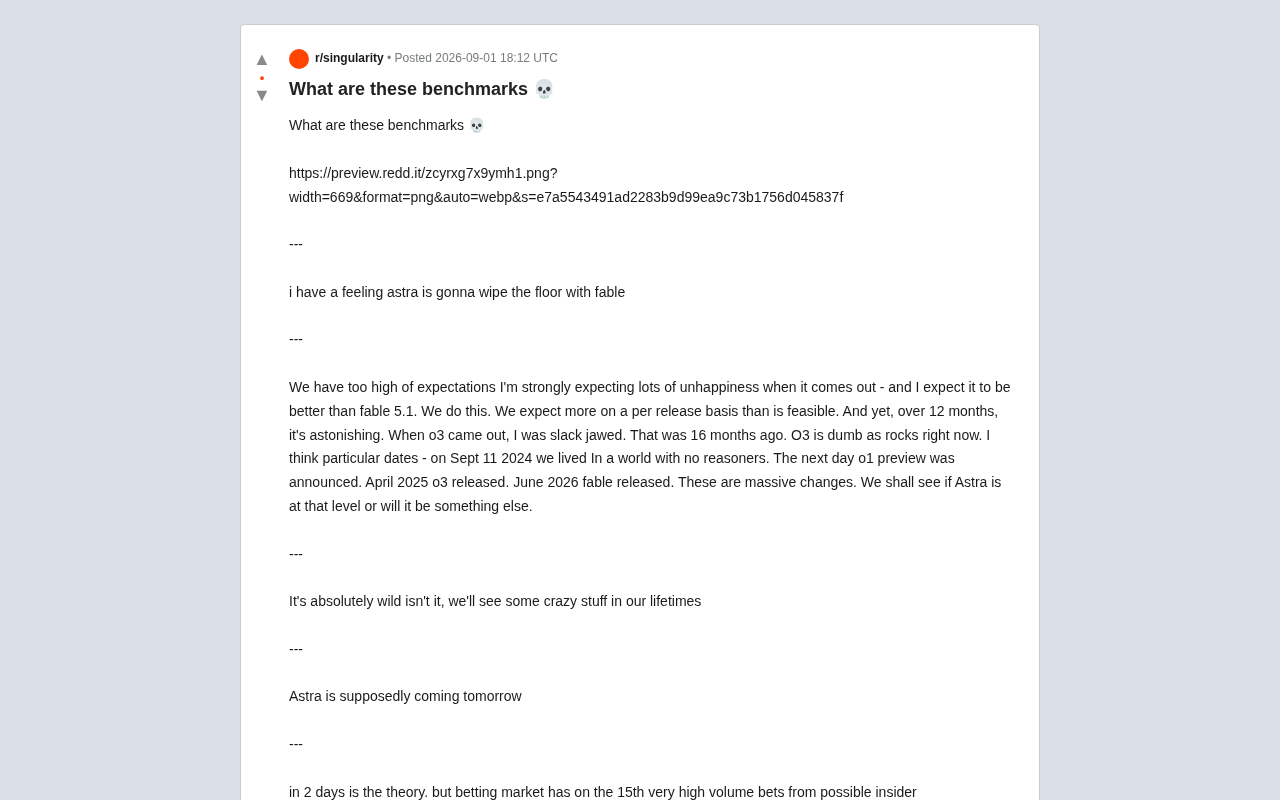
AI models evolve so fast that o3 went from jaw-dropping to 'dumb as a rock' in 16 months—community grapples with expectation inflation.
A Reddit discussion reveals how rapid AI model iteration creates 'expectation inflation'—where capabilities that amazed users months ago now feel inadequate. From the overnight birth of reasoning models in Sept 2024 to upcoming Astra, the community struggles with progress that outpaces psychological adaptation. The key insight: measure AI advances in 12-month cycles, not individual releases.
A Community Debate About Benchmarks
Recently, a Reddit post titled "What are these benchmarks 💀" sparked heated discussion. While the title carries a playful tone, it reflects a real and profound phenomenon in the AI community: model iteration has become so fast that people's expectations have completely spiraled out of control.
Benchmarks and Model Evaluation Systems
Benchmarks are standardized test sets used in AI to evaluate model performance, such as MMLU (Massive Multitask Language Understanding), HumanEval (code generation capability), and MATH (mathematical reasoning). These tests allow different models' capabilities to be quantified and compared through unified datasets and scoring standards. However, benchmarks have limitations: models may overfit to test sets, test scenarios may differ from real-world applications, and new capabilities may be difficult to cover with existing tests. This is why the community questions relying solely on benchmark scores—real-world performance is often more complex than cold numbers.
The core debate revolves around comparing the upcoming model Astra with the existing model Fable (specifically Fable 5.1 mentioned in the discussion). Some users assert "Astra will completely crush Fable," but rational voices remind us: our expectations for each release often far exceed what's technically feasible.
Expectation Inflation: Why We Always Think New Models Aren't Good Enough
The most thought-provoking perspective in this discussion comes from a veteran user. He admits:
"Our expectations are too high. I have a strong feeling there will be widespread dissatisfaction when the new model launches—even though it will actually be better than Fable 5.1. This is our chronic problem: with every release, we expect progress beyond what's actually possible."
This "expectation inflation" phenomenon is particularly pronounced in the AI field. When a model first launches and amazes everyone, but just months later, the same capabilities are taken for granted or even mocked as "stupid." This user captured this psychological gap with personal experience:
"When o3 launched, my jaw dropped. That was 16 months ago. And now, o3 is as dumb as a rock."
This sentence precisely captures the brutal acceleration of AI model iteration—today's cutting edge becomes tomorrow's mediocrity.
Psychological Adaptation Lag to Technical Progress
The psychological theory of "Hedonic Adaptation" suggests that humans quickly adapt to new stimulus levels and regard them as the new normal. In the AI field, this effect is amplified by technological acceleration: tasks that once required expert teams months to complete can now be done by AI in seconds, but users quickly become accustomed to this capability and shift focus to the model's shortcomings. This "capability depreciation" happens far faster than in other tech fields—smartphones took a decade to go from amazing to mundane, while AI models only need a few months. This creates a paradox: objectively, technology is progressing rapidly, but subjectively, users always feel it's "not good enough." Recognizing this psychological mechanism helps us evaluate technical value more objectively and avoid falling into a spiral of perpetual dissatisfaction.
The Birth of Reasoning Models: Looking Back at the Timeline That Changed Everything
In the discussion, this user also outlined a historically significant timeline, highlighting the cliff-like characteristics of AI capability leaps.
The Watershed from No Reasoning to Reasoning
- September 11, 2024: We still lived in a world without reasoning models
- Next day (September 12): o1-preview announced, marking the opening of the reasoning model era
- April 2025: o3 officially released
- June 2026: Fable released
He emphasized: "These are earth-shattering changes." From having no models with "thinking" capabilities to reasoning models becoming standard, the entire transformation happened virtually overnight. This nonlinear, leapfrog progress is the fundamental reason the community keeps resetting expectations.
The Technical Breakthrough of Reasoning Models
Reasoning models represent a paradigm shift in AI development. Traditional language models use an "instant generation" strategy, outputting answers directly after seeing a prompt; whereas reasoning models (like OpenAI's o1 series) introduce a "Chain-of-Thought" mechanism, conducting multi-step internal reasoning before providing final answers. Technically, this trains models through reinforcement learning to learn "when deep thought is needed" and dynamically allocate computational resources during reasoning. This capability shows qualitative leaps in complex math problems, programming tasks, and multi-step logic problems. The release of o1-preview is considered a watershed because it first demonstrated AI exhibiting human-like "pause to think" behavior patterns, rather than relying purely on pattern matching.
Twelve Months Is Enough to Overturn Perception
You may not have noticed, but despite individual releases being potentially disappointing, when viewed over a 12-month timeframe, progress is "shocking." This perspective reminds us: evaluating AI progress shouldn't be measured by individual releases, but rather examined over annual or even longer cycles. Short-term disappointment and long-term amazement form two sides of the same coin in AI development.
The Nonlinear Progress Characteristics of Model Capabilities
AI model development exhibits clear nonlinear characteristics—capability improvements aren't uniform but show a "step function" pattern of long plateaus followed by sudden leaps. This relates to deep learning's "Emergence" phenomenon—when model scale, data volume, or training methods cross certain thresholds, they suddenly exhibit new capabilities not explicitly optimized during training. Examples include the coding ability leap from GPT-3 to GPT-4 and the sudden appearance of reasoning models. This nonlinear characteristic makes predicting next-generation model capabilities extremely difficult and is the technical root of "expectation inflation": people tend to linearly extrapolate past progress rates but cannot predict when the next capability leap will occur.
When Will Astra Launch? The Community's Detective Game
Regarding Astra's release timing, the community engaged in an interesting deduction:
- Some say "Astra is supposedly coming tomorrow"
- Others believe "theoretically in two days"
- More interestingly, betting markets show unusually high trading volume on large bets for a "15th" release, suspected to involve insider information
Inferring Release Rhythm from Model "Dumbing Down"
One technically insightful speculation: recent models have shown obvious performance degradation, and based on past experience, such computational power and capability adjustments often occur weeks before new model releases. Therefore, users deduce that the "15th" date has credibility.
This method of predicting new model release timing by observing existing model performance fluctuations, while carrying a community mystique, also reflects users' keen perception of model behavior—resource reallocation before releases can indeed cause temporary performance degradation in existing services.
Computational Scheduling and Performance Fluctuations in AI Services
Operating large AI models requires massive GPU cluster support. When companies prepare to release new models, they need to migrate computational power from existing services to training, testing, and deploying new models, causing older models' inference speed to slow or response quality to decline. Additionally, cloud service providers typically employ dynamic resource allocation strategies, adjusting model instance numbers based on load. The "dumbing down" phenomenon users observe may stem from: service degradation, using smaller distilled versions, or sampling parameters (like temperature) being adjusted to save costs. Veteran users infer company movements through these subtle changes, forming a unique "service archaeology" culture. This also reflects that AI service operations are far more complex than traditional software.
Psychological Adaptation in the Age of Acceleration: When Amazing Becomes Ordinary
This seemingly casual community discussion actually touches on a deep proposition of the AI era: When the speed of technical progress exceeds the speed of human psychological adaptation, how should we cope?
On one hand, we enjoy unprecedented capability leaps; on the other, satisfaction keeps depreciating. As that user said: "We will witness crazy things in our lifetime." This is both excitement and a certain unease—when 16 months ago's genius becomes today's "idiot," how should we anchor our judgment of technology?
For AI practitioners and observers, this discussion provides three practical thinking frameworks:
- Measure progress in long cycles: Avoid being misled by short-term gaps from individual releases; evaluate model capability changes over at least 12-month periods
- Beware of expectation inflation: Rationally set expectations for new models, recognizing that incremental improvements also have value
- Focus on structural breakthroughs: Rather than benchmark score improvements, paradigm shifts like the birth of reasoning capabilities are true milestones
Conclusion
Whether Astra ultimately launches "tomorrow" or on the "15th," whether it truly crushes Fable, this discussion itself has revealed a core truth about AI development: we are in an era where progress far exceeds expectations and psychological adaptation capacity.
Maintaining awe while staying rational—perhaps this is the most valuable attitude to uphold as we face this frenzy of AI model iteration.
Key Takeaways
Related articles
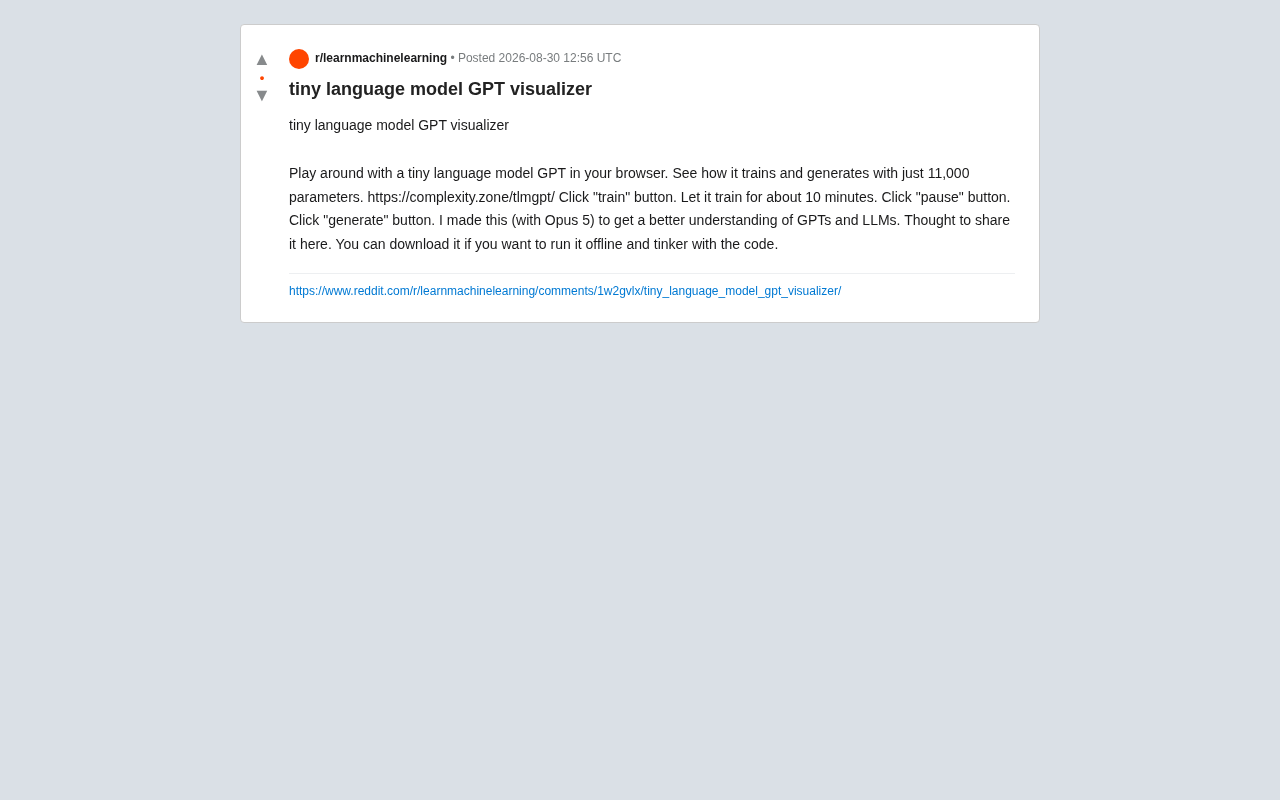
Mini GPT Visualizer with 11,000 Parameters: Train and Understand LLM Fundamentals Right in Your Browser
A mini GPT visualizer with just 11,000 parameters lets you train a language model in your browser and watch the entire process — understand embeddings, attention, and more in 10 minutes.

What Projects Should You Build After One Month of Learning to Code? Recommended Projects for Beginners Ready to Level Up
Not sure what to build after one month of learning to code? This guide offers project recommendations for beginners ready to level up through project-based learning.
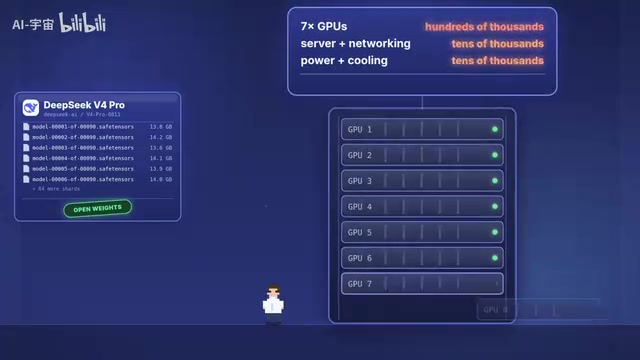
DeepSeek V4 Pro In-Depth Analysis: How Open-Source Weights Are Disrupting the Closed-Source LLM Landscape
DeepSeek V4 Pro releases with MIT license, achieving capability leap through specialized expert training, knowledge distillation, and multi-token prediction with 78% speed boost. Analysis of post-training techniques and open-source impact on closed models.