AI-Native Engineering Transformation: Real Emotions and Coping Strategies from 218 Technical Leaders

218 engineering leaders reveal coexisting excitement and anxiety in AI-native transformation, showing it's fundamentally a people problem.
A survey of 218 engineering leaders reveals that facing the paradigm leap from "AI-assisted" to "AI-native," leaders widely exhibit complex emotions where excitement coexists with anxiety, and hope coexists with feeling threatened. These contradictions stem from deeper concerns about skill depreciation, management paradigm failure, and decision-making authority shifts. The key insight: successful AI transformation requires acknowledging teams' complex emotions, and addressing change through embracing uncertainty, creating safe experimentation spaces, redefining engineer value, and pursuing gradual transformation.
Excited, Anxious, Energized — A Collective Emotional Portrait of 218 Leaders
"Excited, anxious, energized."
This is how one engineering leader described their feelings about the transition to AI-native engineering. When the research team posed the same question to 218 engineering leaders, the answers were strikingly consistent:
- "Insecurity, distrust, hope."
- "Optimistic, excited, threatened."
These seemingly contradictory emotions exist simultaneously within the same group of people. This is precisely the core finding revealed by The State of AI-Native Engineering in 2026 — a report co-authored by Vinay Perneti and Emma Starks that presents a vivid psychological portrait of technical leaders navigating the AI wave.
Coexisting Contradictions: The Emotional Complexity of AI Transformation
Interestingly, these emotions don't come from opposing camps — they are multiple feelings existing within the same individuals. An engineering leader can simultaneously feel excited about AI's potential while anxious about the future of their role; hopeful about technological progress while harboring doubts about AI system reliability.
This emotional complexity reflects the essential nature of AI-native engineering transformation: it's not a simple tool upgrade, but a deep reshaping of entire engineering cultures, workflows, and professional identities. When AI evolves from an assistive tool to the core infrastructure of engineering practice, every practitioner is forced to reassess their value proposition.
The Paradigm Leap from "AI-Assisted" to "AI-Native"
There is a fundamental distinction between "AI-assisted" and "AI-native." The former embeds AI tools into existing workflows — such as using GitHub Copilot for coding assistance. The latter means the entire engineering system — from architecture design and team collaboration to quality assurance — is rebuilt around AI capabilities.
The evolutionary path of this concept bears a striking resemblance to the rise of "Cloud-native" a decade ago. In the 2010s, enterprises progressed from "hosting applications on the cloud" (Cloud-hosted) to "designing applications from scratch for cloud environments" (Cloud-native), giving birth to entirely new technical paradigms like microservices architecture, containerization, and Kubernetes orchestration. Similarly, AI-native means that software systems incorporate large language models (LLMs), AI Agents, and machine learning pipelines as first-class citizens in architectural considerations from the very beginning, rather than "grafting" AI capabilities onto traditional systems after the fact. This fundamental shift in design philosophy affects every engineering decision, from data flow design and API contract definitions to error-handling strategies.
It's worth recalling that the development speed of AI-assisted coding tools themselves has been dizzying. GitHub Copilot was first released as a technical preview in 2021, based on OpenAI's Codex model, marking a turning point for AI-assisted coding's transition from academic experiment to engineering practice. Subsequently, tools like Cursor, Codeium, Amazon CodeWhisperer, and Tabnine rapidly emerged, forming a fiercely competitive AI coding assistant ecosystem. By 2025, these tools had evolved from simple code completion to intelligent agents capable of understanding entire repository contexts, performing multi-file refactoring, and even autonomously completing end-to-end feature development. However, these tools essentially remain in the "AI-assisted" category — they are embedded within developers' existing IDE workflows, augmenting rather than restructuring the development process. The leap from AI-assisted to AI-native demands far deeper change than mere tool replacement.
The uncertainty brought by this paradigm leap is the root cause of the anxiety. When AI can take on increasing amounts of coding, testing, and even design decisions, what is an engineer's core competency? How should team structures be adjusted? Has the meaning of code review already changed?
There are no standard answers to these questions, and the 218 leaders are each forging their own path forward through practice.
The Deeper Concerns Behind "Feeling Threatened"
Among all the emotional keywords, "threatened" is perhaps the one most worthy of deep reflection. This isn't panic from junior developers — it comes from engineering leaders, the very people who theoretically should be most ready to embrace change.
This sense of threat likely stems from multiple dimensions:
- Risk of skill depreciation: Years of accumulated deep technical expertise may accelerate in obsolescence in the face of AI's rapid iteration
- Management paradigm failure: Traditional engineering management methodologies — how to estimate work hours, how to evaluate output — need to be completely rewritten in AI-native environments
- Decision-making authority shift: As AI systems provide increasingly precise technical recommendations, the judgment advantage of technical leaders is shrinking
The failure of management paradigms particularly warrants elaboration. Traditional software engineering management is built on a set of methodologies validated over decades: Story Points estimation, Velocity tracking, Lines of Code statistics, and Pull Request review cycles form the foundational framework for team performance assessment. Sprint planning in Agile development assumes that human developers' output rates are relatively stable and predictable. But in AI-native environments, one engineer leveraging AI agents might complete in hours what previously took days, while another complex task might require repeated rework due to AI hallucination issues. This renders traditional estimation models and performance metrics almost entirely ineffective, and teams need to develop entirely new measurement systems — such as new dimensions measuring "human-AI collaboration efficiency," "AI output review quality," and "Prompt Engineering maturity." For leaders accustomed to managing teams with established frameworks, this foundational disruption is a significant source of the "threatened" feeling.
But the "optimism" and "excitement" that coexist with "feeling threatened" show that these leaders are not pessimists. They clearly see the enormous opportunities that AI-native engineering brings — faster delivery speeds, higher code quality, and greater innovation space.
The coexistence of contradictory emotions demonstrates precisely that they are engaging in deep rational thinking, rather than blind optimism or passive resistance.
Industry Insights from AI Transformation: Embracing Emotional Complexity
The most important insight from this report may not be any specific technology trend, but rather a profound observation about change management: Successful AI transformation requires acknowledging and accepting the complex emotions within teams.
The contradictory emotional patterns revealed in the report align closely with classic change management theories in organizational behavior. The Kübler-Ross Change Curve describes the stages people experience when facing major change — shock, denial, anger, bargaining, depression, and acceptance. John Kotter's eight-step change model emphasizes that successful organizational change must first establish a "sense of urgency" while building a powerful guiding coalition. The simultaneous excitement and anxiety expressed by the 218 leaders actually reflects that they are at a critical inflection point on the change curve — having moved past the denial stage and actively seeking adaptation paths. This lucid state of contradiction is typically viewed in change management research as a positive signal for successful organizational transformation, because it means the individuals both feel the urgency of change and maintain rational awareness of risks.
Four Action Directions for Technical Leaders
1. Acknowledge uncertainty rather than pretending to have all the answers
The candor of 218 leaders demonstrates that admitting anxiety is not a sign of weakness — it's actually the foundation for building team trust. In AI-native transformation, no one has all the answers, and facing this fact openly is more persuasive than feigning confidence.
2. Create safe spaces for experimentation
Let teams try AI-native practices within controlled boundaries, transforming "insecurity" into "courage to explore." Small-scale pilots and rapid feedback loops are effective means of lowering psychological barriers.
3. Redefine engineers' core value
Help team members understand that in the AI-native era, systems thinking, problem-defining ability, and cross-domain collaboration skills are more critical than pure coding skills. AI replaces repetitive labor, not creative judgment.
The systems thinking referenced here originates from the core concept proposed by MIT scholar Peter Senge in The Fifth Discipline, emphasizing the understanding of interdependencies among components in complex systems rather than optimizing individual parts in isolation. In AI-native engineering, the importance of systems thinking is dramatically amplified: engineers need to understand AI models' capability boundaries and failure modes, how data pipeline quality affects downstream decisions, how human-AI interfaces affect user trust, and how AI systems' ethical compliance requirements constrain technology choices. When AI takes on large amounts of concrete coding work, engineers' core value shifts to architecture-level system design — ensuring coordination between AI components and traditional software components, data infrastructure, and security compliance frameworks. This capability cannot be easily replaced by AI, because it requires deep, integrated understanding of business context, technical constraints, and human needs.
4. Establish gradual transformation paths
Don't try to get there all at once. Let teams adapt to the new paradigm through phased goals, building confidence and experience at each step — this is far more sustainable than radical change.
Final Thoughts: The AI-Native Era Is a People Problem More Than a Technology Problem
The AI-native engineering transformation of 2026 is ultimately not a purely technical problem — it's a problem about people. The 218 engineering leaders, with their contradictory yet authentic emotions, tell us: the most cutting-edge technological change ultimately comes back to human feelings, human adaptation, and human growth.
The teams and organizations that can simultaneously embrace excitement and anxiety, finding balance between hope and unease, are the ones most likely to truly prevail in the AI-native era.
After all, change is never painless — and acknowledging this is itself the first step toward success.
Related articles
Meta Muse Hits 900K Downloads in Six D…
Meta Muse Hits 900K Downloads in Six Days: The AI Agent Era Has Officially Arrived
Meta's AI agent Muse hit 902K downloads in 6 days, topping US App Store and Google Play charts above ChatGPT and Claude. A deep dive into Muse's capabilities and the AI Agent race.
 Industry Insights
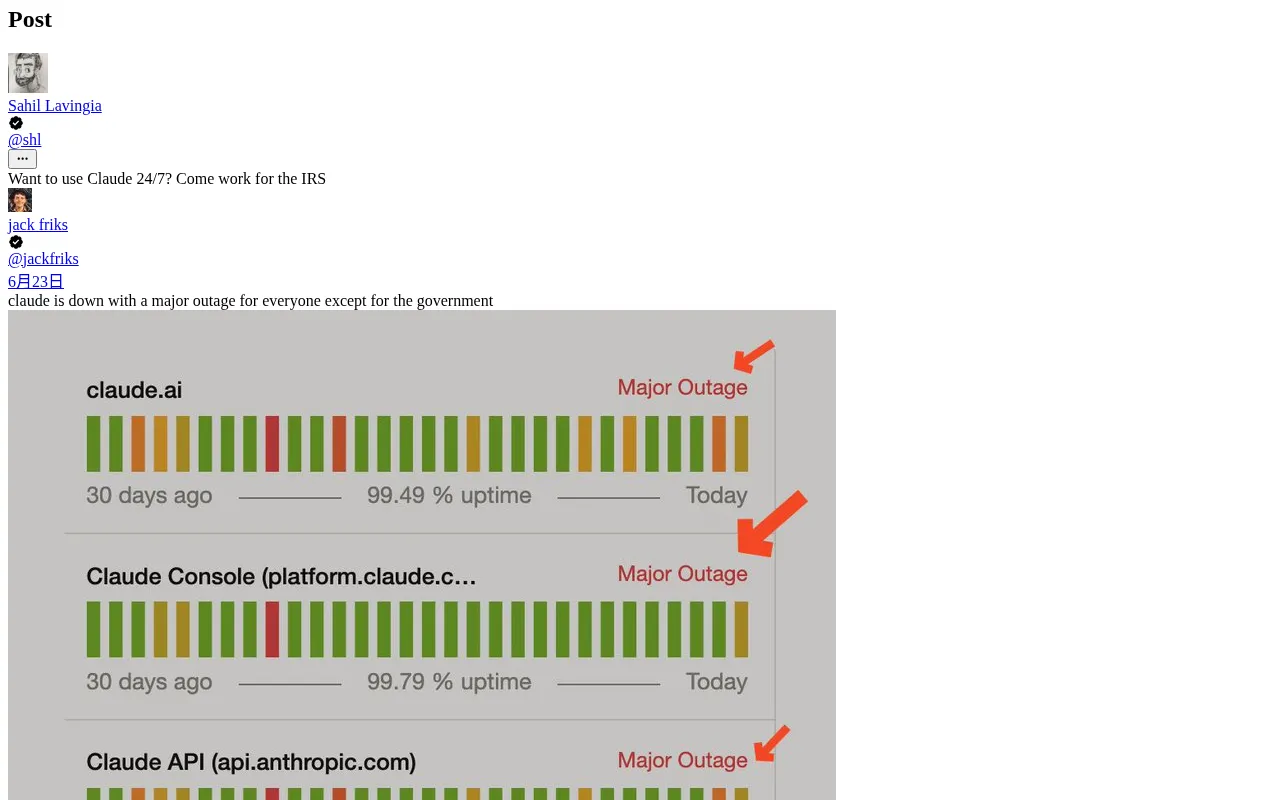
IRS Fully Embraces Claude AI, Accelerating Federal Government's AI Adoption
The IRS is recruiting staff with 24/7 Claude AI access, marking Anthropic's breakthrough into the federal government. Explore the strategic implications and tax use cases.
 Industry Insights
The IRS Mobile App Debate: A Trust Crisis in Government Digital Transformation
The IRS's proposed mobile app has sparked heated debate. This article analyzes the core arguments, exploring data security, privacy, and the trust crisis in government digital transformation.