AI Novel Writing: The Dual Countdown Method for Solving the Sagging Middle Problem

The Dual Countdown Method fixes novel mid-section drag by creating conflicting deadlines that force costly character choices.
The Dual Countdown Method solves the common 'sagging middle' problem in long-form fiction by setting two conflicting time constraints—a public deadline and a private deadline—that cannot be resolved by the same action. Combined with a four-item card structure (remaining time, choice, sacrifice, consequence), regular clock checks, and a pause test for validation, this framework ensures every scene carries irreversible costs. AI writing tools with project memory can automate timeline tracking across chapters.
Why the Middle of a Novel Always Feels Like a "Task Checklist"
Many authors hit a common bottleneck when writing long-form fiction: the outline lists thirty events, yet the middle section still feels sluggish and powerless. The temptation is to turn remaining plot points into a to-do list, checking them off one by one. This Bilibili creator hits the nail on the head—the real problem is never "too few events," but rather: everything can be done tomorrow.
When every plot node lacks a clear time constraint, characters lose their sense of urgency. Readers subconsciously feel that "the protagonist can always do this later," and narrative tension dissolves. Narrative tension is a core concept in narratology—the suspense and anticipation readers feel during the reading process. Robert McKee in Story attributes it to "the gap between expectation and outcome," while Blake Snyder in Save the Cat emphasizes that the "ticking clock" is standard equipment in Hollywood screenplays. When a story lacks time constraints, the narrative falls into what's called "wandering mode"—characters can indefinitely postpone action, and readers lose the motivation to turn pages. The middle section of a novel (typically 40%-60% of total length) is especially prone to this problem, known in the industry as the "sagging middle"—one of the primary reasons readers abandon books.
A countdown is essentially stringing a taut wire through the story.
Core Method: Dual Countdown (Public Deadline + Private Deadline)
What Is the Dual Countdown?
A single countdown can easily be "solved in one shot" by a single character action, losing its sustained pressure. The creator's solution is to set up two clocks that cannot be resolved by the same action:
- Public Deadline: A macro-level time constraint visible to all characters. For example, "the city goes into lockdown in three days."
- Private Deadline: An urgent personal task belonging only to the protagonist. For example, "Mother must get her medicine before tonight."

The key to these two clocks is that they conflict with each other and cannot both be satisfied. If the protagonist goes to find medicine, they miss the opportunity to collect evidence about the lockdown; if they pursue the evidence, they must delegate the medicine delivery to an untrustworthy person. No matter what they choose, there's a cost—and dramatic tension naturally grows from this dilemma.
The design philosophy behind the dual countdown traces back to the classical dramatic concept of "dilemma." Aristotle noted in Poetics that the core of tragedy lies in the protagonist facing two choices that both lead to suffering. In modern screenwriting theory, this principle has evolved into "the cross-pressure of the A-storyline and B-storyline"—the main mission and subplot simultaneously apply pressure, forcing characters to make trade-offs with limited resources. The public deadline resembles "external conflict," driving the macro direction of the plot; the private deadline corresponds to "internal conflict," revealing the character's emotional needs and moral boundaries. Their interweaving not only creates plot urgency but also generates natural space for character arc development.
Why the Two Clocks Must Be "Offset"
If both deadlines can be simultaneously satisfied by a single action, the countdown becomes mere decoration. Only when they are mutually exclusive in time, space, or resources is the character forced to make a genuine choice—and every choice reveals their value hierarchy, creating the perfect opportunity for crafting multidimensional characters.
Practical Implementation: The Four-Item Card Structure
Each Plot Card Contains Only Four Items
The creator provides a very specific operational template. Break the middle section into a series of "plot cards," each containing only four elements:
- Remaining Time (how long until the deadline)
- This Card's Choice (what the protagonist decides to do in this step)
- The Abandoned Alternative (what B cannot be done because A was chosen)
- The Resulting New Consequence (the chain reaction caused by abandoning B)
Card-based writing isn't an entirely new invention—it has deep roots in creative methodology. Nabokov's famous index card method decomposed novels into independent scene cards that could be freely rearranged. The "Beat Sheet" widely used in Hollywood screenwriting follows a similar logic—breaking a screenplay into key beat points, each with a clear dramatic function. The four-item structure essentially introduces the game theory concept of "opportunity cost" into the traditional card method: every choice comes with an explicit sacrifice, and that sacrifice produces trackable causal consequences. This design transforms the creative process from a linear "write wherever inspiration leads" mode into a "every step has a price" decision tree mode, dramatically increasing the density and coherence of middle-section plotting.
The elegance of this structure is that it bakes "cost" into the creative workflow itself. You no longer need to rack your brain manufacturing conflict artificially—conflict naturally emerges from the causal chain of "choice—sacrifice—consequence."
Clock Check Every Five Cards
After completing every five cards, pause and verify: Has the clock genuinely shortened? More importantly, has the character reprioritized their actions based on new information?
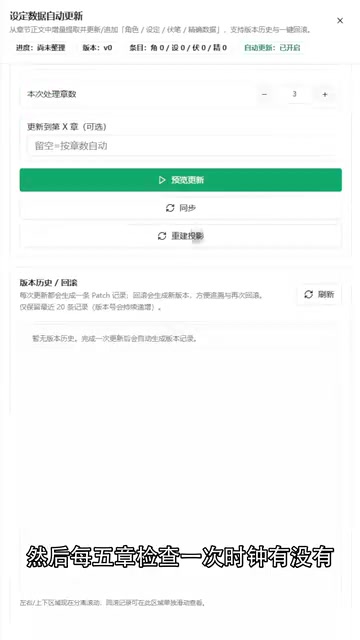
Here the creator proposes an advanced criterion: urgency should manifest in the character's behavioral reprioritization, not through the narrator repeatedly telling us "time is running out." If your story can only convey urgency through the narrator emphasizing time pressure over and over, it means the countdown isn't truly driving the plot.
Verification Technique: The Pause Test for Countdown Effectiveness
To determine whether a countdown is effective, the creator offers a minimalist "pause test": After removing the countdown, can the chapter order be freely rearranged?
- If chapters can be shuffled without affecting readability—those deadlines are merely decorative and aren't truly participating in narrative logic.
- If shuffling causes causal collapse—congratulations, your countdown has become the skeleton of your story structure.
The underlying logic of the pause test aligns closely with the "principle of necessity" in narratology. Chekhov's famous "gun principle"—if a gun hangs on the wall in Act One, it must fire in Act Three—emphasizes the inseparable causal connections between narrative elements. In novels, sequentiality is what distinguishes a "story" from a "journal": a real story requires Event A to occur before Event B because A causes B. If chapters can be freely swapped without affecting comprehension, it means these chapters exist in a "parallel relationship" rather than a "causal relationship"—essentially a collection of independent short stories stitched together, not an organic long-form narrative. The pause test reveals this structural flaw at minimal cost, making it an extremely practical diagnostic tool during self-editing.
This test is simple yet devastating—it quickly filters out those "pseudo-countdown" designs that look tense on the surface but are actually loose.
How AI Writing Tools Assist Long-Form Novel Creation
Writing Deadlines into Project Memory
The creator mentions that the novel-writing Agent in Chain Workshop can write both public and private deadlines into project memory. This means the AI can automatically sync and update "remaining time" when generating subsequent chapter cards, maintaining timeline consistency.

Project memory is one of the key technical breakthroughs in current AI writing tools. Traditional large language models (such as the GPT series, Claude, etc.) are limited by context window length—even the latest models supporting 128K to 1M tokens still experience information forgetting and contradictions when handling novels of hundreds of thousands of words. Project memory stores key settings (such as timelines, character relationships, deadline nodes) in an external database and retrieves relevant context for injection during each generation, achieving cross-chapter information consistency. This architecture is essentially an application of Retrieval-Augmented Generation (RAG) in creative writing scenarios. For the dual countdown method, the AI can automatically track numerical states like "public deadline: 48 hours remaining" or "mother's medicine effect: 6 hours remaining," eliminating the tedium of manually maintaining timeline spreadsheets and letting authors concentrate cognitive resources on higher-level narrative design.
For long-form creation, the most error-prone aspect is timeline management—by Chapter 20, you might forget how much time remains on the deadline set in Chapter 5. AI Agents solve this pain point through persistent memory, allowing authors to focus on verifying logistics, business logic, and causal rhythm while delegating mechanical time calculations to the tool.
The "Gacha-Style" One-Click Generation Experience
The creator also half-jokingly demonstrated the experience of another type of AI writing product: after entering the creation page, you can select preferred tags, genres, and character identities like drawing gacha cards, casually pick a background and title, click generate, and receive a complete novel.

This low-barrier generation approach certainly lowers the startup cost of writing, but deserves a dialectical perspective—AI can quickly produce "complete" text, but not necessarily "tension-filled" stories. Current AI writing products roughly divide into two camps: one focuses on "one-click generation" as its selling point, where users select tags and templates to quickly obtain complete text; the other uses Agent architecture as its core, with AI participating as a "co-pilot" in outline planning, plot reasoning, and style calibration. The former excels at extremely low creative startup costs, suitable for rapid prototyping or recreational writing; however, its generated text often exhibits "averaging" characteristics—smooth sentences and complete structure, yet lacking distinctive narrative rhythm and deep dramatic tension. This is because current language models' training objectives are essentially "maximum likelihood estimation," tending to generate the statistically most probable next word rather than the most surprising narrative choice. True literary tension comes precisely from counter-intuitive decisions—characters giving up when they least should, persisting when they least should. This structural "surprise" still requires active design by human authors; AI tools play the role of executor and validator, not decision-maker.
This precisely validates the value of the dual countdown method: what truly makes a novel compelling isn't the accumulation of sentences, but design at the structural level.
Conclusion: Fast Pacing Isn't About Sentences—It's About "No Cost-Free Tomorrow"
The creator captures the essence of the entire method in one phrase: Characters have no cost-free tomorrow. So-called fast pacing has never been about surface-level speed created through short sentences and quick paragraph cuts—it's about ensuring every present-moment choice is linked to irreversible costs.
The dual countdown method institutionalizes and systematizes this "cost," and combined with AI writing tools' project memory capabilities, provides long-form creators with a replicable, verifiable framework for forward momentum. Whether you write purely by hand or with AI assistance, this combination of "public deadline + private deadline + four-item cards + pause test" is worth trying.
Key Takeaways
Related articles

ChatGPT Space Launches: Team Collaboration and New Pages Features Explained
ChatGPT Space is OpenAI's new team collaboration feature with Pages, real-time collaboration, and Slack/Google Drive sync. We break down its privacy design, multi-platform integration, and the full workflow from conversation to document.

Migrating Apache Spark UDFs to GPU Acceleration with AI Agents
NVIDIA developer blog explains how AI Agents rewrite Apache Spark UDFs for GPU acceleration, covering migration criteria, agent rewriting and verification workflows, plus pitfalls like result consistency and CPU-GPU transfer overhead.
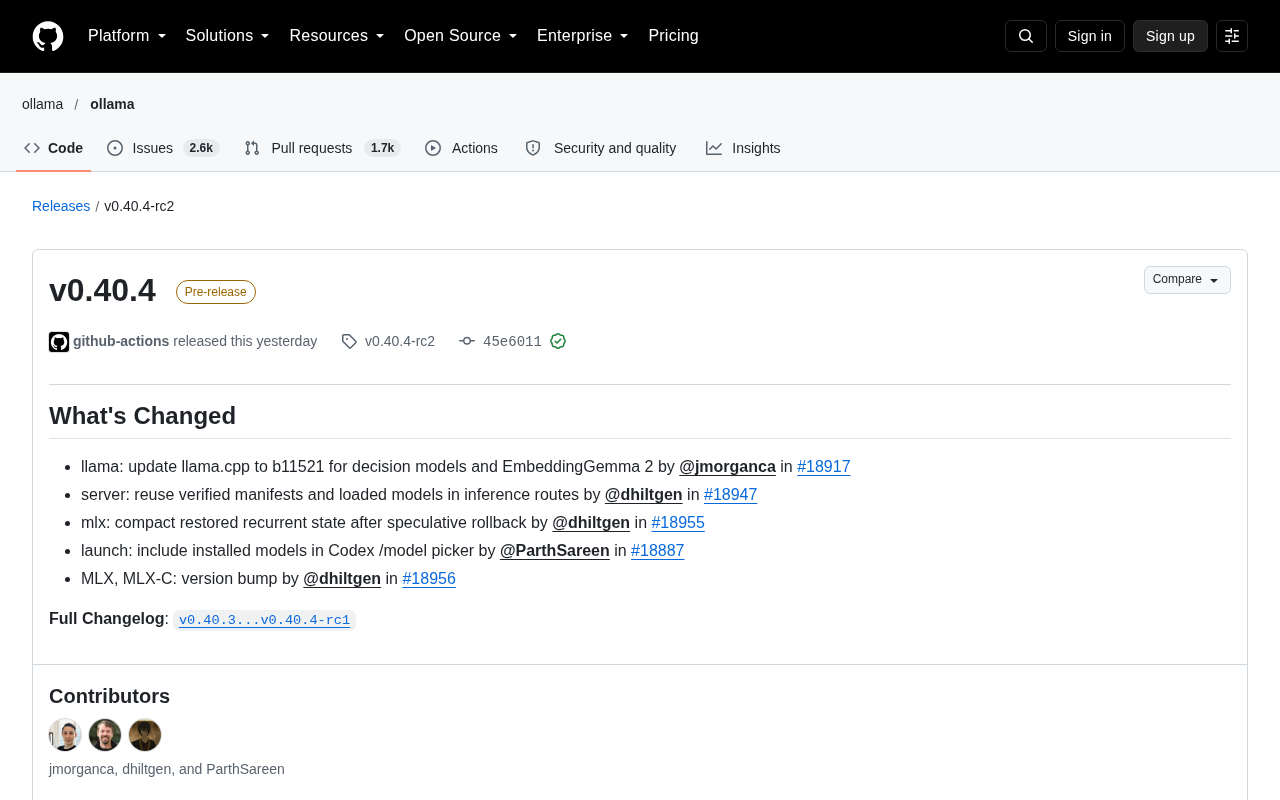
Zed Editor v0.40.4-rc2 Released: Usage Credits Now Available Without Upgrading
Zed editor releases v0.40.4-rc2, allowing users to use usage credits for AI features without upgrading to a paid plan, lowering the trial barrier.