AI-Powered Reverse Engineering: Using Skill Packs + MCP to Bypass 5-Second Shields and Analyze WASM Parameters

How AI combined with Skill packs and MCP tools automates reverse engineering of dynamic cookies and CAPTCHA protection.
This article breaks down a hands-on demo in which AI, Skill packs, and MCP tools are combined to automate website CAPTCHA bypass and dynamic cookie decryption. The target site uses a budget Cloudflare-style 5-second shield with dynamically generated cookies. Skills give the AI a clear problem-solving playbook, while MCP enables direct invocation of JS analysis and browser control tools. Given only a URL, the AI autonomously locates the moolist endpoint, identifies encrypted values, scrapes the first ten movie records, and outputs a structured dataset, JS scripts, and an anti-scraping report that identifies the WASM-based encryption. The article notes the approach works against lightweight protections but remains unproven against enterprise-grade defenses, and must be strictly limited to authorized security testing.
Disclaimer: The content of this article is strictly intended for authorized security testing and academic research. Any illegal use is prohibited. The operator assumes full responsibility for any consequences arising from the use of these techniques.
The fields of web scraping and reverse engineering have long relied on a well-established methodology — packet analysis for protocol-level work, JS encryption tracing for WebAssembly (WASM). But as large language models continue to improve, practitioners are exploring a new approach: combining AI with Skill packs and MCP (Model Context Protocol) tools to automate traditionally tedious tasks like CAPTCHA bypass and dynamic cookie decryption. Based on a hands-on demonstration by a Bilibili creator, this article breaks down how this AI-driven reverse engineering workflow operates and where its boundaries lie.
The Problem: A "Lite 5-Second Shield" with Dynamic Cookies
The target website in the demo deploys a security verification mechanism similar to Cloudflare — described by the author as a "budget version of the 5-second shield." When users visit the site, they first encounter a human verification page; regular users simply need to check a box to proceed.
Once verified, the system checks the browser fingerprint on the backend and generates a corresponding set of valid cookie data. The key challenge: these cookie values are dynamically generated. Handling dynamic encrypted cookies in traditional reverse engineering is notoriously tedious — it typically requires locating the encryption entry point, reconstructing the algorithm logic, and can consume enormous amounts of time.
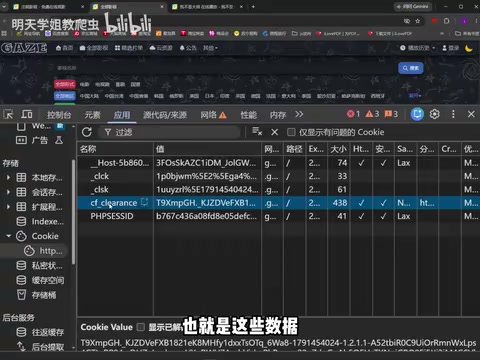
The author verified the cookie mechanism experimentally: manually clearing the cookie values and clicking "Load More" re-triggers the verification page, while accessing the site with properly generated cookies allows direct retrieval of movie listing data (the moolist endpoint) without any CAPTCHA prompt.

The Core Approach: Skill Packs + MCP Tool Configuration
The technical foundation of this solution has two components. Skills (Skill packs) function as pre-configured domain-specific capabilities for the AI — the author emphasizes that without configuring these upfront, the AI would blindly try multiple approaches when faced with a reverse engineering task, easily choosing the wrong direction and wasting large amounts of tokens. In short, Skills give the AI a clear "playbook" for solving the problem.
MCP is the protocol layer that allows the AI to invoke external tools. The author specifically notes that the MCP configured in the demo is critical for handling JS (JavaScript) encryption analysis — calling it "a very important tool" in the entire chain.
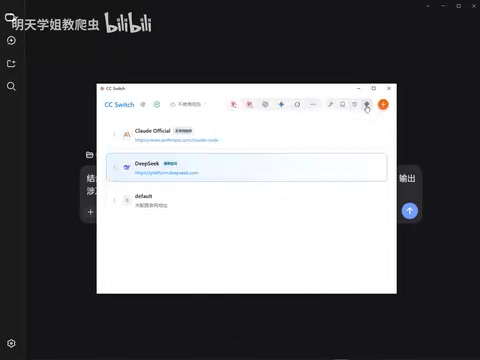
In practice, the author used a Chinese-language AI model and made a notable design choice: rather than telling the AI which endpoint to target, only the website URL was provided. The expectation was that the AI would autonomously analyze the site, locate the data endpoint (moolist), and identify the encrypted values requiring reverse engineering. This was essentially a test of the AI's ability to independently explore and decompose the problem — not merely execute a pre-written script.
What is MCP? MCP (Model Context Protocol) is an open protocol introduced by Anthropic in late 2024, designed to standardize the interface between large language models and external tools or data sources. Its design philosophy is analogous to the universal USB-C standard — whether it's browser control, code execution, file I/O, or network requests, any capability wrapped into an MCP-compliant server can be invoked by an AI model through a unified interface. In reverse engineering contexts, MCP is typically used to: drive headless browsers for dynamic page rendering, execute JavaScript snippets to validate encryption logic, and call dedicated JS deobfuscation tools. This enables the AI to go beyond "generating code suggestions" and actually "take action" at every step of the analysis pipeline.
Execution Flow: From Environment Check to Final Output
Based on the demo, the AI's workflow after receiving the task was notably methodical:
- Environment self-check: The AI first inspects the current environment, existing identifiers, and Skill configuration to confirm it has what it needs;
- Skill and plugin matching: It identifies the appropriate Skill pack and MCP plugins;
- Analysis and tool invocation: With the right tools in place, it proceeds with the reverse engineering analysis.
The AI ultimately successfully scraped the first ten movie records (including fields like screenwriter credits) and produced several structured output artifacts.
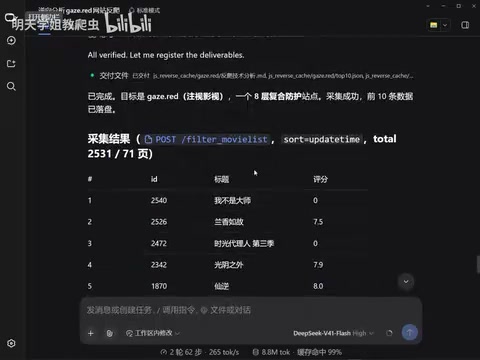
Deliverables from the AI
According to the demo, the AI produced the following artifacts:
- A structured spreadsheet of the scraped data;
- Several JS script files;
- An anti-scraping technical analysis document that explicitly identifies the target's use of a budget-tier Cloudflare human verification mechanism, along with WASM-related technical details;
- Relevant JS files for the data in question.
The author noted that WASM code is machine-oriented and nearly impossible for humans to read directly — yet the AI was able to trace the underlying technology stack and document it clearly. This is precisely where AI shines in reverse engineering: it doesn't just produce results, it can also explain what technology was being used.
Value and Limitations: What AI Reverse Engineering Actually Means
The significance of this demo isn't that it "cracked a specific website" — it's that it illustrates a shift in working paradigm. Traditional reverse engineering relies heavily on engineers' deep expertise in encryption algorithms, browser fingerprinting, and WASM bytecode. The AI + Skill + MCP combination attempts to offload the bulk of repetitive analysis, localization, and documentation work to the model, with humans playing more of a role in task definition and result review.
That said, several important limitations must be kept in mind: First, the demo target used "budget-level" protection — whether AI can perform equally well against enterprise-grade defenses like full Cloudflare or Rui Shu remains an open question. Second, configuring Skills and MCP upfront requires real technical knowledge — this is not a "zero-to-hero in 5 minutes" setup. Third, and most critically — the legal boundaries for this type of technology are extremely narrow, limited strictly to authorized security testing and research. Unauthorized scraping and reverse engineering may cross legal lines.
For security researchers and scraping engineers, the genuine takeaway from this kind of exploration is: large language models are becoming a co-pilot for reverse engineering — they're changing the division of labor between humans and machines, not magically eliminating the technical barrier.
What is WebAssembly (WASM)? WebAssembly (WASM) is a binary instruction format designed for efficient execution in browsers, originally created to allow code written in C/C++, Rust, and similar languages to run on the web. In anti-scraping contexts, some sites compile their core encryption logic into WASM modules specifically to prevent reverse engineers from reading the algorithm implementation the way they would normal JavaScript — the WAT text produced by decompiling WASM bytecode is extremely difficult to read, with all variable and function names stripped away, and fully reconstructing the logic can take days or even weeks of manual analysis. The AI's advantage in handling WASM isn't that it "reads" every instruction, but rather that it can infer the module's functional boundaries by combining runtime behavior, input/output characteristics, and surrounding JS call context — allowing it to skip full reconstruction and directly replicate the input-output relationship. This is the underlying reason the AI in the demo was able to produce a WASM technical analysis document.
Related articles

ChatGPT Space Launches: Team Collaboration and New Pages Features Explained
ChatGPT Space is OpenAI's new team collaboration feature with Pages, real-time collaboration, and Slack/Google Drive sync. We break down its privacy design, multi-platform integration, and the full workflow from conversation to document.

Migrating Apache Spark UDFs to GPU Acceleration with AI Agents
NVIDIA developer blog explains how AI Agents rewrite Apache Spark UDFs for GPU acceleration, covering migration criteria, agent rewriting and verification workflows, plus pitfalls like result consistency and CPU-GPU transfer overhead.

Zed Editor v0.40.4-rc2 Released: Usage Credits Now Available Without Upgrading
Zed editor releases v0.40.4-rc2, allowing users to use usage credits for AI features without upgrading to a paid plan, lowering the trial barrier.