AI Proves the Riemann Hypothesis? Machine Verification Complete, Human Understanding Still Pending
AI went from failing multiplication to joining a Riemann Hypothesis proof, revealing a new split between machine verification and human understanding.
The article traces AI's three-year leap in math: from poor accuracy on four-digit multiplication in 2023 to IMO silver in 2024, gold in 2025, and then participation in a Riemann Hypothesis proof. According to the video, an Anthropic mathematician working with Claude produced a million-line Lean formal proof that multiple independent checkers verified without errors. Yet no one has read it fully, a readable version would exceed hundreds of thousands of pages, and critics say the four-page note does not explain why the result holds. The prize requires formal publication, a two-year waiting period, and broad acceptance—machine verification is not the same as the math community declaring it solved. The article thus proposes a new division of labor: AI generates machine-checkable proofs, and humans give them meaning.
From Multiplication to the Holy Grail of Mathematics: AI's Three-Year Leap
According to a YouTube video, in 2023 researchers asked a leading AI chatbot to compute the product of two four-digit numbers, and the accuracy rate was astonishingly low. Just a few years later, AI has participated in writing a proof of mathematics' most famous unsolved problem—the Riemann Hypothesis. This leap is so vast that it deserves careful examination.
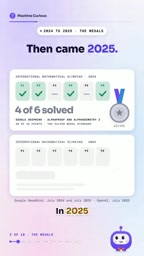
The turning point came at the International Mathematical Olympiad (IMO). In 2024, Google DeepMind's AI system solved four of six problems, reaching silver medal level; in 2025, the model solved five, earning a gold medal performance; in 2026, the goal shifted to genuinely open problems. According to the video, OpenAI once released a large number of results in a single day, and 25 Fields Medalists have signed a statement warning that this race is harming mathematics itself.
The Riemann Hypothesis: A Problem That No Amount of Checking Can Settle
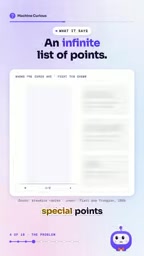
The Riemann Hypothesis was born in 1859, and its core concerns how prime numbers are distributed. It asserts that all special points called "zeros" in an infinite list lie on the same straight line. Computers have verified an extremely large number of zeros, but there are infinitely many zeros, and checking them one by one can never complete a proof. This is precisely a proposition that requires "proof" rather than "verification."
This is also what makes AI's involvement particularly significant: it is not facing a problem that can be exhaustively enumerated, but a domain that requires constructing rigorous logical chains.
The Relationship Between the Riemann Hypothesis and Prime Distribution: The appearance of primes among natural numbers seems random, but the fluctuations of the counting function π(x) (the number of primes not exceeding x) are closely related to the nontrivial zeros of the Riemann ζ function. In 1859, Riemann proposed that all nontrivial zeros of the ζ function lie on the critical line in the complex plane where the real part is 1/2. If this hypothesis holds, the distribution of primes will exhibit a highly regular error term, and a large number of propositions in number theory (such as the precise form of the prime number theorem) would hold. Therefore, it is not merely a single difficult problem but one of the cornerstones of modern number theory.
The Essential Difference Between Verification and Proof: Computers can verify that a finite number of zeros lie on the critical line, but there are infinitely many zeros, and verifying any finite number cannot rule out the possibility that "the next zero deviates." A mathematical proof requires starting from axioms and covering infinite cases through finite steps of logical deduction—this is precisely the threshold that AI's involvement must cross.
Four Pages of Notes and Massive Code: How the Proof Was Machine-Confirmed
According to the video, Anthropic mathematician Levant Alpage released a four-page note on November 20, stating that in collaboration with the AI model Claude, he believed he had found a proof. The proof itself was written in the Lean language, reaching the scale of millions of lines of code—Lean is a formal language in which a small program can check each step incrementally.
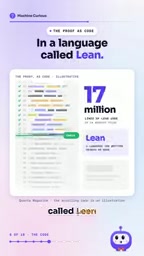
In less than a day, independent mathematicians ran the proof through multiple independent checkers and found no errors. The Lean and Mathlib communities certified it as correct.
What Are Lean and Mathlib: Lean is an interactive theorem prover and also a formal language based on dependent type theory. Mathematical propositions are written as types in Lean, and a proof is a program that constructs a term of that type; the type checker verifies step by step whether each deduction is valid. Mathlib is a large mathematics library built on Lean that has formalized a great deal of content from basic set theory to algebra, analysis, and number theory. Translating a proof into Lean code means that every logical step must strictly follow axioms and already-proven theorems, with no "obvious" leaps allowed.
Independent Checking of Formal Verification: A Lean proof can be independently re-run by anyone who has the software, and the checker judges correctness solely on formal rules, independent of the prover's reputation or intuition. Multiple independent checkers ran the same proof and found no errors, providing highly credible confirmation at the formal level. But formal correctness does not equal human readability; the length and structure of the proof may completely exceed the direct comprehension range of the human brain.
The Machine Says "True," Humans Haven't Yet Said "Understood"
The most intriguing part is this: no one has read the entire proof. According to the video, an attempt to write it out in plain language would far exceed hundreds of thousands of pages. Critics point out that the four-page note does not explain why the result holds.
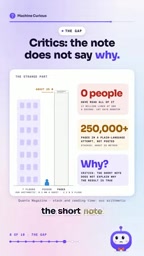
The current situation is: machine checking is complete, but a readable version remains to be supplied. And the prize money requires formal publication, a two-year waiting period, and general acceptance. Machines can tell us that the proposition is true, but understanding "why it is true" remains humanity's job.
Does This Count as "Solved"?
The question the video raises at the end is sharp: would you call it solved? From the perspective of formal verification, the proof has been machine-confirmed as correct; from the perspective of the mathematical community, a proof that no one has read through and that lacks intuitive explanation is still far from being "understood." The significance of this affair may lie not in the Riemann Hypothesis itself but in the new division of labor it exposes—AI is responsible for generating machine-checkable proofs, and humans are responsible for giving them meaning. How this arrangement evolves is more worthy of continued attention than any single result.
Background Supplement
The Tension Between Mathematical Understanding and Formal Proof: Traditional mathematics papers not only give proofs but also help readers build intuition through motivation, analogy, and the organization of key lemmas. A million-line Lean proof may contain a large number of machine-generated intermediate steps, and its macro structure may not correspond to a human-understandable argumentative strategy. Critics point out that the four-page note does not explain why the result holds, precisely reflecting this tension: formal verification confirms that "the proposition is true," but the "understanding" pursued by the mathematical community also includes knowing the core idea of the proof, its scope of applicability, and its connections to other fields.
The Threshold of Prize Money and Academic Recognition: The Clay Mathematics Institute's requirements for the Millennium Prize Problems include: the proof is published in a peer-reviewed journal, passes a two-year waiting period, and is generally accepted by the mathematical community. Machine verification is only the first technical threshold; formal publication and community acceptance are the social thresholds. History contains no shortage of proofs that were formally correct but remained unaccepted for a long time, showing that mathematical recognition is a complex social-cognitive process.
One-line Summary
AI went from getting multiplication wrong to participating in a proof of the Riemann Hypothesis, revealing a new division of labor between machine verification and human understanding.
Paragraph Summary
The article traces AI's three-year leap in mathematics: from extremely low accuracy on four-digit multiplication in 2023, to an IMO silver medal in 2024 and gold in 2025, and then to participation in a proof of the Riemann Hypothesis. According to the video, an Anthropic mathematician working with Claude wrote a million-line formal proof in Lean, which multiple independent checkers verified without finding errors. However, no one has read the entire proof, and a readable version would far exceed hundreds of thousands of pages; critics note that the four-page note does not explain why the result holds. The prize requires formal publication, a two-year waiting period, and general acceptance—machine verification is not the same as the mathematical community declaring the problem solved. The article thus proposes a new division of labor: AI generates machine-checkable proofs, and humans give them meaning.
Related articles
AI Daily: OpenAI and Anthropic Both Publish VP≠VNP Proofs on the Same Day
AI Daily roundup: OpenAI and Anthropic both publish machine proofs of VP≠VNP on the same day, Anthropic breaks below its IPO price, GPT-6 achieves a 10.9% wet-lab hit rate in native protein design, Magic 2 and SWE 2.1 launch, Google Workspace MCP opens, agent safety tests and the purge of pure AI songs advance together.
GPT-6 Protein Design Sparks Debate: Can General Models Replace Specialized Biological Models?
OpenAI preprint shows GPT-6 series attempts protein design via general reasoning—about 10% of 300+ designs show binding signs, but screening still relies on specialized models. Plus Anthropic Siren evaluation, Meta assistant as entry point, and TIDAL removing pure AI music.
Anthropic Breaks IPO Price, GPT-6 Designs Proteins Autonomously: AI Bubble Alarm Sounds
Anthropic falls below its $83 IPO price four days after listing, wiping out all gains from the largest IPO ever; OpenAI paper shows GPT-6 autonomously designing proteins validated in labs; Claude Ship can fix code and approve. A quick look at key AI industry moves and capital signals.