AI Proxy Shopping Leak: Musk's Screenshot Exposes Order Number and Address

Musk's AI proxy shopping screenshot leaked an order number and address, and strangers used it to modify the order through Lego's customer service bot, exposing the permission mismatch between AI agents and legacy systems.
Musk shared a screenshot of AI-assisted shopping on X, accidentally revealing a 10-digit order number, full shipping address, and partial payment information. With only this information, strangers attempted through Lego's automated customer service bot to cancel the order, modify the shipping address, and increase the quantity to 400 sets. The core issue exposed is not that a particular company's customer service bot is flawed, but that when AI agents are connected to legacy customer service systems designed for humans, the system cannot distinguish between "the person themselves" and "someone who holds the person's order information." The article also contrasts Musk's earlier suggestion that users let digital assistants shop using a credit card photo, and Visa's warnings about fraud risks in AI-automated shopping, noting that screenshot leaks of state identifiers and agent permission boundary issues are now compounding.
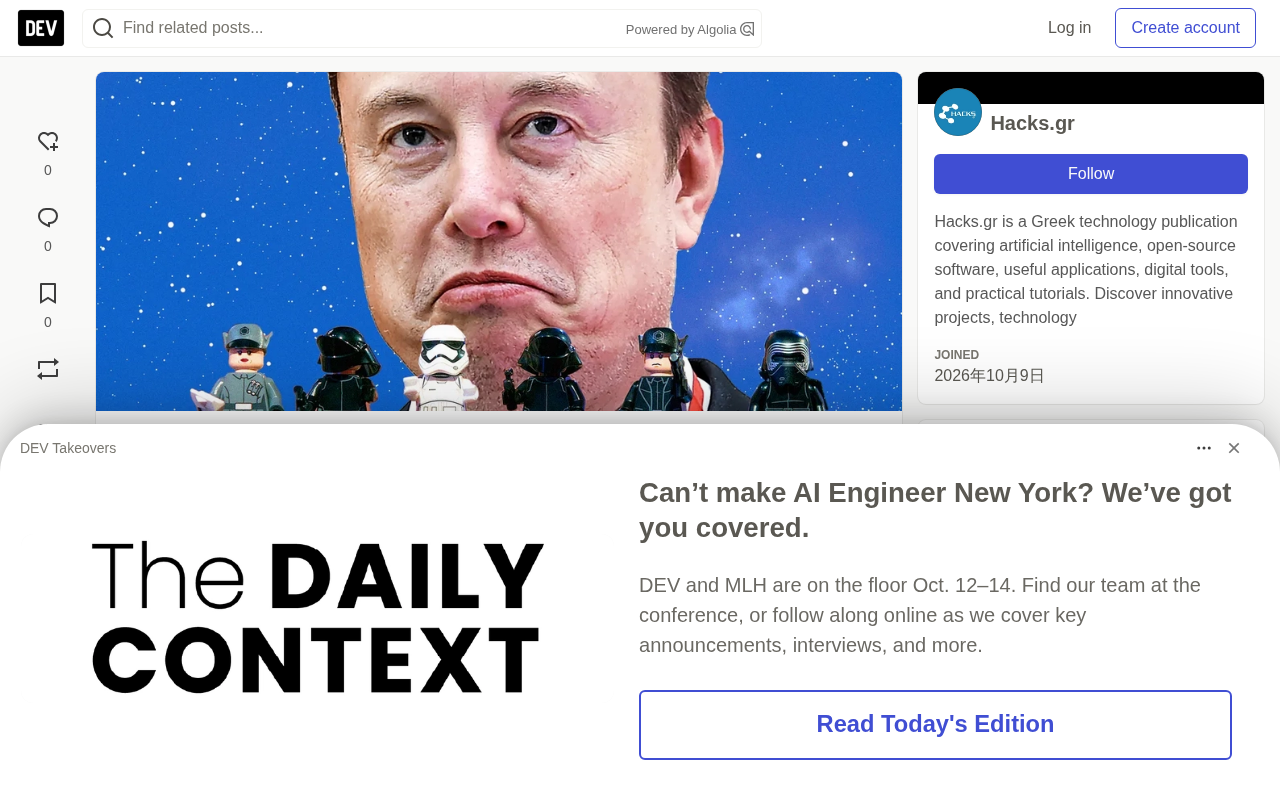
Musk shared a screenshot on X showing an AI-assisted shopping experience, intending to demonstrate the convenience of intelligent proxy purchasing—but accidentally exposed an order number, full shipping address, and partial payment information. That screenshot then became the starting point of a public experiment: strangers, armed only with the information in the image, managed to modify his order through Lego's customer service bot.
Three Types of Sensitive Information in a Single Screenshot
According to Hacks.gr, the screenshot Musk posted contained a 10-digit order number, a complete address, and partial payment details. In traditional e-commerce workflows, these three types of information are typically treated as "identity credentials"—customer service systems rely on them to confirm that "you are the person who placed the order."
The problem is that screenshots are inherently a decontextualized form of expression. The poster focuses on the interface's appearance, while readers can extract structured data from it. When that data is copied into another system, it becomes a key to bypass identity verification.
How Strangers Impersonated the Orderer
First Attempt: Canceling the Order
An X user contacted Lego's automated customer service system using the email and order number from the screenshot, and reportedly succeeded in canceling the order. Hours later, Musk tweeted that the order had not actually been canceled.
Second Attempt: Changing the Address and Increasing the Quantity
Subsequently, another user allegedly used the same information to access the customer service system, re-placed the order, increased the quantity to 400 sets, and modified the shipping address. When journalists reached out to Lego for comment, Lego declined to comment.
These two operations revealed the same vulnerability: automated customer service systems cannot distinguish between "the person themselves" and "someone who holds the person's order information." In human customer service scenarios, unusual quantity changes or address modifications would often trigger a review; in bot-driven workflows, as long as the fields match, the request gets executed.
Automated customer service systems typically operate on a "knowledge base + rule engine" or lightweight conversational models, designed to complete high-frequency, standardized requests—such as tracking logistics, changing addresses, or canceling orders—with minimal interaction. To achieve this, the system must minimize "friction," so it tends to substitute verifiable static fields (order number, email, phone) for human verification. This design also exists in human customer service scenarios, but human agents add behavioral judgment: for example, repeated address changes within a short period, abnormally large quantity increases, or unusual tone will trigger manual review or a risk control queue.
Bot-driven workflows lack this layer of "soft judgment." They can only determine whether fields match, not the intent behind the request. When the attacker holds authentic fields—because they come from a real order screenshot—the system loses the ability to distinguish between "the person themselves" and "someone who holds the person's information." This type of vulnerability is known in security as "authentication and authorization confusion": the system equates "knowing certain information" with "having the authority to perform operations," without additional session binding or secondary verification.
The Convenience and Cost of AI Proxy Shopping
Shortly before the incident, Musk had just suggested that X users let digital assistants shop online on their behalf by uploading a photo of their credit card. This suggestion forms a direct contrast with the leak: letting an AI agent shop requires handing over payment credentials; and the act of sharing itself can expose those credentials to the public.
Since late last year, Visa has warned that AI-automated shopping carries fraud risks, and malicious transactions initiated by automated programs are increasing. The issue payment networks see is not just "will AI buy the wrong thing," but "when agents can autonomously initiate transactions, who is responsible for the authenticity of the transaction?"
An "AI agent" refers to a software program capable of autonomously performing multi-step tasks on behalf of a user, such as comparing prices, filling out forms, and completing payments. The key difference from ordinary automation scripts is that agents can call external tools, adjust actions based on environmental feedback, and make autonomous decisions within a certain scope. This means they may initiate transactions that the user has not confirmed one by one.
Payment networks worry about three layers of risk. The first layer is identity impersonation: if the credentials an agent holds during operation (card number, order number, address) are leaked or subject to malicious prompt injection, they could be exploited by third parties. The second layer is authorization boundaries: under what conditions can an agent place, modify, or cancel orders on behalf of a user? Currently, most payment systems have not designed independent authorization and accountability chains for "machine-initiated" actions. The third layer is dispute resolution: when a transaction is initiated by an agent, the user says "I didn't tell it to buy," the merchant says "the system verified it," and responsibility is hard to define. The warnings from Visa and others are essentially signaling that: existing payment risk controls assume "the cardholder is operating personally," and agents break that assumption.
The Mismatch Between Legacy Systems and AI Agents
The core contradiction in this incident is not that any particular company's customer service bot did something wrong, but that AI agents have been connected to legacy customer service systems designed for humans.
Traditional customer service workflows assume requests come from a real person who is under time pressure, subject to social constraints, and capable of hesitation. When the same workflow faces an automated program that can retry indefinitely, submit in bulk, and is unaffected by emotions, the design originally intended to "make things convenient for real people"—such as using an order number for quick lookup or an address for quick modification—instead becomes an attack surface.
Therefore, this is more like a public demonstration of systemic risk: the risk of screenshots leaking state identifiers (order number, address) and the permission boundary problems after AI agents are integrated with legacy systems appear superimposed in the same case.
A "legacy system" typically refers to a software system that is still running but has an outdated architecture and is difficult to modify quickly. Many e-commerce customer service systems were built ten years ago or even earlier, with the design assumption that requests come from real people, and that real people will exercise restraint due to waiting time, identity verification, and social norms. Therefore, the system uses low-friction fields like "order number + address" to improve efficiency, rather than strong identity binding.
When AI agents connect to such systems, the mismatch emerges. Agents can retry at millisecond speeds, submit in bulk, automatically switch accounts, and will not give up because of customer service scripts or waiting. Shortcut channels originally designed to "make things convenient for real people" become attack surfaces that can be amplified by automation. More troublesome still, the permission models of legacy systems often lack a role for "agent," cannot distinguish between "the user themselves" and "a program authorized by the user," and cannot terminate a session when agent behavior goes out of bounds. Therefore, the problem is not that some bot "did something wrong," but that the trust assumptions of the entire workflow are outdated.
Implications for Ordinary Users
There is no need to consume this as Musk's personal oversight. Any user who posts screenshots of orders, logistics, or payment interfaces on social platforms is doing the same thing—they just haven't been noticed by onlookers interested in 400 Lego sets.
More worthy of attention is that as more people accept "letting AI place orders for me," low-sensitivity information such as screenshots, order numbers, and addresses will circulate between systems at higher frequency. Security boundaries will not automatically tighten just because the operator is an AI; they will only become looser because workflows do not distinguish between "people" and "agents."
One-line Summary
Musk's AI proxy shopping screenshot leaked an order number and address, and strangers used it to modify the order through Lego's customer service bot, exposing the permission mismatch between AI agents and legacy systems.
Paragraph Summary
Musk shared a screenshot on X of AI-assisted shopping, accidentally revealing a 10-digit order number, full shipping address, and partial payment information. With only this information, strangers attempted through Lego's automated customer service bot to cancel the order, modify the shipping address, and increase the quantity to 400 sets. The core issue exposed is not that a particular company's customer service bot is flawed, but that when AI agents are connected to legacy customer service systems designed for humans, the system cannot distinguish between "the person themselves" and "someone who holds the person's order information." The article also contrasts Musk's earlier suggestion that users let digital assistants shop using a credit card photo, and Visa's warnings about fraud risks in AI-automated shopping, noting that screenshot leaks of state identifiers and agent permission boundary issues are now compounding.
Related articles

@ai-sdk/vue 3.0.306 Patch Release Syncs with [email protected] Update
@ai-sdk/vue 3.0.306 released, synced with [email protected]. A routine patch release for the Vercel AI SDK ecosystem with no public API changes; the Vue adapter layer stays version-aligned with the core package.

Gemini 4 Argon API Launches: The Era of Million-Token Output Begins
Google launches Gemini 4 Argon with sparse MoE architecture, up to 1M output tokens, and a 68.90% Vals Index score, available across API, AI Studio, and the Gemini app.

DukaanAI: Turning Product Photos into Inventory Lists with Open-Source AI
DukaanAI is an AI inventory tool for small retailers that turns product photos into inventory entries using the open-source Gemma 3 model, with local inference, editable fields, and CSV export.