AI Robot Learns to Bake Bread: What Embodied Intelligence Entering the Kitchen Really Means

An AI robot baking bread marks a key milestone in embodied intelligence's move into the physical world.
AI robot Dury successfully baked its first loaf of bread, demonstrating embodied intelligence's leap from digital to physical tasks. This article analyzes why bread baking is a significant milestone, exploring the technical challenges of perception-execution loops, long-horizon task planning, and skill generalization — and what it all means for the future of AI in everyday life.
It Started with a Tweet: An AI Robot Baked Its First Loaf of Bread
Recently, a social media post caught widespread attention: "dury just baked its first loaf of bread, haha, what should dury do next?" The accompanying image showed the results of an AI robot completing a bread-baking task.
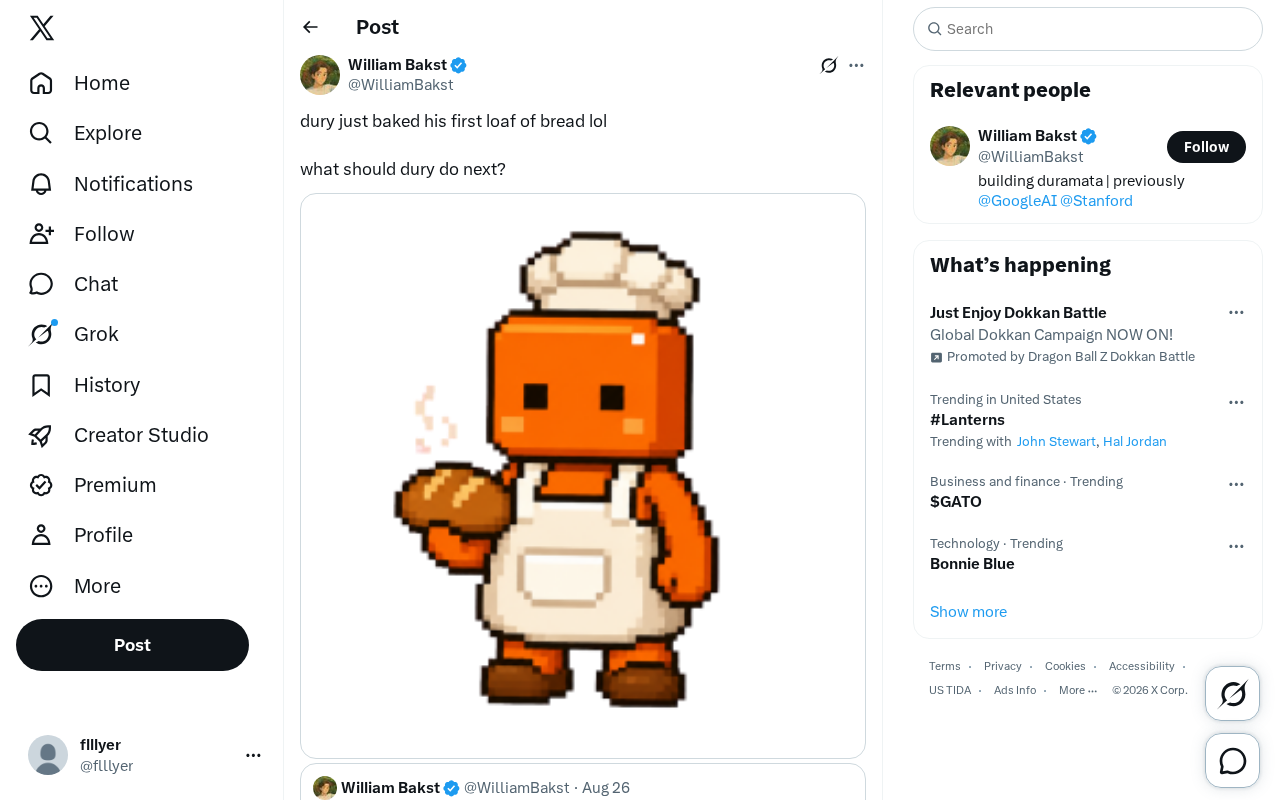
This seemingly lighthearted and humorous tweet reflects a thought-provoking trend in the field of Embodied AI: AI is moving from the purely digital world into the physical world, beginning to tackle tasks from our daily lives that seem simple but are actually riddled with uncertainty.
Embodied AI refers to embedding AI models into physical entities (such as robots), enabling them to perceive the real world through sensors and interact with it through actuators. Unlike pure software AI, embodied intelligence must understand physical laws in real three-dimensional space, manipulate tangible objects, and cope with random environmental changes. The current mainstream embodied AI tech stack typically includes Vision-Language Models (VLMs) for scene understanding, motion planning algorithms for generating robotic arm trajectories, reinforcement learning or imitation learning for policy training, and force/tactile feedback systems for fine-grained manipulation. In recent years, with the advancement of foundation models, the industry has been actively exploring end-to-end architectures that unify perception, planning, and control under a single foundation model.
Baking bread — a chore we take for granted — is actually a complex, multifaceted challenge for machine intelligence. Measuring ingredients, controlling timing, sensing temperature, judging dough state... every step requires tight coordination between perception, decision-making, and execution.
Why "Baking Bread" Is a Significant Milestone for Embodied Intelligence
The Complexity of Everyday Tasks Far Exceeds Our Expectations
We often underestimate how challenging everyday tasks are for intelligent systems. There's a famous concept in AI known as Moravec's Paradox: high-level reasoning tasks that are difficult for humans (such as playing chess or proving logical theorems) are relatively easy for computers, while perceptual and motor skills that humans perform effortlessly (such as recognizing objects or dexterous manipulation) are extraordinarily difficult for computers.
This paradox was articulated in the 1980s by Hans Moravec of Carnegie Mellon University, Rodney Brooks of MIT, and others. The core insight is that human sensorimotor capabilities, honed over hundreds of millions of years of evolution, are deeply embedded in neural circuits. They appear effortless but actually mobilize enormous neural computational resources. Higher cognitive abilities like logical reasoning, with only a few thousand years of history, have not been deeply optimized by evolution, making them comparatively easier to simulate with algorithms. Decades later, this paradox remains one of the central challenges in robotics and embodied AI — we can build a Go AI that defeats world champions, yet we still struggle to get a robot to neatly fold a shirt.
Baking bread is a textbook example of the latter. It requires the system to handle soft, deformable materials (dough) in an open, unstructured physical environment, making continuous decisions over an extended time horizon. This is fundamentally different from calculating optimal moves on a game board.
A True Leap from Virtual Capabilities to the Physical World
Over the past few years, AI has achieved breakthrough progress in digital domains such as language understanding, image generation, and code writing. But getting AI to truly "land" in the physical world — helping humans with housework, cooking, repairs, and other tangible tasks — has long been recognized as a holy grail of the industry.
A dominant paradigm in current embodied AI research is Sim-to-Real — training robot policies extensively in physics simulators (such as NVIDIA Isaac Sim, MuJoCo, etc.) before transferring learned skills to real robots. However, there is always a hard-to-eliminate "Reality Gap" between simulation and the real world, especially when dealing with soft materials like dough, whose complex nonlinear deformation properties are extremely difficult for simulators to model accurately. Therefore, Dury's ability to complete bread baking in a real environment suggests it likely employed a strategy of learning directly in the real world or fine-tuning with a small amount of real-world data. This represents an important signal of embodied AI progressing from lab demonstrations to real-world deployment.
The significance of Dury baking bread lies in this: it demonstrated that an AI agent can complete a physical task with a real, tangible output from end to end. This is no longer a demonstration in a simulator — it produced an edible, physical result: an actual loaf of bread.
What Makes Baking Bread So Hard for Embodied Intelligence
A Complete Perception-Execution Closed Loop
The key to having AI complete a task like baking bread is building a complete "perception-decision-execution" closed loop. The system must perceive the environment's state through visual, tactile, and other sensors, assess current progress, and adjust subsequent actions in real time.
How far along is the dough's fermentation? Is the oven temperature right? Has the surface color reached the ideal state? These judgments all depend on the coordinated interplay of multimodal perception capabilities. Specifically, multimodal perception means the robot simultaneously fuses visual (RGB-D depth cameras), tactile (pressure sensor arrays), auditory (microphones), temperature, torque, and other sensor signals to comprehensively understand the environment. In the bread-baking scenario, vision is used to observe changes in dough shape and bread surface browning, touch is used to sense the dough's softness and elasticity to judge whether fermentation is sufficient, and temperature sensors monitor the oven's internal state in real time. How to effectively fuse these heterogeneous signals from different modalities within a unified representation space is a frontier research topic in robot perception. Representative works include MIT's GelSight tactile sensor (which converts microscopic deformation of contact surfaces into high-resolution images) and Google DeepMind's RT-series multimodal robot models (which unify vision, language, and action in a single model).
Planning and Scheduling Long-Horizon Tasks
Baking bread is not an instantaneous action — it's a continuous process spanning hours, encompassing stages like mixing, kneading, fermenting, shaping, and baking. AI needs long-horizon task planning capabilities, understanding causal relationships and temporal dependencies between steps. This places extremely high demands on current agent architectures.
Long-horizon Task Planning is one of the core challenges in embodied AI. Traditional Hierarchical Task Networks (HTN) and classical planning methods (such as the PDDL planning description language) can decompose high-level goals into ordered sub-task sequences but struggle with the various uncertainties of open-world environments. In recent years, researchers have begun experimenting with Large Language Models (LLMs) as high-level planners — for example, Google's SayCan project combines the language reasoning capabilities of LLMs with robots' physical feasibility assessments, and the Inner Monologue project lets robots continuously self-correct their execution plans through an "inner monologue." However, state-dependent waiting phases like dough fermentation (where the system needs to continuously monitor rather than actively execute), and dynamic replanning after failures (such as discovering the dough hasn't risen enough and extending the wait time), still pose enormous challenges to the system's temporal reasoning and state estimation capabilities.
From One-Time Success to General-Purpose Generalization
The real challenge lies in generalization. Can a system that baked one loaf of bread handle different recipes, different kitchen environments, and different brands of ingredients? Can it transfer from baking bread to preparing other dishes? These are the critical metrics for determining whether embodied AI is maturing.
Skill Transfer — extracting reusable capability modules from tasks already learned and flexibly applying them to new tasks — is a key technology in this domain. The research community is currently advancing along multiple fronts: meta-learning-based rapid adaptation methods, such as the MAML algorithm, which enables models to quickly master new skills with only a few new task samples; skill library-based modular approaches that decompose operations into atomic skills like "grasp," "stir," and "pour" that can be freely combined for new tasks; and foundation model-based zero-shot generalization methods that use Vision-Language-Action models pre-trained on massive datasets (such as Google's RT-2 and the open-source OpenVLA) to directly understand novel natural language instructions and generate corresponding actions. Transferring from baking bread to making other dishes is an ideal testing ground for evaluating the practical effectiveness of these methods — can the "stirring" skill learned from baking bread be directly applied to stir-frying? Can the ability to "judge browning levels" transfer to pan-searing a steak? The answers to these questions will determine the pace of embodied AI's practical deployment.
"What Should It Do Next?": The Development Trajectory of Embodied AI
The question posed at the end of the tweet — "what should dury do next?" — may seem casual, but it touches on a core issue in embodied AI's development trajectory.
For an AI agent that has already mastered basic physical manipulation capabilities, the next steps could evolve in several directions:
- Scaling task complexity: From a single dish to coordinating the preparation of multiple courses, from fixed procedures to flexibly handling unexpected situations
- Skill transfer and rapid learning: Transferring operational experience accumulated from baking bread to other tasks like baking cakes or searing steaks
- Human-robot collaboration scenarios: Working alongside humans to complete tasks in real home environments, rather than operating independently
- Safety and reliability assurance: Ensuring operational safety in scenarios involving high temperatures, knives, and other potential hazards
This incremental approach to capability validation, using everyday tasks as the vehicle, is becoming a pragmatic path for embodied AI R&D. Rather than directly pursuing general-purpose domestic robots, tackling specific, measurable life tasks one at a time may be more effective in driving substantive technological breakthroughs. This also echoes a long-standing rule of thumb in the robotics field: rather than pursuing universal intelligence in one leap, it's better to gradually approach general capability by continuously expanding the boundaries of specific tasks. Each newly completed task contributes new perceptual experience, operational skills, and environmental knowledge to the system, creating a positive flywheel of capability accumulation.
AI Entering the Kitchen Is More Than Just a Tech Event
The reason Dury's bread-baking episode resonates is that it demonstrates, in a lighthearted way, an important signal: AI technology is quietly permeating the most everyday scenes of our lives. When AI can bake a loaf of bread for us, it's no longer just an algorithm behind a screen — it becomes a partner capable of creating tangible value in the physical world.
From a broader perspective, this event also reflects a paradigm shift underway across the entire AI industry. Over the past decade, AI's core battleground has been between the cloud and the screen — search recommendations, content generation, intelligent customer service. Over the next decade, AI's primary arena will likely shift to physical spaces — homes, factories, farmlands, warehouses. This means AI systems will need not only to "think" but also to "act," operating robustly in a real world full of noise, change, and surprises. This places entirely new demands on algorithms, hardware, sensors, safety mechanisms, and every other component of the stack.
From demonstration to true practicality, there's still a long road ahead. But every small milestone like this one accumulates experience and validates possibilities for the future of embodied AI. Perhaps before long, "having AI cook you a meal" will no longer be science fiction, but an everyday reality within reach.
Related articles

Chain of Thought Isn't Just for AI: How Humans Can Use CoT to Improve Thinking Quality
Chain of Thought isn't just a prompt trick for large models. Starting from a Hacker News discussion, this article analyzes why CoT works for human thinking too, breaks down actionable ways to transfer it, and highlights the key differences between human CoT and machine CoT.
Cloudflare Teams Up with OpenAI: Closi…
Cloudflare Teams Up with OpenAI: Closing the Loop from Vulnerability Discovery to Defense with AI
Cloudflare uses OpenAI Daybreak to investigate security vulnerabilities and generate reviewable remediation plans, while developers use Codex to boost coding efficiency and quality.

Orca Multi-Agent Orchestration in Practice: A Guide to Parallel Collaboration with Claude and Codex
Orca is Stable AI's free open-source agent workbench supporting 34 agents like Claude Code and Codex in parallel. Learn its Git worktree isolation, multi-model orchestration, and mobile management.