@ai-sdk/voyage 2.0.42 Released: Dependency Update Breakdown
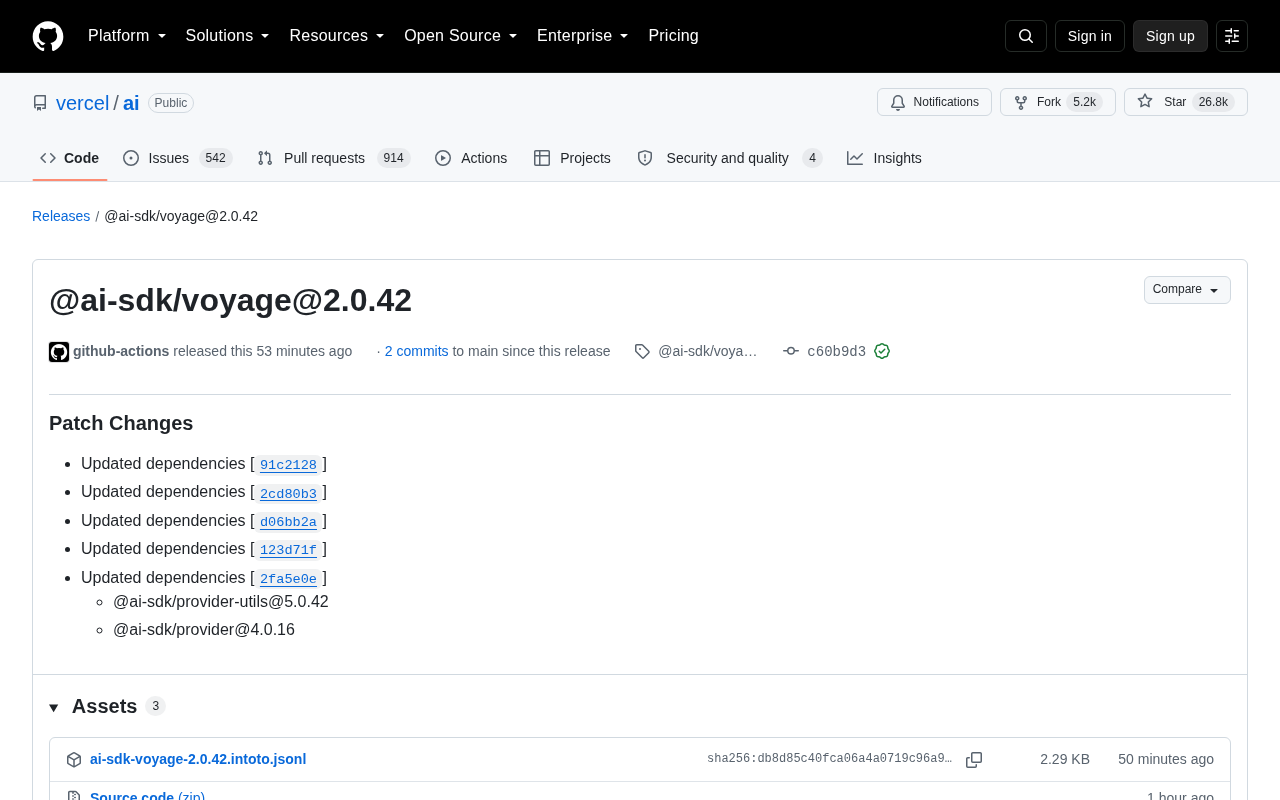
@ai-sdk/voyage 2.0.42 patch release syncs core Vercel AI SDK dependency versions.
`@ai-sdk/voyage@2.0.42` is a routine maintenance patch that upgrades `@ai-sdk/provider` to 4.0.16 and `@ai-sdk/provider-utils` to 5.0.42, maintaining version consistency across the Vercel AI SDK ecosystem. This provider adapter package enables Voyage AI embedding models — widely used in RAG and semantic search — within the SDK's unified interface. Due to the SDK's cascading Monorepo release pattern, any foundational interface change triggers updates across all provider packages. No API changes or new features are included; developers should safely upgrade and align related `@ai-sdk/*` dependencies to avoid type mismatches.
The @ai-sdk/voyage package in the Vercel AI SDK ecosystem has released version 2.0.42 as a patch update. This is a maintenance release focused primarily on dependency updates. The following analysis is based on the official GitHub Release information.
What's in This Update
According to the Release record pushed by GitHub Actions on the release date, @ai-sdk/voyage@2.0.42 is a patch-level version update. Patch versions typically don't include breaking changes or new features — they're mainly used to fix issues, synchronize dependencies, or improve stability.
The substance of this update centers on dependency synchronization, specifically five upstream dependency changes (corresponding to commit hashes 91c2128, 2cd80b3, d06bb2a, 123d71f, and 2fa5e0e). These changes ultimately manifest as version bumps for two core dependency packages:
@ai-sdk/provider-utilsupgraded to 5.0.42@ai-sdk/providerupgraded to 4.0.16
The release was signed with a verified GPG key (ID: B5690EEEBB952194), confirming the authenticity of the release source.
What Is @ai-sdk/voyage
@ai-sdk/voyage is a Voyage AI provider adapter package within the Vercel AI SDK. Voyage AI is well known for its high-quality text embedding models, widely used in retrieval-augmented generation (RAG), semantic search, and vectorization scenarios.
Through this provider package, developers can call Voyage's embedding models via the Vercel AI SDK's unified interface without writing provider-specific code. This "unified abstraction layer" is the core value proposition of the AI SDK — @ai-sdk/provider defines the standard interfaces, @ai-sdk/provider-utils provides shared utility functions, and individual provider packages (such as voyage, openai, and anthropic) implement their own adapter logic.
Voyage AI's embedding models are recognized in the industry for their strong retrieval accuracy, particularly excelling in code retrieval and multilingual semantic understanding scenarios. Text embedding converts natural language text into high-dimensional floating-point vectors, placing semantically similar texts closer together in vector space. In a RAG architecture, the embedding model handles two critical steps: encoding document chunks for storage in a vector database, and encoding user queries at inference time for nearest-neighbor retrieval — with the retrieved results then inserted into the prompt for a large language model to generate a response. The quality of the embedding model therefore directly impacts both the recall rate and final answer accuracy of a RAG system. By implementing the standard embedding interface defined in @ai-sdk/provider, @ai-sdk/voyage allows developers to swap or test different embedding models just as easily as switching any other AI provider, without modifying business-layer code.
Why Dependency Updates Matter
For provider packages released as patches, dependency synchronization may seem trivial, but it's essential to the consistency of the entire SDK ecosystem. When foundational packages like @ai-sdk/provider and @ai-sdk/provider-utils change, every upstream provider package needs to follow suit to maintain a unified interface contract.
This explains why Vercel's AI SDK follows a relatively frequent cascading release cadence: a single fix or improvement in a foundational package often triggers version bumps across a batch of provider packages. For consumers, keeping dependency versions aligned helps avoid potential issues like type mismatches and behavioral inconsistencies.
The Vercel AI SDK uses a Monorepo structure to manage all provider packages. The foundational @ai-sdk/provider acts as an interface definition layer (similar to an abstract base class), specifying core types and method signatures for EmbeddingModel, LanguageModel, and others. Even a subtle type adjustment in the underlying interface can cause compilation errors or runtime type assertion failures in upstream adapter packages under TypeScript strict mode, if those packages aren't updated in sync. @ai-sdk/provider-utils encapsulates shared logic such as request retries, streaming parsing, and error normalization — version drift here can lead to inconsistent error-handling behavior across different provider packages. While this "cascading release" pattern generates a large number of seemingly trivial patch versions, it's a necessary cost for maintaining type safety and behavioral consistency across the entire SDK ecosystem.
Practical Impact for Developers
For projects currently using Voyage embedding models, upgrading to 2.0.42 is a low-risk operation:
- As a patch version, it theoretically introduces no API changes and can be adopted smoothly
- It's recommended to update related
@ai-sdk/*dependencies in tandem to keep versions aligned - After upgrading, monitor the stability and compatibility of embedding calls
It's worth noting that the Release Notes for this version do not disclose specific bug fixes — only dependency update entries are listed. If you need to understand the details of the underlying dependency changes, you'll need to consult the changelogs for the corresponding versions of @ai-sdk/provider-utils and @ai-sdk/provider.
Summary
@ai-sdk/voyage@2.0.42 is a typical maintenance patch release, focused on syncing upstream dependencies. It doesn't bring functional breakthroughs on its own, but reflects the Vercel AI SDK ecosystem's ongoing commitment to internal consistency. For developers relying on this package, this is a routine upgrade you can confidently apply.
Related articles
Automattic Executives Signed Reciprocal Severance Agreements During Mullenweg's Brief Ouster
Automattic's CFO and General Counsel signed reciprocal severance agreements during Matt Mullenweg's brief ouster, covering one year's salary and accelerated equity vesting, raising corporate governance concerns.
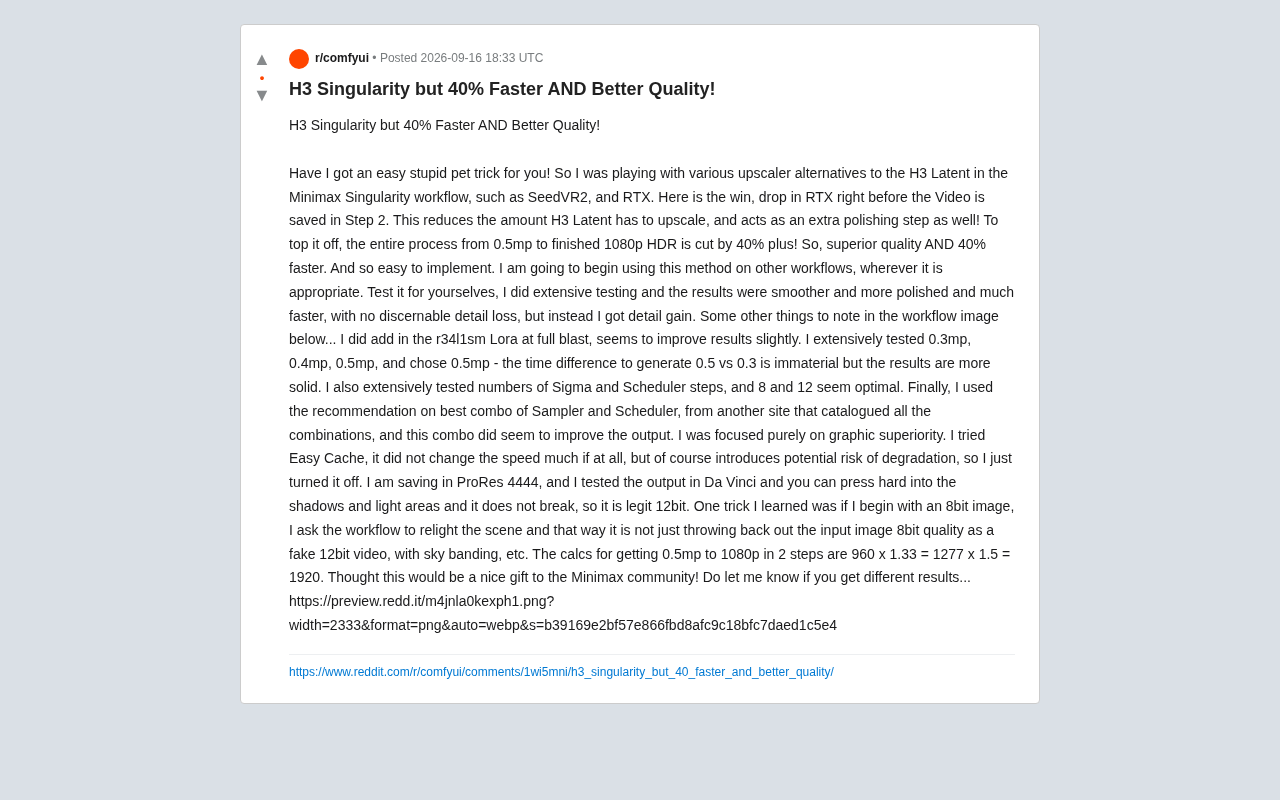
H3 Singularity Optimization: 40% Speed Boost With Better Image Quality
A Reddit user's Minimax Singularity workflow tip: insert an RTX upsampler before H3 Latent for 40%+ speed gains and better quality. Covers parameters, 12-bit output, and more.
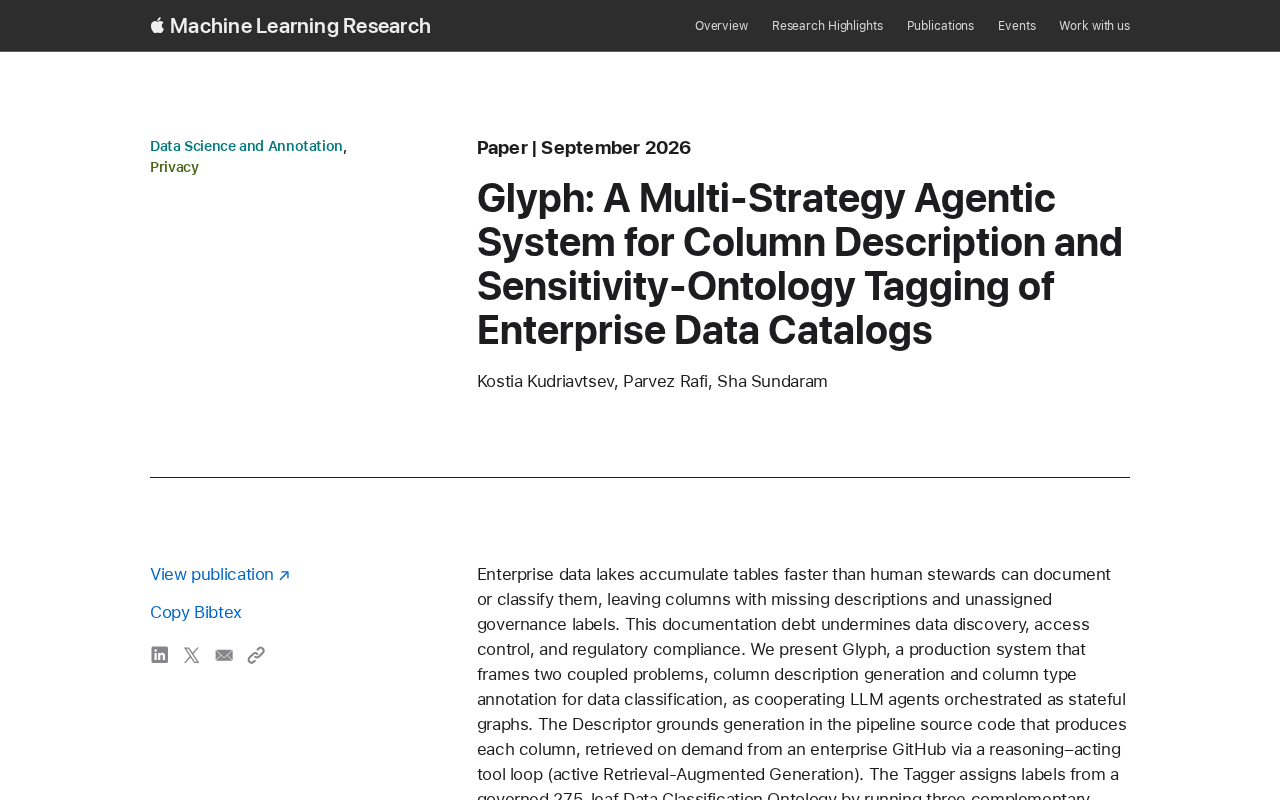
Glyph: A Multi-Strategy Agent System for Automated Enterprise Data Catalog Annotation
Glyph is a multi-strategy LLM agent system for enterprise data catalogs that automates column description generation and sensitivity ontology tagging, grounding outputs in pipeline source code to improve accuracy.