AI SDK Workflow Harness 1.0.194 Patch Update Analysis
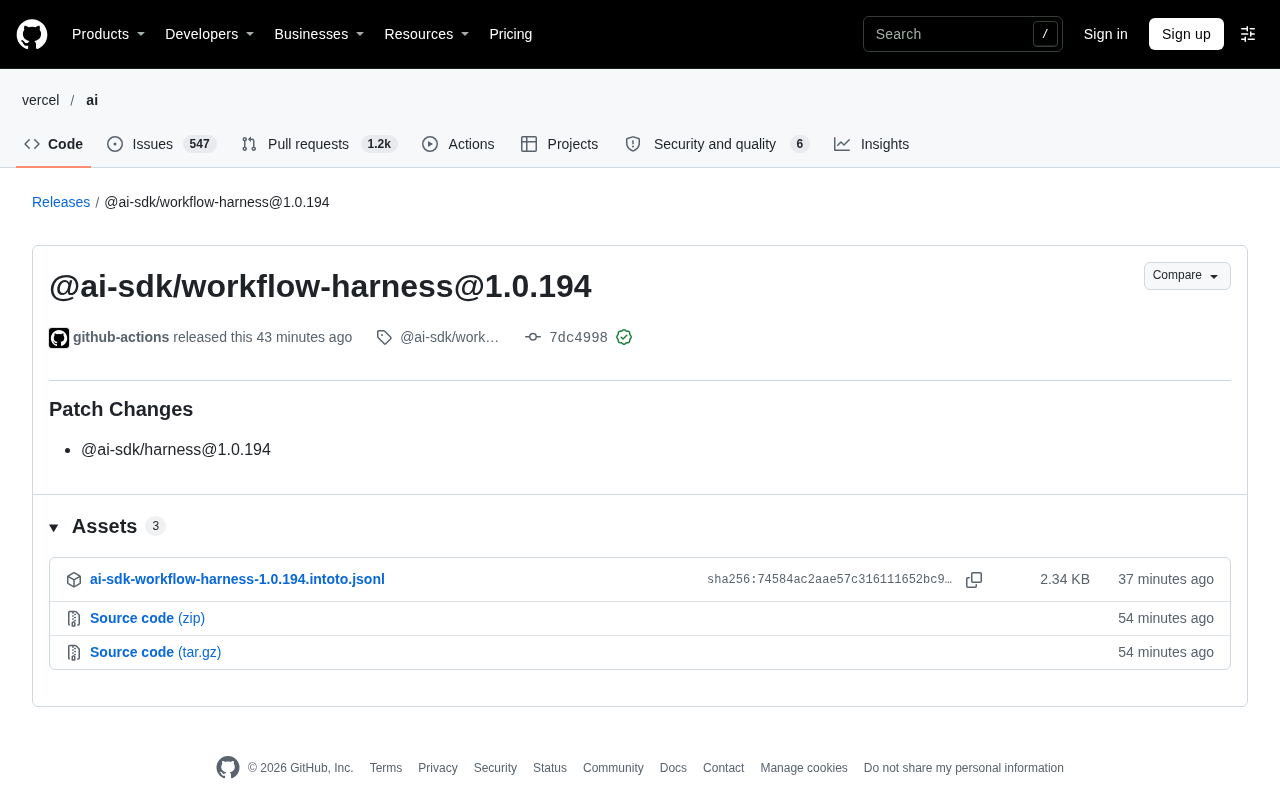
@ai-sdk/workflow-harness releases 1.0.194 patch with automated publishing and signature verification
On GitHub, @ai-sdk/workflow-harness was released as version 1.0.194, automatically published by github-actions with a GPG-verified signed commit, alongside a synchronized version bump for @ai-sdk/harness. The article notes that harness handles foundational duties like orchestration, state management, and execution scheduling, so its patch iterations can affect the stability of downstream agents and automation processes—meaning patch updates should not be casually ignored. Automated publishing and signature verification reflect the repository's emphasis on supply chain security; the matching version cadence of the two packages indicates a coordinated versioning strategy to reduce dependency conflicts. For teams already depending on the package, patch semantics guarantee API compatibility and low upgrade cost, and it is recommended to verify long-running task scheduling behavior in a test environment; teams not yet onboard can use it as a window to observe the maturity of AI SDK workflow orchestration.
A Low-Key Patch Release
On GitHub, @ai-sdk/workflow-harness@1.0.194 was quietly released as a patch version. For developers familiar with the AI SDK ecosystem, such updates typically mean stability fixes rather than feature leaps. The release record shows that this version was automatically published by github-actions, the commit was verified with a GPG signature, and it was accompanied by a synchronized change to @ai-sdk/harness@1.0.194.
From an engineering perspective, a patch release of a harness package often affects the reliability of upper-layer workflows. Workflow harness handles foundational responsibilities such as orchestration, state management, and execution scheduling, so its minor version iterations can directly impact the stability of downstream agents or automation processes.
Why Patch Versions Deserve Attention
Most developers tend to ignore patch updates, but for infrastructure packages, patches often fix execution anomalies in edge-case scenarios. The change notes for this release only mark "Patch Changes" without detailing specific items—a brief record that is fairly common in monorepo automated releases.
Semantic Versioning (SemVer) splits version numbers into three parts: MAJOR.MINOR.PATCH. A major version change indicates incompatible API modifications, a minor version indicates backward-compatible feature additions, and a patch number is used only for backward-compatible bug fixes. Therefore, by convention, a patch release will not introduce new APIs or change existing behavioral contracts, and the upgrade risk is theoretically the lowest. But this convention only constrains "public interfaces"—it does not guarantee that internal implementations, timing assumptions, or behavior under boundary conditions remain unchanged. For orchestration-layer packages like harness, even a slight adjustment to the scheduler's internal retry strategy, timeout determination, or state machine transitions can change the actual behavior of downstream workflows. So there remains a gap between the semantic guarantee of a patch version and the real runtime stability, which needs to be verified in a test environment.
Scope of This Update
Engineering Signals in the Release Process
Automated Release and Signature Verification
This release was completed by github-actions, and the commit carries a GitHub verified signature. This reveals that the repository has fully automated its release process and has clear requirements for supply chain security. For teams building production systems on the AI SDK, signature verification means the package's origin is traceable, reducing the risk of introducing tampered dependencies.
GPG signature verification in the npm ecosystem corresponds to provenance and signed publishing mechanisms: the CI environment signs commits or release artifacts with a private key, and consumers can verify whether the signature was generated by the expected repository and workflow. GitHub Actions' OIDC tokens allow publishers to assert that "this package was indeed produced by a specific workflow run of a specific repository," thereby binding the package to the source commit. This mechanism targets the typical threat of supply chain attacks—attackers stealing maintainer tokens to publish malicious versions, or replacing artifacts during transit. The signature itself does not prove the code is vulnerability-free, but it proves that the origin is traceable and the artifact has not been tampered with, making it one layer in defense in depth.
Coordination with @ai-sdk/harness
The change list also includes @ai-sdk/harness@1.0.194, indicating that workflow-harness and harness maintain synchronized version cadence. This coordinated versioning strategy is common in tool libraries with layered architectures, as it reduces version conflicts during dependency resolution.
Monorepos (single repository with multiple packages) commonly use tools like changesets or lerna to manage versions: when a commit touches multiple packages, the tool decides which packages need synchronized version bumps based on the dependency graph, and automatically generates changelogs, creates tags, and publishes to the registry. The benefit of this "locked-step" strategy is that version combinations among internal packages are tested uniformly, avoiding mismatches where A is bumped to 1.0.194 while the B it depends on remains at 1.0.190. The cost is that patch numbers inflate quickly, and a package with very small actual changes may still be bumped along with others. The fact that the two packages share exactly the same version number here is a direct manifestation of this coordinated release strategy.
Practical Impact for Developers
If your project directly or indirectly depends on workflow-harness, upgrading to 1.0.194 is low-cost, and patch semantics guarantee API compatibility. It is recommended to verify in a test environment whether workflow execution paths are affected, with particular attention to the scheduling behavior of long-running tasks.
For teams that have not yet adopted this toolkit, this version itself is not a reason to migrate, but it can serve as a window for evaluating the AI SDK's workflow orchestration capabilities. Its release cadence and engineering standards reflect the ecosystem's maturity at the infrastructure level.
How to Follow Subsequent Versions
Watching the repository's tag list is a direct way to track version activity. The release page for this version showed error prompts when loading the tag comparison and resource list, indicating that the release page itself still needs improvement. Developers can obtain accurate change information through GitHub Releases or the package manager's version metadata.
Related articles

AI Assistant Misleads Tenant Into Eviction: Where Does Liability Lie for a Landlord's AI?
A landlord's AI assistant told a tenant they could delay rent—then she was evicted. This case reveals a liability vacuum for AI output involving contracts and legal obligations, and the responsibility deployers bear.

Best Black Friday Buys Under $100: 60+精选科技好物推荐
Black Friday on a budget? Here are 60+精选 tech deals under $100, covering accessories and practical gadgets to help you spend smart and avoid impulse buys.
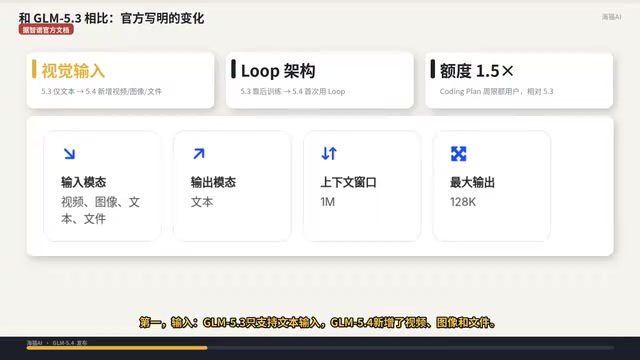
Zhipu GLM-5.4 Released: Loop Transformer Runs 28 Layers Twice
Zhipu releases GLM-5.4, the first Loop Transformer flagship: 28 layers run twice for 2-3T-equivalent intelligence, plus video and image input. API and open weights not yet released.