AI Security Audit Reports Are Crushing the curl Project: An Existential Crisis for Open Source Maintainers

AI-generated security vulnerability reports are overwhelming curl's open source maintainers
curl founder Daniel Stenberg reveals that AI-driven security vulnerability reports have surged to 4–5 times 2024 levels, averaging more than one per day. These reports are high-quality and lengthy, impossible to simply dismiss. This places enormous psychological and workload pressure on a project sustained by just a few maintainers, with Stenberg experiencing serious work-life imbalance for the first time. On a positive note, no high-severity vulnerabilities have been found in curl for nearly two years, demonstrating the project's strong code quality.
An Unprecedented Pressure on Open Source Foundations
curl is one of the most important open source projects in internet infrastructure—it runs on virtually every connected device. Yet curl's founder and core maintainer, Daniel Stenberg, recently published a thought-provoking blog post revealing a growing crisis: AI-assisted security vulnerability reports are flooding in at an unprecedented rate, placing enormous pressure on the project team.
curl's Technical Significance: curl (Client URL) was born in 1998, evolving from a small tool called httpget created by Daniel Stenberg. It supports over 30 network protocols (including HTTP, HTTPS, FTP, SMTP, IMAP, and more) and serves both as a command-line tool and a widely-used development library (libcurl). By some estimates, curl runs on over 10 billion devices worldwide, spanning smartphones, cars, smart TVs, routers, servers, and even spacecraft. Android, macOS, and virtually all Linux distributions ship with curl built in, while SDKs from major cloud platforms like AWS and Google Cloud deeply depend on libcurl. This ubiquitous presence means any security vulnerability in curl could trigger a global chain reaction, making it one of the most popular audit targets for security researchers and bug bounty hunters.
This isn't just one project's predicament—it reflects a systemic challenge facing the open source software maintenance model in the AI era.
Security Reports Surge: More Than One Per Day
According to Daniel Stenberg, the current rate of incoming security reports is 4–5 times that of 2024 and double the rate from early 2025. In practical terms, the curl security team now receives more than one security report per day on average.
More critically, these reports are far higher quality than before. They're typically very detailed and lengthy, meaning each one requires the security team to invest significant time reading, understanding, verifying, and responding. These are no longer the low-quality "junk reports" that could be dismissed at a glance—AI tools are helping security researchers (or bounty hunters) generate structurally complete, well-argued vulnerability analyses.
The LLM-Driven Security Audit Revolution: The application of Large Language Models (LLMs) in code security auditing is experiencing explosive growth. Traditional static code analysis tools (such as Coverity and Semgrep) rely on predefined rules and struggle to understand complex business logic and cross-function data flows. In contrast, LLMs like GPT-4 and Claude can understand the semantic context of code, identify subtle vulnerability patterns such as race conditions, integer overflows, and out-of-bounds memory access, and automatically generate structured analysis documents conforming to CVE report standards—including vulnerability descriptions, reproduction steps, impact scope, and remediation recommendations. The proliferation of AI coding assistants like GitHub Copilot and Cursor, along with the emergence of security-focused tools (such as LLM-based fuzzing frameworks), enables developers without deep security backgrounds to generate professional-looking vulnerability reports. While this democratization of capability raises the overall security waterline, it also creates massive amounts of "noise" that requires expert discernment.
This "high-quality flood" is precisely the hardest kind to deal with: you can't simply ignore them, because each one might contain a real security threat.
The Human Cost for Maintainers: Work-Life Imbalance
Daniel Stenberg made a rare personal disclosure in his blog post:
This is the first time in my life that my wife has expressed concern about my working hours and the imbalance between my work and personal life. I'm working more than before, but the flood keeps coming.
These words are deeply moving. Daniel Stenberg has maintained curl for over 25 years, weathering countless security incidents and project crises, but the pressure from the AI-driven security audit wave is unprecedented.
He characterized this pressure as "primarily psychological"—technically, the team could simply choose to ignore these reports, but as maintainers who feel responsible for the project and its users, their sense of duty and professional pride won't allow it.
The Systemic Crisis of Open Source Maintainer Burnout: Open source maintainer burnout isn't a new topic, but the AI era is pushing it toward a new tipping point. The 2021 Log4Shell vulnerability incident sparked widespread industry discussion about open source sustainability—a critical library depended upon by millions of systems worldwide was maintained by a handful of volunteers working in their spare time. Research from the Linux Foundation shows that over 36% of code in globally critical open source infrastructure is maintained by a single person. Psychological research indicates that workers in a long-term state of "unlimited responsibility with limited resources" are highly susceptible to the burnout triad of emotional exhaustion, depersonalization, and reduced sense of accomplishment. Daniel Stenberg's case is particularly illustrative: he simultaneously handles curl's development, security response, community management, and public communications, while the AI-driven report flood effectively multiplied his workload by 4–5x without any additional support. If this structural pressure isn't addressed systemically, it could lead to core maintainers stepping away, thereby threatening the security of the entire internet infrastructure.
This dilemma of "can't not do it, but can't finish it all" is the classic pattern of open source maintainer burnout—only now AI has accelerated it to an entirely new magnitude.
curl's Code Quality Has Withstood the Test
Amid the suffocating pressure, there's one encouraging trend. Despite the explosion in report volume, almost no one has found a critical-severity vulnerability. All vulnerabilities discovered in curl over the past several years have been rated LOW or MEDIUM. The most recent HIGH-rated curl CVE (CVE-2023-38545) was published in October 2023, nearly two years ago.
The CVE Mechanism and Vulnerability Severity Ratings: CVE (Common Vulnerabilities and Exposures) is a globally standardized vulnerability numbering system managed by the MITRE Corporation, where each confirmed security vulnerability receives a unique CVE identifier (e.g., CVE-2023-38545). Vulnerability severity is typically quantified using CVSS (Common Vulnerability Scoring System), which classifies issues into four levels: CRITICAL (9.0–10.0), HIGH (7.0–8.9), MEDIUM (4.0–6.9), and LOW (0.1–3.9). Scoring dimensions encompass attack vector, attack complexity, required privileges, user interaction requirements, and impact on confidentiality, integrity, and availability. Vulnerabilities rated HIGH or above typically mean an attacker can remotely execute code or cause severe data breaches without special privileges, triggering large-scale emergency patching responses. The fact that curl's vulnerabilities have remained at LOW/MEDIUM levels for nearly two years is remarkably rare given such a broad attack surface.
Related articles
Meta Muse Hits 900K Downloads in Six D…
Meta Muse Hits 900K Downloads in Six Days: The AI Agent Era Has Officially Arrived
Meta's AI agent Muse hit 902K downloads in 6 days, topping US App Store and Google Play charts above ChatGPT and Claude. A deep dive into Muse's capabilities and the AI Agent race.
 Industry Insights
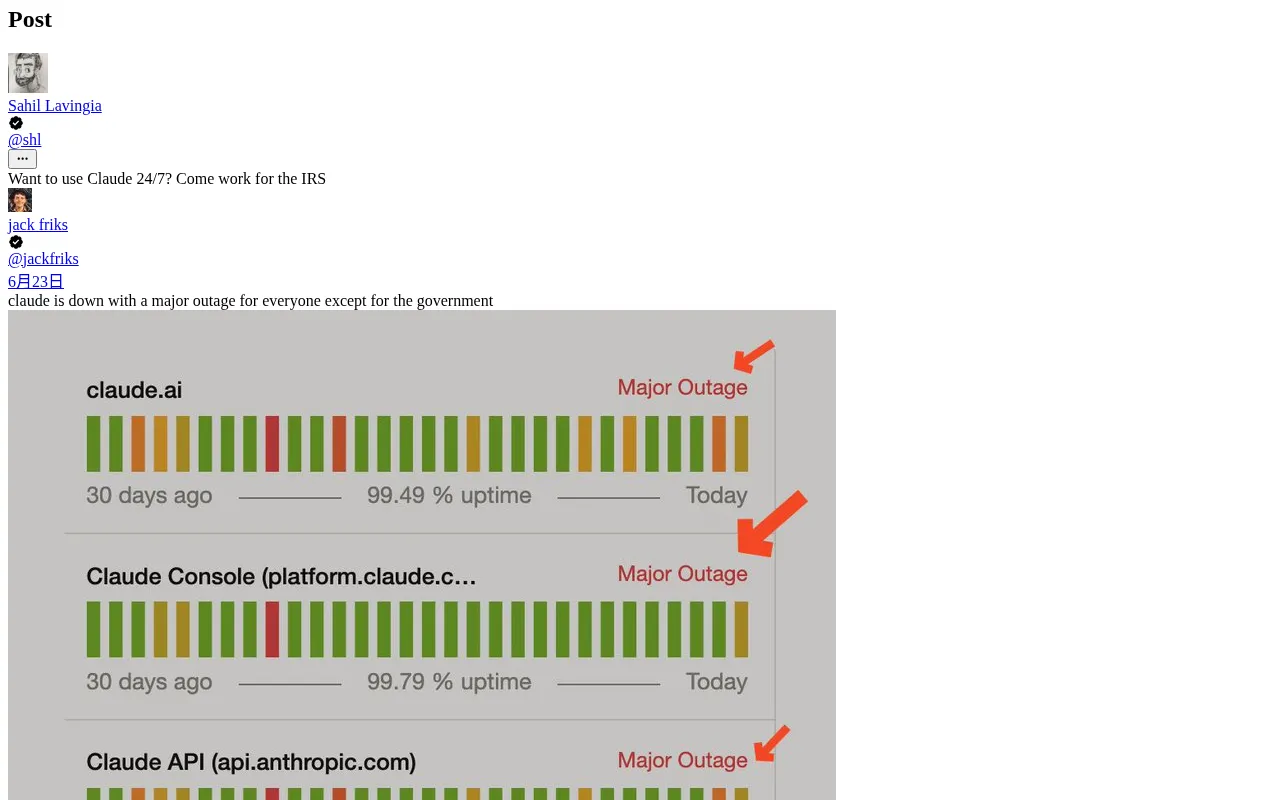
IRS Fully Embraces Claude AI, Accelerating Federal Government's AI Adoption
The IRS is recruiting staff with 24/7 Claude AI access, marking Anthropic's breakthrough into the federal government. Explore the strategic implications and tax use cases.
 Industry Insights
The IRS Mobile App Debate: A Trust Crisis in Government Digital Transformation
The IRS's proposed mobile app has sparked heated debate. This article analyzes the core arguments, exploring data security, privacy, and the trust crisis in government digital transformation.