AI Short Drama Practical Guide: A Three-Phase Learning Roadmap to Launch in Two Weeks

A structured 3-phase roadmap for producing commercial AI short dramas, from scriptwriting to finished film.
Most people fail in AI video production not from lack of skill, but from lacking a complete workflow. This guide presents a three-phase learning roadmap for AI short dramas: building control fundamentals, mastering character consistency and TTS pipelines, and advancing to commercial delivery — combined with a scriptwriting methodology built around emotional hooks and AI-friendly writing techniques.
Why AI Short Dramas Are the Best Bet Right Now
According to the author of a 100-episode AI short drama tutorial series on Bilibili, 90% of people who enter the AI video space fail — not because they can't learn the skills, but because they "learn aimlessly." They waste time endlessly tweaking prompts and chasing random outputs, yet never produce a single complete piece of work. This is a sharp observation: the AI video landscape may seem packed with knowledge points, but the real bottleneck is rarely any single skill. It's the absence of a complete workflow that ties everything together.
An AI video workflow refers to a standardized production pipeline that chains together multiple AI generation tools — such as Runway, Kling, and Jimeng — with traditional post-production steps according to a specific logic. This concept rose to prominence alongside the rapid release of video foundation models like Sora, Runway Gen-2, and Pika from 2023 onward. These models lowered the technical barrier to video generation, but footage produced by any single tool tends to be inconsistent in quality and style. Only a systematic workflow can integrate these outputs into a polished, deliverable final product. This is precisely why professionals who can "run a complete workflow" command significantly higher salaries than those who only know how to operate a single tool.
From a market demand perspective, film and TV companies, major advertising agencies, and short drama studios are all aggressively hiring for roles focused on "AI video generation and workflow delivery" — with compensation that clearly outpaces traditional editing and visual design positions. The underlying logic is straightforward: AI dramatically reduces the marginal cost of video production. Whoever can own the full chain from script to finished film is best positioned to capitalize on this wave.
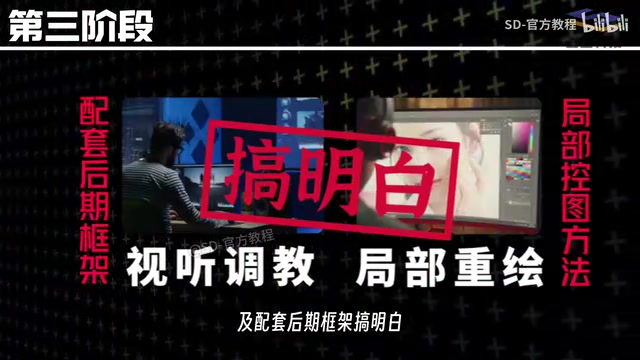
Three-Phase Learning Roadmap: From Foundation to Commercial Delivery
The core methodology offered in this tutorial isn't a loose collection of tips — it's a structured growth path. This directly addresses the most common pain point for learners: "I've absorbed a ton of individual knowledge points, but I still can't produce a complete short film." The root cause is fragmented knowledge with no connective tissue between concepts.
Phase One: Build a Solid Foundation in Control
The first step is understanding the underlying logic of AI image and video generation, and mastering controllable generation and camera movement techniques in the latest generation of video foundation models. The author repeatedly stresses that "without a solid foundation, no matter how many tools you learn afterward, all you'll produce is disjointed, plastic-looking junk."
Controllable generation refers to using tools like ControlNet, reference images, and motion vectors to exert precise control over image content, composition, and camera movement. Camera movement corresponds to the fundamental cinematic moves in filmmaking — push, pull, pan, tilt, track, and follow. Leading video models today (such as Runway, Kling, and Jimeng) all support controlling camera trajectories via first-frame images, last-frame images, or motion brushes. Beginners who don't understand these fundamentals typically rely on random generation and can't reproduce their desired compositions — which is the core reason "junk footage" gets produced. Individual frames may look beautiful, but when assembled into a video, the inconsistencies become obvious.
Phase Two: Master the Two Highest-Demand Market Skills
Phase two focuses on the two highest-frequency, most commercially viable directions: AI short dramas and AI commercial short films. Concretely, this means using AI-written scripts and storyboards to produce content at scale, while solving real-world production challenges such as character consistency, motion control, and voice consistency. It also means chaining text-to-image, silent video, AI voiceover, and post-production restoration into a single automated production pipeline.
Character consistency is the most central technical challenge — maintaining a character's appearance, clothing, and expressions at a high level of consistency across multiple shots and scenes. The leading industry approaches include: IP-Adapter (which preserves appearance through facial feature encoding), InstantID (focused specifically on face identity preservation), and training dedicated LoRA fine-tuning models for primary characters. LoRA (Low-Rank Adaptation) is a lightweight model fine-tuning technique that can train a custom character model on top of a pre-trained foundation model using just 20–50 reference images. The compute requirements are far lower than full fine-tuning, making it a core piece of infrastructure for high-volume AI short drama production.
The AI voiceover stage relies on TTS (Text-to-Speech) technology. Representative products include ElevenLabs, Microsoft Azure TTS, CapCut's AI dubbing, and open-source solutions like fish-speech. In a complete pipeline, TTS must address three key challenges: voice consistency, emotion control, and lip sync. Lip sync is typically handled by tools such as MuseTalk or Wav2Lip, and is one of the most critical factors in determining the final production's perceived quality.
This is currently the direction with the highest demand from both enterprises and independent content creators.
Phase Three: Advanced Skills That Set You Apart
Phase three covers optional advanced content — diving deep into video refinement and inpainting, mastering localized control methods for mainstream AI video tools and their companion post-production frameworks, and accumulating experience through complete commercial project work. Completing this phase will put you "well ahead" of the majority of people who entered the field at the same time.
The Core of AI Short Dramas: Content Is King, Not Visual Quality
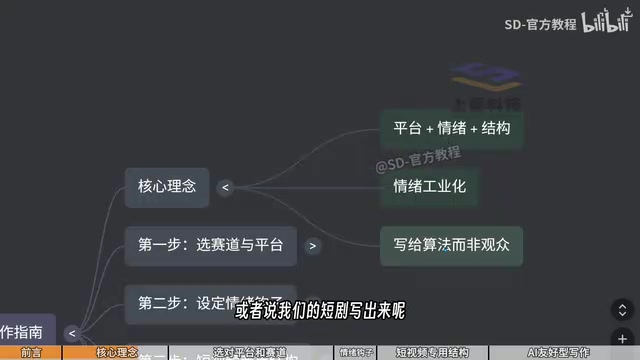
The most valuable insight from this tutorial series is its assessment of what AI short dramas are fundamentally about: AI short dramas have very low requirements for visual polish. What actually determines success is the script and the emotional impact.
The author puts forward a counterintuitive but highly practical idea: "Short dramas are written for the algorithm, not for the audience." This has a clear underlying logic: the distribution of short dramas on platforms like Douyin (TikTok) and Kuaishou is fundamentally algorithm-driven. Platforms evaluate content quality and determine distribution volume based on core metrics such as completion rate, engagement rate (likes, comments, shares), and paid conversion rate. This means the first "audience" a short drama creator must satisfy is actually the algorithm. Only after passing the algorithm's evaluation and achieving a sufficient completion rate will the content be seen by real users at scale. Boosting completion rate depends on high-density emotional stimulation and suspense hooks — every creative decision maps to a behavioral metric that the algorithm can quantify.
Because the short drama market has been flooded with industrialized production, a mature system of emotional payoff mechanics has emerged. Simply put, there needs to be a satisfying "hit" moment — but more rigorously, the following methodology applies.
Choosing the Right Niche and Platform
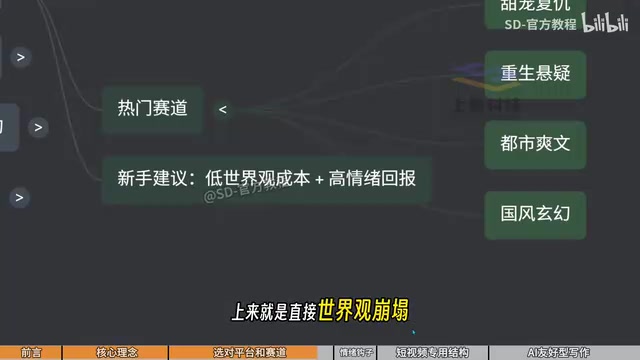
Different platforms have vastly different tonal profiles: Douyin and Kuaishou prioritize fast pacing and immediate emotional payoff; Bilibili demands higher quality and rarely sees short drama ad placements; Xiaohongshu's audience skews female, and short dramas typically center on female perspectives, such as "being spoiled rotten" fantasy storylines. Popular niches include romance, revenge, and reincarnation, among which Chinese fantasy (guofeng xuanhuan) is particularly well-suited for AI production. Live-action fantasy requires extensive special effects at high cost, while AI enables fast, low-cost generation that perfectly matches the short drama format.
The fit between Chinese fantasy themes and AI is no coincidence. Special effects costs for live-action fantasy short dramas often account for 40–60% of the total production budget. Meanwhile, AI image and video generation models have been trained on large volumes of data featuring Eastern aesthetics, ancient Chinese styles, and xianxia (martial arts fantasy) imagery, giving them noticeably stronger generation quality in this genre compared to realistic modern settings. More importantly, fantasy settings have a naturally relaxed tolerance for "realism" — audiences readily accept the otherworldly look of flying swords and celestial landscapes, often finding it atmospheric rather than jarring. This neatly sidesteps the obvious weaknesses of current AI video models in realistic human motion and fine detail, creating a perfect alignment between theme and technology.
For beginners, the author recommends a "low worldbuilding cost, high emotional return" approach. Traditional long-form works require hundreds or thousands of episodes to build out a world and character power system. Short dramas skip straight to the payoff — "the whole world collapses, I've been reborn" — and that's precisely their defining characteristic.
Designing Emotional Hooks and a Purpose-Built Structure
The magic of short dramas lies in the "industrialization of emotion" — at its core, it's "listening to a novel while matching visuals are playing alongside." Whether the visuals are beautiful is almost beside the point. The author's recommended structure for short dramas is worth adopting:
- First half: Ignite the emotion fast
- Immediately after: Make character allegiances crystal clear (who's the protagonist, who's the villain, who can pull out 100 million yuan on the spot)
- Middle section: High-frequency information changes, turbulent plot developments
- Final five seconds: Leave a suspenseful twist (e.g., "stay your blade," "stop!") to hook viewers into the next episode
Every node in this structure maps precisely to an algorithm-quantifiable metric: the emotional ignition in the first half drives the first-three-second retention rate; clear character positioning helps viewers invest quickly, boosting completion rate; the ending cliffhanger drives binge-watching and share behavior. This structure serves as a "starter template" for beginners — once internalized, it can be adapted dynamically rather than applied rigidly.
AI-Friendly Writing: Getting AI to Truly Understand Your Script
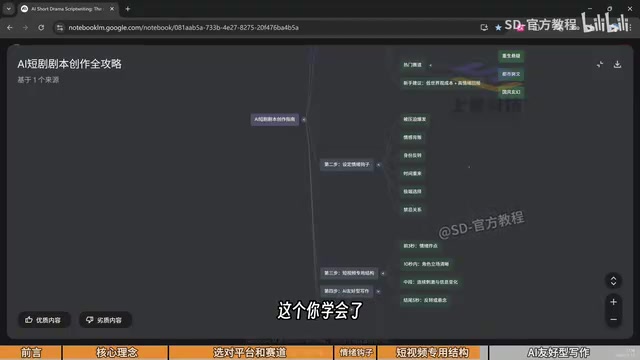
Once you've internalized the scriptwriting methodology, a key advanced technique is "AI-friendly writing" — when prompting AI to generate a script, proactively telling it these creative principles so it produces output that meets your requirements. The essence of this technique is systematically combining creative principles with technical constraints. Each of the following tips isn't just a writing suggestion — every one of them corresponds to a specific limitation in AI generation technology.
Simplify scenes and characters: When generating multiple characters in the same scene, AI tends to produce distorted faces. If five people appear in a single scene, unless it's a close-up or medium shot, the faces will fall apart in any wide shot. The root cause is that current face LoRA models struggle with group scenes — the attention mechanism across multiple subjects interferes with itself, making it hard to maintain stable features for multiple characters simultaneously. Keep the number of characters in frame to a minimum.
Externalize and visualize emotions: In live-action, an actor furrowing their brow can convey an entire inner monologue — but AI struggles to render that kind of internalized emotion. AI models generate visuals from text prompts, and abstract psychological states can't be accurately described or translated into visible imagery. Scripts should externalize emotion — express it through intense, overt action rather than buried subtext.
Keep dialogue short and punchy: Brief, forceful lines are easier for AI voiceover (TTS) to process, produce stronger rhythmic pacing in the audio, and reduce the processing difficulty for lip sync tools. This is a practical principle that balances creative quality with production efficiency.
Avoid abstract psychological description: Overly abstract inner monologues can't be translated through prompts into imagery AI can generate. Replace them with concrete behaviors and situations. This also aligns with the logic of training LoRA models for characters — the fewer characters there are, and the more externalized their actions, the fewer variables the model has to handle during generation, resulting in more stable output quality.
Conclusion: The Roadmap Matters More Than Any Individual Trick
Stepping back to look at the core thinking behind this entire tutorial series, the biggest takeaway isn't any specific AI tool technique — it's a clear, interconnected learning and production roadmap. The biggest trap in the AI video space is getting distracted by the sheer volume of tools and tips available, ending up with "knowledge that's scattered and disconnected."
Whether it's the three-phase capability growth path, or the AI short drama philosophy of "script is king, industrialize emotion, write AI-friendly" — both ultimately emphasize the same thing: use systematic workflow thinking to chain fragmented skills into a complete, deliverable capability. From building a foundation in controllable generation, to constructing character-consistency LoRA models, to understanding platform algorithm logic, to writing AI-friendly scripts — none of these steps is an isolated technique. Each is a gear that meshes with the others in a complete chain. For anyone looking to enter the AI video space, rather than burning out on random generation and endless prompt tweaking, the better move is to first establish the complete pipeline from script to finished film.
Key Takeaways
Related articles
Understanding GitHub's Availability Report: Platform Stability and Developer Response Strategies
Deep dive into GitHub's monthly availability report: analyzing service degradation impacts, CI/CD fault tolerance, and platform dependency risk strategies for resilient development.
OpenAI's Claim of Solving a Millennium Prize Problem Sparks Academic Controversy
OpenAI claims its AI solved a Millennium Prize Problem, sparking debates over attribution, verification, and AI's role in reshaping mathematical research.
Ledoit-Wolf Covariance Shrinkage in Practice: 57% Lower Turnover + 10x GPU Acceleration
Learn how Ledoit-Wolf covariance shrinkage reduces portfolio turnover by up to 57% and how cuML GPU acceleration cuts backtest time from 1.5 hours to 9 minutes.