AI Skill Auto-Generates Test Cases: Say Goodbye to Manually Transcribing PRDs

An AI Skill that auto-generates structured test cases from PRDs or screenshots, eliminating manual entry.
The 'Doc-based Test Case Generator' AI Skill transforms PRD documents, text, or screenshots into fully structured Markdown test cases covering positive, negative, boundary value, and idempotency scenarios. It supports enterprise template alignment and outputs ready-to-use files, freeing test engineers from repetitive manual work.
The Real Pain of Writing Test Cases
For software test engineers, the most frustrating part of the job is rarely test execution — it's the upstream task of writing test cases. Product managers routinely hand over PRDs that run dozens of pages long, requiring engineers to extract requirements piece by piece, manually enumerate boundary values, edge cases, and negative scenarios. Worse still, when PRDs arrive as screenshots, testers are forced to retype everything from an image word by word.
This inefficient workflow has predictable consequences: missed boundary values, overlooked exception scenarios, zero coverage of negative test cases — all of which lead to a flood of issues after code is submitted for testing. Boundary Value Analysis (BVA) and Equivalence Partitioning (EP) are among the most fundamental — and most commonly neglected — methodologies in software testing. BVA focuses on the boundary conditions of an input domain, such as the maximum, minimum, and ±1 values of a numeric field, while EP divides input data into valid and invalid classes to avoid exhaustive testing. When writing cases manually, engineers tend to cover the "happy path" due to time pressure or limited experience, systematically missing the negative and boundary scenarios these methods demand. The result: production defects that leave everyone wondering, "How did we miss that?" Repetitive, mechanical work consumes most of the time, while the strategic thinking that actually matters gets pushed aside.
This article introduces a ready-to-use AI Skill — 「Doc-based Test Case Generator」 — that automatically generates structured test cases from documents, plain text, or even screenshots, and outputs a complete, ready-to-use Markdown file.
What is an AI Skill? An AI Skill is a modular capability unit that has emerged in recent years across AI Agent and workflow automation platforms such as Coze, Dify, and LangChain. Unlike a traditional prompt, a Skill typically encapsulates a complete input-processing pipeline, an intermediate reasoning chain, and a structured output specification — callable and reusable like a function. The emergence of Skills like 「Doc-based Test Case Generator」 represents the evolution of LLMs (Large Language Models) from simple Q&A toward deep integration into professional domain workflows. These models no longer just answer questions — they own end-to-end document processing and content generation tasks.

Three Core Capabilities of This AI Skill
Flexible Input: Documents and Screenshots Both Supported
The biggest advantage of this Skill is its tolerance for different input formats. Whether you're working with a PRD, an API specification, or a product screenshot, it can handle it.
For copyable text, just paste it in directly. If you only have a screenshot, the Skill will guide you to first convert the image text into plain text before processing. This means no matter what form the requirements material takes, it can be reliably converted into test cases — completely eliminating the need to retype content from images.
Comprehensive Coverage, Structured Output
The Skill has a built-in test design strategy that spans multiple dimensions: positive scenarios, negative scenarios, boundary values, equivalence classes, state/flow transitions, and scenario-based testing. This framework isn't arbitrary — it's grounded in the black-box test design techniques defined by ISTQB (International Software Testing Qualifications Board). State Transition Testing specifically validates system behavior as it moves between states, and is commonly applied to order state machines and permission workflows. Idempotency Testing is a critical dimension in API testing, verifying that sending the same request multiple times leaves the system in a consistent state — especially important for payment and form-submission interfaces. By embedding this methodological framework, the AI Skill essentially encodes expert knowledge into reusable reasoning rules. This kind of systematic coverage is precisely what human engineers are most likely to miss.

Whether it's API parameters, error codes, robustness, idempotency, functional flows, state transitions, performance loads, or metrics — the Skill organizes everything into its appropriate category. The final output is a structured Markdown document where every test case includes an ID, title, module, type, priority, preconditions, steps, and expected results. Ready to copy and paste immediately.
Template Alignment: Zero Post-Processing Required
This may be the most practically valuable feature. Many AI-generated test cases come out with inconsistent formatting, requiring significant cleanup before they're usable. This Skill supports template alignment — just tell it "refer to the template in my assets folder," and it will read the template structure and organize the output according to your defined columns and format.

The generated cases can be imported directly into your company's Word or Excel templates with virtually no additional formatting work — truly ready to use out of the box.
Why This AI-Driven Test Case Design Approach Is Worth Learning
From Solving Today's Task to Building Long-Term Competitive Advantage
Some might ask: we've been writing test cases by hand for years — why bother learning this? That question reveals two fundamentally different mindsets.
Writing test cases manually solves today's specific task. Mastering the design thinking behind AI Skills solves a long-term career competitiveness problem. While others are still retyping screenshots character by character, you can generate a complete, structured test suite in minutes.

Irreplaceability Comes from Solving Complex Problems
From a career development perspective, the more complex problems an engineer can solve, the more irreplaceable they become. AI tools aren't here to replace test engineers — they're here to free engineers from repetitive work so they can focus on higher-value activities: test strategy design, defect analysis, and quality assurance.
In fact, AI's involvement in software testing has gone through clear evolutionary stages. Early AI testing tools (such as Testim and Applitools) focused primarily on intelligent recognition and self-healing capabilities in UI automation — what we might call the "assisted execution" phase. The new generation of LLM-powered tools is pushing AI into an "assisted design" phase — from understanding requirements documents to generating test strategies, from analyzing defect patterns to predicting high-risk modules. In its 2024 Software Testing Technology Hype Cycle, Gartner noted that generative AI-based test case generation is transitioning from the "Peak of Inflated Expectations" toward the "Trough of Disillusionment" — meaning the technology has real practical value, but users should maintain realistic expectations. Human review remains an indispensable quality gate.
The real efficiency gain here isn't just saving typing time. More importantly, standardized test design strategies reduce case omissions caused by human oversight — and that kind of systematic quality assurance is difficult to achieve consistently in a purely manual workflow.
Practical Recommendations for Real-World Use
While this AI Skill can dramatically improve testing efficiency, a few considerations are worth keeping in mind:
- Human review is non-negotiable: AI-generated cases still require manual review, especially for complex business logic scenarios where domain knowledge remains essential. LLMs still carry a "hallucination" risk when handling highly context-dependent business rules — cases covering core user flows must be verified line by line by experienced test engineers.
- Define your templates clearly upfront: The template alignment feature is powerful, but the initial configuration requires a well-defined template structure to produce ideal results. Explicitly annotating each column's data type, required fields, and enumeration value ranges will help the AI map its output more accurately.
- Embrace it proactively, don't just accept it passively: Rather than viewing AI as a threat, hand off the tedious case-writing work to AI and invest your time in sharpening your testing strategy skills.
From a broader perspective, tools like this reflect the trend of AI in software testing evolving from "assisted execution" to "assisted design." The role of the test engineer is shifting from "test case writer" to "test strategy designer and AI output reviewer" — a shift that demands a new capability profile. Professionals need not only to understand business logic, but also to develop the meta-cognitive ability to evaluate the quality of AI-generated output. For testing teams looking to improve efficiency, now is an excellent time to systematically learn this workflow.
Key Takeaways
Related articles
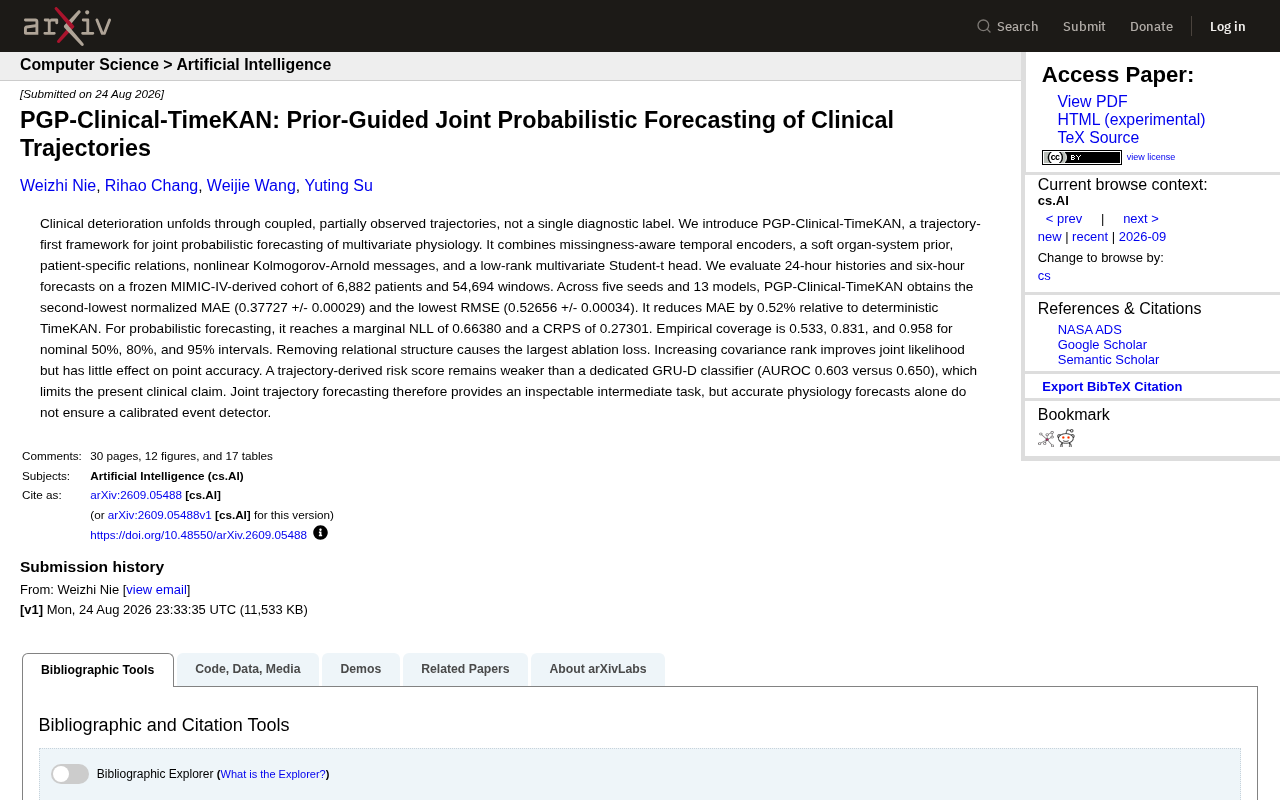
PGP-Clinical-TimeKAN: A Detailed Guide to the Multivariate Physiological Indicator Joint Prediction Framework
An in-depth analysis of the PGP-Clinical-TimeKAN framework for joint probabilistic prediction of multivariate physiological indicators, covering trajectory-first paradigm, KAN message passing, MIMIC-IV validation, and ablation studies.
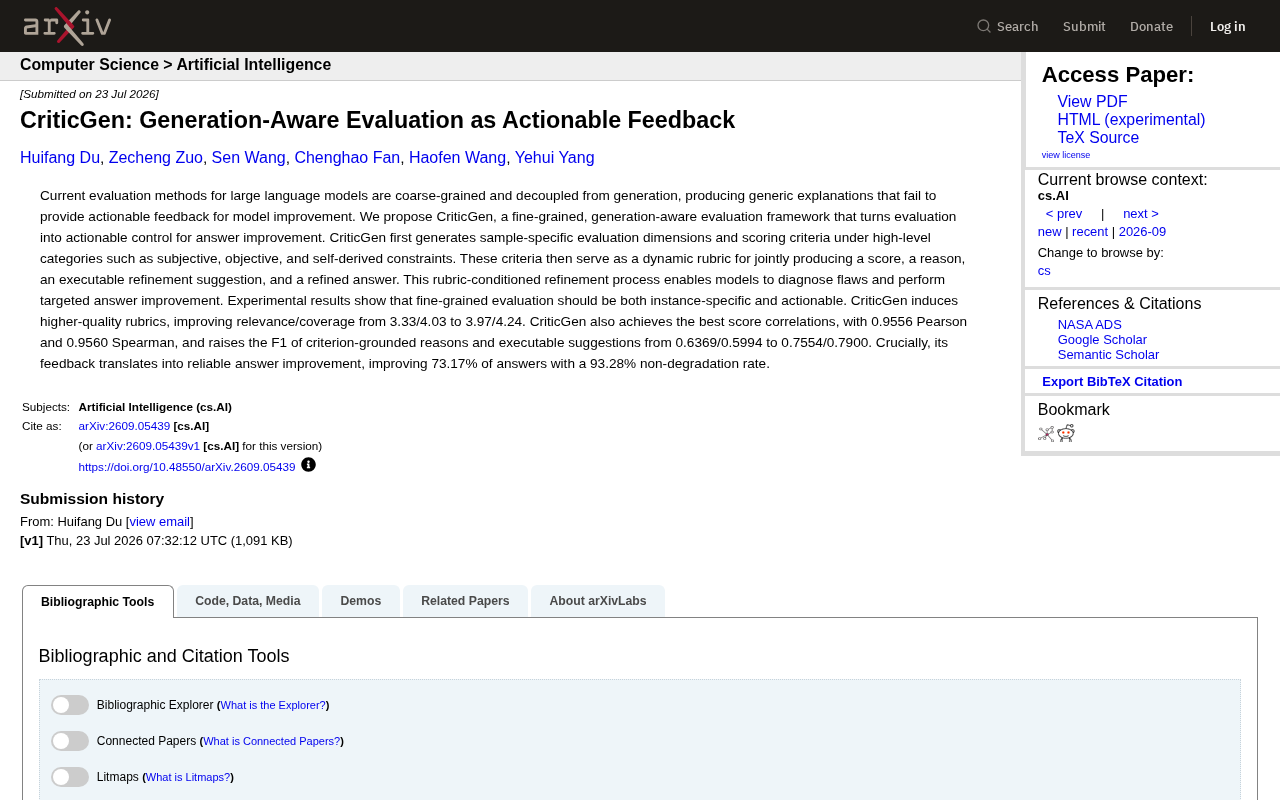
CriticGen: A New Framework That Transforms AI Evaluation into Actionable Improvement Feedback
CriticGen proposes a generation-aware evaluation framework that transforms AI assessment from passive scoring to an active optimization loop, achieving 73.17% answer improvement and 93.28% non-degradation rate.
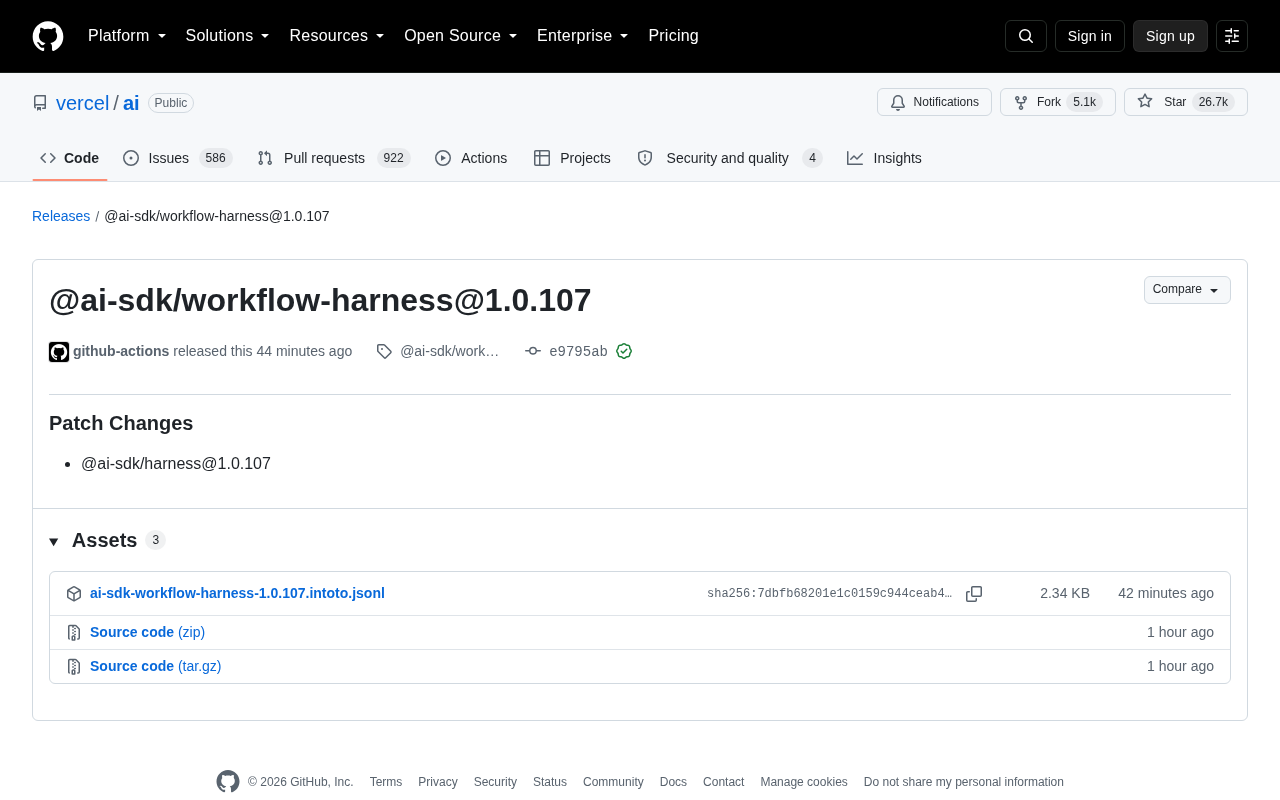
Vercel AI SDK workflow-harness Update Analysis
Deep analysis of Vercel AI SDK workflow-harness 1.0.107 update: architecture design, engineering practices, and developer value for building reliable AI apps.