AI Slacking as Resistance: When Users Start Saying No to AI
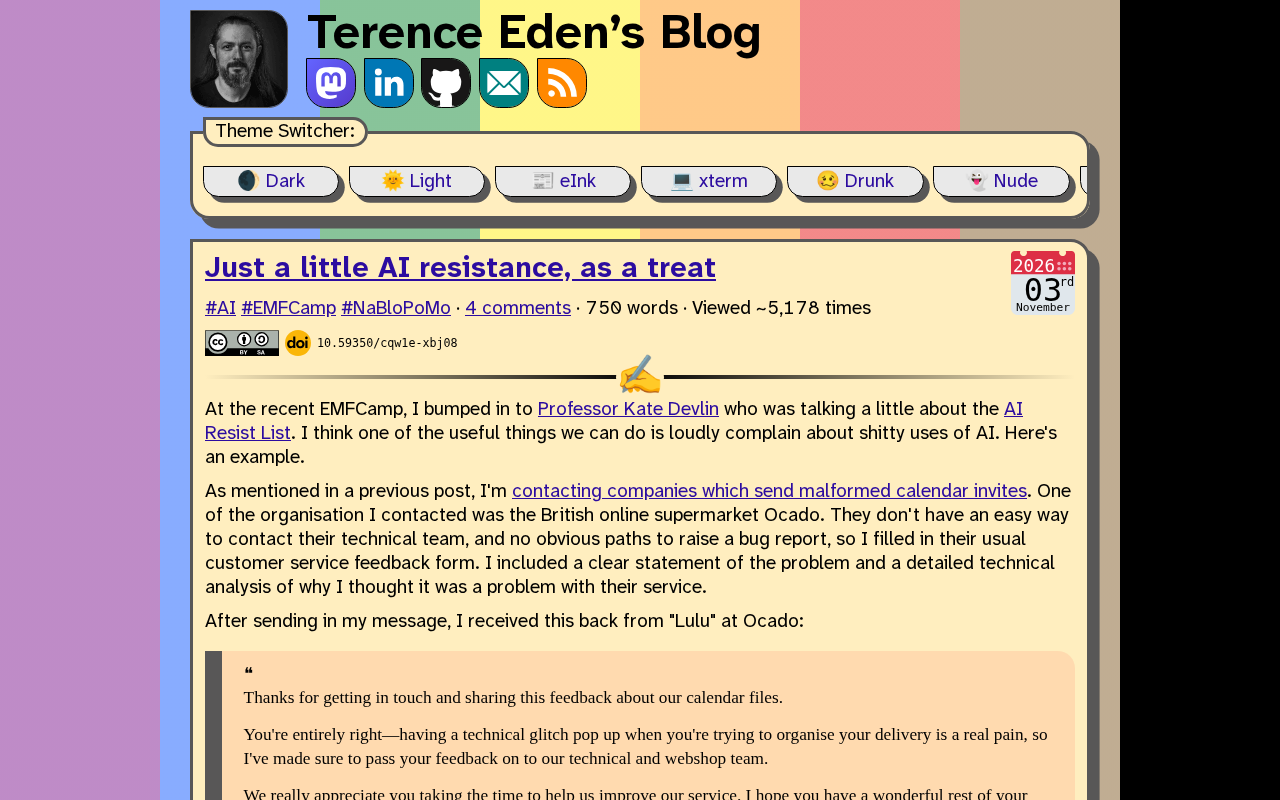
A tongue-in-cheek Hacker News post reflects users' decentralized, non-confrontational micro-resistance to AI.
Taking the Hacker News post "Just a little AI resistance, as a treat" as its entry point, the article discusses a spreading phenomenon: users actively reducing AI usage or avoiding it in specific scenarios. This resistance is decentralized and unorganized, motivated not by opposition to technology but by concern that attention, judgment, and work rhythm are being over-smoothed. The tech community is divided, and the article reads this as a product signal: the right to refuse is becoming part of UX, and "no-AI" labels may emerge like "organic" food.
A Quiet Resistance Is Brewing
On Hacker News, a post titled "Just a little AI resistance, as a treat" earned 70 points and sparked 37 comments. The title itself carries a playful tone—"a little AI resistance, just as a treat." This isn't a long technical essay; it reads more like a community code phrase pointing to a spreading phenomenon: more and more users are actively reducing their use of AI, or deliberately avoiding it in certain scenarios.
This resistance isn't fierce. It's not a regulatory ban, nor a wholesale boycott by the tech community—it's closer to small, everyday choices. Some people insist on writing emails by hand, some refuse to use AI-generated meeting notes, and some deliberately append "-ai" to their searches to exclude generative results. Most of these behaviors come with no public manifesto, yet they form a recognizable resonance within communities like Hacker News where technical crowds gather.
Why "Little" Resistance Is Worth Discussing
The key is in "as a treat." It downgrades the act of resistance from a moral stance to a kind of self-reward—like giving a small piece of cake to someone on a long diet. This framing dissolves the confrontational edge, suggesting users aren't opposing AI technology itself but preserving a little space for themselves where they don't use it.
This differs subtly from past pushback against automation. Resistance during the industrial automation era often revolved around jobs and livelihoods; this time it revolves around attention, judgment, and daily rhythm. Users aren't worried that AI will take their jobs, but that AI will make work too smooth—so smooth that they no longer need to think. Discussion of "generative AI fatigue" is growing in tech communities, fueled both by content saturation and by the pressure of tools being forcibly embedded into every workflow.
The Shape of Resistance Is Decentralized
Judging by the direction the discussion took, this kind of resistance has no unified organization and no clear demands. Some people use AI but set strict personal rules—say, only for first drafts, never for final deliverables; others ban it entirely in specific domains, like writing and learning to code. This decentralization itself shows that resistance isn't ideologically driven but accumulates from concrete user experiences.
Generative AI Fatigue is a term that has gradually gained currency in tech communities since 2023, referring to users' weariness with the ubiquity of generative AI content and features. It has three typical sources: first, the information environment is diluted by low-quality AI-generated content, with more "looks right but useless" answers in search and social feeds; second, forced embedding at the tool level, as many SaaS products make AI assistants the default entry point, forcing users to pass through a chat interface even for simple tasks; third, a shift in cognitive burden, as users must additionally judge whether AI output is reliable—a verification cost that sometimes exceeds doing it themselves. Unlike earlier "techno-anxiety," generative AI fatigue doesn't presuppose that technology is a threat; it points to diminishing marginal returns in user experience, and thus more often manifests as silent workarounds rather than public criticism.
Divergent Attitudes in the Tech Community
The discussion atmosphere on Hacker News offers a window into this. A scale of 70 points and 37 comments isn't explosive virality—it's a moderately warm resonance post. Comment sections on such posts usually show two voices: one agreeing that "using a little less AI is actually more efficient," the other questioning whether this resistance is more symbolic than practical—after all, most users still rely on AI tools, resisting in word while using in deed.
This divergence is itself noteworthy. It shows that the tech crowd's attitude toward AI has moved from early curiosity or panic into a more complex phase: the tools are already good enough, and the question becomes whether "good enough" equals "should be used." When AI-generated code is embedded almost seamlessly into IDEs, and when search engines default to summary-style answers, choosing not to use it requires extra self-awareness and willpower.
Hacker News's voting and commenting mechanics deserve a brief note so the significance of "70 points, 37 comments" is clear. The site uses simple upvote/downvote voting; post scores decay over time, and front-page ranking is determined jointly by score and posting age. 70 points is a moderately above-average level of resonance: enough to reach some users' front pages and spark discussion, but far from the hundreds of votes of a contentious hot post. A comment count relatively high versus the score usually means the topic provoked debate rather than one-sided agreement. Additionally, Hacker News's user base is mainly engineers, founders, and tech professionals; its attitudes carry some signaling value for developer tools and API design, but don't represent the mainstream consumer market.
A Signal for Product Designers
Read as product feedback, this post reveals an easily overlooked point: the right to refuse is becoming part of user experience. Users want AI features to be optional, switchable off, and non-intrusive. Products that stuff an AI button into every corner of the interface may be accumulating silent resentment.
This resentment won't necessarily translate into uninstalls, but it will translate into a stratification of usage habits—users may keep the tool but route around AI features, or switch to alternatives free of AI intrusions. For designers of AI products and tools, this means "on by default" is no longer a risk-free strategy. Providing a clear off-ramp, preserving non-AI ways of working, and not making AI the only entry point may retain users better than adding yet another smart feature.
Right to refuse borrows a concept from product design and user-rights discussions, referring to users' ability to decline a feature without losing core functionality. In the context of AI products, it concretizes into several actionable design dimensions: features can be turned off without degrading the basic experience; AI isn't the only path to completing a task; content generated by AI is clearly labeled; and users' default preferences are respected without repeated pop-up persuasion. Its opposite is "dark pattern"-style AI promotion, such as hiding the off button in a submenu or periodically re-enabling a feature after it's turned off. Industry practice shows that forcing defaults on can boost feature-usage metrics in the short term while damaging long-term retention and trust, so the right to refuse is increasingly seen as an experience metric on par with accessibility.
What Will Remain After the Resistance
Posts like "Just a little AI resistance" are more emotional markers than action platforms. Their value isn't in predicting trends but in recording a moment: AI has become so pervasive that people are starting to calculate the cost of using it—not just monetary cost, but attention cost and judgment cost.
This calculation may gently change the market. When enough users insist on manual operation in certain scenarios, products will re-emerge with "handmade" and "no-AI" labels, much as the food industry saw "organic" and "additive-free." Resistance won't necessarily stop technology's spread, but it will shape the posture in which technology enters daily life.
The emergence of "no-AI" and "handmade" labels can be compared to the evolution of "organic" and "additive-free" certifications in the food industry. Such labels started as self-identifiers for small circles, then became institutionalized as consumers proved willing to pay for verifiable differences, eventually forming independent certification systems and premium markets. Analogies have already appeared in software: some writing tools, note apps, and search engines now sell themselves on "we don't train on your data" and "no generated content," and some open-source projects explicitly state "this project uses no LLM-generated code." However, verifying software labels is harder than food certification, and proving "no AI" will be key to whether such labels can endure—it may also spur new auditing and declaration standards.
One-line Summary
A tongue-in-cheek post on Hacker News reflects users' decentralized, non-confrontational micro-resistance to AI.
Paragraph Summary
Taking the Hacker News post "Just a little AI resistance, as a treat" as its entry point, the article discusses a spreading phenomenon: users actively reducing their AI usage or deliberately avoiding AI in specific scenarios. This resistance is decentralized and unorganized; its motive isn't opposition to the technology itself but concern that attention, judgment, and work rhythm are being over-smoothed. The phrase "as a treat" downgrades resistance to a self-reward, dissolving its confrontational edge. The tech community is divided, with efficiency advocates and skeptics of symbolic value coexisting. The article further reads this as a product signal: the right to refuse is becoming part of user experience, "on by default" strategies carry risk, and "no-AI" product labels akin to "organic" and "additive-free" may emerge.
Related articles
 Tech Frontiers
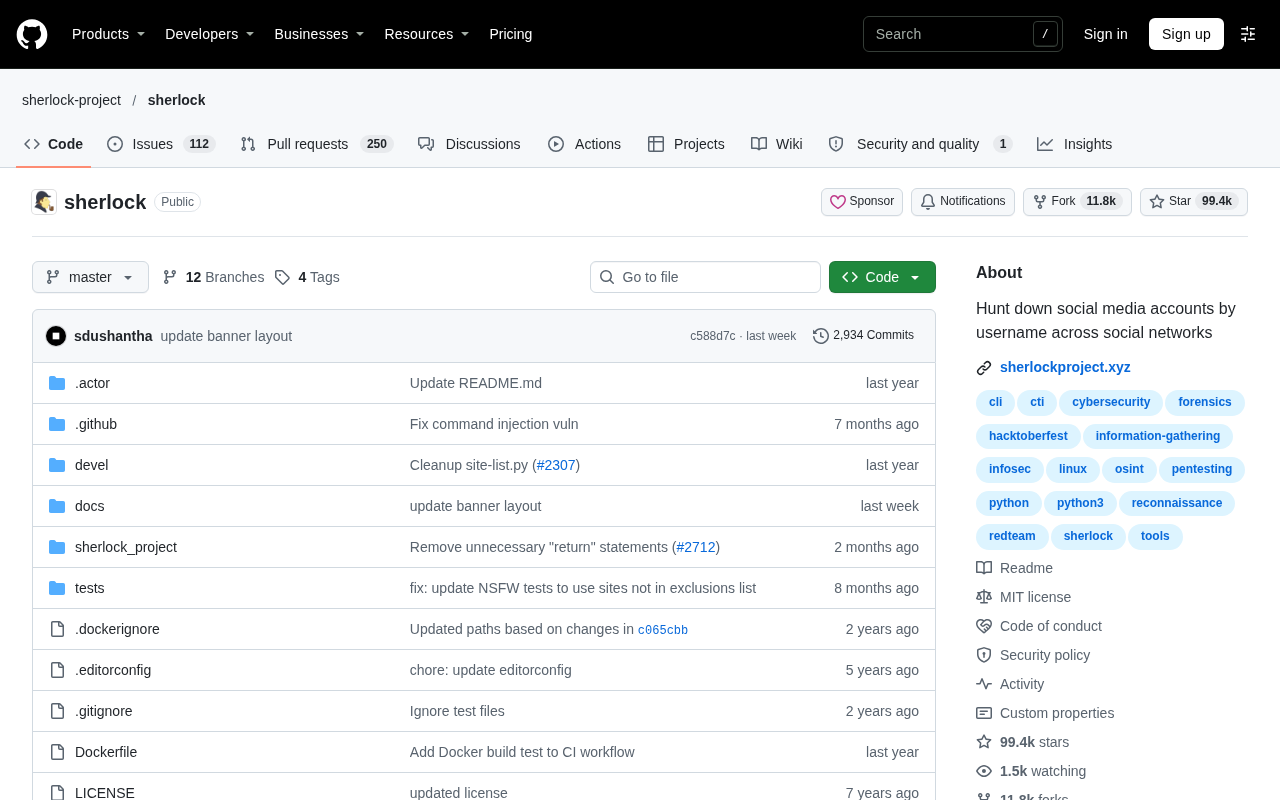
Sherlock: An Open-Source Tool for Tracking Usernames Across Social Networks
Sherlock is an open-source Python tool that tracks social accounts across networks by username. This article covers its core features, why developers love it, typical use cases, and privacy compliance considerations.
 Tech Frontiers
GitHub Daily·Nov 07: Agent-Ready and Context Compression
GitHub Trending Nov 07: meta's agent-ready design system astryx, billion-context's 5x context compression, sherlock nearing 100k stars, plus local-first localthings and bare-metal GPU orchestration nvke.
 Tech Frontiers
Buoyant Open-Sources Kinference: An Inference Control Plane for vLLM on K8s
Buoyant open-sources Kinference, an inference control plane for vLLM on Kubernetes, with declarative routing, KV-cache-aware load balancing, and per-tenant metrics—claiming 95% lower median TTFT in official benchmarks.