AI + SRC Vulnerability Hunting: A Step-by-Step Tutorial from Zero to Your First Bug

A 2026 systematic SRC vulnerability hunting course breaks down a four-stage path to help zero-based learners find their first vulnerability.
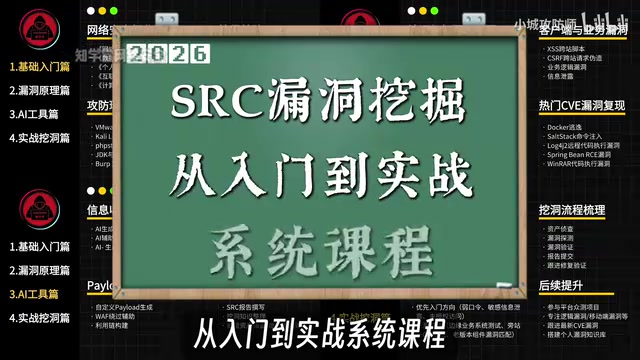
This article introduces a newly recorded 2026 systematic SRC vulnerability hunting course for zero-based learners and office workers who want to hunt bugs in their spare time. The course is divided into four stages: fundamentals, vulnerability principles, AI tools, and hands-on hunting, with a clear goal: guide learners to find their first vulnerability. The fundamentals section covers network protocols, operating systems, and web basics; the vulnerability principles section explains high-frequency vulnerabilities such as SQL injection, XSS, CSRF, and file upload, plus CVE reproduction; the AI tools section introduces AI into asset gathering, vulnerability scanning, and report writing to boost efficiency; the hands-on section transitions from labs to real SRC platforms. The course includes a study plan, notes, and tool packages, and recommends hands-on practice after each stage. The article also reminds readers to view the course's effectiveness rationally—professional-level skills still require extensive practice in real environments.
Why Now Is the Right Time to Learn SRC Vulnerability Hunting
The cybersecurity industry's talent gap continues to widen, and SRC (Security Response Center) vulnerability hunting—the direction closest to real-world practice—is attracting more and more learners starting from zero. According to observations from a Bilibili creator at the start of the course, complete beginners who have just stepped into cybersecurity and working professionals who want to hunt bugs in their spare time for extra income make up the main audience learning SRC today. This newly recorded 2026 systematic course breaks the learning path into four parts: fundamentals, vulnerability principles, AI tools, and hands-on hunting. The goal is clear: guide learners to find their first vulnerability.
SRC (Security Response Center) refers to the security emergency response center established by enterprises or organizations, responsible for receiving, verifying, and fixing vulnerability reports submitted by external security researchers. Major domestic SRC platforms include Tencent Security Response Center (TSRC), Alibaba Security Response Center (ASRC), and ByteDance Security Center, which typically run bug bounty programs that award cash or points based on vulnerability severity. For learners, SRC platforms provide legally authorized testing environments and are an important channel for building practical experience. Compared with penetration testing, SRC vulnerability hunting emphasizes discovering security issues in real business systems within authorized scope, so learners need to be familiar with platform rules, vulnerability rating standards, and report-writing conventions.
Breaking Down the Four-Stage Course Structure
Fundamentals: Building the Foundation
No security skill can do without fundamentals. The course starts with network protocols, operating systems, and web basics, helping zero-based learners build a basic understanding of cyberspace. The creator emphasizes that although this part may seem dry, it is the prerequisite for understanding vulnerability principles later. For those who want to transition into cybersecurity and become white hats at major companies, the solidity of your fundamentals directly determines the technical depth you can demonstrate in interviews.
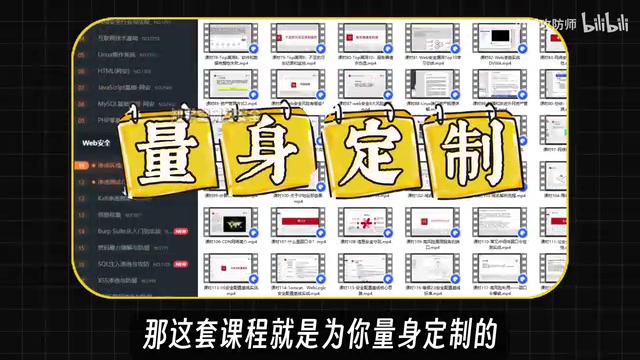
Network protocols are the rule sets governing internet communication. For vulnerability hunting, the key protocols to master are HTTP/HTTPS, TCP/IP, and DNS. The stateless nature of HTTP, request methods (GET/POST), status codes, header fields, and Cookie mechanisms are directly tied to understanding web vulnerabilities such as SQL injection, XSS, and CSRF. For example, understanding the difference between Cookie and Session helps analyze session hijacking and privilege escalation vulnerabilities; familiarity with URL encoding and parameter passing is a prerequisite for discovering injection-type vulnerabilities. For operating systems, you need to know basic Linux commands, file permissions, and process management, as well as Windows registry, services, and security mechanisms, because many exploits involve system-level interaction. Web basics include HTML, JavaScript, the same-origin policy, and the browser security model—these are the foundation for understanding front-end vulnerabilities and bypass techniques.
Vulnerability Principles: Understanding High-Frequency Vulnerabilities
The course focuses on the principles and exploitation methods of high-frequency vulnerabilities, including common types such as SQL injection, XSS, CSRF, and file upload. Unlike courses that simply teach tool usage, this part emphasizes helping learners understand the root causes of vulnerabilities so they can adapt flexibly to different targets. The creator mentions that the course also covers CVE vulnerability reproduction, deepening understanding through real vulnerability cases.

CVE (Common Vulnerabilities and Exposures) is an internationally used vulnerability numbering system maintained by MITRE, assigning a unique identifier to each publicly disclosed cybersecurity vulnerability in a format like CVE-2024-12345. CVE itself does not contain technical details of the vulnerability; instead, it provides descriptions, reference links, and CVSS scores through associated platforms such as NVD (National Vulnerability Database). CVE vulnerability reproduction refers to recreating the trigger process of a publicly disclosed vulnerability in a learning environment, usually requiring analysis of vulnerability advisories, patch comparisons, and PoC (proof-of-concept) code. Reproducing CVEs not only helps understand the root causes of vulnerabilities but also trains learners' abilities to read English advisories, set up test environments, and debug exploit code. Note that reproduction should be done in isolated virtual environments to avoid impacting production systems.
AI Tools: The Key to Efficiency Gains
This is the highlight that sets the course apart from traditional tutorials. AI tools are introduced into asset information gathering, vulnerability scanning, report writing, and other stages, helping beginners bypass tedious repetitive work and focus their energy on analysis and judgment. The creator does not provide a specific tool list, but based on the course positioning, AI here plays the role of an efficiency tool rather than a replacement for thinking. For working professionals with limited time, the value of this part is particularly obvious.
Hands-On Hunting: From Labs to Real Targets
The hands-on section covers asset information gathering, practical tool operation, and real SRC platform practice. The course design follows a path from simulation to reality—first getting familiar with the process in lab environments, then gradually transitioning to real SRC projects. The creator's goal is for learners to have the basic ability to hunt independently after completing the course, whether they choose to become white hats at major companies or take on bounty tasks from home.
Supporting Resources and Learning Advice
To ensure learning effectiveness, the course provides a study plan, video tutorials, study notes, and tool installation packages, forming a relatively complete learning loop. The creator calls for audience support in the video but does not disclose how to obtain the specific resources.
From a learning strategy perspective, the most common problem with systematic courses like this is "finished watching but can't do it." It is recommended that learners immediately practice after each stage, especially the vulnerability principles and hands-on sections—you must operate by hand to build muscle memory. The AI tools section can be reviewed repeatedly, because tools iterate quickly, and understanding the usage logic is more important than memorizing operational steps.
Target Audience and Expectations
This course targets two types of people: first, zero-based learners preparing to transition into cybersecurity with the goal of joining major companies' security teams; second, office workers who want to use spare time to hunt bugs on SRC platforms for extra income. The creator claims that after completing the course, learners can handle white hat work or bounty hunting, but this should be viewed rationally—the course provides an entry path and practical framework, and reaching a professional level still requires extensive practice in real environments.
For complete beginners, it is recommended to first confirm whether you have a basic interest in network protocols and programming before investing time. The barrier to SRC vulnerability hunting is not tool operation but the patience for continuous learning and sensitivity to details.
The course content comes from a Bilibili creator's sharing. Vulnerability hunting activities involved in the learning process should strictly comply with laws and regulations and be conducted only within authorized scope.
One-line Summary
A 2026 systematic SRC vulnerability hunting course breaks down a four-stage path to help zero-based learners find their first vulnerability.
Paragraph Summary
This article introduces a newly recorded 2026 systematic SRC vulnerability hunting course for zero-based learners and office workers who want to hunt bugs in their spare time. The course is divided into four stages: fundamentals, vulnerability principles, AI tools, and hands-on hunting, with a clear goal: guide learners to find their first vulnerability. The fundamentals section covers network protocols, operating systems, and web basics; the vulnerability principles section explains high-frequency vulnerabilities such as SQL injection, XSS, CSRF, and file upload, plus CVE reproduction; the AI tools section introduces AI into asset gathering, vulnerability scanning, and report writing to boost efficiency; the hands-on section transitions from labs to real SRC platforms. The course includes a study plan, notes, and tool packages, and recommends hands-on practice after each stage. The article also reminds readers to view the course's effectiveness rationally—professional-level skills still require extensive practice in real environments.
Related articles

Sugra MCP: One-Click Access to 200+ Data Sources, Connecting Mainstream AI Applications
Sugra MCP connects mainstream AI apps like Claude, ChatGPT, and Cursor through a unified MCP protocol, offering 200+ data sources and 1,600+ endpoints. Listed in Anthropic, OpenAI, and GitHub directories—integrate with one command.
 Tech Frontiers
T3 Code: Free, Open-Source, and a Unified Way to Manage All AI Coding Agents
T3 Code is a free open-source app that aggregates AI coding tools like Cloud Code and Codex into one interface, with conversation handoff, branch isolation review, automatic PR creation, and remote access.
 Tech Frontiers
Conductor Cloud Service Shutting Down? A Comparative Review of Three Parallel AI Coding Agent Solutions
Conductor's cloud service is shutting down—how can developers keep running AI coding agents in parallel? This article compares three alternatives: Orca, Codex, and Cursor: Orca is open-source and free and compatible with old workspaces, Codex is built into the ChatGPT desktop app and supports cloud handoff, and Cursor offers multi-agent windows within the editor. Choose the tool that best fits your workflow.