AI + SRC Vulnerability Hunting in Practice: From Environment Setup to Your First Vulnerability
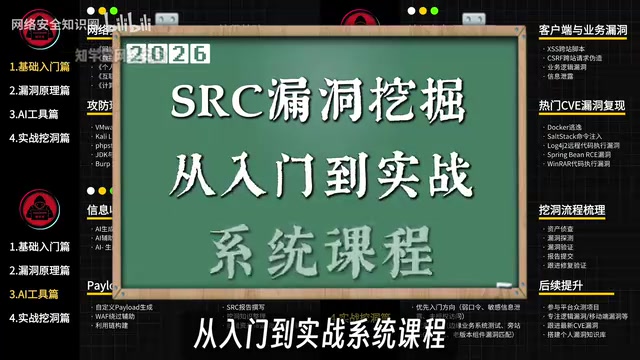
A four-stage SRC hunting course: the complete path from zero foundation to your first vulnerability
This course breaks SRC vulnerability hunting into Foundations, Vulnerability Principles, AI Tools, and Hands-On Hunting, aimed at complete beginners and aspiring bounty hunters. It emphasizes hand-holding instruction—from high-frequency vulnerability principles, asset gathering, and tooling to CVE reproduction and SRC practice—with the goal of landing your first vulnerability. The AI Tools chapter stands alone as efficiency enhancement, not a replacement for understanding principles. It also covers two career paths and provides a study plan, notes, and tool packages, stressing hands-on reproduction and compliant testing.
Course Overview: A Four-Stage System Covering the Entire SRC Bug-Hunting Workflow
This course breaks SRC vulnerability hunting into four modules: Foundations, Vulnerability Principles, AI Tools, and Hands-On Hunting. The target audience is complete beginners just entering cybersecurity and practitioners who want to earn bounties in their spare time. The course emphasizes "hand-holding" instruction—from high-frequency vulnerability principles, asset information gathering, and hands-on tooling to CVE reproduction and SRC practice—with the ultimate goal of helping students find their first vulnerability.
For beginners, the biggest obstacle is often not any specific technical point but not knowing how to connect the learning path. The value of this course lies in organizing scattered knowledge points into an executable route: first build systematic awareness of vulnerability types, then master asset discovery and tool usage, and finally complete the closed loop from information gathering to vulnerability validation in real SRC scenarios.
Course Structure: A Progressive Design from Principles to Practice
The course is clearly divided into four parts, each serving a different teaching function. The Foundations section builds a security worldview and basic operating environment; the Vulnerability Principles section focuses on the formation mechanisms and exploitation conditions of high-frequency vulnerabilities; the AI Tools section introduces intelligent methods to improve efficiency; and the Hands-On Hunting section applies the knowledge from the first three parts to real targets.
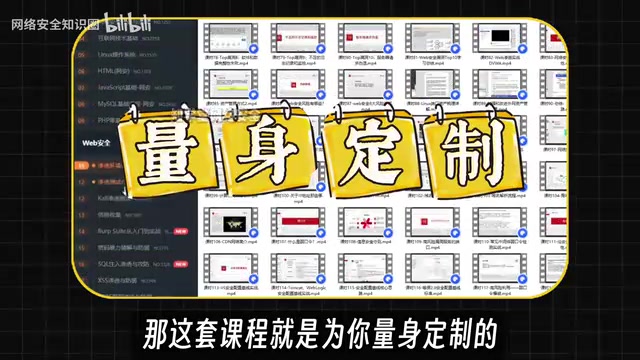
This progressive design follows the patterns of skill acquisition. Vulnerability hunting is not simply stacking tools—understanding principles is what allows flexible adaptation across scenarios. The course making AI Tools a standalone chapter also reflects a trend in the current security community: AI is becoming an auxiliary force in asset mapping, fingerprinting, payload generation, and other steps, but its role is to enhance—not replace—understanding of the nature of vulnerabilities.
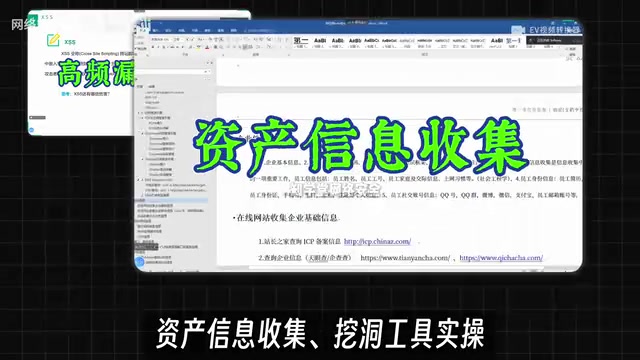
Asset information gathering is the前置 (preliminary) step of vulnerability hunting. It refers to identifying, within an authorized scope, the various digital assets a target organization exposes to the internet, including domains, subdomains, IP addresses, open ports, web applications, API interfaces, mobile apps, and more. Common techniques include subdomain enumeration (via dictionary brute-forcing, Certificate Transparency logs, DNS datasets, etc.), port scanning (such as Nmap), fingerprinting (identifying web frameworks, middleware, CMS types and versions), directory scanning (discovering hidden paths), and search engine syntax (such as Google Hacking). The breadth and depth of asset collection directly determine the probability of finding vulnerabilities, because unknown assets often lack security maintenance. In SRC scenarios, asset collection must be strictly limited to the testing scope declared by the platform to avoid out-of-scope testing.
The Role of the AI Tools Section: Efficiency Enhancement, Not a Silver Bullet
The course treats the AI Tools section as an independent module, indicating the author believes AI already has actionable value in the SRC hunting workflow. Combined with course content such as asset information gathering and hands-on tooling, AI may be used to assist with information categorization, automate repetitive tasks, or help generate testing ideas. It is important to recognize clearly that, at the current stage, AI is better suited to a "copilot" role; the core of vulnerability hunting still depends on deep understanding of the target's business logic and protocol interactions.
For beginners, it is advisable to treat the AI Tools section as an efficiency lever: first use it to reduce mechanical labor, then invest the saved time into vulnerability principles and hands-on reproduction. The CVE reproduction step mentioned in the course is exactly the key exercise for developing this kind of deep understanding.
CVE (Common Vulnerabilities and Exposures) is a vulnerability numbering dictionary maintained by MITRE that assigns a unique identifier to each publicly disclosed cybersecurity vulnerability (such as CVE-2021-44228), making it easier for the global security community to identify and track them consistently. CVE itself does not contain detailed technical information about a vulnerability; instead, it points via reference links to the NVD (National Vulnerability Database) or vendor advisories. CVE reproduction means recreating a vulnerability's trigger conditions and exploitation process in a learning environment, usually requiring setting up the vulnerable software version, crafting specific inputs, and observing the effects. The value of reproducing CVEs lies in: understanding the root cause of vulnerabilities (such as missing input validation or memory out-of-bounds), learning how exploitation chains are constructed, and mastering methods for vulnerability validation and reporting. For SRC hunting, reproducing CVEs helps students build vulnerability pattern recognition, enabling them to quickly locate potential risks when encountering similar code or architectures.
Hands-On Hunting: Using "Your First Vulnerability" as a Milestone
The course sets "finding your first vulnerability" as a clear learning milestone—a pragmatic goal. Early frustration in SRC hunting often comes from poor target selection or unfamiliarity with the validation process, not from insufficient technical ability. Through the guidance in the hands-on section, students can complete a full process within a controlled or compliant SRC scope: asset discovery, vulnerability identification, and validation submission.
From a career perspective, the course also covers two paths: transitioning into cybersecurity to become an in-house white hat, or earning income from home through bug bounties. The two paths have overlapping and differing skill requirements—corporate roles value systematic knowledge and compliance awareness more, while bounty hunters rely more on target selection and efficiency. The course presents both side by side, and students need to choose their focus based on their own circumstances.
SRC (Security Response Center) is an official channel established by enterprises to receive and manage vulnerabilities, such as Tencent's TSRC and Alibaba's ASRC. After registering on an SRC platform, white hats can conduct security testing against assets within the authorized scope. Once a vulnerability is found, they submit it through the platform, and after the enterprise reviews and confirms it, bounties or points are awarded based on severity. SRC platforms usually have clear testing rules (such as prohibiting automated scanners, destructive testing, or access to user data), and violating the rules may lead to account bans or even legal liability. For beginners, choosing SRC as a starting point for practice is a relatively safe option because the testing scope is clear, there is compliance backing, and platforms usually provide vulnerability submission templates and review feedback, which helps build standardized vulnerability reporting habits.
Supporting Resources and Learning Advice
The author mentions that a study plan, video tutorials, study notes, and tool installation packages are bundled and provided, which is important support for self-learners. The recommended learning pace is: after learning each vulnerability principle, immediately reproduce it locally or in an authorized environment; for asset collection and hands-on tooling, run through the complete workflow yourself rather than just watching demonstrations; and after entering the hands-on section, test strictly within the rules of the SRC platform, treating compliance awareness as lesson one.
SRC vulnerability hunting is a path that requires continuous practice. The course provides a roadmap and starting point; real skill growth comes from repeated reproduction and real-world feedback. For complete beginners, prioritize completing the Foundations and Vulnerability Principles sections, then use AI tools to improve efficiency, and finally sharpen judgment through hands-on practice.
One-line Summary
A four-stage SRC hunting course: the complete path from zero foundation to finding your first vulnerability
Paragraph Summary
This course breaks SRC vulnerability hunting into four modules: Foundations, Vulnerability Principles, AI Tools, and Hands-On Hunting, aimed at complete beginners and practitioners who want to earn bounties in their spare time. The course emphasizes hand-holding instruction, from high-frequency vulnerability principles, asset information gathering, and hands-on tooling to CVE reproduction and SRC practice, with the ultimate goal of helping students find their first vulnerability. The AI Tools section is a standalone chapter positioned as efficiency enhancement rather than a replacement for understanding vulnerability principles. The course also covers two career paths—transitioning into white-hat work and becoming a bounty hunter—and provides supporting resources such as a study plan, notes, and tool installation packages, emphasizing hands-on reproduction and compliant testing.
Related articles

Putting TimesFM 3.0, Chronos-2, and Toto 2.0 to the Test: Time-Series LLMs Can't Beat Simple Baselines
A developer's zero-shot benchmark of TimesFM 3.0, Chronos-2 and Toto 2.0 on 24 U.S. stocks and ETFs: directional accuracy of just 49.9%-51.1%, and simulated trading underperformed buy-and-hold. Time-series foundation models show no edge over simple baselines on financial data.
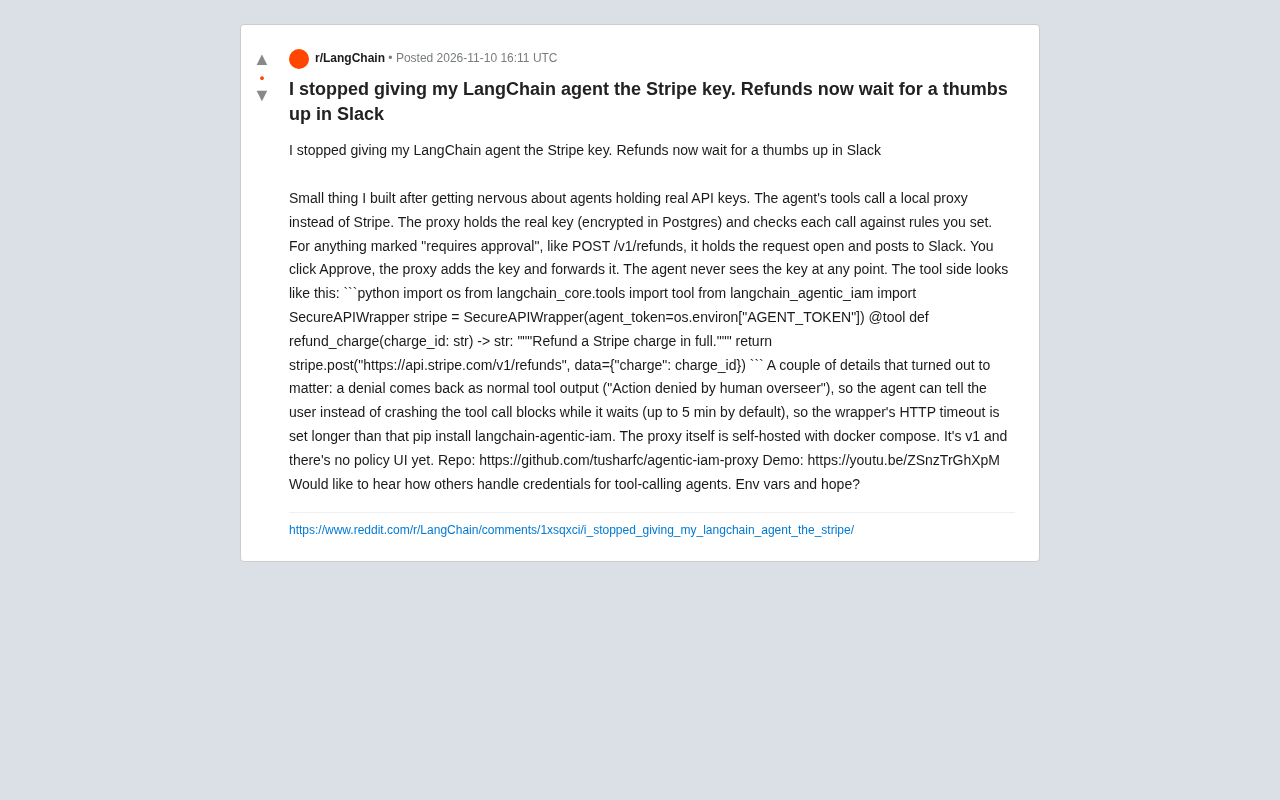
LangChain Agents No Longer Hold Stripe Keys: Refunds Require Slack Approval
A developer shares a credential management approach for LangChain agents: agents don't hold Stripe keys, and sensitive operations like refunds are forwarded through a local proxy and only executed after human approval in Slack, with code examples and engineering details.

Does LangChain Really Make Agent Development Easier? A Developer Reflects on the Cost of Abstraction
A Reddit developer reflects on the abstraction cost of LangChain and LangGraph in multi-agent workflows: easy to start, but StateGraph, state management, debugging, and cost control add new complexity. The discussion covers debugging methods, whether to mix native Python + model SDKs, and production trade-offs.