Does LangChain Really Make Agent Development Easier? A Developer Reflects on the Cost of Abstraction
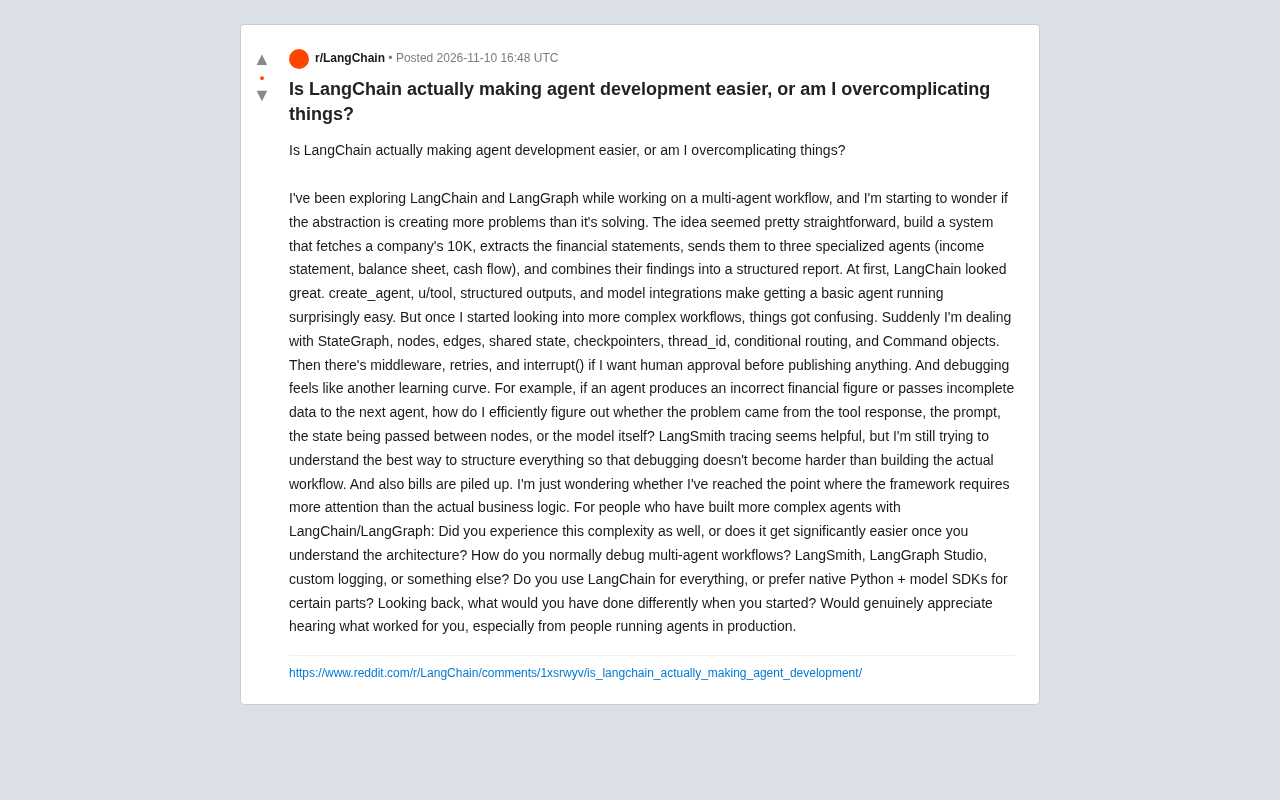
Developer criticizes LangChain/LangGraph: abstraction lowers the barrier to entry but shifts complexity onto debugging and cost.
A developer on Reddit shares their experience building multi-agent workflows with LangChain and LangGraph: using the example of scraping 10-K filings, having three specialized agents process the three financial statements separately, and merging the report, they note that create_agent, tool decorators, and structured output get a basic agent running quickly—but as workflows grow complex, StateGraph, checkpointer, thread_id, conditional routing, Command, and interrupt pile up, creating a steep learning curve. The sharpest problem is debugging: when an agent outputs wrong financial figures, it's hard to tell whether the issue lies in tool returns, prompts, inter-node state, or the model itself. LangSmith tracing helps, but observability must be part of the architecture. Token consumption and retry-related cost pressure also prompt them to consider switching some steps to native Python plus model SDKs.
A developer posted on Reddit about their confusion while building multi-agent workflows with LangChain and LangGraph: is the framework's abstraction layer actually simplifying development, or is it creating new complexity? They envisioned a task that seemed clear enough—scrape a company's 10-K filing, extract the financial statements, hand them to three specialized agents (income statement, balance sheet, cash flow statement) for separate processing, and finally merge everything into a structured report. At first, LangChain made it surprisingly easy to get a basic agent running, but the deeper they went into complex workflows, the more concepts surfaced, and debugging became more and more of a black art.
From "a few lines of code" to "a whole architecture"
The developer admits that LangChain's onboarding experience is quite friendly. create_agent, tool decorators, structured output, and model integration let you stand up a working basic agent in a very short time. The problems show up once the workflow gets complex: StateGraph, nodes, edges, shared state, checkpointer, thread_id, conditional routing, Command objects, plus middleware, retry mechanisms, and the interrupt() you need when you want to add human review before publishing. Each concept makes sense on its own, but piled together they form a steep learning curve.
Their feeling is concrete: the architectural details the framework requires developers to understand are almost as complex as the business logic itself.
StateGraph is the core abstraction of LangGraph, modeling a workflow as a directed graph: nodes are processing functions (such as calling a model or executing a tool), edges define execution order, and shared state is passed between nodes and updated by each one. The checkpointer persists a state snapshot after each node executes, and together with thread_id it enables session resumption, resuming from a checkpoint, and multi-user isolation. Conditional routing dynamically selects the next node based on current state, essentially an if/else within the graph; a Command object allows a node to explicitly specify a jump target while also returning a state update, combining "change state" and "choose path" into a single operation. interrupt() is used to pause execution at a specified node and resume after waiting for human input—it's the mechanism for implementing human-in-the-loop review, and its resumption depends on the state saved by the checkpointer. These concepts each solve problems of state management, persistence, dynamic control flow, and human intervention; when combined, they require developers to understand both the graph topology and the evolution of state at the same time, which makes the learning curve noticeably steeper.
Debugging multi-agent workflows: which layer is the problem actually in?
The sharpest question in the post is about debugging. Suppose an agent produces wrong financial figures, or passes incomplete data to the next node—how does the developer quickly pinpoint the source of the problem? Is it a problem with the tool's returned result, a poorly written prompt, a deviation in the state passed between nodes, or the model itself?
LangSmith's tracing is considered helpful, but they're still figuring out how to organize the whole system so that debugging isn't harder than building the workflow itself. This is also the wall many teams hit when moving from demo to production: observability isn't an add-on, it's part of the architecture.
LangSmith is the observability and evaluation platform in the LangChain ecosystem. It records an agent run as a tree-shaped trace: every model call, tool execution, retrieval, and state change is a span on the tree, with inputs, outputs, latency, and token usage attached. When debugging multi-agent systems, the value of a trace is that you can drill down layer by layer along the call chain to determine whether an error originates from some tool's return, a particular prompt rendering, state merging between nodes, or the model's own reasoning. However, a trace only shows "what happened," not "why it was designed this way," so if the workflow's state structure and the division of responsibilities between nodes are themselves unclear, the more complete the tracing information, the harder it can be to pinpoint the issue. In practice, you usually need to combine traces with structured logging and node-level assertions: validate the completeness and types of state fields at key nodes so errors surface before propagating downstream.
Cost anxiety and the alternative path of "native Python + model SDK"
Beyond complexity, mounting bills are another real pressure they mention. Multiple agents, multiple calls, tracing, and retries all amplify token consumption. They raise a question many developers are weighing: is every part worth using LangChain, or is it more cost-effective and transparent to use native Python plus the model vendor's SDK for some steps?
They end by throwing out several questions to people with production experience: Is this complexity an unavoidable stage, or does it get significantly simpler once you understand the architecture? How are multi-agent workflows usually debugged—LangSmith, LangGraph Studio, custom logging, or some other combination? Looking back, what would you do differently at the start?
The post doesn't give a standard answer, but it accurately captures a widespread tension: while abstraction layers lower the barrier to entry, they can also shift complexity onto debugging, state management, and cost control. For teams preparing to adopt LangChain/LangGraph, figuring out how much "cognitive tax" you're willing to pay for abstraction upfront may be more important than rushing to pick a framework.
Background
10-K filings are annual reports that U.S. public companies file with the SEC, containing audited financial statements (income statement, balance sheet, cash flow statement), management discussion and analysis, risk factors, and more. They typically run hundreds of pages, are table-heavy, and have inconsistent formatting, so "scrape—parse—extract structured financial data" is itself a standalone engineering pipeline involving HTML/PDF parsing, table recognition, and field alignment. Splitting this pipeline across multiple specialized agents for parallel processing and then merging is a common multi-agent design, but it also means the input quality of each agent directly determines the credibility of the final report; architecturally, you usually need to define a unified schema for extraction results and perform consistency validation before merging (e.g., assets = liabilities + equity), otherwise errors from a single agent get amplified during aggregation and become hard to trace.
One-line Summary
A developer vents about LangChain/LangGraph: abstraction lowers the barrier to entry but shifts complexity onto debugging and cost.
Paragraph Summary
A developer on Reddit shares their experience building multi-agent workflows with LangChain and LangGraph: using the example of scraping 10-K filings, having three specialized agents process the three financial statements separately, and merging the report, they note that during onboarding create_agent, tool decorators, and structured output get a basic agent running quickly—but as workflows grow complex, concepts like StateGraph, checkpointer, thread_id, conditional routing, Command, and interrupt pile up, creating a steep learning curve. The sharpest problem is debugging: when an agent outputs wrong financial figures, it's hard to tell whether the issue lies in tool returns, prompts, inter-node state, or the model itself. LangSmith tracing helps, but observability must be part of the architecture. Token consumption and retry-related cost pressure also prompt them to consider switching some steps to native Python plus model SDKs.
Related articles
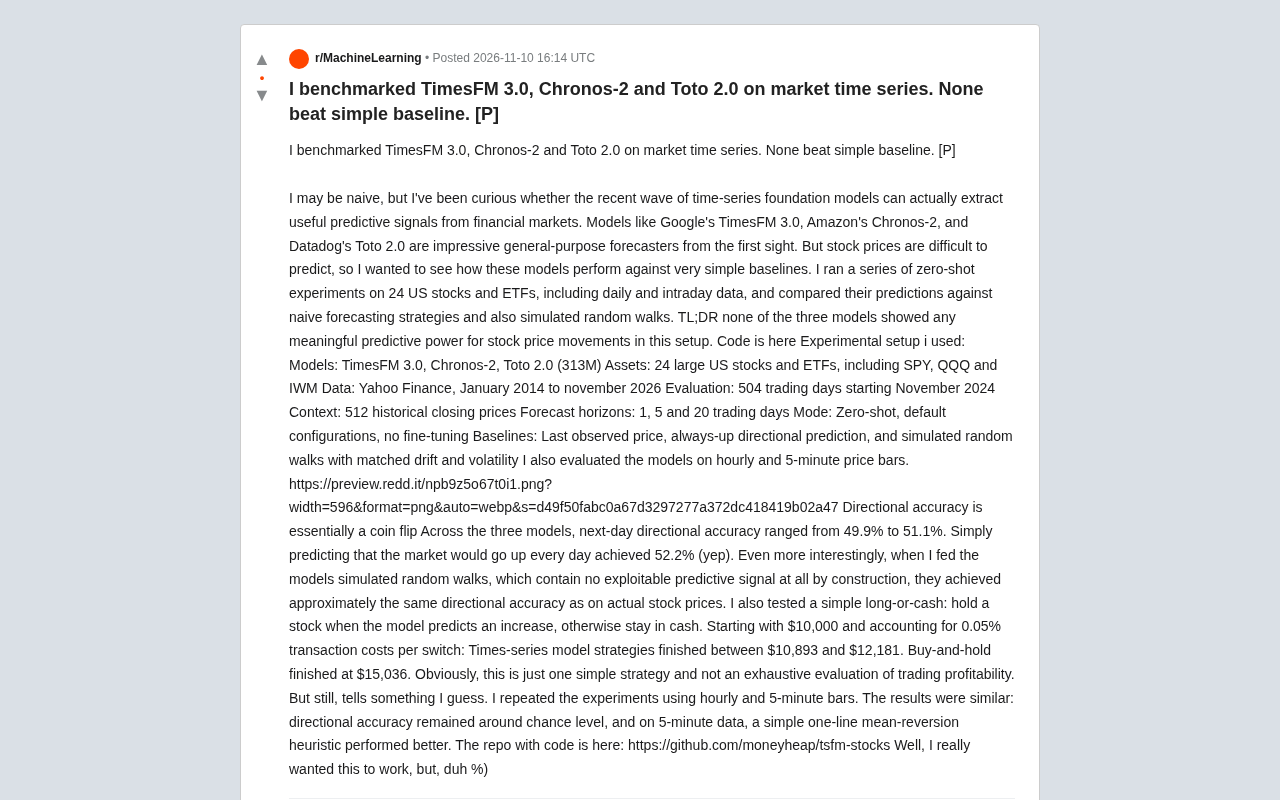
Putting TimesFM 3.0, Chronos-2, and Toto 2.0 to the Test: Time-Series LLMs Can't Beat Simple Baselines
A developer's zero-shot benchmark of TimesFM 3.0, Chronos-2 and Toto 2.0 on 24 U.S. stocks and ETFs: directional accuracy of just 49.9%-51.1%, and simulated trading underperformed buy-and-hold. Time-series foundation models show no edge over simple baselines on financial data.
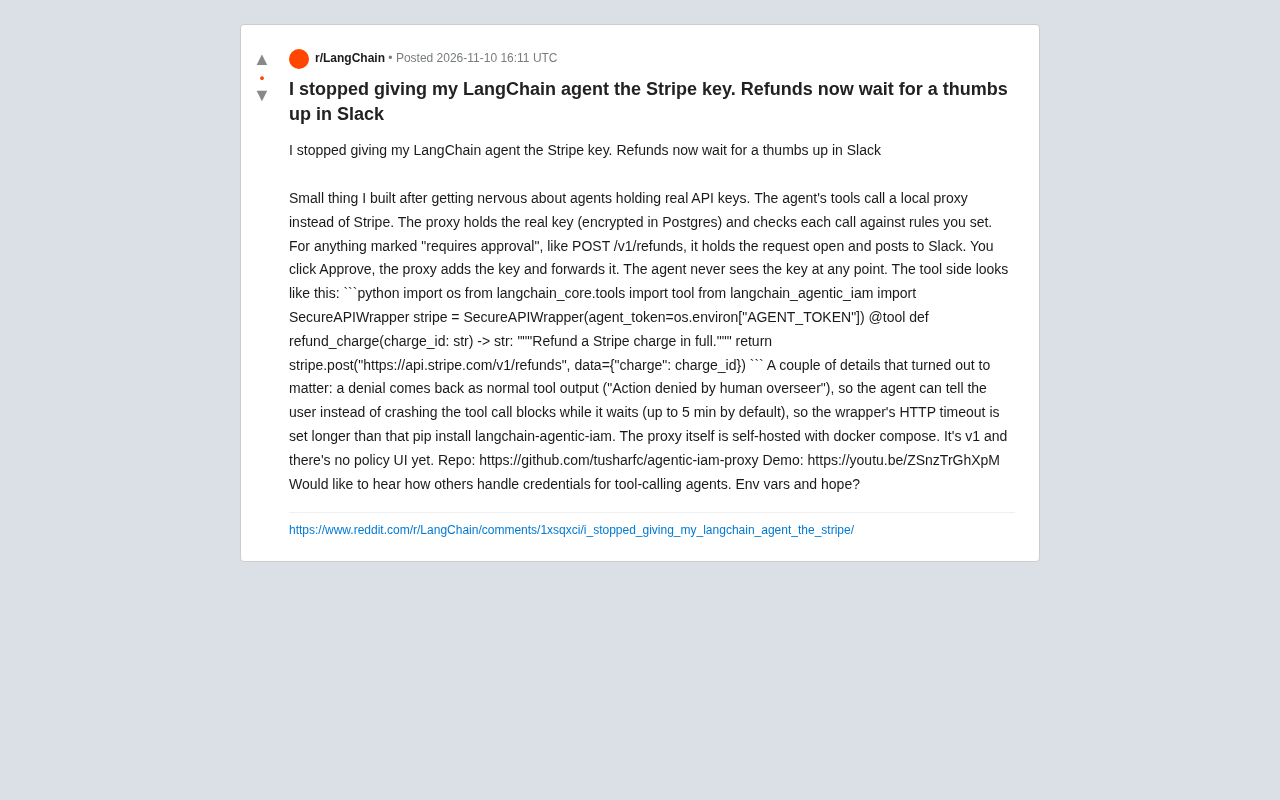
LangChain Agents No Longer Hold Stripe Keys: Refunds Require Slack Approval
A developer shares a credential management approach for LangChain agents: agents don't hold Stripe keys, and sensitive operations like refunds are forwarded through a local proxy and only executed after human approval in Slack, with code examples and engineering details.
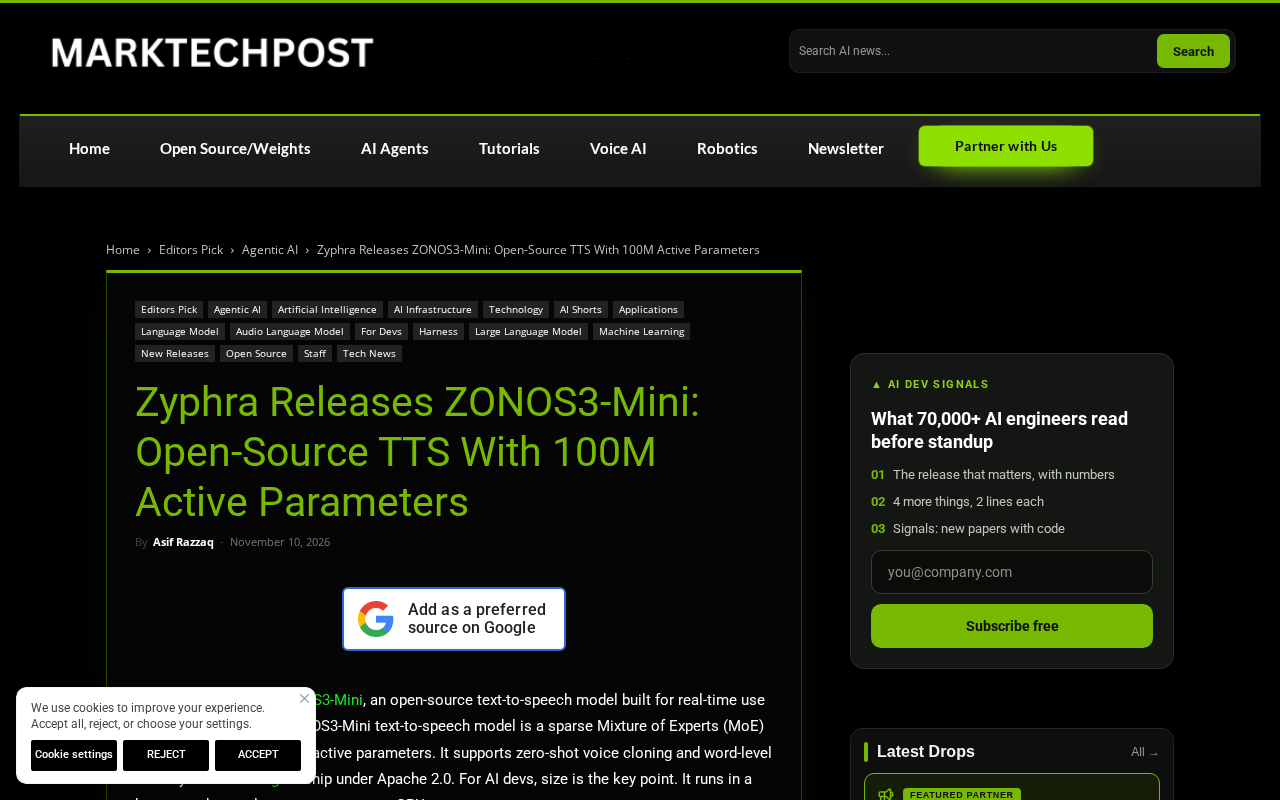
Zyphra Open-Sources ZONOS3-Mini: A 100M Active Parameter Speech Synthesis Model
Zyphra open-sources the ZONOS3-Mini TTS model: 800M total / 100M active sparse architecture, voice cloning, word-level control, real-time browser execution, Apache 2.0.