AI Subscription Methods Compared: Third-Party Top-Ups, Credit Cards, Overseas Apple ID, and Google Play — Pros and Cons

Four methods for subscribing to AI tools like ChatGPT compared — risks, costs, and which suits you best.
As ChatGPT Plus, Claude Pro, and other AI tools expand their paid tiers, overseas payment restrictions have become a major obstacle for users in China. This article compares four subscription methods: third-party self-service top-ups (simple but carry account security risks via token sharing), overseas credit cards (most official but high barriers), overseas Apple ID with gift cards (legitimate but complex), and Google Play in-app purchase (demanding environment and IP requirements). Official channels are always the safer, more compliant choice, while third-party options trade convenience for risk.
Why Subscribing to AI Memberships Has Become a Challenge
As ChatGPT Plus, Claude Pro, Gemini, Grok, and other leading AI tools roll out paid subscriptions, more and more users want to unlock more powerful models and higher usage limits. For users in China, however, the payment step is often the biggest hurdle — restricted access to overseas payment channels, high barriers to payment tools, and strict account risk controls leave many people stuck in the frustrating situation of wanting to subscribe but being unable to pay.
This article walks through the most common methods for subscribing to AI memberships, objectively analyzing the pros, cons, and potential risks of each, so you can make an informed decision based on your own situation. A word of caution: any non-official top-up method carries account security and compliance risks, and users should evaluate these carefully.
A Comparison of Four Main Subscription Methods
Method 1: Third-Party Self-Service Top-Up
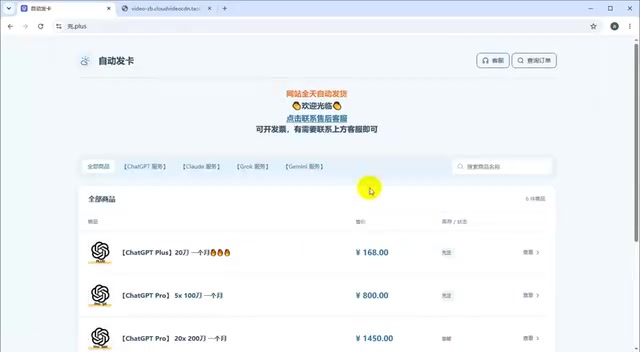
This approach uses third-party platforms that offer card key redemption services. Users purchase a card key and complete the top-up themselves on the platform. Unlike the traditional "top-up on your behalf" model — where you hand over your username and password to a stranger — the self-service model works by obtaining the account's token (a login credential code) to complete the subscription, meaning your password is never directly shared with a third party.
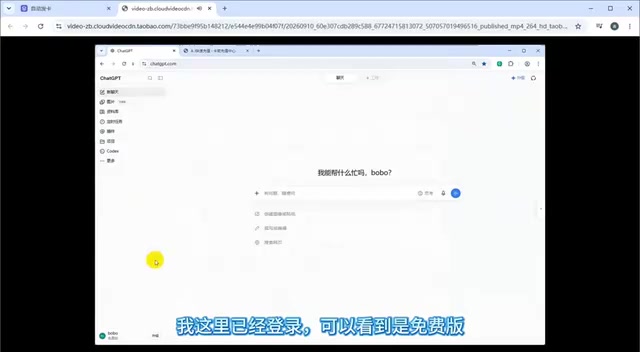
The typical workflow goes roughly like this: log into your target account on the AI platform's official website → obtain a token on the top-up platform → copy and paste the token into the platform → confirm your account details and submit → wait for completion, then refresh the official site to see your membership status.
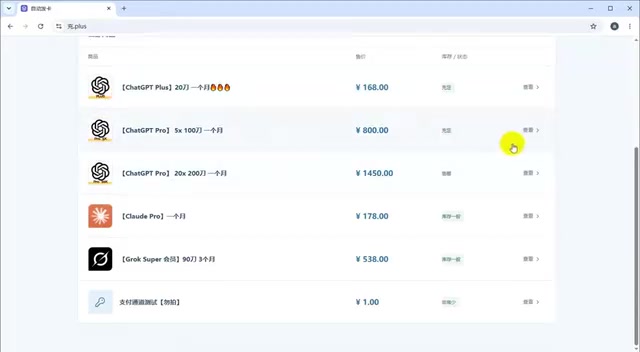
The barrier to entry is relatively low with this method, but it's critical to note: obtaining a token essentially means providing access credentials to your account. A third-party platform could theoretically use it to access your account. Exercise extreme caution about privacy and account security risks, and never use this method on platforms you don't trust.
The Technical Mechanics Behind Tokens (Login Credentials)
A token is a common authentication mechanism in modern web services — essentially an encrypted string issued by a server to a successfully logged-in user. After login, the browser saves this token in cookies or local storage, and every subsequent request carries it to prove identity, so the server doesn't need the user to re-enter their password. ChatGPT, for example, uses __Secure-next-auth.session-token — a classic session token that typically remains valid for days to weeks.
Providing your token to a third party is equivalent to handing over full access to your account for that period. The other party can read your chat history, modify account settings, and even retain the credential after the subscription is complete. Unlike giving away your password, a token leak often comes with no obvious warning, making it hard to detect. After the process is complete, it's strongly recommended that you immediately go to the official website and log out of all device sessions to invalidate the old token.
Method 2: Overseas Credit Card
Paying directly with a credit card is the most "official" approach, but standard domestic Chinese credit cards generally cannot process overseas payments, which usually means obtaining a foreign bank card. The barriers here are significant: the application process is cumbersome and time-consuming, some foreign cards frequently trigger regional restrictions and risk controls — resulting in failed or rejected payments — and there may be hidden costs such as transaction fees and annual fees.
For users who already have reliable access to an overseas card, this is the most hassle-free and secure method. For most ordinary users in China, however, the barrier is quite high.
Method 3: Overseas Apple ID + Gift Cards
Apple ecosystem users can switch to a US Apple ID, add balance using the corresponding regional gift cards, and then complete the subscription via in-app purchase. The advantage is that it goes through Apple's official in-app purchase channel, making it relatively legitimate.
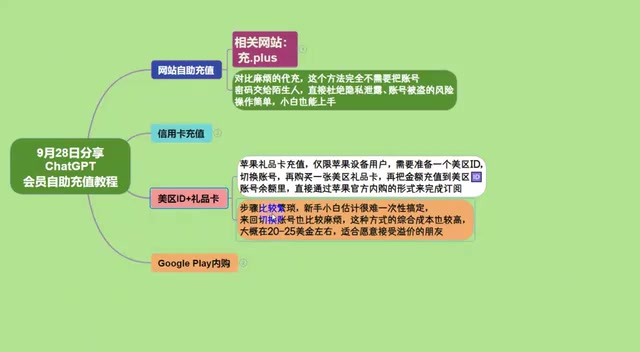
The downsides are equally apparent: registering an overseas ID, purchasing gift cards, and switching accounts back and forth involves many steps that beginners will struggle to get right on the first try, and the overall cost is not low either. This is best suited for users who are willing to put in the effort and already use Apple devices.
Method 4: Google Play In-App Purchase
The Android equivalent is subscribing via Google Play in-app purchase. This method has extremely demanding environmental requirements: you need an Android device with a complete GMS framework, a foreign IP address throughout the entire process, and a new Google account with an overseas payment method linked.
Environmental verification is the biggest bottleneck — if your IP is identified as a data center or proxy rather than a genuine residential IP, your account may be locked immediately. Users relying on proxies frequently get stuck at the environmental verification step and are unable to pass. This method is better suited for enthusiasts with experience configuring Android environments and network setups.
Why GMS and Residential IPs Matter
GMS (Google Mobile Services) is a core service framework that Google provides for Android devices, encompassing the Google Play Store, account sync, payment verification, and more. Most Android phones sold in China have GMS removed from the factory, so it either needs to be installed separately or you need to use an original international-edition device.
A residential IP is a network address assigned by real home broadband, and compared to data center IPs (server IPs), residential IPs are rated as far more trustworthy by the risk control systems of major platforms. When Google verifies a payment environment, it checks the IP's origin. Data center or proxy IPs are frequently associated with bulk fraud and promotional abuse, making them highly likely to trigger risk controls. Residential proxy services can provide genuine home IPs, but they are expensive and their use still occupies a compliance gray area — proceed with caution.
An Overall Assessment of Each Method
Comparing across ease of use and cost:
- Credit card: The most official and secure option, but high barriers to getting a card and frequent risk controls — best for those who already have overseas card access
- Overseas Apple ID: Goes through official in-app purchase channels, relatively legitimate, but the process is cumbersome and costs are higher
- Google Play in-app purchase: More accessible for Android users, but strict environment requirements make account lockouts common
- Third-party self-service top-up: Simplest to operate and requires no overseas payment tools, but depends entirely on the trustworthiness of the third-party platform, with account security risks
It's worth emphasizing that official payment channels (credit cards, official in-app purchases) should always be the first choice for compliance and account security. Third-party top-ups may be convenient, but they inherently operate at the edge of platform rules and may expose users to account bans, service interruptions, and no recourse for refunds.
A Rational Approach to AI Membership Subscriptions
Tools like ChatGPT, Claude, Gemini, and Grok genuinely deliver meaningful productivity gains in research, programming, content creation, and more, and the value of paid memberships is becoming increasingly clear. But when choosing a top-up method, users should put account security and data privacy first.
For users who rely heavily on AI tools over the long term, official payment channels are the recommended path — even if setting up a card takes some effort upfront, it pays off in long-term stability and peace of mind. For occasional users with limited budgets who do choose third-party channels, make sure to select platforms with a verifiable reputation and clear refund policies, and take steps to protect your account (such as using a unique password and regularly checking login activity).
There's no such thing as a free lunch. Any "ultra-cheap all-in-one bundle" likely has hidden costs or risks lurking behind it. Staying rational is the foundation for making good use of AI tools.
Related articles

Workbuddy for Absolute Beginners: How a Desktop AI Agent Fits Into Real Workflows
A beginner's guide to the Workbuddy desktop AI agent: installation, claiming credits, file management, and building automated workflows—compared with CodeX for fit and cost, helping professionals shift from AI question-askers to AI managers.

OpenAI's New Agent Stack: Computer Use, Decisions API, and Ultra-Fast Workflows
OpenAI Dev Day unveiled a new agent stack: Computer Use outperforms humans, Decisions API delivers ultra-low-latency classification via Luna, Agents API opens the same Computer Use capabilities, and GPT-6.1 Sol costs only one-seventh of Astra. Core updates, benchmark data, and developer insights.

Liang Wenfeng Open-Sources DeepInfo Inference Framework, Takes On U.S. Ban
DeepSeek open-sources its DeepInfo inference framework after its models, featuring GPU/CPU cross-pipelining, small-model prediction with large-model verification, and full Huawei Ascend and NVIDIA chip support—facing the U.S. federal ban head-on. This article analyzes its significance for AI deployment and open-source strategy.