AI Team Live Stream Recap: Model Quota Strategies and AI Coding in Practice

Anthropic team's casual live stream discussing quota strategies, AI coding in practice, and breaking industry events.
This atypical AI team live stream unfolded as a casual AMA, delving into the reset logic and usage strategies of AI model quotas, showcasing multiplayer online games and motion game collections built with the Fable model, demonstrating the powerful capabilities of AI coding tools. Breaking news about the NVIDIA CEO emerged during the stream, and the team discussed the impact of executive personal behavior on company value, conducted a website "slop audit," and analyzed the aesthetic features of AI-generated content. The entire stream showed how an AI team interacts with its own tools and offered a real cross-section of a rapidly evolving industry.
An Atypical AI Team Live Stream
This wasn't a model launch stream—it was a casual AMA. The team from Anthropic went live on YouTube to chat with viewers and show off things they'd built with their own models. The opening was full of improvisation—someone's phone call muted their mic, and someone joked about using the model to lip-read and transcribe the conversation that had just happened. The stream wove together product demos, quota strategy discussions, and reactions to breaking industry news, offering a glimpse into the daily work life of an AI team.

Model Quotas and Reset Strategies: A Game of "Burning Tokens"
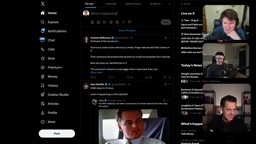
One of the most in-depth topics discussed during the stream was how to manage AI model usage quotas. Team member Matt mentioned that his cloud subscription usage was approaching its limit, and the natural reset wouldn't come until Friday. This sparked a discussion about whether they should proactively "burn" quota to trigger a reset.
According to team member Alex, quota reset logic varies significantly across platforms. OpenAI's banked reset is personalized—after using it, you wait a week for the next natural reset; while Anthropic's quota reset is tied to registration time, with fixed natural reset times. Additionally, banked resets typically have expiration dates—for example, this year's resets expire in March.
What's more complicated is model-level quota allocation. Take the Fable model, for instance—it can consume up to half of the weekly usage, but using Fable also counts toward total usage. This means that even with a Fable-specific reset, it won't reset the entire weekly usage. The team admitted these rules "require reading a lot of fine print to understand," and even joked that they "pretend to get it but don't fully."
On whether to stockpile quotas, two viewpoints emerged: one side argued that quotas might become more generous over time, so stockpiling could be beneficial; the other pointed out that resets have expiration dates and models iterate rapidly—"by March it might be a different world"—so it's better to use them sooner.
Banked reset is a quota management mechanism offered by some AI platforms (such as OpenAI). Users can earn extra "reset" opportunities by participating in activities or meeting specific conditions. These reset opportunities are "banked" and can be manually used when needed to immediately restore usage quota. Unlike natural resets (which automatically restore on a fixed cycle), banked resets are personalized resources that typically require waiting a week before earning another. Additionally, banked resets often have expiration dates—for example, they must be used by a certain date or they expire. This design provides flexibility while also encouraging active platform usage.
AI Coding in Practice: From a Fall Guys Clone to Coaster-Grade Work
The highlight of the stream was showcasing games built with the Fable model. The team made a Fall Guys clone supporting multiplayer online play, accommodating multiple players simultaneously, and featuring multiple levels—quite rare among AI-generated games of this kind. Team member Brian commented that effects that might take five or six iterations with other models could be achieved in one shot with Fable, which even came up with ideas the developers themselves hadn't thought of.
They invited viewers to join the game live to experience multiplayer battles firsthand. The gameplay also exposed some typical "vibe coding" issues: a camera angle permanently shifted downward, abnormal character controls, and so on. The team joked around while playing, keeping the atmosphere light.
Another demo was a three-player "Sports Club"—a collection of motion games similar to Wii Sports. Brian and Alex had already played it for a long time the day before, rating it "very fun." These cases demonstrate that AI coding tools can already support complete, multi-level game products—not just simple demos.
"Vibe coding" is an informal term in the AI-assisted programming space, referring to developers describing intent in natural language and letting AI generate code without writing it line by line. This approach emphasizes rapid iteration and creative implementation, but may overlook code robustness and details, leading to "typical issues" such as abnormal camera angles and control logic errors. It reflects that while AI coding tools boost efficiency, developers still need to supervise and debug.
Breaking Industry News: NVIDIA CEO Rumors and Market Turmoil
Halfway through the stream, team members received breaking news: NVIDIA CEO Jensen Huang was reportedly involved in a second office romance, allegedly with an executive who reported to him, and the board was preparing to remove him. Following the news, NVIDIA's stock price dropped sharply in after-hours trading—according to the stream, it had already fallen about a quarter over the previous month.
The team's reactions were mixed. Some expressed disappointment: "You look up to someone, and then this happens." Some analyzed from an investment perspective, suggesting it could be a sell signal. Others discussed whether this would become a permanent mark on NVIDIA. The discussion was interspersed with jokes about "once a cheater, always a cheater," and reflections on whether Huang's personal charisma could be separated from the company's value.
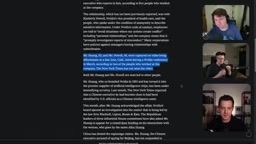
Interestingly, there was also skepticism about the information source during the stream—when someone cited "a message in the chat room" as a source, the team immediately pointed out that this wasn't rigorous. This indirectly reflects the AI community's sensitivity to information accuracy.
Website "Slop Audit": Aesthetic Judgment of AI-Generated Content
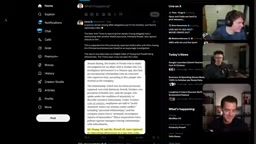
One segment of the stream involved a "slop audit" of websites submitted by viewers—judging whether a website looks AI-generated at first glance. The one audited was an AI product website targeting skilled trades contractors.
The team's evaluation criteria were specific: eyebrow text, a style of short sentences each ending with a period, overly symmetrical layouts—all typical features of "AI flavor." However, they also acknowledged that for the target customers without design backgrounds, the website was "perfectly adequate" and could receive a decent overall score.
The discussion also touched on an interesting detail: whether websites should allow users to select text. Some argued that text selection is a native internet interaction and shouldn't be prohibited; others felt that disabling selection could improve the experience. This kind of detail discussion reflects the trade-offs AI-generated content faces when landing in real products.
"Slop" in the AI community often refers to low-quality, lackluster AI-generated content, akin to "assembly-line output." Its typical features include: eyebrow text—small labels above headings, often overused by AI; a style of short sentences each ending with a period, appearing mechanical and lacking variation; and overly symmetrical layouts lacking the natural asymmetry of human design. These features stem from AI models mimicking common patterns in training data, resulting in content that is "correct" but soulless.
Social Observations on Voice Assistants
There was a lighthearted discussion about gender selection for voice AI. A team member mentioned that when their child used a voice assistant, the child would ask thousands of questions in a row. Regarding choosing a male or female voice, the discussion raised an interesting phenomenon: most users default to female voices, and some female AI voices are designed to be "overly flirtatious." Someone suggested that if a partner minds, just switch to a male voice.
This seemingly off-topic chat touched on a real issue in AI product design: how the anthropomorphic design of voice assistants affects user behavior and social acceptance.
Editorial View
The value of this stream wasn't in launching any new product, but in showing how an AI team interacts with its own tools. The complexity of quota strategies, the completeness of AI-generated games, immediate reactions to breaking industry events, and discussions about aesthetic standards for AI-generated content—these fragments piece together a cross-section of a rapidly evolving industry. For developers, the most practical takeaway is perhaps: quota rules require careful study, and AI coding tools can already handle more complete projects than you might imagine.
One-line Summary
Anthropic team's casual live stream discussing quota strategies, AI coding in practice, and breaking industry events.
Paragraph Summary
This atypical AI team live stream unfolded as a casual AMA, delving into the reset logic and usage strategies of AI model quotas, showcasing multiplayer online games and motion game collections built with the Fable model, demonstrating the powerful capabilities of AI coding tools. Breaking news about the NVIDIA CEO emerged during the stream, and the team discussed the impact of executive personal behavior on company value, conducted a website "slop audit," and analyzed the aesthetic features of AI-generated content. The entire stream showed how an AI team interacts with its own tools and offered a real cross-section of a rapidly evolving industry.
Related articles
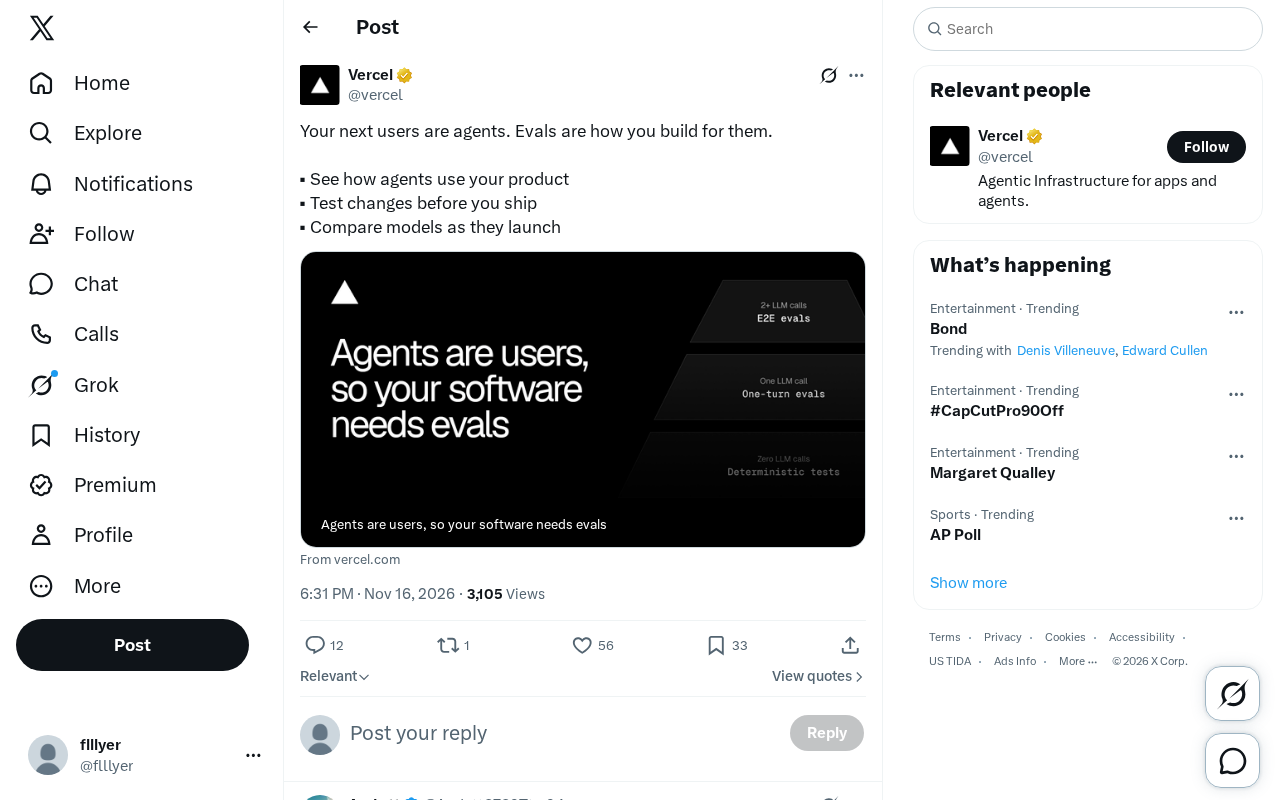
The AI Agent Era: Building a New Product Paradigm with Evals
AI Agents are becoming the next users of products. This article explains how to use Evals to observe Agent usage behavior, test changes before launch, and compare new model performance, helping product teams establish a development methodology for the Agent era.
Microsoft Global Email Outage Leads to Chlorine Leak at German Hotel, Injuring 15
A Microsoft 365 and Outlook global outage prevented a chlorine safety alert from reaching a German Phantasialand hotel, injuring 15 guests and exposing the fragility of cloud-dependent safety systems.
iPhone Duo to Support Face Unlock Using Only the Front Camera
Apple is developing front-camera-only face unlock for the iPhone Duo, now testing in the iOS 27.3 beta. We analyze the technical approach, user experience, and security trade-offs.