AI Test Automation Learning Roadmap: A Complete Guide from Beginner to Expert

A comprehensive guide to mastering AI test automation from fundamentals to advanced practice
This guide provides a systematic learning path for AI test automation, covering three key stages: traditional automation foundations, AI-specific testing methodologies (data quality, model performance, adversarial testing, fairness), and practical toolchain mastery including MLOps platforms and LLM-assisted testing.
AI Test Automation Learning Roadmap: A Complete Guide from Beginner to Expert
As artificial intelligence technology penetrates deeply across industries, AI test automation is becoming one of the most promising development directions in software testing. Based on frontline practical experience, this article outlines a complete learning path from beginner to expert, helping testing professionals efficiently master the core skills of AI test automation.
Defining AI Test Automation and Its Scope
AI test automation refers to a methodological framework that uses artificial intelligence technologies to enhance and optimize software testing processes. It encompasses two core dimensions: first, testing AI systems themselves (Testing AI), which requires validating the quality of machine learning models, neural networks, and other AI components; second, using AI technologies to improve the testing process of traditional software (AI for Testing), such as automatically generating test cases through machine learning algorithms, predicting defect-prone areas, and intelligently selecting regression tests. Compared to traditional test automation, AI test automation is unique in that it must handle model uncertainty, data dependencies, and continuous learning characteristics, requiring testers to possess interdisciplinary knowledge structures.
Career Opportunities in AI Test Automation
With AI technology applications deepening across major industries like healthcare and finance, enterprise demand for AI-related talent continues to grow strongly. AI test automation, as a critical component ensuring AI system quality, is seeing a clear upward trend in related position salaries.
For traditional software testing professionals, mastering AI test automation capabilities means a significant boost in career competitiveness. Core value is reflected in two aspects:
- Understanding AI system-specific testing strategies: Including model testing, data testing, and other aspects not involved in traditional testing
- Leveraging AI tools to improve testing efficiency: Using large language models to achieve automatic test case generation, intelligent defect analysis, and more

Complete AI Test Automation Learning Roadmap
Stage 1: Foundation Knowledge Building (2-3 weeks)
First, you need to solidify traditional test automation foundations, including testing frameworks, programming languages (primarily Python), and CI/CD processes.
Selenium and Pytest Framework Analysis: Selenium is the de facto standard framework for web application test automation, controlling browsers to execute test operations through the WebDriver protocol, supporting mainstream browsers like Chrome and Firefox. It provides a complete API system including element location, page interaction, and wait mechanisms. Pytest is the most popular testing framework in the Python ecosystem, known for its concise syntax, powerful fixture mechanism, and rich plugin ecosystem. In AI testing scenarios, Pytest is commonly used for writing model validation scripts, data pipeline tests, etc. Its parameterized testing functionality is particularly suitable for batch validation of model performance under different inputs. Mastering these two frameworks is the foundational threshold for entering the test automation field.
CI/CD Specifics in AI Testing: Continuous Integration/Continuous Delivery (CI/CD) faces unique challenges in AI projects. Traditional software CI/CD primarily focuses on code compilation, unit testing, and deployment, while AI project CI/CD also needs to integrate model training, validation dataset preparation, model performance benchmarking, and other aspects. A typical AI-CD workflow includes: code commit triggers data validation → automatic model training → performance metric comparison → A/B test deployment → online monitoring feedback. Since model training is time-consuming and results have randomness, a layered testing strategy is needed: fast code-level tests run on every commit, while complete model training tests execute nightly or periodically. MLOps platforms like MLflow and Kubeflow are designed precisely to solve these problems.
Based on this, supplement AI foundational knowledge by understanding basic machine learning concepts, common algorithm types, model evaluation metrics, etc. The focus of this stage is establishing a knowledge framework without needing to deeply master every detail.
Stage 2: AI Testing-Specific Skills
Entering the core learning stage, you need to master special methodologies for AI system testing, which differ significantly from traditional functional testing:
- Data quality testing: Validating training data completeness, accuracy, and representativeness
- Model performance testing: Evaluating core metrics like accuracy, recall, and F1-score
- Adversarial testing: Constructing boundary cases to test model robustness
- Fairness testing: Detecting whether models contain data bias
- Explainability validation: Ensuring model decision-making processes are traceable and auditable
Deep Dive into Model Evaluation Metrics: Accuracy, Recall, and F1-score form the classic trio for evaluating classification models. Accuracy measures the proportion of correct predictions among all predictions, but can be misleading with imbalanced data—for example, when 99% of samples are negative, a model predicting all negatives can still achieve 99% accuracy. Recall focuses on "how many of the targets that should be found were actually found," which is crucial for scenarios like medical diagnosis where false negatives cannot be missed. F1-score is the harmonic mean of Precision and Recall, balancing both weights. In AI testing, appropriate metrics must be selected based on business scenarios: anti-fraud systems emphasize precision to reduce false positives, while disease screening systems prioritize recall. Additionally, multi-dimensional metrics like AUC-ROC curves and confusion matrices should be monitored, as single metrics cannot fully reflect model quality.
Adversarial Testing Methodology: Adversarial testing originates from the machine learning security field, exposing model vulnerabilities by constructing carefully designed inputs. The most classic example is adversarial sample attacks: adding noise imperceptible to human eyes on images that cause models to misclassify. In practical testing, adversarial methods are not only used for security assessment but are effective means of discovering boundary cases. For example, when testing autonomous driving systems, extreme weather and abnormal road conditions can be constructed as corner cases; when testing NLP models, text inputs with ambiguity, dialects, or typos can be designed. Systematic adversarial testing requires establishing threat models, clarifying attacker capability boundaries and attack objectives, then using algorithms like FGSM and PGD to generate adversarial samples, or using methods like Metamorphic Testing to construct semantically equivalent but formally different test inputs.
Detecting and Mitigating Data Bias: AI system fairness issues stem from implicit social biases in training data. For example, recruiting AI scores female resumes lower because of low female engineer proportions in historical data, or loan approval models make discriminatory decisions due to race-related features. Detecting bias requires multi-dimensional analysis: statistical parity tests passage rate differences across groups, equalized odds focuses on whether true positive rates are consistent, and individual fairness requires similar individuals receive similar outcomes. Tools like IBM AI Fairness 360 and Google What-If Tool provide bias measurement and visualization capabilities. Mitigation strategies include data-level resampling, algorithm-level fairness constraints, and post-processing threshold adjustments. Testers need to collaborate with product and legal teams to define acceptable fairness standards and incorporate them into test acceptance criteria.
These testing methods require understanding their application value in actual project scenarios—theory alone is difficult to truly master.
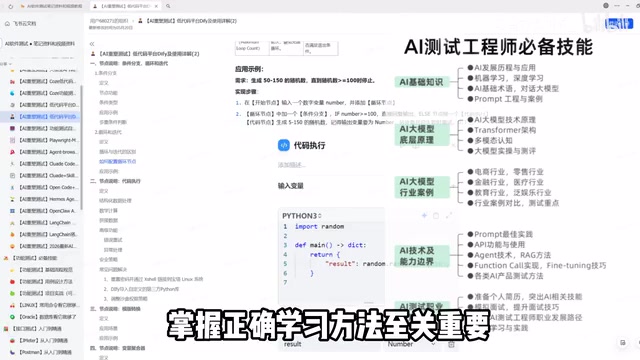
Stage 3: Toolchain and Practical Capabilities
MLOps Platforms and Tool Ecosystem: MLOps (Machine Learning Operations) is the practice methodology of applying DevOps principles to machine learning systems. Core toolchains include: experiment tracking platforms (MLflow, Weights & Biases) that record hyperparameters and metrics for each training run; feature stores (Feast, Tecton) that manage feature engineering processes ensuring training-inference consistency; model registries that uniformly manage model versions and metadata; monitoring systems (Evidently AI, Fiddler) that detect data drift and model degradation in real-time. Open-source solutions like Kubeflow provide end-to-end ML pipeline orchestration capabilities, while cloud vendors' SageMaker and Vertex AI offer managed services. Testers need to understand the positioning and integration methods of these tools to effectively embed testing into MLOps workflows.
At the same time, master how to leverage large models to assist daily testing work:
- Use ChatGPT and similar tools to batch generate test cases
- Leverage AI to analyze test logs and quickly locate root causes
- Automate generation of test reports and technical documentation
- Intelligently recommend test priorities based on historical data
Application Paradigms of Large Language Models in Testing: Large language models (LLMs) like ChatGPT and Claude are reshaping testing workflows. Typical applications include: 1) Test case generation—input requirement documents and LLMs automatically generate test case sets covering normal flows, boundary conditions, and exception scenarios; 2) Defect root cause analysis—input error logs and stack traces to quickly locate problem modules and possible causes; 3) Test data synthesis—generate test data conforming to constraints based on data schemas, particularly suitable for sensitive data masking scenarios; 4) Documentation automation—automatically generate test reports and API documentation from code comments and test cases. However, LLM limitations must be noted: generated content may contain hallucinations (untrue information), code suggestions may have security vulnerabilities, so human review remains indispensable. The key to effective use is carefully designing prompts, providing sufficient context, and establishing validation mechanisms.
For practical experience, start with open-source AI projects and gradually transition to actual business scenarios. Relatively mature areas like image classification and text analysis are good starting points for practice.
Learning Methods and Common Pitfalls
Beware of Two Major Learning Traps
Many beginners fall into two pitfalls when learning AI test automation:
- Theory-heavy: Spending excessive time delving into machine learning algorithm details without being able to apply knowledge to testing practice
- Tool accumulation: Blindly chasing various new tools while lacking systematic thinking and methodology

The correct learning strategy is: Learn theory as needed, quickly enter practice, and deepen theoretical understanding through practice. A project-driven learning approach is recommended, learning relevant knowledge points as needed around a complete AI testing project.
Four Advantages of Systematic Learning
Although fragmented learning resources are abundant online, the value of systematic courses cannot be ignored:
- Complete knowledge system: Avoid comprehension biases caused by knowledge gaps
- Experience transfer: Avoid detours already validated by predecessors
- Continuous Q&A: Promptly resolve bottleneck issues during learning
- Project practice: Complete real projects under instructor guidance, accumulating demonstrable results
For professionals needing rapid transformation, systematic learning can compress what might take six months of exploration into 1-2 months.
Career Development Path for AI Test Engineers
AI test automation is not about completely replacing traditional testing, but expanding and upgrading upon existing capabilities. The recommended gradual entry path:
- Entry level: Use AI tools to improve efficiency of existing testing work, reducing repetitive labor
- Intermediate level: Participate in testing AI functional modules, accumulating AI domain testing experience
- Advanced level: Independently design AI system testing strategies, building complete AI testing frameworks
Current industry demand for composite talent who "understand both testing and AI" is strong. These positions not only offer competitive salaries but also have significantly higher career ceilings. For professionals with 3-5 years of testing experience, transitioning toward AI test automation is an ideal career breakthrough.
Conclusion
AI test automation is an inevitable development trend in software testing. Mastering this skill requires organically combining traditional testing foundations, AI foundational knowledge, and practical experience. Through systematic learning and project-driven practice, test engineers can achieve capability leaps in a relatively short time and seize career opportunities brought by this technological transformation.
Whether you are a new tester just entering the field or a senior test engineer hoping to break through bottlenecks, it's not too late to start learning AI test automation now—the key is choosing the right direction, finding the right method, and taking action quickly.
Related articles

Meta Muse Spark 1.3 In-Depth Review: The Truth Behind Top-Tier Coding Capability and Ultra-Low Pricing
In-depth analysis of Meta Muse Spark 1.3's coding capabilities, million-token context, ultra-low pricing strategy, and data exchange logic. Covers performance benchmarks, technical architecture, use case recommendations, and privacy risk warnings to help developers rationally evaluate this AI programming model.
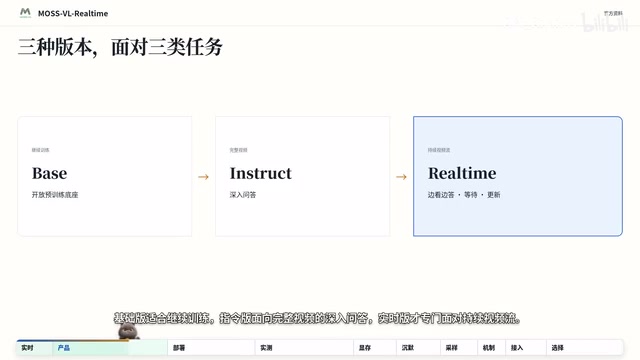
MOSS-VL-Realtime Hands-On: 11B-Parameter Real-Time Video Understanding on Consumer GPUs
MOSS Intelligence's MOSS-VL-Realtime model hands-on: 11B open-weight parameters supporting watch-while-answering, active silence, and dynamic updates. Successfully deployed locally on dual RTX 4070Ti Super with ~13.3GB memory usage. 256K context with 1fps sampling suits real-time scenarios like live monitoring and experimental observation.

New Paradigm in Protein Design: How Machine Learning Breaks Through Natural Sequence Limitations
Explore the paradigm shift in protein design from imitating nature to surpassing it. Learn how machine learning frameworks enhance artificial protein design success through non-natural sequence exploration, multi-objective optimization, and negative sample learning, driving innovation in synthetic biology and drug design.