AI Tool Selection Guide for Test Engineers: A Hybrid Approach to Avoid Three Common Pitfalls

A practical AI tool selection guide for QA engineers: hybrid strategies, tool tiers, and the shift to AI reviewer roles.
Pure AI testing solutions face three key pitfalls: output randomness, token costs, and slow execution. This guide recommends a hybrid approach — using AI for upstream tasks like test case generation while relying on stable custom frameworks for execution. It also provides tiered tool recommendations (Doubao, TRAE, Claude Code, DeepSeek) and highlights Skill encapsulation as an underrated cost-saver, while emphasizing the QA engineer's evolving role as an AI reviewer.
How AI Is Reshaping the Testing Industry
As AI-assisted development becomes mainstream, the pace of software delivery is being completely transformed. Projects that once shipped on weekly, bi-weekly, or monthly cycles can now — with AI in the mix — iterate daily. A small feature update can be turned around without breaking a sweat.
This shift puts enormous pressure on the testing phase. When developers are already using tools like Claude Code and TRAE to write code and fix bugs at superhuman speed, a single requirement might be handled within minutes of submission.
Background: The Generational Leap in AI Coding Tools
Claude Code is Anthropic's command-line AI programming assistant, capable of reading and writing files, executing commands, and calling APIs — closing the loop on end-to-end code development. TRAE (by ByteDance) is an AI IDE designed for Chinese developers, with built-in multi-model dispatch capabilities. The key breakthrough of these tools is the shift from "code completion" to "task execution" — developers simply describe their intent, and the AI plans the steps, generates code, and runs debugging autonomously, compressing what used to take hours into minutes. This paradigm shift is the fundamental reason testing cycles are being forced to accelerate.
Test engineers who stick to traditional manual testing methods simply can't keep up with this development pace — not even by working overnight.
The job market is also reflecting this change. Interviews for QA roles almost always probe candidates' familiarity with AI tools, even at companies still in the exploration phase. Some teams that once had six developers have kept only two after deploying AI — not because of restructuring, but because AI handles the baseline work while the remaining engineers focus on quality control and review.

Three Real Pain Points of Pure AI Solutions
The market is flooded with AI testing tools: MCP, Cline, Claude Code, TRAE, Doubao, OpenClaude (Crayfish), and more. But in real-world deployments, pure AI solutions consistently reveal three core problems.
Output Randomness: Inconsistent Test Results
Ask AI to optimize the same API today and again tomorrow, and you'll likely get two different implementations. Even generating a document can yield inconsistent formatting each time. For test execution — which demands stable, reproducible results — this is a critical flaw. It becomes genuinely difficult to trust whether any given result is actually reliable.
Token Costs: The Hidden Expense You Can't Ignore
Tokens are the basic unit of text processing for large language models — roughly 1–2 tokens per English word or Chinese character. All major model APIs charge by token usage, with input and output tokens typically priced separately. GPT-4o costs around $5 per million tokens, while China's DeepSeek-V3 is as low as ¥1 RMB per million — a dramatic difference.
In testing scenarios, token consumption primarily comes from long-form content in the context window: conversation history, API documentation, code files, and so on. Real-world data shows that a few hours of intensive use can burn through tens of millions of tokens, translating to a few yuan in direct costs. That sounds cheap per session, but during the script debugging and iterative optimization phase — if you're fully relying on LLMs without building up any reusable rules or templates — the cumulative cost adds up significantly. This is also why interviewers ask, "How many tokens do you consume per day?" — that number reveals how deeply and maturely a candidate is actually using AI tools.
Execution Speed: A Performance Gap That's Hard to Close
Running tests with tools like OpenClaude is noticeably slower than executing pure code. A traditional script can run dozens of API checks in seconds, while AI-driven approaches are slower by design — especially in UI automation scenarios. Poor implementation can even cause the process to halt midway.

The Hybrid Approach: AI as Assistant, Not Replacement
Given these pain points, the more pragmatic strategy is: use AI to assist the testing workflow, not to execute it end-to-end.
The practical approach is to leverage AI heavily during upstream tasks — writing test cases, extracting API documentation, generating API scaffolding code — and then fall back to a stable, in-house framework for final execution. Pure code runs faster and more reliably. This way, you capture the productivity gains of AI while avoiding its weaknesses in cost, stability, and execution speed.
It's worth emphasizing the role shift this implies. Test engineers are no longer "executors" — they're now managers and reviewers of AI-generated output. The collaboration model has changed; you no longer need to manually capture every packet from start to finish.
For model selection, Chinese users can prioritize domestic LLMs like DeepSeek, Zhipu AI, and MiniMax. DeepSeek, developed by DeepSeek AI, saw its V3 and R1 series gain global attention in early 2025 for their exceptional price-to-performance ratio and open-source strategy. Their code generation and logical reasoning capabilities are close to GPT-4o level, but API pricing is a fraction of the cost. Domestic models also offer data compliance advantages: many financial, government, and healthcare projects explicitly prohibit data from leaving Chinese jurisdiction. Domestic models eliminate data sovereignty risk, provide more stable mainland-connected APIs, and are particularly valuable for automated testing scenarios that require continuous CI/CD pipeline integration.
Tool Selection: Fit Matters More Than Prestige
For those overwhelmed by the sheer number of options, here's a clear, tiered selection guide:
- Everyday Q&A, requirements analysis, test case brainstorming: The Doubao web interface is sufficient — lowest cost, often free, and performance isn't far behind specialized tools.
- UI automation that requires browser control: You'll need to understand Playwright and other MCP-compatible tools for tool interoperability.
- Writing test-related code: TRAE is a solid choice — free within reasonable usage limits, meets the needs of most QA engineers.
- Large projects, long contexts, engineering-level development: Professional tools like Claude Code, which includes memory capabilities, are the right fit.
- Projects without strict confidentiality requirements: OpenClaude solutions are worth considering.
Background: The MCP Protocol — The Infrastructure for AI Tool Interoperability
MCP (Model Context Protocol) is an open protocol standard proposed by Anthropic in late 2024, designed to solve the interoperability problem between large models and external tools and data sources. At its core, it's a standardized "AI tool-calling interface" — tools that comply with the MCP protocol (such as Playwright browser automation, file systems, databases, etc.) can be invoked uniformly by any MCP-compatible AI client, without building separate integrations for each model. In testing scenarios, the Playwright MCP Server lets AI directly control a browser to execute UI automation tests, eliminating the tedium of writing scripts by hand. MCP marks a pivotal transition from AI applications as "conversational Q&A" toward "tool orchestration," and is essential context for understanding the current AI testing tool ecosystem.
Many manual QA roles don't involve code at all in day-to-day work. There's absolutely no need to deploy high-end agents or professional tools — PyCharm with Tongyi Lingma is perfectly sufficient. Chasing high-end tools blindly wastes time and energy. The key to good tool selection is always to anchor on your real needs and pain points.
Also pay attention to compliance: many enterprises explicitly prohibit tools with broad system access permissions, especially on high-confidentiality projects. AI platforms run by individuals or small teams often can't be used in enterprise projects due to compliance restrictions.
Skill Encapsulation: The Underrated Cost-Reduction Powerhouse
Among all the strategies available, Skill encapsulation is the most overlooked yet most cost-effective option. Whether you're using TRAE, OpenClaude, or Claude Code, a well-crafted Skill library can match the performance of dedicated platforms — at a fraction of the resource cost.
The core advantage of Skills is that they require no interactive UI, minimal code, and consume very few tokens. Much of the logic runs through pre-set scripts rather than triggering LLM inference every time. This both guarantees output consistency and uniqueness and dramatically reduces token costs.
Background: The Technical Nature of Skill Encapsulation
Skills are essentially a combination of "prompt engineering templates" and "pre-executed scripts." In the Claude Code ecosystem, Skills are stored as Markdown files in the
.claude/commands/directory, defining execution logic, input/output formats, and tool-call chains for specific tasks. The cost-reduction principle works like this: pre-defined Skills lock most decision logic into deterministic scripts, only calling LLM inference when necessary — replacing "AI generation from scratch every time" with a hybrid model of "template-driven execution with localized AI completion." Analogous to "function encapsulation" in software engineering, Skills let reusable test workflows be written once and reused infinitely, with fully controlled output formatting. This fundamentally addresses the core pain point of output randomness in pure AI approaches. The concept is closely related to Few-shot Learning and Chain-of-Thought techniques in prompt engineering, but goes further by achieving engineering-level deployment.
Taking Claude Code's Skill directory as an example: with four testing-related skills encapsulated, you can generate API documentation, API scaffolding, API test cases, and test cases on demand — each following a strict template with consistent formatting. Compared to asking AI freeform questions, token consumption is significantly lower.
One caveat: Skills require substantial real-world iteration and refinement to work well. A Skill casually generated by AI will often underperform. This is an area worth investing serious time in — it's a core asset that compounds over time.
From Executor to AI Reviewer: The Role Transformation for Test Engineers
Underlying all of these methodologies is a core proposition worth every test engineer's serious consideration: the role of the test engineer is shifting from "executor" to "AI reviewer."
The people who will thrive long-term in this industry are those who understand AI, can direct it, and have the judgment to evaluate its output. But driving AI and assessing whether the code it produces is correct requires a solid foundation in automation testing, performance testing, and other core technical skills. Without that foundation, you can't make sense of what AI writes, can't judge its correctness — and ultimately, you end up being directed by the AI rather than directing it.
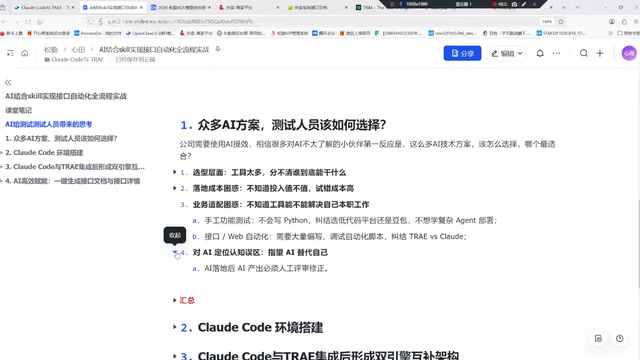
Embracing AI while shoring up your foundational domain skills is the fundamental strategy for navigating this industry transformation. AI can indeed replace large amounts of repetitive work currently done by mid-to-senior QA engineers — but the ability to direct and govern AI will always belong to those who truly know their craft.
Key Takeaways
Related articles
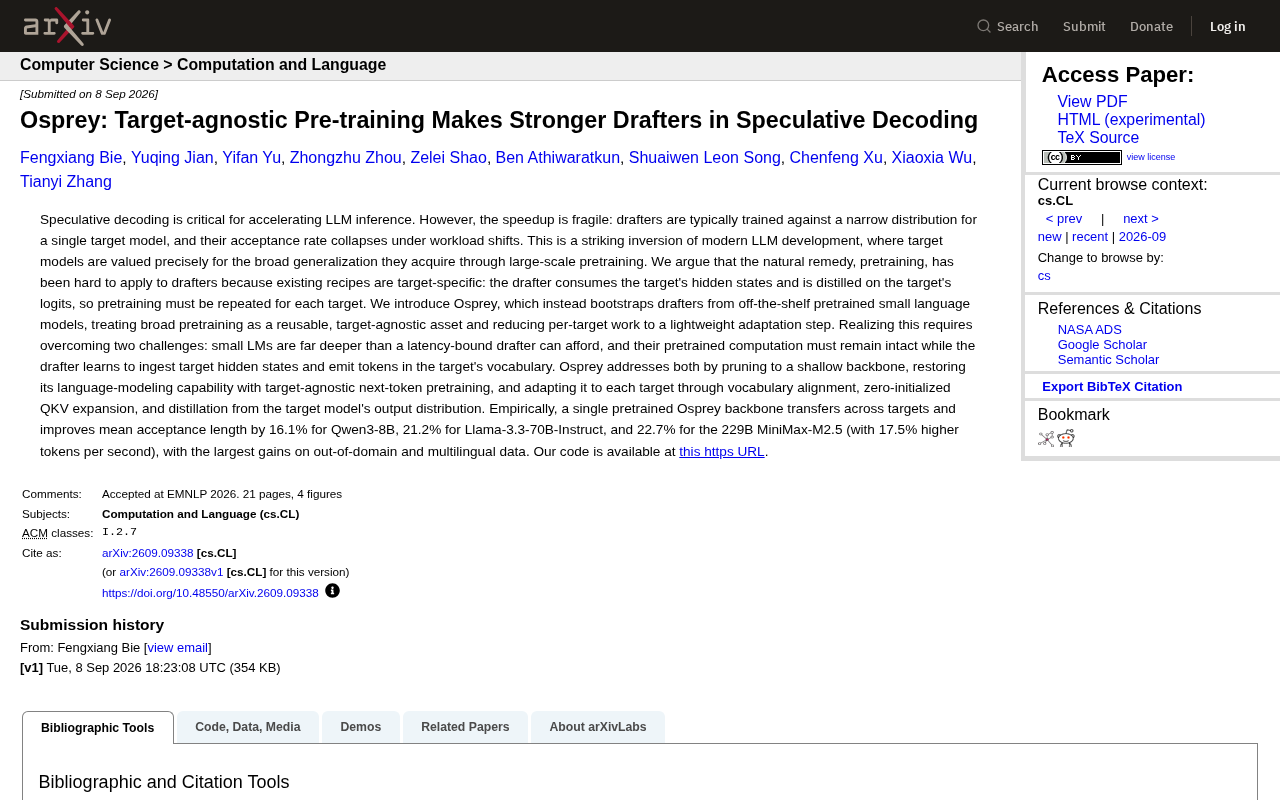
Osprey: General-Purpose Pretraining Makes Speculative Decoding Draft Models More Efficient
Osprey treats pretraining as a reusable, target-agnostic asset. Through pruning and lightweight adaptation, a single draft model transfers across multiple LLMs, boosting mean acceptance length by 16%-22%.
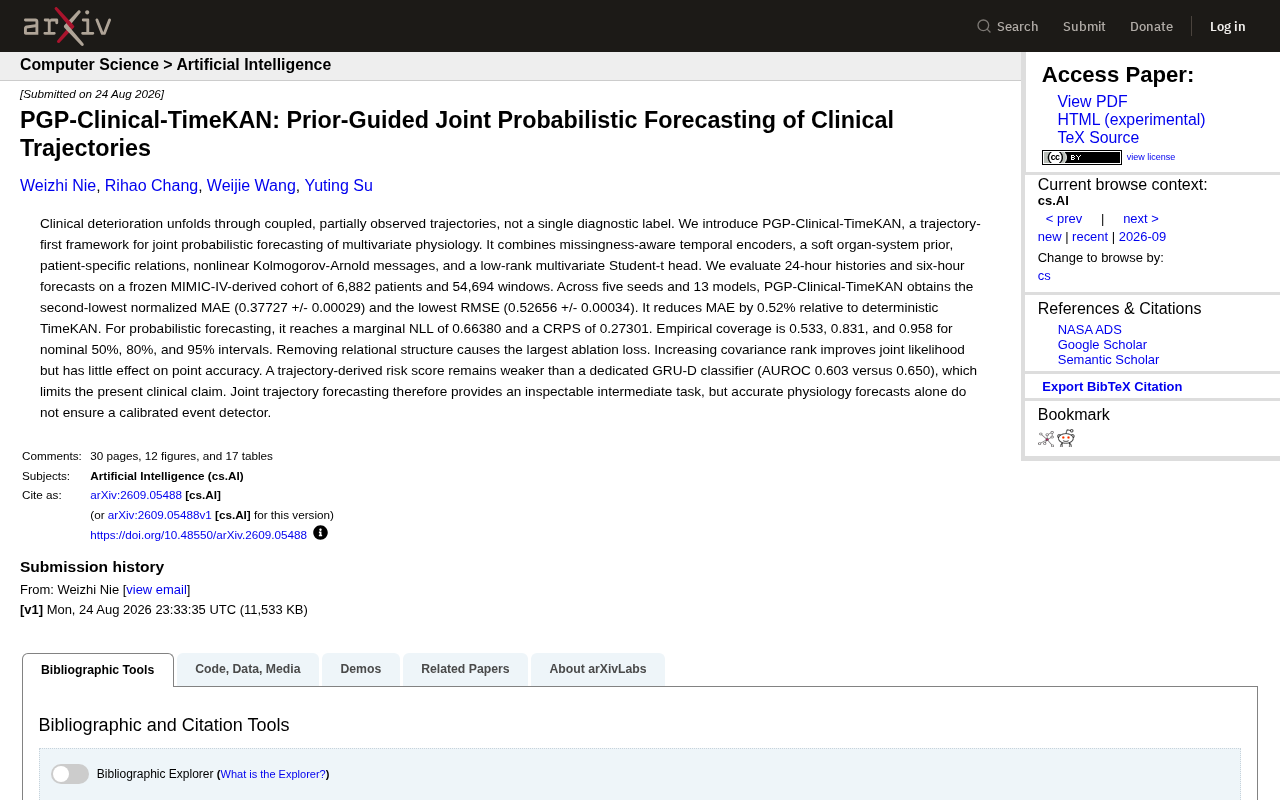
PGP-Clinical-TimeKAN: A Detailed Guide to the Multivariate Physiological Indicator Joint Prediction Framework
An in-depth analysis of the PGP-Clinical-TimeKAN framework for joint probabilistic prediction of multivariate physiological indicators, covering trajectory-first paradigm, KAN message passing, MIMIC-IV validation, and ablation studies.
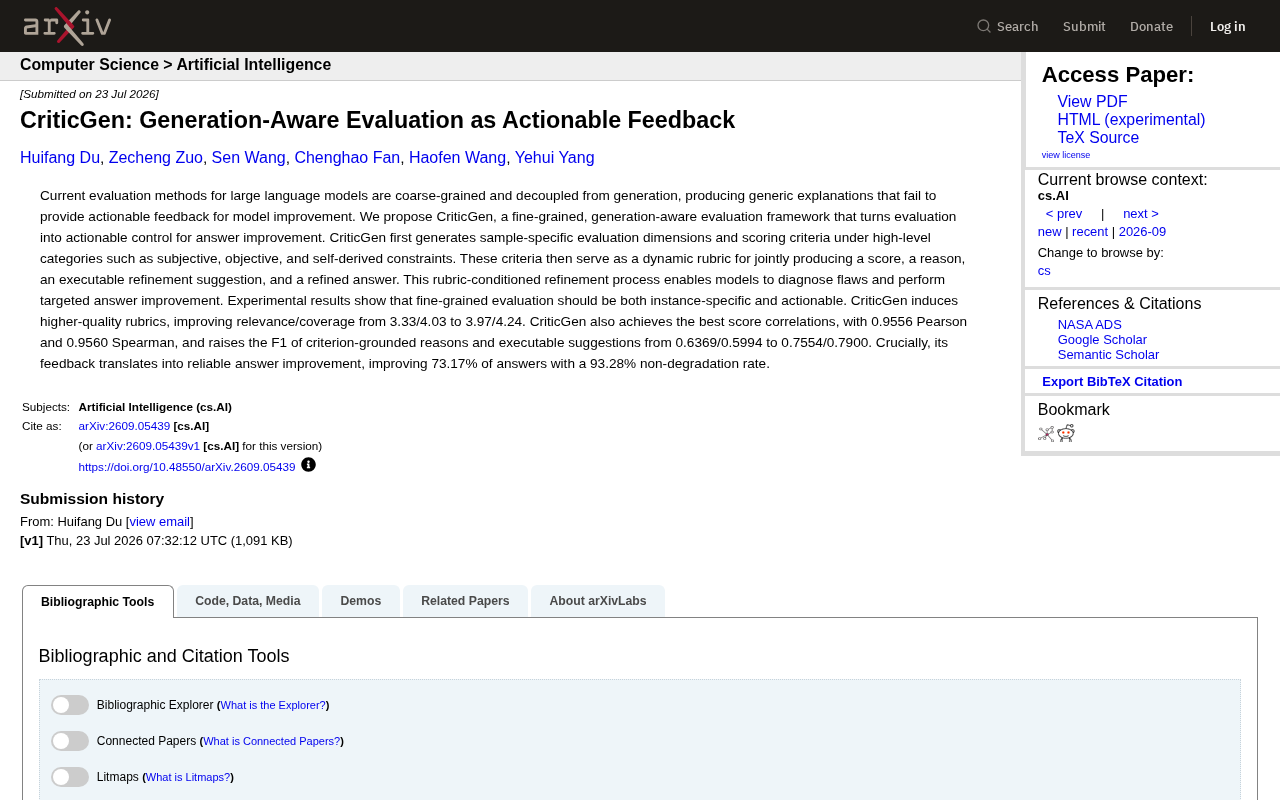
CriticGen: A New Framework That Transforms AI Evaluation into Actionable Improvement Feedback
CriticGen proposes a generation-aware evaluation framework that transforms AI assessment from passive scoring to an active optimization loop, achieving 73.17% answer improvement and 93.28% non-degradation rate.